
lovethailand home >North Travel Attractions >Lampang Travel Attractions >Mueang Lampang >Wiang Nuea > Ratsadaphisek Bridge (Saphan Khao)
TL;DR: Ratsadaphisek Bridge (Saphan Khao) is located at Ratsada Road, Hua Wiang Subdistrict, Mueang Lampang District, Lampang Province, open Daily, hours Open all day.

Ratsadaphisek Bridge (Saphan Khao)
Open Days: Daily
Opening Hours: Open all day
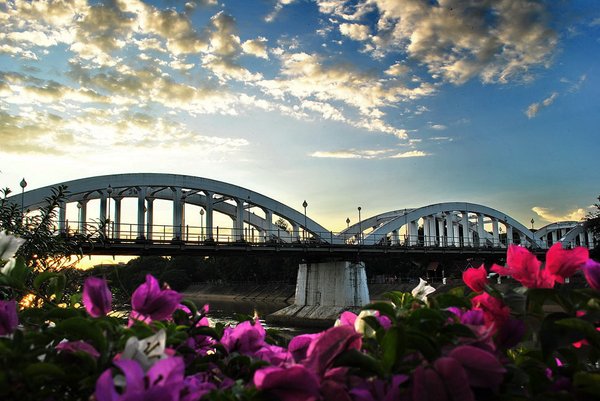
Ratsadaphisek Bridge, widely known as the “White Bridge,” is one of the most important historical landmarks in Lampang Province. Located on Ratsada Road in Hua Wiang Subdistrict, Mueang Lampang District, the bridge stretches gracefully across the Wang River and connects the old commercial districts of the city. With its distinctive white reinforced-concrete arches and elegant early 20th-century design, the bridge has become one of the most recognizable symbols of Lampang and remains a popular destination for travelers exploring the old town area.
The bridge is much more than a transportation structure. It reflects the transformation of Lampang during the period when northern Thailand was developing into a modern urban center connected by railway networks and expanding trade routes. The name “Ratsadaphisek” was given in honor of the royal celebration of King Chulalongkorn (Rama V), linking the bridge to an important period of modernization in Siam. For local residents, the bridge represents both historical memory and civic pride.
Before the current structure was built, an older wooden bridge reinforced with iron stood at this location. Over time, the original bridge deteriorated and could no longer support increasing transportation demands. In March 1917, a new reinforced-concrete bridge was constructed to replace it. Unlike many bridges from the same era that no longer survive today, Ratsadaphisek Bridge has remained standing for more than a century, making it one of Lampang’s most valuable engineering and architectural heritage sites.
The appearance of the bridge is instantly recognizable. Its four white arch spans curve elegantly above the Wang River, creating a balanced and graceful silhouette. Viewed from the riverside, the bridge appears both simple and sophisticated at the same time. During sunrise and sunset, the white structure reflects warm light onto the river surface, creating one of the most photogenic scenes in Lampang. This combination of historic architecture and riverside atmosphere has made the bridge a favorite location for photography enthusiasts and cultural travelers.
At both ends of the bridge are decorative symbols featuring the White Rooster and the Garuda emblem. The White Rooster is strongly associated with Lampang’s local identity and traditional legends, while the Garuda represents royal authority and the state during the period of the bridge’s construction. These decorative details give the bridge a unique character and connect it deeply with the cultural identity of Lampang.
One of the most fascinating stories connected to Ratsadaphisek Bridge comes from World War II. During the war, the bridge survived Allied bombing campaigns that targeted transportation routes in northern Thailand. Local accounts describe how the bridge was painted with camouflage colors to reduce visibility from the air. Another important story involves Lucy Scarloring, former director of Wichanari School and an adviser to Allied forces during that period. She reportedly informed the Allies that the bridge had no major strategic importance, helping prevent it from becoming a bombing target. Because of this, the bridge survived both World War I and World War II and remains standing today.
Walking across Ratsadaphisek Bridge today allows visitors to experience more than just a historical structure. The bridge serves as a connection between different periods of Lampang’s history. Travelers can see the Wang River flowing beneath the arches while observing old commercial buildings, local neighborhoods, and riverside communities that still preserve the atmosphere of earlier decades. The bridge therefore acts as both a transportation route and an open-air historical landmark within the city.
The bridge is closely connected to Kad Kong Ta Walking Street, one of Lampang’s best-known cultural districts. Visitors can easily walk from the bridge into the old market area filled with historic wooden buildings, cafés, local restaurants, art spaces, and riverside shops. During weekends and evening hours, the area becomes especially lively as both locals and tourists gather to enjoy the atmosphere of the old town. Many travelers choose to visit the bridge first before continuing toward Kad Kong Ta for food, coffee, shopping, and riverside walks.
For photographers, Ratsadaphisek Bridge offers multiple perspectives throughout the day. Early morning provides soft light and a quiet atmosphere with fewer visitors, while sunset creates dramatic reflections across the Wang River. At night, lights surrounding the bridge produce another layer of beauty, making the white arches glow against the dark sky. The bridge therefore remains attractive for photography during almost every hour of the day.
Beyond tourism, the bridge continues to function as part of daily life in Lampang. Residents still use the bridge regularly, vehicles continue to cross it, and nearby communities remain active. This living connection between the bridge and local life gives the site an authentic atmosphere rather than the feeling of an isolated monument. Visitors who spend time around the bridge can observe how history and modern urban life coexist naturally in Lampang.
Travelers interested in architecture will notice how the bridge combines functionality with elegance. The curved reinforced-concrete arches reflect engineering ideas from the early modern period, while the proportions of the structure maintain visual harmony with the surrounding landscape. Despite being over a century old, the bridge still feels integrated with the city rather than disconnected from it. This balance is one reason why Ratsadaphisek Bridge remains highly valued both culturally and visually.
The bridge is also an excellent starting point for exploring Lampang’s historical attractions. Visitors can combine a trip to Ratsadaphisek Bridge with nearby destinations such as Kad Kong Ta Walking Street, Wat Pong Sanuk Tai, Wat Sri Chum, and Nakhon Lampang Railway Station. Together, these places help travelers understand the broader story of Lampang as a northern trading city shaped by rivers, railways, and cultural exchange.
Getting There is convenient because the bridge is located within Lampang city center on Ratsada Road. Travelers arriving by private car can easily access the old town district. Visitors arriving by train can travel from Nakhon Lampang Railway Station by local transport or taxi within a short distance. The bridge is also suitable for walking tours through the historical center of Lampang, especially when combined with nearby riverside attractions and local markets.
Ratsadaphisek Bridge remains one of the clearest representations of Lampang’s identity. Its elegant white arches above the Wang River reflect more than architectural beauty; they represent the endurance of the city through modernization, war, and social change. For many visitors, standing on the bridge is not only an opportunity to admire a historical structure but also a way to experience the rhythm, atmosphere, and historical depth of Lampang itself.
| Name | Ratsadaphisek Bridge (White Bridge) |
| Location | Ratsada Road, Hua Wiang Subdistrict, Mueang Lampang District, Lampang Province |
| Address | Ratsada Road, Hua Wiang Subdistrict, Mueang Lampang District, Lampang 52000 |
| Coordinates | 18.29222, 99.49444 |
| Highlights | Historic white reinforced-concrete arch bridge crossing the Wang River and one of Lampang’s most recognizable landmarks |
| History | The current reinforced-concrete bridge was constructed in March 1917 during the modernization era of northern Thailand |
| Name Origin | Named in honor of the Ratsadaphisek royal celebration during the reign of King Rama V |
| Distinctive Features | Four white arch spans with White Rooster and Garuda emblems decorating both ends of the bridge |
| Travel Information | Accessible by private car, local transport, taxi, or walking from Kad Kong Ta and Lampang old town areas |
| Current Status | Open to visitors and remains an important landmark of Lampang |
| Open Days | Daily |
| Opening Hours | Open all day |
| Managed By | Lampang Municipality Tel. 054-237-237 |
| Nearby Tourist Attractions | 1. Kad Kong Ta Walking Street, about 200 m 2. Wat Pong Sanuk Tai, about 1 km 3. Hor Pum Lakon Museum, about 1 km 4. Wat Sri Chum, about 2 km 5. Wat Si Rong Mueang, about 3 km |
| Nearby Restaurants | 1. Wooden House Cafe', about 20 m, Tel. 084-228-7042 2. Kour Cafe, about 30 m 3. Guay Tiew Ratsada (Nguan Khun), about 50 m, Tel. 054-222-557 4. Pa Boonsri Khanom Jeen, about 20 m 5. At One Kad Kong Ta Cafe’, about 50 m |
| Nearby Accommodations | 1. Baan Chiang Guesthouse Lampang, about 100 m 2. City2Lampang, about 200 m 3. Villa Rassada Nakorn Lampang, about 300 m, Tel. 085-365-9697 4. Pin Hotel, about 700 m 5. Khelang Nakorn Hotel, about 800 m |
Frequently Asked Questions (FAQ)
Q: Where is Ratsadaphisek Bridge located?
A: The bridge is located on Ratsada Road in Hua Wiang Subdistrict, Mueang Lampang District, Lampang Province.
Q: Why is Ratsadaphisek Bridge called the White Bridge?
A: The bridge is known as the White Bridge because of its white reinforced-concrete arch structure crossing the Wang River.
Q: When was the current bridge constructed?
A: The current reinforced-concrete structure was built in March 1917 to replace the older wooden bridge.
Q: Why is Ratsadaphisek Bridge historically important?
A: The bridge represents Lampang’s modernization era, survived World War II, and remains one of the city’s most important historical landmarks.
Q: What is the best time to visit the bridge?
A: Early morning and late afternoon are ideal for photography and riverside walks because of the softer light and pleasant atmosphere.
Q: Is the bridge close to Kad Kong Ta Walking Street?
A: Yes. Kad Kong Ta Walking Street is only a short walking distance from the bridge.
Q: Can travelers walk across the bridge?
A: Yes. Visitors can walk across the bridge and enjoy views of the Wang River and Lampang old town.
 Category: ●Art, Culture and Heritage
 Group: ●Landmarks and Memorials
Last Update : 4 MonthAgo
 Last Update : 4 MonthAgo
 Click to Access the Navigation Map GPS
Ratsadaphisek Bridge (Saphan Khao) Map
Recommend

 Historical Sites and Monuments(2)
Landmarks and Memorials(5)
Historical Sites and Monuments(2)
Landmarks and Memorials(5)
 Art, Craft Centres, Tradition(10)
 Museums(4)
 Historic Homes and Cities(1)
 Places of Worship
 Temple(86)
 Other Sacred Sites(9)
 Research and Development
 Royal Project(2)
 Suburban Living
 Village, Community(3)
 Local Market(2)
 Nature and Wildlife
 National Parks and Marine Reserves(5)
 Mountain (Doi)(4)
 Dam, Reservoir, Lake(11)
 Waterfalls(15)
 Hot Springs(1)
 Caves(12)
 Flower Field(1)
 River, Canal(1)
 Bays and Beaches(1)
 Other natural attractions(4)
 Entertainment and Agricultural
 Animal camps and shows(1)
 Farms, Parks and Ecotourism(2)
 Outdoor and Adventure Activities(2)
 Shopping
 Shopping and Night Market(2)
 Spas and Wellness
 Spas and Wellness(1)


