
lovethailand home >North Travel Attractions >Lampang Travel Attractions >Hang Chat >Hang Chat > Wat Pang Muang
TL;DR: Wat Pang Muang is located at Ban Pang Muang, Moo 9, Hang Chat Subdistrict, Hang Chat District, Lampang Province, open Daily, hours 08.00 – 17.00.
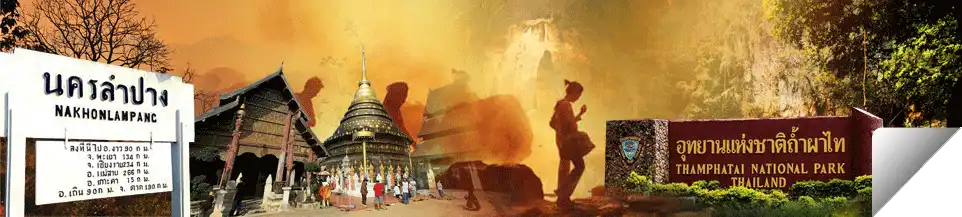
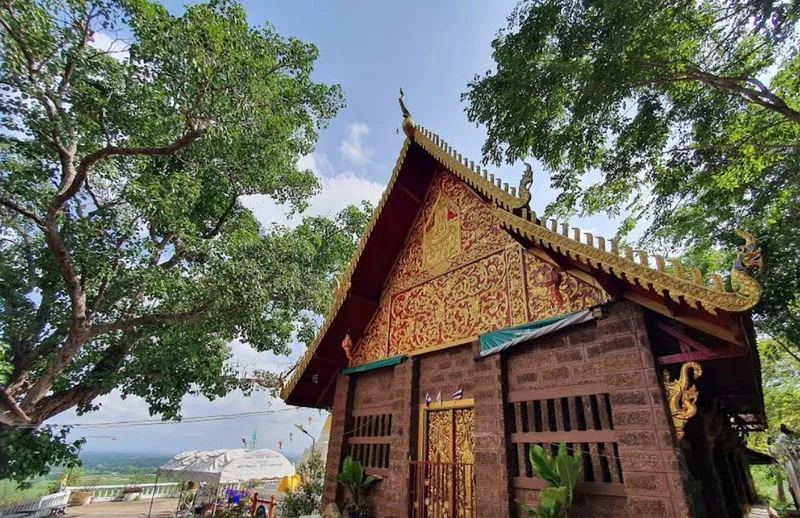
Wat Pang Muang
Open Days: Daily
Opening Hours: 08.00 – 17.00
Wat Pang Muang, also widely known as Wat Phra That Pang Muang, is an old Buddhist temple in Ban Pang Muang, Moo 9, Hang Chat Subdistrict, Hang Chat District, Lampang Province. It stands slightly above Pang Muang Railway Station at an elevation of about 500 meters above sea level. The temple is best known for Phra That Doi Pang Muang, formerly called Doi Nai, a sacred stupa believed to enshrine hair relics of the Buddha. With its hilltop setting, distinctive stupa architecture, Buddha footprint shrine, and beautiful views, Wat Pang Muang is one of the most meaningful cultural and religious destinations in Hang Chat District.
The temple covers approximately 6 rai and belongs to the Mahanikaya order. It was built in 2420 BE and received its consecrated boundary in 2535 BE. Wat Pang Muang is not only a local community temple but also a registered religious historic site. The Fine Arts Department registered it as a historic site under the name Wat Pa Muang, announced in the Royal Gazette Volume 67, Part 15, on 14 March 2543 BE. This recognition confirms the temple’s historical, artistic, and religious importance.
The central sacred object of the temple is Phra That Doi Pang Muang. The stupa is believed to enshrine hair relics of the Buddha, making it highly respected by the people of Ban Pang Muang and devotees from other areas. In Buddhist belief, a relic stupa represents the living presence of the Buddha in the hearts of worshippers. Paying respect to the stupa is therefore not only an act of visiting an old monument but also a devotional act connected with the Buddha’s qualities.
One of the most distinctive features of Phra That Doi Pang Muang is its unusual architectural style. Local information describes the stupa as showing Indian-influenced design. It is associated with an Indian craftsman named Kabinyen Phorada, who is said to have supervised the construction. The stupa has crossed-sword symbols on all four sides, triangular canopy-like forms, spear-like three-pronged details at the tips, and small Buddha images placed in tiers inside the canopy areas. These details make Phra That Pang Muang visually different from many typical Lanna stupas in Lampang.
The distinctive appearance of the stupa is important not only as decoration but also as evidence of cultural exchange and local creativity. Lampang has long been part of the wider Lanna cultural region, where local craftsmanship, trade routes, religious devotion, and outside influences shaped temple art. The Indian-influenced form of Phra That Pang Muang gives the site a special identity for visitors interested in Buddhist architecture and regional art history.
On the northern hill area of the temple, there is a mondop covering a replica Buddha footprint. The shrine is decorated with a five-headed naga coiling around the footprint area, creating a sacred and visually striking setting. In Buddhist culture, a Buddha footprint symbolizes the Buddha’s presence and the path of the Dhamma in the human world. The naga, often seen as a protector of Buddhism, adds another layer of sacred meaning to the site.
The hilltop location is another major attraction of Wat Pang Muang. Because the temple stands above Pang Muang Railway Station and the surrounding community, visitors can enjoy open views of the area. After parking at the temple’s parking area, visitors walk up the stairs to reach the stupa. This gradual ascent helps create a sense of entering a sacred space. Once at the top, visitors find the stupa, the Buddha footprint shrine, peaceful surroundings, and beautiful scenery.
At around 500 meters above sea level, the atmosphere is especially pleasant in the morning and late afternoon. The light is softer, the weather is more comfortable, and the views are more enjoyable. The combination of sacred architecture, stairway approach, hilltop scenery, and local village surroundings makes Wat Pang Muang suitable for worshippers, cultural travelers, photographers, and anyone seeking a peaceful stop in Hang Chat District.
Getting There is convenient by both car and train. By car, travelers can drive from Lampang city toward Hang Chat District and continue to Ban Pang Muang, Moo 9, Hang Chat Subdistrict. Vehicles should be parked at the temple’s parking area, then visitors walk up the stairs to the stupa. By train, travelers can get off at Pang Muang Railway Station and continue to the temple, which is located slightly above the station. This makes Wat Pang Muang one of the more accessible hilltop temples in the area.
Visitors should wear comfortable shoes because reaching the stupa requires walking up stairs. Modest clothing is recommended, as the temple is an active religious site. During the rainy season, visitors should be careful of slippery steps, while elderly travelers should walk slowly and rest when needed. The temple is best visited in daytime, especially in the morning or late afternoon.
The most important annual tradition associated with the temple is the bathing ceremony of Phra That Pang Muang, held in May each year. During this period, local people and devotees gather to make merit, bathe the sacred stupa, and pay respect to the relic. The ceremony expresses purification, reverence, gratitude, and community unity. For travelers who want to experience living local culture, visiting during the May ceremony provides a deeper sense of the temple’s role in community life.
Outside the festival period, Wat Pang Muang is also worth visiting for a quieter spiritual experience. Weekdays and early mornings are especially suitable for those who prefer calm surroundings. Visitors can spend time paying respect to the stupa, observing its unique architectural details, visiting the Buddha footprint shrine, and enjoying the view from the hill.
Wat Pang Muang is suitable for many types of travelers. Devotees can come to worship the relic stupa and Buddha footprint. Cultural travelers can study the registered historic site and its unusual stupa form. Architecture enthusiasts can observe the crossed-sword symbols, triangular structures, and small Buddha images. Photographers can capture the stupa, naga shrine, stairway, and landscape from the hilltop.
Respectful behavior is important when visiting Wat Pang Muang. Visitors should dress modestly, keep their voices low, avoid climbing on the stupa or old structures, and refrain from touching historic elements unnecessarily. Photography should be done without disturbing worshippers or ceremonies. Keeping the temple clean and respecting local devotees helps preserve the dignity of this sacred site.
Wat Pang Muang can be included in a cultural route through Hang Chat District. Nearby places include Kad Tung Kwian, the Thai Elephant Conservation Center, Wat Pong Yang Khok, Wat Phra That Lampang Luang, and Wat Lai Hin Luang. A good route may begin with Wat Pang Muang in the morning, continue to Kad Tung Kwian for local products, then visit the Thai Elephant Conservation Center or continue toward major Lanna temples in the nearby Ko Kha area.
Overall, Wat Pang Muang is one of the important sacred sites of Hang Chat District. Its relic stupa, Indian-influenced architectural form, crossed-sword symbols, Buddha footprint shrine with a five-headed naga, and hilltop views give the temple a clear identity. For visitors who want to experience Lampang beyond its better-known city temples, Wat Pang Muang offers a peaceful and meaningful encounter with local faith, Buddhist heritage, and the cultural landscape of northern Thailand.
| Name | Wat Pang Muang / Wat Phra That Pang Muang |
| Location | Ban Pang Muang, Moo 9, Hang Chat Subdistrict, Hang Chat District, Lampang Province |
| Position | Located slightly above Pang Muang Railway Station, at about 500 meters above sea level |
| Order | Mahanikaya |
| Temple Area | About 6 rai |
| Highlights | Phra That Doi Pang Muang, believed to enshrine hair relics of the Buddha, the Buddha footprint shrine, a five-headed naga, and hilltop views |
| History | Built in 2420 BE, received its consecrated boundary in 2535 BE, and registered as a religious historic site under the name Wat Pa Muang on 14 March 2543 BE |
| Former / Related Names | Phra That Doi Pang Muang was formerly called Doi Nai; the historic site is registered as Wat Pa Muang |
| Distinctive Features | Indian-influenced stupa form, crossed-sword symbols on four sides, triangular canopy-like structures, spear-like three-pronged details, and small Buddha images placed in tiers |
| Main Areas / Zones | Phra That Doi Pang Muang stupa, Buddha footprint mondop, five-headed naga, viewpoint area, stairway, and temple parking area |
| Important Tradition | Annual bathing ceremony of Phra That Pang Muang, held in May |
| Travel Information | Accessible by car and train. By car, park at the temple parking area and walk up the stairs to the stupa. By train, get off at Pang Muang Railway Station and continue to the temple located slightly above the station |
| Current Status | Active Buddhist temple and religious cultural attraction in Hang Chat District, Lampang Province |
| Open Days | Daily |
| Opening Hours | 08.00 – 17.00 |
| Fees | Free Admission |
| Abbot / Caretaker | Phra Athikan Phon Chanthapalo |
| Main Contact Number | 065-241-9650 |
| Nearby Tourist Attractions | 1. Kad Tung Kwian, about 8 km 2. Thai Elephant Conservation Center, about 12 km 3. Wat Pong Yang Khok, about 13 km 4. Wat Phra That Lampang Luang, about 18 km 5. Wat Lai Hin Luang, about 19 km |
| Nearby Restaurants | 1. Halyn Matcha Cafe, about 10 km 2. Luk Thung Dab Daeng Noodle, about 11 km 3. Krua Kala Hang Chat, about 11 km 4. Arjarn Tu Restaurant, about 13 km, Tel. 090-673-7342 5. Krua Mae Pranom, about 16 km |
| Nearby Accommodations | 1. Satakanta Mansion & Resort, about 10 km, Tel. 0-5426-9219, 094-663-5255 2. The Areaac, about 13 km, Tel. 093-301-0004 3. Nitta Hotel, about 14 km 4. Lampang River Lodge, about 17 km 5. Tree Tara Hotel, about 25 km |
Frequently Asked Questions (FAQ)
Q: Where is Wat Pang Muang located?
A: Wat Pang Muang is located in Ban Pang Muang, Moo 9, Hang Chat Subdistrict, Hang Chat District, Lampang Province, slightly above Pang Muang Railway Station.
Q: Why is Wat Pang Muang important?
A: The temple enshrines Phra That Doi Pang Muang, believed to contain hair relics of the Buddha, and is registered as a religious historic site under the name Wat Pa Muang.
Q: What makes Phra That Doi Pang Muang distinctive?
A: The stupa has Indian-influenced architecture, crossed-sword symbols on four sides, triangular structures, and small Buddha images placed in tiers.
Q: Can travelers reach Wat Pang Muang by train?
A: Yes. Travelers can get off at Pang Muang Railway Station and continue to the temple, which is located slightly above the station.
Q: Do visitors need to climb stairs to reach the stupa?
A: Yes. Visitors park at the temple parking area and walk up the stairs to reach the stupa, so comfortable footwear is recommended.
Q: What are the opening hours of Wat Pang Muang?
A: The temple is open daily from 08.00 to 17.00, and admission is free.
Q: When is the annual bathing ceremony of Phra That Pang Muang held?
A: The annual bathing ceremony of Phra That Pang Muang is held in May every year.
Q: What nearby attractions can be combined with Wat Pang Muang?
A: Nearby attractions include Kad Tung Kwian, the Thai Elephant Conservation Center, Wat Pong Yang Khok, Wat Phra That Lampang Luang, and Wat Lai Hin Luang.
Mobile : 0877280216
 Mobile : 0877280216
 Category: ●Places of Worship
 Group: ●Temple
Last Update : 4 WeekAgo
 Last Update : 4 WeekAgo
 Click to Access the Navigation Map GPS
 Art, Culture and Heritage
 Historical Sites and Monuments(2)
 Landmarks and Memorials(5)
 Art, Craft Centres, Tradition(10)
 Museums(4)
 Historical Houses and The Ancient City(1)
Temple(86)
Historical Houses and The Ancient City(1)
Temple(86)
 Other religious and spiritural sites(9)
 Research and Development
 Royal Project(2)
 Suburban Living
 Village, Community(3)
 Local Market(2)
 Nature and Wildlife
 National Parks and Marine Reserves(5)
 Mountain (Doi)(4)
 Dam, Reservoir, Lake(11)
 Waterfalls(15)
 Hot Springs(1)
 Caves(12)
 Flower Field(1)
 River, Canal(1)
 Bays and Beaches(1)
 Other natural attractions(4)
 Entertainment and Agricultural
 Animal camps and shows(1)
 Farm, Parks, Gardens and Ecotourism(2)
 Outdoor and Adventure Activities(2)
 Shopping
 Shopping and Night Market(2)
 Spas and Wellness
 Spas and Wellness(1)


