
lovethailand home >North Travel Attractions >Lampang Travel Attractions >Sop Prap >Na Yang > Wat Na Prap
TL;DR: Wat Na Prap is located at Ban Na Prap, Moo 3, Na Yang Subdistrict, Sop Prap District, Lampang Province, open Daily, hours Daytime Visits Recommended.

Wat Na Prap
Open Days: Daily
Opening Hours: Daytime Visits Recommended
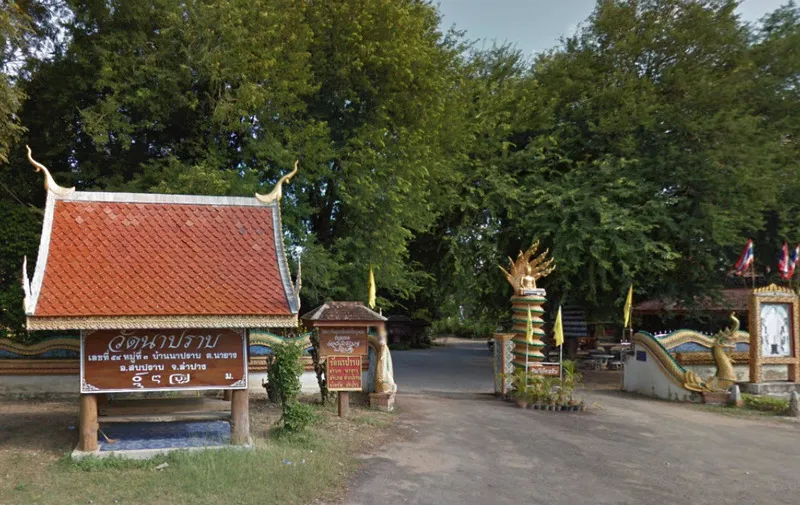
Wat Na Prap is an old community temple located at 54 Moo 3, Ban Na Prap, Na Yang Subdistrict, Sop Prap District, Lampang Province 52170. Formerly known as Wat Luang, the temple was rebuilt in 1907 by Pho Luang Nan Yot Mueang Mun and was then named Wat Sop Yong. Later, it was renamed Wat Na Prap after the village. This layered history makes the temple an important religious and cultural site for Ban Na Prap and the wider Na Yang community.
Wat Na Prap is a local Buddhist temple under the Mahanikaya order. It serves as a spiritual center for villagers, a place for Buddhist ceremonies, a space for merit-making, and a keeper of community memory. Although it is not a large tourist landmark, it offers a meaningful experience for travelers who want to understand rural Buddhist life in Sop Prap District and the historical development of local temples in Lampang Province.
The history of Wat Na Prap began in its earlier form as Wat Luang. In 1907, Pho Luang Nan Yot Mueang Mun led the rebuilding of the temple and gave it the name Wat Sop Yong. This act of rebuilding reflects the faith and leadership of the local community at that time. A village temple in northern Thailand is rarely built by one person alone; it usually represents the shared devotion of villagers who want their community to have a stable center of worship and moral life.
The later change of name to Wat Na Prap connected the temple more directly with the identity of Ban Na Prap. When a temple carries the name of its village, it becomes more than a religious site. It becomes a symbol of the community itself, representing its people, history, local values, and shared Buddhist faith. For this reason, Wat Na Prap remains closely tied to the identity of the village.
Wat Na Prap received its official consecrated boundary on 6 July 1949. The boundary measured 20 meters wide and 40 meters long. This was an important milestone in the temple’s religious status because a consecrated boundary allows the temple to conduct formal monastic acts, including important Sangha ceremonies. The recognition confirms the temple’s role as a properly established Buddhist institution within the local monastic system.
The temple grounds include important monastic structures such as the ordination hall, viharn, monk residences, multi-purpose hall, small pavilions, drum hall, dining hall, and stupa. These structures reflect the complete function of a rural temple. The ordination hall is used for important monastic ceremonies, the viharn supports worship and merit-making, the monk residences support monastic life, and the halls provide space for community gatherings and religious events.
One of the most important sacred objects at Wat Na Prap is a stucco Buddha image in Lanna artistic style. The image has a lap width of about 150 centimeters and is around 85 years old. This Buddha image is valuable not only as an object of worship, but also as evidence of local craftsmanship and Buddhist art in the community. Its stucco material reflects a traditional technique commonly found in community temples where local skill, faith, and available materials were used to create sacred objects.
The Lanna-style stucco Buddha image represents the devotion of the people who created and preserved it. In rural temples, Buddha images are not merely decorative objects. They are spiritual centers that connect generations of villagers through prayer, offerings, and shared memory. For visitors, paying respect to this image is a way to experience the living faith of Ban Na Prap.
Another important sacred object is Phra Chao Than Chai, a Buddha image created on Saturday, the ninth day, the fifth waxing day of the ninth lunar month. In northern Thai Buddhist belief, Phra Chao Than Chai is often associated with strong faith, quick completion, and auspicious wishes. Visitors who come to Wat Na Prap often pay respect to this image for blessings and spiritual encouragement.
The stupa of Wat Na Prap is another key element of the temple’s sacred landscape. In Lanna Buddhist culture, a stupa is a central symbol of faith and continuity. It connects the community with the Buddhist tradition and serves as a focus for merit-making, reverence, and ritual. The presence of the stupa gives the temple a deeper spiritual character and supports annual devotional activities.
Wat Na Prap also has an important educational role. A Dhamma section of the Phra Pariyatti Dhamma school was opened at the temple in 1957. This shows that the temple functioned not only as a place for ceremonies, but also as a center of Buddhist learning. Monks, novices, and laypeople could learn Buddhist teachings, discipline, ethics, and religious knowledge through the temple’s educational activities.
In the past, many temples in northern Thailand served as learning centers before modern schools became widespread. They helped transmit literacy, moral education, cultural knowledge, and Buddhist values. The establishment of a Phra Pariyatti Dhamma school at Wat Na Prap reflects this traditional role and shows the temple’s contribution to the intellectual and spiritual development of the community.
The temple has had a long line of abbots, beginning with Phra Athikan Sao from 1912 to 1924, followed by Phra Athikan Kham, Phra Athikan Saen, Phra Athikan Tan, Phra Athikan Suk, Phra Athikan Siwichai, another Phra Athikan Kham, Phra Athikan Ta Sanarato, Phra Athikan Kaeo Sirichanto, Phra Athikan Chuen, and later Phra Khru Sophon Chariyanuwat from 1964 onward. This succession reflects the continuity of temple leadership over more than a century.
Each abbot played a role in maintaining the temple, supporting Buddhist practice, and connecting the Sangha with the local community. A continuous line of temple leadership is important because it shows that Wat Na Prap has remained an active religious institution rather than a site remembered only for its past. The temple has been cared for and used by generations of monks and villagers.
The current abbot associated with Wat Na Prap is Phra Watcharachan Sophon, formerly Phra Khru Sophon Chariyanuwat, with the lay name In Kham and the monastic name Thighayuko. He is an important senior monk connected with Sop Prap District. He served as the ecclesiastical chief of Sop Prap District and later became an advisor to the district ecclesiastical administration. In 2024, he received the royal ecclesiastical title Phra Watcharachan Sophon, further strengthening the temple’s importance within the local Sangha.
The atmosphere of Wat Na Prap is calm and simple, reflecting the character of a living village temple. Its beauty is not based on grand tourism development, but on its continuity, sacred objects, community faith, and the quiet dignity of a temple that has served the village for many decades. Visitors who appreciate local temples will find that Wat Na Prap offers an authentic experience of rural Buddhist culture.
Wat Na Prap is also associated with the local tradition of bathing the stupa, an important merit-making event of Ban Na Prap and Na Yang Subdistrict. This tradition reflects the community’s devotion to the temple stupa. In Lanna culture, bathing the stupa is an act of reverence, purification, and blessing. It allows villagers to gather, make merit, and renew their connection with the temple.
The stupa-bathing tradition helps keep the temple alive as a community center. During the event, villagers return to the temple, meet relatives and neighbors, participate in religious rituals, and help maintain the temple’s role in local life. Such traditions preserve not only Buddhist devotion, but also social bonds and local identity.
For travelers interested in local history, Wat Na Prap offers a valuable view into Sop Prap District. The district contains old villages, rural landscapes, forested areas, streams, and temples that reflect the quieter side of Lampang. Visiting Wat Na Prap is therefore not simply a stop at a temple; it is a way to understand how small communities maintain their religious and cultural roots.
Na Yang Subdistrict has several temples and monastic sites, including Wat Ban Kat, Wat Chai Mongkhon, Wat Na Prap, Wat Nong Wua Daeng, Wat Ban Na Yang, Wat Na Mai Daeng, Wat Ban Kaen, and Wat Ban Rai. The presence of many temples in one subdistrict shows how deeply Buddhism is embedded in village life. Wat Na Prap is one of these important religious centers.
Visitors to Wat Na Prap should pay respect to the stucco Buddha image, Phra Chao Than Chai, and the stupa. They can also observe the temple buildings and learn about the temple’s history, its consecrated boundary, its educational role, and its line of abbots. A visit becomes more meaningful when travelers understand that each part of the temple is connected with the story of the village.
Wat Na Prap can also be included in a wider Sop Prap travel route. Nearby attractions include Wat Ban Kaen, Wat Luang Sop Prap, Doi Chong National Park, Mae Nga Chang Waterfall, Wat Phra That Lampang Luang, and Wat Phra That Chom Ping. This route combines local temples, nature, waterfalls, mountains, and major cultural landmarks in Lampang Province.
Doi Chong National Park is one of the important natural attractions in Sop Prap District, with forested hills and seasonal waterfalls. Mae Nga Chang Waterfall is a small waterfall that is best visited during the rainy season. Wat Phra That Lampang Luang, located farther away in Ko Kha District, is one of the most important temples in Lampang and can be combined with a temple-focused itinerary for travelers with private transport.
Food options in Sop Prap include local restaurants, noodle shops, coffee stops, and roadside eateries. Popular choices around the district include Khrua Ban Suan Sop Prap, pork rib noodle shops, local spicy food restaurants, Inthanin Coffee, and PunThai Coffee. These places can serve as convenient stops before or after visiting Wat Na Prap, especially for travelers continuing to Doi Chong National Park or Lampang city.
Accommodation near Sop Prap includes local resorts in the district and hotels along the broader Lampang route. Travelers who want to stay close to Sop Prap can choose local accommodation such as Huai Fang Resort, while those who prefer city convenience may stay in Lampang city and visit Wat Na Prap as a day trip. This approach is suitable for travelers who want access to more restaurants, transport options, and other attractions.
When visiting Wat Na Prap, travelers should dress modestly, speak quietly, and respect monks and local residents. Sacred objects should not be touched without permission. Photography should be done discreetly, especially around Buddha images, the ordination hall, and ceremonial areas. Since the temple remains an active religious site, respectful behavior is essential.
Getting There is most convenient by private car or rental car. From Lampang city, travel south toward Sop Prap District, then continue to Na Yang Subdistrict and Ban Na Prap. Travelers using the main Lampang-Thoen or Phahonyothin route can enter Sop Prap District and then continue toward the village. The distance is suitable for a day trip from Lampang city, especially when combined with nearby temples or natural attractions.
The best time to visit is during the daytime, especially in the morning or late afternoon when the weather is more comfortable. If visiting during the stupa-bathing tradition, travelers can experience a more active expression of local faith, but should follow community guidance and respect the ceremonial space.
Wat Na Prap is suitable for travelers interested in old temples, village history, Lanna Buddhist art, stucco Buddha images, Phra Chao Than Chai, local stupa traditions, and cultural travel in Sop Prap District. It is a quiet temple, but it contains a rich historical and religious story that rewards visitors who take time to learn.
Overall, Wat Na Prap tells the story of Ban Na Prap through its former names, rebuilding history, consecrated boundary, Dhamma education, long line of abbots, sacred objects, and continuing community traditions. It is a valuable local temple that helps visitors understand the depth of rural Buddhist culture in Lampang Province.
For travelers seeking a deeper and quieter side of Lampang, Wat Na Prap is worth including in a cultural route through Sop Prap District. Visitors can pay respect to sacred images, learn about the temple’s history, and experience the calm atmosphere of a community temple that continues to serve local people with dignity and devotion.
| Name | Wat Na Prap |
| Location | Ban Na Prap, Moo 3, Na Yang Subdistrict, Sop Prap District, Lampang Province |
| Address | 54 Moo 3, Ban Na Prap, Na Yang Subdistrict, Sop Prap District, Lampang 52170, Thailand |
| Highlights | Old community temple formerly known as Wat Luang and Wat Sop Yong, with a Lanna-style stucco Buddha image, Phra Chao Than Chai, stupa, and local stupa-bathing tradition |
| History | Rebuilt by Pho Luang Nan Yot Mueang Mun in 1907 and named Wat Sop Yong before being renamed Wat Na Prap; received its consecrated boundary on 6 July 1949 |
| Name Origin | Formerly Wat Luang, later rebuilt as Wat Sop Yong, and eventually renamed Wat Na Prap after Ban Na Prap village |
| Distinctive Features | Mahanikaya community temple with ordination hall, viharn, monk residences, multi-purpose hall, small pavilions, drum hall, dining hall, and stupa |
| Antiquities / Sacred Objects | Lanna-style stucco Buddha image with a lap width of about 150 cm and an age of about 85 years, Phra Chao Than Chai, and the temple stupa |
| Education | A Dhamma section of the Phra Pariyatti Dhamma school was opened in 1957 |
| Important Tradition | The stupa-bathing tradition of Ban Na Prap, an important merit-making activity of Na Yang Subdistrict |
| Travel Information | From Lampang city, travel toward Sop Prap District, then continue to Na Yang Subdistrict and Ban Na Prap; private car or rental car is recommended |
| Current Status | Active community temple listed in temple databases and the ecclesiastical records of the area |
| Open Days | Daily |
| Opening Hours | Daytime Visits Recommended |
| Fees | No Admission Fee |
| Facilities | Merit-making area, viharn, ordination hall, multi-purpose hall, temple courtyard, and parking space within or near the temple depending on local conditions |
| Main Areas / Zones | Ordination hall, viharn, stupa, Phra Chao Than Chai, stucco Buddha image, drum hall, monk residences, dining hall, pavilions, and multi-purpose hall |
| Abbot / Caretaker | Phra Watcharachan Sophon (In Kham Thighayuko), formerly Phra Khru Sophon Chariyanuwat, abbot of Wat Na Prap and advisor to the ecclesiastical chief of Sop Prap District |
| Nearby Tourist Attractions | 1. Wat Ban Kaen, about 6 km 2. Wat Luang Sop Prap, about 10 km 3. Doi Chong National Park, about 24 km 4. Mae Nga Chang Waterfall, about 26 km 5. Wat Phra That Lampang Luang, about 36 km 6. Wat Phra That Chom Ping, about 42 km 7. Lampang City, about 58 km |
| Nearby Restaurants | 1. Khrua Ban Suan Sop Prap, about 10 km, Tel. 089-633-7906, 090-971-3262, 054-242-282 2. Pork Rib Noodle Restaurant Sop Prap, about 10 km 3. Khrua Khot Saep Kaeng Pa-Pla Mae Nam, about 10 km 4. Inthanin Coffee Sop Prap, about 10 km 5. PunThai Coffee Sop Prap, about 11 km 6. Kha Mu Chae Oi Restaurant, about 11 km |
| Nearby Accommodations | 1. Huai Fang Resort, about 12 km, Tel. 064-429-0763 2. Kohkaburi Hotel, about 28 km 3. Lampang River Lodge, about 42 km 4. One Budget Hotel Lampang Phahonyothin, about 52 km 5. Lampang Vintage, about 54 km 6. The Space Hotel Lampang, about 56 km 7. Tree Tara Hotel, about 58 km |
Frequently Asked Questions (FAQ)
Q: Where is Wat Na Prap located?
A: Wat Na Prap is located at 54 Moo 3, Ban Na Prap, Na Yang Subdistrict, Sop Prap District, Lampang Province 52170.
Q: What was Wat Na Prap formerly called?
A: It was formerly known as Wat Luang, then rebuilt in 1907 as Wat Sop Yong before being renamed Wat Na Prap after the village.
Q: When did Wat Na Prap receive its consecrated boundary?
A: Wat Na Prap received its consecrated boundary on 6 July 1949, with a boundary measuring 20 meters wide and 40 meters long.
Q: What sacred objects are found at Wat Na Prap?
A: Important sacred objects include a Lanna-style stucco Buddha image about 150 cm wide, Phra Chao Than Chai, and the temple stupa.
Q: Who is the abbot of Wat Na Prap?
A: The abbot is Phra Watcharachan Sophon (In Kham Thighayuko), formerly Phra Khru Sophon Chariyanuwat, a senior monk associated with Sop Prap District.
Q: What local tradition is connected with Wat Na Prap?
A: The temple is connected with the stupa-bathing tradition of Ban Na Prap, an important merit-making activity of Na Yang Subdistrict.
Q: How can visitors get to Wat Na Prap?
A: From Lampang city, travel toward Sop Prap District, then continue to Na Yang Subdistrict and Ban Na Prap. A private car or rental car is the most convenient option.
Q: What attractions are near Wat Na Prap?
A: Nearby attractions include Wat Ban Kaen, Wat Luang Sop Prap, Doi Chong National Park, Mae Nga Chang Waterfall, Wat Phra That Lampang Luang, and Wat Phra That Chom Ping.
Mobile : 0819806968
 Mobile : 0819806968
 Category: ●Places of Worship
 Group: ●Temple
Last Update : 3 MonthAgo
 Last Update : 3 MonthAgo
 Click to Access the Navigation Map GPS
Wat Na Prap Map
Recommend

 Art, Culture and Heritage
 Historical Sites and Monuments(2)
 Landmarks and Memorials(5)
 Art, Craft Centres, Tradition(10)
 Museums(4)
 Historic Homes and Cities(1)
Temple(86)
Historic Homes and Cities(1)
Temple(86)
 Other Sacred Sites(9)
 Research and Development
 Royal Project(2)
 Suburban Living
 Village, Community(3)
 Local Market(2)
 Nature and Wildlife
 National Parks and Marine Reserves(5)
 Mountain (Doi)(4)
 Dam, Reservoir, Lake(11)
 Waterfalls(15)
 Hot Springs(1)
 Caves(12)
 Flower Field(1)
 River, Canal(1)
 Bays and Beaches(1)
 Other natural attractions(4)
 Entertainment and Agricultural
 Animal camps and shows(1)
 Farms, Parks and Ecotourism(2)
 Outdoor and Adventure Activities(2)
 Shopping
 Shopping and Night Market(2)
 Spas and Wellness
 Spas and Wellness(1)


