
lovethailand home >North Travel Attractions >Lampang Travel Attractions >Mueang Lampang >Phichai > Wat Ban Rai (Sila Thong)
TL;DR: Wat Ban Rai (Sila Thong) is located at Ban Rai Sila Thong, Village No. 10, Phichai Subdistrict, Mueang Lampang District, Lampang Province, open Daily, hours 08.00 – 17.00.

Wat Ban Rai (Sila Thong)
Open Days: Daily
Opening Hours: 08.00 – 17.00
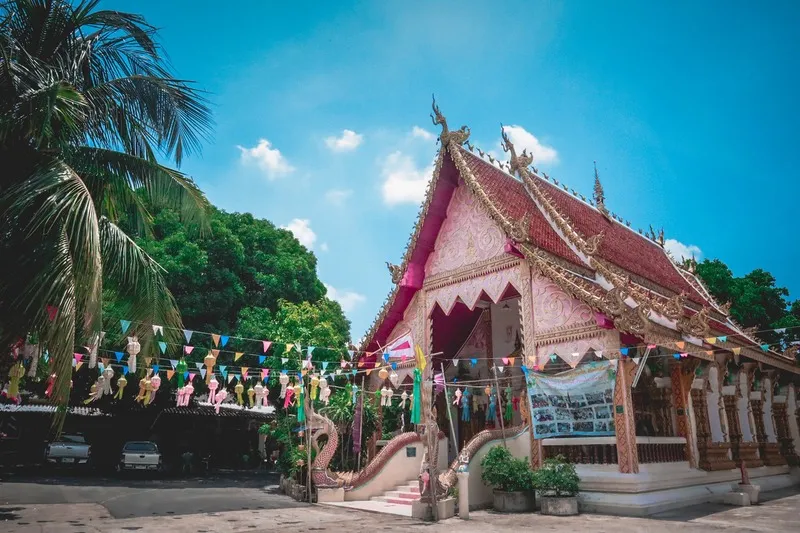
Wat Ban Rai (Sila Thong) in Lampang Province is a local Buddhist temple of the Mahanikaya order, located at 121 Ban Rai Sila Thong, Village No. 10, Phichai Subdistrict, Mueang Lampang District. Established in 1882, the temple is more than 100 years old and has long served as the spiritual center of the Ban Rai Sila Thong community. Although it is not a large tourist temple, it preserves an important local history involving relocation, community devotion, old Buddhist images, and the continuing role of a village temple in northern Thai life.
The temple covers an area of 2 rai, 2 ngan, and 5 square wah. Its northern boundary adjoins an internal village road, the southern side borders local houses, the eastern side adjoins garden land, and the western side borders a public road. This location places the temple directly within the village environment, allowing it to serve as a center for merit-making, Buddhist ceremonies, community gatherings, and local moral education.
Originally, Wat Ban Rai stood near rice fields in the area that is now associated with Ban Rai Pracha Samakkhi School. It was first established as a monastery by Chao Nai In Pan from Wat Chetawan. The original location suited the agricultural lifestyle of the past, but over time the temple faced water shortages and was too far from the homes of local villagers. As a result, people found it difficult to visit regularly for merit-making and religious activities.
The temple was later moved to the center of the village. Pho Nan Ta Thip Si donated approximately 2 rai, 2 ngan, and 5 square wah of land for the new temple site. This donation was a turning point in the history of Wat Ban Rai (Sila Thong), as it brought the temple closer to the daily life of the community. Villagers could then visit more easily for worship, sermons, merit-making, and seasonal Buddhist events.
In the early period after the relocation, the temple did not yet have a complete viharn. Later, Pho Khun Boriban, known as an elephant healer, initiated the construction of the viharn, temple wall, and monks’ residence. His role reflects an older layer of Lampang society, where people connected with elephants, forestry, and local healing traditions also contributed to Buddhist temple development.
The viharn was repaired and improved over time. During the period of Phra Khru In Kham Upalo, a new viharn was built beginning on May 11, 1961 and completed in 1965. This construction marked an important phase in the temple’s development, showing how the community continued to invest in its religious center as the village grew and modernized.
Wat Ban Rai (Sila Thong) received its consecrated boundary, known as wisungkhamsima, on January 15, 1970. This allowed the temple to conduct formal monastic ceremonies correctly according to Buddhist discipline, especially ordination and other Sangha rituals. The granting of the boundary confirmed the temple’s religious status and its readiness to serve the wider Buddhist community.
The temple’s main monastic structures include an ordination hall, sermon hall, monks’ residence, and library. Each structure plays an important role in temple life. The ordination hall is used for formal monastic ceremonies, the sermon hall supports merit-making and community gatherings, the monks’ residence supports daily monastic life, and the library reflects the temple’s role as a place of learning and moral development.
Important sacred objects at Wat Ban Rai (Sila Thong) include a brick Buddha image in Lanna style, a brass Buddha image from the Sukhothai period, a lacquered and gilded Buddha image from the Sukhothai period, and a sermon seat. These objects give the temple artistic and religious value beyond its role as a village monastery. They represent the preservation of Buddhist art from different traditions and periods, including Lanna and Sukhothai styles.
The brick Buddha image in Lanna style reflects the local craftsmanship of northern Thailand, where faith was often expressed through simple but meaningful materials. The brass and lacquered gilded Buddha images associated with the Sukhothai period reflect the elegance, balance, and serenity of Thai Buddhist art. Their presence within the temple shows how sacred objects can be preserved and respected across generations within a local community.
The sermon seat is also significant. In a community temple, a sermon seat is not only a ritual object but also a symbol of Buddhist teaching, listening to the Dharma, and the relationship between monks and villagers. It represents the temple’s role as a place where Buddhist knowledge and moral values are passed from one generation to the next.
Today, Wat Ban Rai (Sila Thong) is overseen by Phra Khru Sathit Tham Wiphat, also known as Trinarong Thitathammo. He plays an important role in maintaining the temple, supporting religious activities, and continuing the temple’s connection with the Ban Rai Sila Thong community. The temple has also been associated with community learning, youth activities, and moral development.
The atmosphere of Wat Ban Rai (Sila Thong) is simple, quiet, and strongly local. It is not a large commercial tourist attraction, but that is part of its appeal. Visitors can experience the rhythm of a real village temple, where Buddhist practice, community life, and local history remain closely connected.
For travelers interested in local history, the temple tells the story of how a rural community adapted over time. The movement of the temple from a rice-field location to the center of the village reflects changes in settlement, access to water, and the need for religious spaces to remain close to the people they serve. This makes Wat Ban Rai (Sila Thong) an important example of the relationship between temples and village life in Lampang.
The temple’s history is also a story of many contributors across generations. Chao Nai In Pan helped establish the original monastery. Pho Nan Ta Thip Si donated the land for the current site. Pho Khun Boriban initiated the construction of the viharn, wall, and residence. Phra Khru In Kham Upalo built the new viharn in the 1960s. The present abbot continues the work of maintaining the temple today. This continuity shows how Buddhist temples are built and sustained through shared devotion rather than by a single person alone.
Wat Ban Rai (Sila Thong) is suitable for visitors who want to explore lesser-known temples in Lampang and understand local community heritage. It can be combined with nearby attractions in Phichai Subdistrict and Lampang city, such as Wat Phra Chedi Sao Lang, Wat Phra Kaew Don Tao Suchadaram, Ban Sao Nak, Kad Kong Ta Walking Street, and Ratsadaphisek Bridge.
Visitors should dress respectfully, keep a calm manner, and avoid touching old sacred objects without permission. Because the temple remains an active place of worship for the local community, respectful conduct helps preserve its peaceful atmosphere and cultural value.
Getting There is convenient from Lampang city. Travel toward Phichai Subdistrict and continue to Ban Rai Sila Thong, Village No. 10. The temple is accessible by private car or motorcycle and can be included in a one-day cultural route around Mueang Lampang District.
| Name | Wat Ban Rai (Sila Thong) |
| Location | Ban Rai Sila Thong, Village No. 10, Phichai Subdistrict, Mueang Lampang District, Lampang Province |
| Address | 121 Ban Rai Sila Thong, Village No. 10, Phichai Subdistrict, Mueang Lampang District, Lampang 52000 |
| Temple Type | Local Buddhist temple of the Mahanikaya order |
| Area | 2 rai, 2 ngan, 5 square wah |
| Boundaries | North: internal village road; South: local houses; East: garden land; West: public road |
| Highlights | Historic community temple of Ban Rai Sila Thong, with Lanna-style brick Buddha image, Sukhothai-period Buddha images, sermon seat, and a history of relocation from rice-field area to the village center |
| History / Significance | Established in 1882, originally near rice fields before being moved to the center of the village for easier access by local residents |
| Main Structures | Ordination hall, sermon hall, monks’ residence, and library |
| Sacred Objects | Brick Buddha image in Lanna style, brass Buddha image from the Sukhothai period, lacquered and gilded Buddha image from the Sukhothai period, and sermon seat |
| Consecrated Boundary | Granted wisungkhamsima on January 15, 1970 |
| Travel Information | From Lampang city, travel toward Phichai Subdistrict and continue to Ban Rai Sila Thong, Village No. 10; private car or motorcycle is convenient |
| Current Status | Open for merit-making, worship, and cultural visits |
| Open Days | Daily |
| Opening Hours | 08.00 – 17.00 |
| Fees | No admission fee |
| Facilities | Ordination hall, sermon hall, monks’ residence, library, temple courtyard, and parking space within or near the temple |
| Abbot / Caretaker | Phra Khru Sathit Tham Wiphat (Trinarong Thitathammo) |
| Nearby Tourist Attractions | 1. Wat Phra Chedi Sao Lang, about 6 km 2. Wat Phra Kaew Don Tao Suchadaram, about 8 km 3. Ban Sao Nak, about 9 km 4. Kad Kong Ta Walking Street, about 10 km 5. Ratsadaphisek Bridge, about 10 km |
| Nearby Restaurants | 1. Local Restaurants in Phichai Area, about 3 km 2. Krua Runway, about 6 km 3. Krua Mukda, about 7 km 4. Long Jim New York Pizza, about 10 km, Tel. 054-010555 5. Baan Phraya Suren by Madame Musur, about 10 km, Tel. 054-222317 |
| Nearby Accommodations | 1. Na Ban Mae Resort, about 5 km 2. The Coconut Hotel Lampang, about 7 km, Tel. 054-821999 3. The Riverside Guest House, about 9 km 4. Wienglakor Hotel Lampang, about 10 km, Tel. 054-225501 5. Hop Inn Lampang City Center, about 11 km, Tel. 02-6592899 |
Frequently Asked Questions (FAQ)
Q: Where is Wat Ban Rai (Sila Thong) located?
A: Wat Ban Rai (Sila Thong) is located at 121 Ban Rai Sila Thong, Village No. 10, Phichai Subdistrict, Mueang Lampang District, Lampang Province.
Q: When was Wat Ban Rai (Sila Thong) established?
A: The temple was established in 1882 and later moved from its original rice-field location to the center of the village.
Q: Who is the abbot of Wat Ban Rai (Sila Thong)?
A: The abbot is Phra Khru Sathit Tham Wiphat, also known as Trinarong Thitathammo.
Q: What important sacred objects are found inside the temple?
A: Important objects include a Lanna-style brick Buddha image, Sukhothai-period brass Buddha image, lacquered and gilded Sukhothai-period Buddha image, and sermon seat.
Q: When did the temple receive its consecrated boundary?
A: Wat Ban Rai (Sila Thong) received its wisungkhamsima on January 15, 1970.
Q: Is Wat Ban Rai (Sila Thong) open daily?
A: Yes. The temple is open daily from 08.00 to 17.00.
Q: Is there an admission fee?
A: No. Visitors can make merit, worship, and visit the temple free of charge.
Mobile : 0843782993
 Mobile : 0843782993
 Category: ●Places of Worship
 Group: ●Temple
Last Update : 3 MonthAgo
 Last Update : 3 MonthAgo
 Click to Access the Navigation Map GPS
Wat Ban Rai (Sila Thong) Map
Recommend

 Art, Culture and Heritage
 Historical Sites and Monuments(2)
 Landmarks and Memorials(5)
 Art, Craft Centres, Tradition(10)
 Museums(4)
 Historic Homes and Cities(1)
Temple(86)
Historic Homes and Cities(1)
Temple(86)
 Other Sacred Sites(9)
 Research and Development
 Royal Project(2)
 Suburban Living
 Village, Community(3)
 Local Market(2)
 Nature and Wildlife
 National Parks and Marine Reserves(5)
 Mountain (Doi)(4)
 Dam, Reservoir, Lake(11)
 Waterfalls(15)
 Hot Springs(1)
 Caves(12)
 Flower Field(1)
 River, Canal(1)
 Bays and Beaches(1)
 Other natural attractions(4)
 Entertainment and Agricultural
 Animal camps and shows(1)
 Farms, Parks and Ecotourism(2)
 Outdoor and Adventure Activities(2)
 Shopping
 Shopping and Night Market(2)
 Spas and Wellness
 Spas and Wellness(1)


