
lovethailand home >North Travel Attractions >Lampang Travel Attractions >Mueang Lampang >Phra Bat > Wat Banphot Sathit
TL;DR: Wat Banphot Sathit is located at Village No. 7, Phichai Subdistrict, Mueang Lampang District, Lampang Province, open Daily, hours 08.00 – 17.00.

Wat Banphot Sathit
Open Days: Daily
Opening Hours: 08.00 – 17.00
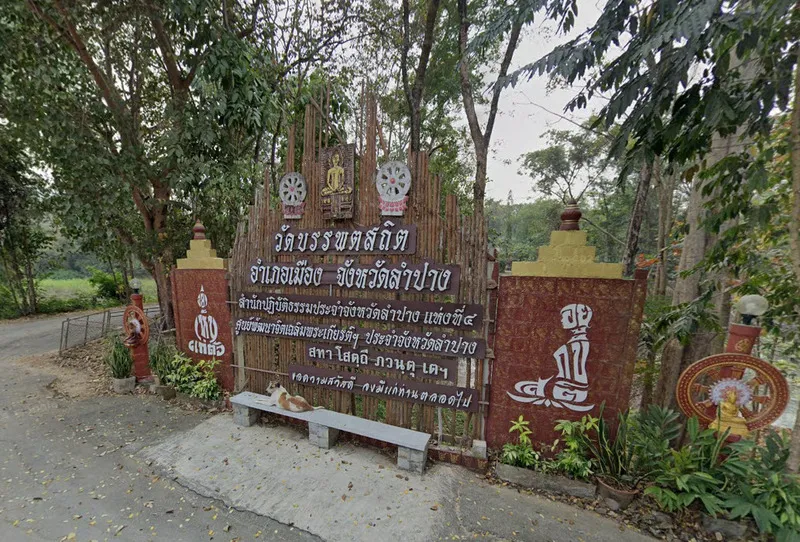
Wat Banphot Sathit in Lampang Province is a local Buddhist temple of the Mahanikaya order, located at 383, Village No. 7, Phichai Subdistrict, Mueang Lampang District. The temple is known for its mountain setting on an area locally called Doi Mon Nam Oi. Its name directly reflects its landscape: “Banphot” means mountain, while “Sathit” means situated or established. Together, the name means a temple situated on a mountain. Surrounded by hills and natural scenery, Wat Banphot Sathit offers a peaceful atmosphere suitable for merit-making, worship, meditation, and quiet cultural visits.
The temple occupies 73 rai, 2 ngan, and 45 square wah of land. To the north, it borders the area of Ban Rai Phaen Din Thong village. To the south and east are private lands, while the west side borders a public road. This spacious mountain location gives the temple a distinctive character, combining the qualities of a forest temple, a hill temple, and a community monastery.
The history of Wat Banphot Sathit began in a concrete way on May 21, 1977, when Luang Pho Phra Khru Siri Tham Wiphat, also known as Si Ong Chayasiri, the former abbot, initiated the temple’s construction. He invited faithful villagers, merchants, and devotees who respected his practice to help clear the forest, level the land, and prepare the area for a Buddhist temple. This beginning reflects the strong faith and cooperation between monks and the local community.
Building a temple on a mountain was not easy. It required physical effort, dedication, and support from many groups. In addition to local devotees, several government agencies also helped with the development of the site, including the 32nd Military Circle, the Provincial Police Region 3 in Lampang, and mechanical equipment units that assisted in building the road into the temple. The road became essential for transporting construction materials and allowing people to visit the temple more conveniently.
Before becoming a legally established temple, Wat Banphot Sathit was originally known as Samnak Song Satsana Phiman, a monastic residence. When formal permission was sought to establish the temple, its name was changed to Wat Banphot Sathit. The new name was chosen to match the temple’s location on a mountain and its natural surroundings, including the hills and Mae Katip stream running through the temple area.
On September 27, 1978, permission was granted to build the temple. Suthin Phu Sae was the person who applied for permission and donated land for the temple site. Later, on March 20, 1980, the Ministry of Education officially announced the establishment of Wat Banphot Sathit as a legal Buddhist temple. This marked the transformation of the site from a forest monastic residence into a fully recognized temple.
Wat Banphot Sathit received its consecrated boundary, known as wisungkhamsima, on October 16, 1985. This allowed the temple to conduct important monastic ceremonies properly, including ordination and other formal Sangha activities. The granting of the boundary marked another important stage in the temple’s religious development.
Today, Wat Banphot Sathit includes several important monastic structures: one viharn, one ordination hall, four sermon and multipurpose halls, seven monks’ residences, and one chedi. These structures show the steady growth of the temple from a newly cleared mountain site into a complete religious center serving monks, villagers, and visitors.
Phra Maha Nopphadon Suwannamethi is the current abbot of Wat Banphot Sathit. He continues the temple’s religious duties and development after the pioneering work of Luang Pho Phra Khru Siri Tham Wiphat. The temple therefore preserves a sense of continuity between its founding generation and its present role as a living Buddhist community.
The most distinctive quality of Wat Banphot Sathit is its peaceful mountain environment. Visitors arriving at the temple can immediately feel the difference from city temples. The air is open, the setting is quiet, and the surrounding nature creates a suitable atmosphere for mindfulness and reflection. The sounds of wind, birds, and flowing water from Mae Katip stream contribute to the temple’s calm character.
Mae Katip stream, which flows through the middle of the temple, is an important natural feature. It adds moisture and freshness to the temple grounds and reinforces the connection between the temple and its landscape. Wat Banphot Sathit is not separate from nature; it is part of a living environment of hills, trees, streams, and local community land.
For local residents, Wat Banphot Sathit is more than a place for merit-making. It is a temple created through collective effort. The clearing of the forest, preparation of the land, construction of the road, and building of the temple structures were all shaped by the cooperation of monks, villagers, donors, and supporting agencies. This gives the temple strong community meaning.
As a Buddhist temple, Wat Banphot Sathit serves the religious life of people in Phichai Subdistrict and nearby areas. Local residents come here to make merit on Buddhist holy days, listen to sermons, participate in annual traditions, and gather for community activities. The presence of an ordination hall, viharn, sermon hall, multipurpose halls, and monks’ residences allows the temple to support both monastic and community functions.
For travelers, Wat Banphot Sathit is suitable for those who prefer quiet temples and natural surroundings rather than crowded tourist sites. Visitors can make merit, pay respect to sacred objects, walk around the temple grounds, and enjoy the surrounding mountain scenery. The temple is especially appealing to travelers who appreciate forest temples, hill temples, and peaceful religious sites in northern Thailand.
The local name Doi Mon Nam Oi adds cultural charm to the temple. In northern Thai usage, the word “mon” often refers to a small hill or elevated mound. Because the temple stands on such a hill, it has the character of a highland temple with open views and a calm atmosphere typical of northern hill temples.
Wat Banphot Sathit is also interesting for those studying the development of modern community temples in northern Thailand. Unlike ancient temples with centuries of history, this temple represents a more recent example of Buddhist expansion and community devotion in the late 20th century. It shows how Buddhist faith continues to create new sacred spaces in local communities.
A visit to the temple can begin with the main worship areas such as the viharn, ordination hall, and chedi. Visitors can then walk slowly through the temple grounds to appreciate the natural atmosphere. Because the temple remains an active religious site, visitors should dress respectfully, keep quiet, and avoid disturbing monks or local worshippers.
Wat Banphot Sathit can easily be included in a Lampang travel itinerary. It is located within Mueang Lampang District and can be combined with nearby attractions such as Wat Phra Chedi Sao Lang, Wat Phra Kaew Don Tao Suchadaram, Ban Sao Nak, Kad Kong Ta Walking Street, and Ratsadaphisek Bridge. This makes it possible to experience both a peaceful hill temple and historic city attractions in the same day.
For photography enthusiasts, the temple offers mountain scenery and a spacious temple setting. Morning light works well for photographing the temple buildings in a soft atmosphere, while late afternoon gives the area a warm and calm tone. Visitors looking for images of Lampang temples in a natural setting will find this temple rewarding.
Another important value of Wat Banphot Sathit is its connection to Luang Pho Phra Khru Siri Tham Wiphat, the monk who initiated the temple’s development in 1977. The story of clearing the forest and developing the mountain site through faith and effort gives the temple a strong sense of dedication, perseverance, and collective merit.
Visitors should prepare appropriately for a hill temple environment. Comfortable footwear, drinking water, and caution during the rainy season are recommended. Some areas may be moist due to the natural stream and forest setting. Visiting respectfully allows travelers to experience the temple in a peaceful and meaningful way.
Getting There is convenient from Lampang city. Travelers can drive toward Phichai Subdistrict in Mueang Lampang District and continue to the Doi Mon Nam Oi area, Village No. 7. A private car or rental vehicle is recommended because the temple is located on a hill. The temple can be combined with Wat Phra Chedi Sao Lang, Wat Phra Kaew Don Tao Suchadaram, and other attractions around Lampang city in a one-day itinerary.
| Name | Wat Banphot Sathit |
| Location | Village No. 7, Phichai Subdistrict, Mueang Lampang District, Lampang Province |
| Address | 383, Village No. 7, Phichai Subdistrict, Mueang Lampang District, Lampang 52000 |
| Temple Type | Local Buddhist temple of the Mahanikaya order |
| Area | 73 rai, 2 ngan, 45 square wah |
| Former Name | Samnak Song Satsana Phiman |
| Name Origin | Banphot means mountain and Sathit means situated, meaning a temple situated on a mountain |
| Highlights | Hill temple on Doi Mon Nam Oi, surrounded by mountains, with Mae Katip stream flowing through the temple grounds |
| History / Significance | Development began on May 21, 1977 by Luang Pho Phra Khru Siri Tham Wiphat; permission to build the temple was granted on September 27, 1978; officially established as a temple on March 20, 1980 |
| Consecrated Boundary | Granted wisungkhamsima on October 16, 1985 |
| Main Structures | 1 viharn, 1 ordination hall, 4 sermon and multipurpose halls, 7 monks’ residences, and 1 chedi |
| Travel Information | From Lampang city, travel toward Phichai Subdistrict and continue to Doi Mon Nam Oi; private car or rental vehicle is recommended |
| Current Status | Open for merit-making, worship, and cultural visits |
| Open Days | Daily |
| Opening Hours | 08.00 – 17.00 |
| Fees | No admission fee |
| Facilities | Access road, worship areas, viharn, ordination hall, sermon hall, multipurpose halls, and parking area |
| Abbot / Caretaker | Phra Maha Nopphadon Suwannamethi |
| Main Contact Number | 061-2695444 |
| Nearby Tourist Attractions | 1. Wat Phra Chedi Sao Lang, about 5 km 2. Wat Phra Kaew Don Tao Suchadaram, about 7 km 3. Ban Sao Nak, about 8 km 4. Kad Kong Ta Walking Street, about 9 km 5. Ratsadaphisek Bridge, about 9 km |
| Nearby Restaurants | 1. Krua Runway, about 6 km 2. Krua Mukda, about 7 km 3. Khao Soi Islam, about 8 km 4. Long Jim New York Pizza, about 9 km, Tel. 054-010555 5. Baan Phraya Suren by Madame Musur, about 9 km, Tel. 054-222317 |
| Nearby Accommodations | 1. The Coconut Hotel Lampang, about 6 km, Tel. 054-821999 2. The Riverside Guest House, about 8 km 3. Baan Chiang Guest House Lampang, about 8 km 4. Wienglakor Hotel Lampang, about 9 km, Tel. 054-225501 5. Hop Inn Lampang City Center, about 10 km, Tel. 02-6592899 |
Frequently Asked Questions (FAQ)
Q: Where is Wat Banphot Sathit located?
A: Wat Banphot Sathit is located at 383, Village No. 7, Phichai Subdistrict, Mueang Lampang District, Lampang Province.
Q: What does the name Wat Banphot Sathit mean?
A: Banphot means mountain and Sathit means situated, so the name means a temple situated on a mountain.
Q: What was the former name of Wat Banphot Sathit?
A: The temple was formerly known as Samnak Song Satsana Phiman before being officially named Wat Banphot Sathit.
Q: Who initiated the construction of Wat Banphot Sathit?
A: Luang Pho Phra Khru Siri Tham Wiphat, also known as Si Ong Chayasiri, initiated the temple’s development on May 21, 1977.
Q: Who is the current abbot of Wat Banphot Sathit?
A: The current abbot is Phra Maha Nopphadon Suwannamethi.
Q: Is Wat Banphot Sathit open daily?
A: Yes. The temple is open daily from 08.00 to 17.00.
Q: Is there an admission fee?
A: No. Visitors can make merit, worship, and visit the temple free of charge.
Mobile : 0865867540
 Mobile : 0865867540
 Category: ●Places of Worship
 Group: ●Temple
Last Update : 2 MonthAgo
 Last Update : 2 MonthAgo
 Click to Access the Navigation Map GPS
 Art, Culture and Heritage
 Historical Sites and Monuments(2)
 Landmarks and Memorials(5)
 Art, Craft Centres, Tradition(10)
 Museums(4)
 Historic Homes and Cities(1)
Temple(86)
Historic Homes and Cities(1)
Temple(86)
 Other Sacred Sites(9)
 Research and Development
 Royal Project(2)
 Suburban Living
 Village, Community(3)
 Local Market(2)
 Nature and Wildlife
 National Parks and Marine Reserves(5)
 Mountain (Doi)(4)
 Dam, Reservoir, Lake(11)
 Waterfalls(15)
 Hot Springs(1)
 Caves(12)
 Flower Field(1)
 River, Canal(1)
 Bays and Beaches(1)
 Other natural attractions(4)
 Entertainment and Agricultural
 Animal camps and shows(1)
 Farms, Parks and Ecotourism(2)
 Outdoor and Adventure Activities(2)
 Shopping
 Shopping and Night Market(2)
 Spas and Wellness
 Spas and Wellness(1)


