
lovethailand home >North Travel Attractions >Lampang Travel Attractions >Muang Pan >Thung Kwao > Wat Thung Pong Chai
TL;DR: Wat Thung Pong Chai is located at Ban Thung Pong, Moo 6, Thung Kwao Subdistrict, Mueang Pan District, Lampang Province, open Daily, hours Daytime.
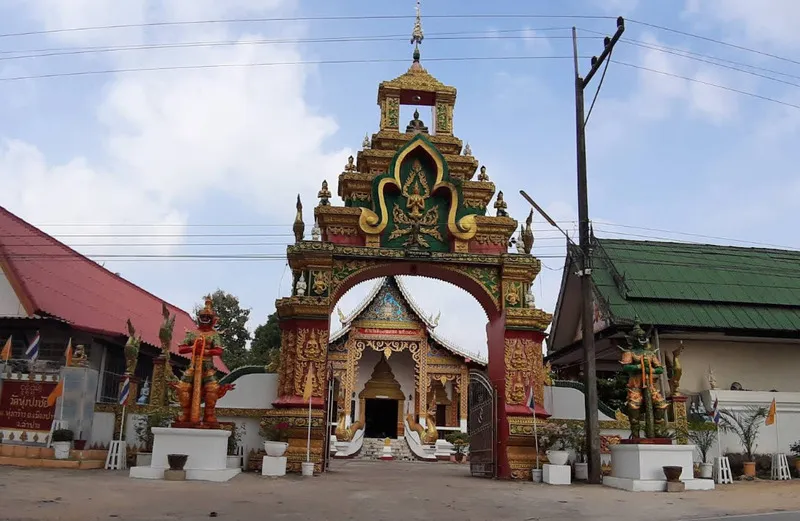
Wat Thung Pong Chai
Open Days: Daily
Opening Hours: Daytime
Wat Thung Pong Chai is located at No. 133, Ban Thung Pong, Moo 6, Thung Kwao Subdistrict, Mueang Pan District, Lampang Province. It is a local Buddhist temple under the Mahanikaya order and has served as the religious center of Ban Thung Pong for generations. The temple was founded in 1883 CE and was originally called Wat Don Chai. Later, Phra Chao Ya Rangsri changed the name to Wat Thung Pong Chai to match the name of the village. Local people often call it Wat Thung Pong.
The temple occupies 4 rai, 3 ngan, and 32 square wah of land. Its boundaries connect closely with public roads, private land, and a stream. To the north, the temple borders a public road and private land. To the south, it borders a public road and a stream. To the east and west, it also borders public roads and private land. These details show that Wat Thung Pong Chai is physically and socially embedded in the village landscape. It is not separated from community life but stands among roads, houses, agricultural land, and local waterways.
The original name, Wat Don Chai, reflects both the landscape and an auspicious meaning. The word “chai” suggests victory or success, while “don” often refers to slightly raised ground. The later name, Wat Thung Pong Chai, gives the temple a clearer connection with Ban Thung Pong. In northern Thai communities, temples are often closely tied to village names because the temple functions as the spiritual heart of the settlement.
Wat Thung Pong Chai was founded through the joint effort of Phra Saem Luang and local villagers. This reflects the traditional way many rural Lanna temples developed. A village temple was not merely a place for monks but also a center for merit-making, rituals, moral education, community gatherings, and cultural continuity. The founding of Wat Thung Pong Chai therefore represents the shared faith of the people of Ban Thung Pong.
The main monastic buildings include an ubosot, a viharn, and a merit-making hall, also described as a salabat or sala rai. The ubosot is the most important formal monastic building, used for Sangha ceremonies. The viharn is a place of worship and devotional gathering. The merit-making hall supports community activities, Buddhist ceremonies, and religious events. Together, these buildings form the essential structure of an active community temple.
The temple’s sacred objects include stucco Buddha images, wooden Buddha images, and a chedi. Stucco Buddha images represent the local community’s devotion and the desire to enshrine the Buddha as a spiritual center. Wooden Buddha images reflect local Lanna craftsmanship and the use of natural materials in Buddhist art. The chedi serves as a sacred monument and a point of reverence for villagers during religious ceremonies and annual merit-making occasions.
The wooden Buddha images are especially meaningful because wooden Buddhist art has deep roots in northern Thai culture. Wood was a familiar material in rural life and temple craftsmanship. When transformed into Buddha images, it became a sacred medium that united nature, craft, and devotion. Such images may not appear as grand as large bronze or stucco statues, but they carry the quiet beauty of village craftsmanship and local faith.
The chedi of Wat Thung Pong Chai gives the temple a clear sacred focus. In Buddhist culture, a chedi may represent the Buddha, the Dhamma, relics, or sacred memory. In a village temple, it often serves as a center for worship, circumambulation, and community ceremonies. The presence of a chedi confirms the temple’s role as a complete religious site, not only a meeting place or village hall.
The rural setting of Ban Thung Pong gives the temple a peaceful and local character. The surrounding area of Thung Kwao Subdistrict is known for village scenery, rice fields, and green landscapes during the rainy season. This makes Wat Thung Pong Chai suitable for travelers who appreciate quiet temples and community-based cultural routes rather than crowded tourist sites.
In terms of temple administration, earlier records mention Phra Winyakrit Kittiyano as abbot, while the current abbot is Phra Witthaya Thitadhammo. Pho Nan Kaeo Kowarit is identified as the temple ritual teacher. This reflects a common northern Thai temple structure, where monks and knowledgeable lay ritual specialists support the religious life of the community. The role of a temple teacher is especially important in local ceremonies, merit-making events, and traditional rituals.
Phra Witthaya Thitadhammo, as the current abbot, oversees the religious activities, temple buildings, sacred objects, and general order of the temple. The presence of a temple teacher helps connect monastic practice with local customs and lay devotion. Together, these roles keep Wat Thung Pong Chai functioning as a living center of Buddhist and community life.
Wat Thung Pong Chai is suitable for visitors who want to understand Lampang at the village level. It may not be a large or widely promoted tourist attraction, but it preserves important details of a community temple: land boundaries, monastic buildings, sacred objects, foundation history, name changes, and local religious leadership. A visit here offers a quieter and more grounded view of Mueang Pan District.
Getting There is most convenient by private car or rental car. From Lampang city, travel toward Mueang Pan District, then continue to Thung Kwao Subdistrict and Ban Thung Pong, Moo 6. The temple is located within the village. Since some parts of the route are local roads, daytime travel and navigation support are recommended, especially for first-time visitors.
Wat Thung Pong Chai can be included in a cultural and nature route through Mueang Pan. Nearby places include Wat Mon Doi Kaeo in Ban Thung Pong, Wat Thung Kwao, Wat Chaloem Phra Kiat Phra Chom Klao Rachanusorn, Chae Son National Park, and Chae Son Hot Springs. This route combines local temples, mountain scenery, and natural attractions, making it suitable for a half-day or full-day trip.
The best time to visit is in the morning or late afternoon, when the weather is more comfortable. The rainy season brings lush green scenery to Ban Thung Pong and nearby areas, while the cool season offers pleasant weather for temple visits and nature travel. Visitors who prefer a quiet experience should come on weekdays or outside major community merit-making periods.
Visitors should dress modestly, speak quietly, avoid climbing on temple structures or the chedi, and avoid touching sacred objects unnecessarily. If they wish to take photos inside the ubosot or viharn, they should ask permission from monks or temple caretakers first. Respectful behavior helps preserve the dignity of the temple and supports the local community’s care for its religious heritage.
Overall, Wat Thung Pong Chai is a valuable old community temple in Thung Kwao Subdistrict. Founded in 1883 CE as Wat Don Chai and later renamed to match Ban Thung Pong, the temple preserves the faith and history of the local community. Its ubosot, viharn, merit-making hall, stucco Buddha images, wooden Buddha images, and chedi make it an important religious site for Ban Thung Pong and a meaningful stop for travelers who want to experience the quieter cultural side of Lampang.
| Name | Wat Thung Pong Chai |
| Location | Ban Thung Pong, Moo 6, Thung Kwao Subdistrict, Mueang Pan District, Lampang Province |
| Address | No. 133, Ban Thung Pong, Moo 6, Thung Kwao Subdistrict, Mueang Pan District, Lampang Province |
| Order | Mahanikaya |
| Temple Area | 4 rai, 3 ngan, 32 square wah |
| Boundaries | North: about 56 wah 2 sok, adjoining a public road and private land. South: about 64 wah 2 sok, adjoining a public road and a stream. East: about 36 wah, adjoining a public road and private land. West: about 36 wah 2 sok, adjoining a public road and private land |
| Former Name | Wat Don Chai |
| Local Name | Wat Thung Pong |
| Highlights | Old community temple of Ban Thung Pong with an ubosot, viharn, merit-making hall, stucco Buddha images, wooden Buddha images, and chedi |
| History | Founded in 1883 CE as Wat Don Chai by Phra Saem Luang and local villagers. Later renamed Wat Thung Pong Chai by Phra Chao Ya Rangsri to match the village name |
| Main Buildings | Ubosot, viharn, merit-making hall, salabat, or sala rai |
| Sacred Objects | Stucco Buddha images, wooden Buddha images, and chedi |
| Travel Information | Travel from Lampang city toward Mueang Pan District, then continue to Thung Kwao Subdistrict and Ban Thung Pong, Moo 6. Private car or rental car is recommended |
| Current Status | Active community Buddhist temple and religious site of Ban Thung Pong, Thung Kwao Subdistrict, Mueang Pan District, Lampang Province |
| Open Days | Daily |
| Opening Hours | Daytime |
| Fees | Free Admission |
| Abbot / Caretaker | Phra Witthaya Thitadhammo |
| Temple Ritual Teacher | Pho Nan Kaeo Kowarit |
| Nearby Tourist Attractions | 1. Wat Mon Doi Kaeo, Ban Thung Pong, about 2 km 2. Wat Thung Kwao, about 4 km 3. Wat Chaloem Phra Kiat Phra Chom Klao Rachanusorn, about 15 km 4. Chae Son National Park, about 24 km, Tel. 089-851-3355 5. Chae Son Hot Springs, about 24 km |
| Nearby Restaurants | 1. Window View Cafe & Bistro, about 9 km, Tel. 095-135-3335 2. NIYA Cuisine Mueang Pan, about 12 km 3. The First Valley Coffee Academy, about 13 km 4. Trai Khun Mueang Pan, about 13 km 5. Chae Son National Park Welfare Restaurant, about 24 km |
| Nearby Accommodations | 1. Pimpisa Garden, about 13 km, Tel. 064-984-3389 2. Rai Ya Chae Son Resort, about 19 km, Tel. 054-263-048 3. Chae Son Vintage, about 22 km 4. Chae Son National Park Accommodation, about 24 km, Tel. 089-851-3355 5. The Little Earth Farm View, about 28 km |
Frequently Asked Questions (FAQ)
Q: Where is Wat Thung Pong Chai located?
A: Wat Thung Pong Chai is located at No. 133, Ban Thung Pong, Moo 6, Thung Kwao Subdistrict, Mueang Pan District, Lampang Province.
Q: What was the former name of Wat Thung Pong Chai?
A: The temple was formerly called Wat Don Chai before being renamed Wat Thung Pong Chai to match the village name.
Q: When was Wat Thung Pong Chai founded?
A: Wat Thung Pong Chai was founded in 1883 CE by Phra Saem Luang together with local villagers.
Q: What are the important features of Wat Thung Pong Chai?
A: Important features include the ubosot, viharn, merit-making hall, stucco Buddha images, wooden Buddha images, and chedi.
Q: Who is the abbot of Wat Thung Pong Chai?
A: The abbot is Phra Witthaya Thitadhammo.
Q: How can travelers get to Wat Thung Pong Chai?
A: Travelers can drive from Lampang city toward Mueang Pan District, then continue to Thung Kwao Subdistrict and Ban Thung Pong, Moo 6.
Q: Is there an admission fee?
A: Admission is free. Daytime visits are recommended.
Q: What nearby attractions can be combined with Wat Thung Pong Chai?
A: Nearby attractions include Wat Mon Doi Kaeo, Wat Thung Kwao, Wat Chaloem Phra Kiat Phra Chom Klao Rachanusorn, Chae Son National Park, and Chae Son Hot Springs.
 Category: ●Places of Worship
 Group: ●Temple
Last Update : 1 MonthAgo
 Last Update : 1 MonthAgo
 Click to Access the Navigation Map GPS
Wat Thung Pong Chai Map
Recommend

 Art, Culture and Heritage
 Historical Sites and Monuments(2)
 Landmarks and Memorials(5)
 Art, Craft Centres, Tradition(10)
 Museums(4)
 Historic Homes and Cities(1)
Temple(86)
Historic Homes and Cities(1)
Temple(86)
 Other Sacred Sites(9)
 Research and Development
 Royal Project(2)
 Suburban Living
 Village, Community(3)
 Local Market(2)
 Nature and Wildlife
 National Parks and Marine Reserves(5)
 Mountain (Doi)(4)
 Dam, Reservoir, Lake(11)
 Waterfalls(15)
 Hot Springs(1)
 Caves(12)
 Flower Field(1)
 River, Canal(1)
 Bays and Beaches(1)
 Other natural attractions(4)
 Entertainment and Agricultural
 Animal camps and shows(1)
 Farms, Parks and Ecotourism(2)
 Outdoor and Adventure Activities(2)
 Shopping
 Shopping and Night Market(2)
 Spas and Wellness
 Spas and Wellness(1)


