
lovethailand home >North Travel Attractions >Sukhothai Travel Attractions >Muang Sukhothai >Muang Kao > Sukhothai Loi Krathong and Candle Festival
TL;DR: Sukhothai Loi Krathong and Candle Festival, Sukhothai attractions : Art, Culture and Heritage, Art, Craft Centres, Tradition.
Sukhothai Loi Krathong and Candle Festival
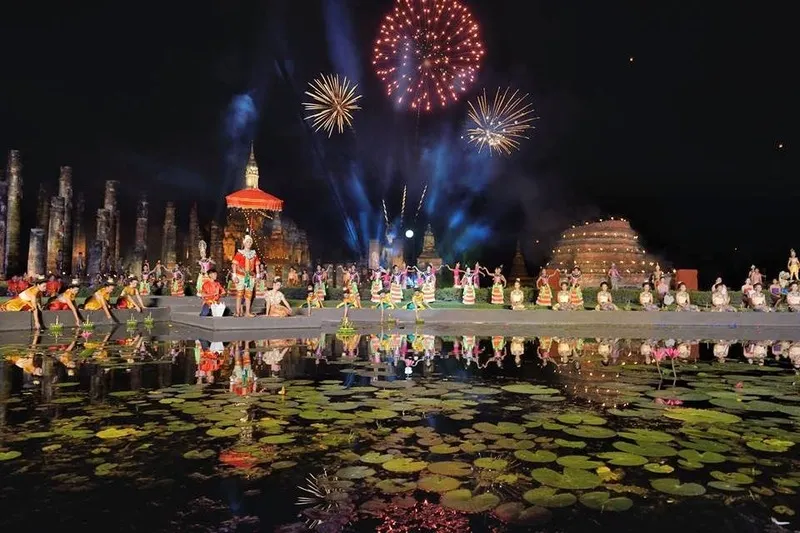
Open Days: Held annually around the full moon of the 12th lunar month
Opening Hours: Activities take place during both daytime and evening hours; visitors should check the annual schedule before traveling
The Sukhothai Loi Krathong and Candle Festival, known in Thai as “Loi Krathong Phao Thian Len Fai,” is one of Thailand’s most culturally significant and visually impressive annual festivals. Held around the full moon of the 12th lunar month, the festival takes place mainly at Sukhothai Historical Park in Mueang Kao Subdistrict, Mueang Sukhothai District, Sukhothai Province. This location gives the event an exceptional historical atmosphere, because visitors are not simply attending a festival; they are walking through the ancient capital where the memory of early Thai civilization, Buddhist devotion, water culture, craftsmanship, and firelight come together in a single unforgettable experience.
TL;DR: The Sukhothai Loi Krathong and Candle Festival is Thailand’s most iconic historical Loi Krathong celebration. It is held at Sukhothai Historical Park, a former royal capital and one of the country’s most important heritage sites. The festival is associated with the full moon of the 12th lunar month and was formally revived in 1977 as a major cultural event. Highlights include floating krathongs, candlelit ancient monuments, light and sound performances, processions, traditional games, handmade krathongs, floral offerings, lanterns, Sukhothai-style fireworks, and a deeply symbolic act of gratitude and apology to water sources.
The importance of the Sukhothai Loi Krathong and Candle Festival lies not only in its beauty, but also in its historical depth. Sukhothai is widely remembered as one of the earliest centers of Thai civilization. The city played an important role in the development of Thai political culture, language, Buddhism, art, urban planning, and community life. Because the festival takes place among real ancient monuments, moats, ponds, temples, stupas, and Buddha images, it feels very different from a modern city festival. The setting itself becomes part of the ceremony, allowing visitors to experience the past through light, water, music, ritual, and movement.
Historical memory connects Sukhothai with the tradition of candle lighting and festive illumination. The famous inscription known as King Ramkhamhaeng Inscription, or Stone Inscription No. 1, includes a passage describing crowds gathering in Sukhothai to see the candle lighting and fire-playing festivities. This reference has become central to the identity of the modern event. The Thai phrase “Phao Thian Len Fai,” meaning “burning candles and playing with fire,” gives the Sukhothai celebration its unique name and distinguishes it from other Loi Krathong festivals across Thailand.
Loi Krathong itself carries multiple layers of meaning. At its most familiar level, people create small floating vessels called krathongs and release them onto water as an act of gratitude. Water is essential to agriculture, travel, food, ritual life, and daily living in Thailand. Floating a krathong is therefore a symbolic way to thank water sources and to ask forgiveness for any pollution or careless use of water throughout the year. For many people, the act also represents letting go of misfortune, sadness, or negative thoughts and making a quiet wish for renewal.
In Buddhist belief, the floating of krathongs is also associated with paying respect to the Buddha’s footprint, especially the sacred footprint believed to be located on the sandy bank of the Nammada River. This religious layer gives the festival a devotional quality. For this reason, Loi Krathong is not simply a romantic night by the water, although it is often visually romantic. It is a cultural and spiritual act that brings together gratitude, apology, merit-making, memory, and personal reflection under the full moon.
The “candle” and “fire” elements make the Sukhothai festival especially distinctive. Candles, oil lamps, lanterns, and terracotta lamps are placed around ancient stupas, temple walls, lotus ponds, walkways, and ceremonial areas. When night falls, thousands of small lights transform the archaeological park into a glowing historical landscape. The flames reflected on the water create an atmosphere that is peaceful, sacred, and cinematic. This use of light is not merely decorative; it reflects Buddhist offering, royal memory, and the old practice of illuminating the city during auspicious festivals.
The festival’s modern revival began in 1977, when Sukhothai Province, the Fine Arts Department, and tourism-related agencies worked together to restore and organize the tradition under the name “Loi Krathong Phao Thian Len Fai.” This revival helped bring the historical atmosphere of Sukhothai back to public attention. Since then, the festival has become one of Thailand’s most famous cultural events, attracting both Thai and international visitors who want to experience Loi Krathong in a setting closely connected with the origin stories and historical memory of the tradition.
One of the festival’s most meaningful activities is the making of krathongs and traditional ceremonial offerings. Visitors can see or learn about handmade krathongs, phanom bia, phanom mak, phanom dokmai, hanging lanterns, and pulling lanterns. These objects reflect Thai craftsmanship and the culture of offering. A krathong is usually made from natural materials such as banana leaves, banana trunk, flowers, incense, and candles. Phanom mak and phanom dokmai show the refined artistry of Thai ceremonial presentation, while lanterns add vertical layers of light to the festival space.
Another major highlight is the decoration of ancient monuments and ponds with countless lamps and candles. The lights are placed carefully around stupas, ruins, temple platforms, pathways, and water features known as traphang. During the day, Sukhothai Historical Park is a serene archaeological landscape. At night during the festival, the same space becomes a luminous city of memory. The sight of ancient brick structures glowing under candlelight is one of the most iconic images of Sukhothai and one of the reasons many travelers consider this the most atmospheric place in Thailand to celebrate Loi Krathong.
Processions from different districts of Sukhothai add community identity and local creativity to the festival. These processions often include decorated floats, traditional costumes, music, dance, local stories, and symbols from each district. They are important because they show that Sukhothai is not only an archaeological site but also a living province with active communities. The festival allows local people to present their heritage, pride, and artistic skills to visitors from across Thailand and around the world.
Traditional games and folk performances also help preserve the social spirit of the festival. These activities give younger generations and foreign visitors a chance to see forms of entertainment that were part of older Thai community life. Instead of relying only on modern concerts or commercial entertainment, the Sukhothai event keeps local play, folk culture, dance, music, and craft demonstrations visible. This makes the festival educational as well as enjoyable.
Fireworks, talai, fai phaniang, and Sukhothai-style pyrotechnic displays complete the meaning of “playing with fire.” These displays are designed to create excitement and visual drama, but in the Sukhothai setting they also function as historical storytelling. Light and sound performances often use the actual monuments as a backdrop to narrate the story of ancient Sukhothai, its kings, its people, its beliefs, and its prosperity. For international travelers, these performances can be one of the easiest ways to understand Thai history through spectacle, movement, music, and atmosphere rather than through text alone.
The central ritual remains the floating of krathongs. People carry their decorated krathongs to the water, light the candle and incense, make a wish, and gently release the vessel onto the surface. Some people pray for good fortune, some let go of sorrow, and some simply give thanks to nature. The emotional power of this moment comes from its simplicity. A small flame floating on water becomes a personal symbol, while thousands of similar lights together create a collective act of beauty and reverence.
Food and local markets are also important parts of the festival experience. Visitors can enjoy Sukhothai noodles, Thai desserts, local snacks, handmade products, and traditional-style market zones. These areas help connect the festival with everyday local culture. Walking through the market with the scent of food, the sound of Thai music, the glow of lanterns, and the silhouette of ancient monuments nearby creates a complete sensory experience that is difficult to find elsewhere.
The location inside Sukhothai Historical Park makes the festival especially attractive for travelers who are interested in heritage. Important places within or near the park include Wat Mahathat, Wat Sa Si, Wat Si Sawai, Wat Traphang Ngoen, Wat Traphang Thong, the King Ramkhamhaeng Monument, and Ramkhamhaeng National Museum. Many visitors spend the daytime exploring the park by bicycle or on foot, then stay into the evening for the festival lights and performances. This combination of daytime heritage travel and nighttime cultural celebration is one of the best ways to experience Sukhothai.
Getting There is straightforward from Sukhothai town. Sukhothai Historical Park is located in Mueang Kao, about 12 km from the modern town center. Travelers can use a private car, rental car, local songthaew, taxi, or hired vehicle from Sukhothai Bus Terminal. Those traveling from Bangkok can reach Sukhothai by long-distance bus or by flying to Sukhothai Airport and continuing by road. During the festival period, accommodation should be booked early because rooms near the historical park are often in high demand.
Visitors should wear comfortable shoes because the festival area is large and involves a lot of walking. Modest clothing is recommended because the event takes place among temples and sacred historical sites. Travelers should avoid climbing on ancient monuments, placing personal belongings on ruins, or touching fragile structures. Using biodegradable krathongs made from natural materials is strongly recommended so that the beauty of the tradition does not harm the environment it is meant to honor.
For foreign travelers, the Sukhothai Loi Krathong and Candle Festival is one of the best introductions to Thai culture. It brings together Buddhism, gratitude to water, historical memory, ancient architecture, folk performance, craftsmanship, food, firelight, and community participation. It is visually stunning, but its real value lies in the meaning behind the beauty. Every candle, krathong, procession, and illuminated ruin helps explain how Thai culture connects nature, faith, art, and memory.
From a heritage perspective, the festival gives new life to Sukhothai’s ancient monuments. The ruins are not treated as silent remains of the past; they become part of a living cultural landscape. This requires careful management by the relevant authorities to balance tourism, conservation, and public participation. When done well, the festival shows how a historical site can remain meaningful to modern society while preserving respect for the past.
The Sukhothai Loi Krathong and Candle Festival is therefore much more than an annual event. It is a living expression of Thai cultural memory, a tribute to water, a celebration of light, and a bridge between ancient Sukhothai and the present day. For anyone seeking the most historically meaningful place to experience Loi Krathong in Thailand, Sukhothai is one of the strongest choices. The combination of full moon, candlelight, ancient temples, floating krathongs, and local devotion creates a festival that is both spectacular and deeply moving.
| Name | Sukhothai Loi Krathong and Candle Festival |
| Location | Sukhothai Historical Park, Mueang Kao Subdistrict, Mueang Sukhothai District, Sukhothai Province |
| Address | Mueang Kao Subdistrict, Mueang Sukhothai District, Sukhothai 64210, Thailand |
| Coordinates | 17.01930, 99.70325 |
| Festival Period | Around the full moon of the 12th lunar month every year; the official event period may extend across several days depending on the annual announcement |
| 2026 Event Dates | 15-24 November 2026 |
| Highlights | Floating krathongs in a World Heritage atmosphere, candlelit ancient monuments, light and sound performances, processions, handmade krathongs, floral offerings, lanterns, Sukhothai-style fireworks, and traditional fire displays |
| History | Associated with Sukhothai’s historical memory for more than 700 years and formally revived as a major cultural festival in 1977 |
| Key Evidence | Stone Inscription No. 1 refers to people gathering in Sukhothai to watch candle lighting and fire-playing festivities |
| Name Origin | The name combines Loi Krathong, the floating of decorated vessels, with Phao Thian Len Fai, the lighting of candles and fire displays associated with Sukhothai |
| Distinctive Features | A Loi Krathong celebration held among real ancient monuments, creating a historic and atmospheric festival setting |
| Main Activities | Making krathongs, phanom bia, phanom mak, phanom dokmai, hanging lanterns and pulling lanterns; candle decoration; processions; folk performances; fireworks; talai; fai phaniang; and floating krathongs to honor the Buddha’s footprint and give thanks to water sources |
| Travel Information | The historical park is about 12 km from Sukhothai town and can be reached by private car, rental car, local songthaew, taxi, or hired vehicle from Sukhothai Bus Terminal |
| Current Status | An annual provincial festival and one of Thailand’s most important Loi Krathong celebrations |
| Caretaker / Related Authorities | Sukhothai Province, Sukhothai Historical Park, Fine Arts Department, local administrative organizations, and tourism-related agencies |
| Main Contact Number | Sukhothai Historical Park, Tel. 055-697527 |
| Nearby Tourist Attractions | 1. Wat Mahathat, about 0.2 km 2. King Ramkhamhaeng Monument, about 0.4 km 3. Ramkhamhaeng National Museum, about 0.6 km 4. Wat Traphang Thong, about 0.8 km 5. Wat Si Sawai, about 1 km 6. Wat Sa Si, about 1 km 7. Wat Si Chum, about 2 km |
| Nearby Restaurants | 1. Chanda's Historical Garden Restaurant, about 0.3 km, Tel. 092-993-3408 2. Sureerat Restaurant, about 0.5 km, Tel. 055-633-323 3. Cafe Thammada, about 0.6 km, Tel. 084-931-9299 4. Say Hi Cafe, about 0.4 km 5. Som Tam Pa Long, about 0.4 km 6. Som Tam Mai Ngam, about 0.4 km |
| Nearby Accommodations | 1. Wake Up at Muang Kao Boutique Hotel, about 0.6 km, Tel. 062-419-6924 2. Sukhothai Garden, about 1 km, Tel. 084-751-1533 3. Thai Thai Sukhothai Resort, about 1.5 km, Tel. 084-932-1006 4. Sriwilai Sukhothai Resort & Spa, about 2 km, Tel. 094-194-4122 5. Le Charme Sukhothai Historical Park Resort, about 2 km, Tel. 055-633-333 |
Frequently Asked Questions (FAQ)
Q: When is the Sukhothai Loi Krathong and Candle Festival held?
A: It is held around the full moon of the 12th lunar month every year. The official event period may extend for several days and should be checked before traveling.
Q: Where does the festival take place?
A: The main venue is Sukhothai Historical Park in Mueang Kao Subdistrict, Mueang Sukhothai District, Sukhothai Province.
Q: Why is the Sukhothai Loi Krathong Festival important?
A: It is connected with Sukhothai’s historical memory, Buddhist devotion, gratitude to water, and the tradition of candle lighting and fire displays described in early Sukhothai cultural references.
Q: What are the main highlights of the festival?
A: Highlights include floating krathongs, candlelit ruins, light and sound performances, processions, folk games, handmade offerings, lanterns, Sukhothai-style fireworks, and traditional markets.
Q: How many days should visitors spend at the festival?
A: One to two days is recommended, allowing time to explore the historical park during the day and enjoy the festival activities in the evening.
Q: Is the festival suitable for foreign travelers?
A: Yes. It is one of the best cultural festivals in Thailand for foreign travelers because it combines history, Buddhism, traditional crafts, local food, firelight, water rituals, and ancient monuments in one setting.
Q: How can visitors get to Sukhothai Historical Park?
A: The park is about 12 km from Sukhothai town. Visitors can travel by private car, rental car, local songthaew, taxi, or hired vehicle from Sukhothai Bus Terminal.
Q: What should visitors prepare before attending the festival?
A: Visitors should book accommodation early, wear comfortable shoes, dress respectfully, check the annual schedule, and use biodegradable krathongs made from natural materials.
 Category: ●Art, Culture and Heritage
 Group: ●Art, Craft Centres, Tradition
Last Update : 4 MonthAgo
 Last Update : 4 MonthAgo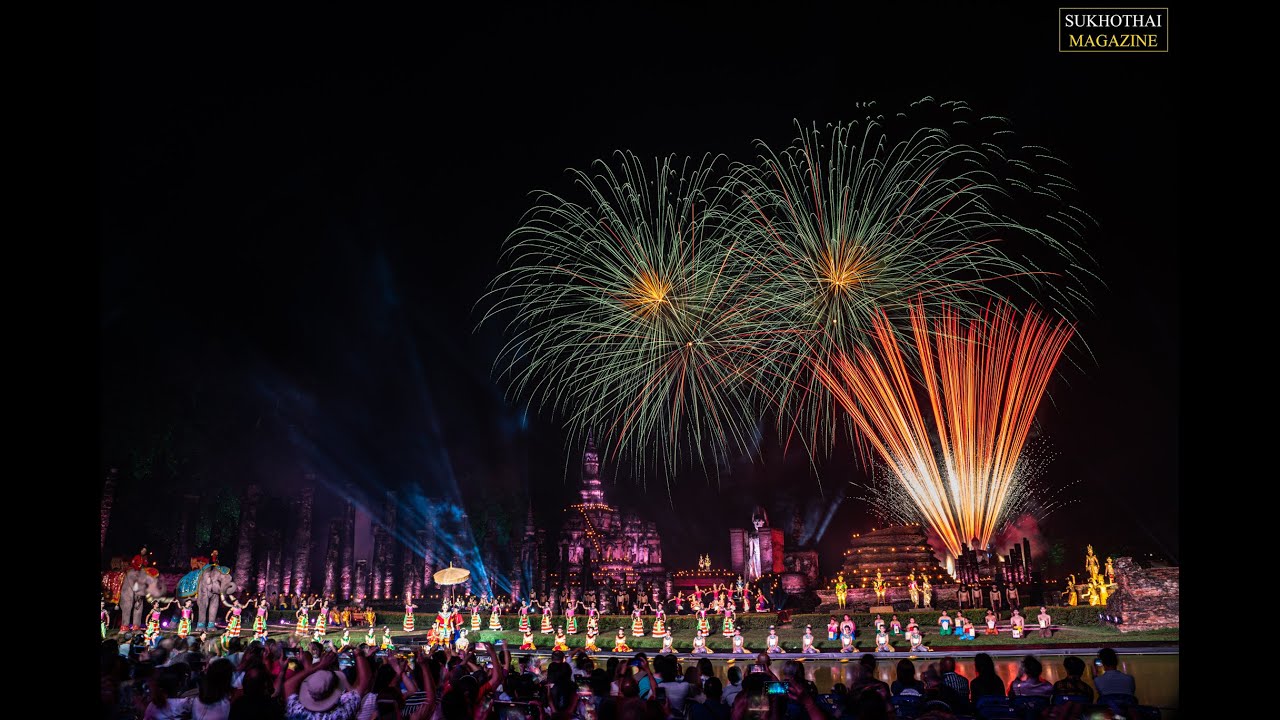

 Historical Sites and Monuments(4)
 Landmarks and Memorials(5)
Art, Craft Centres, Tradition(11)
Landmarks and Memorials(5)
Art, Craft Centres, Tradition(11)
 Museums(5)
 Places of Worship
 Temple(40)
 Other Sacred Sites(10)
 Suburban Living
 Village, Community(3)
 Nature and Wildlife
 National Parks and Marine Reserves(3)
 Mountain (Doi)(2)
 Dam, Reservoir, Lake(4)
 Waterfalls(8)
 Caves(4)
 River, Canal(2)
 Entertainment and Agricultural
 Farms, Parks and Ecotourism(3)


