
lovethailand home >North Travel Attractions >Sukhothai Travel Attractions >Si Sat Chana Lai >Si Sat Chana Lai > Si Satchanalai Historical Park
TL;DR: Si Satchanalai Historical Park is located at Mueang Kao Subdistrict, Si Satchanalai District, Sukhothai Province, in the Kaeng Luang area, covering parts of Si Satchanalai, Sarachit, open Daily, hours 08.30 – 16.30.
Si Satchanalai Historical Park
Open Days: Daily
Opening Hours: 08.30 – 16.30
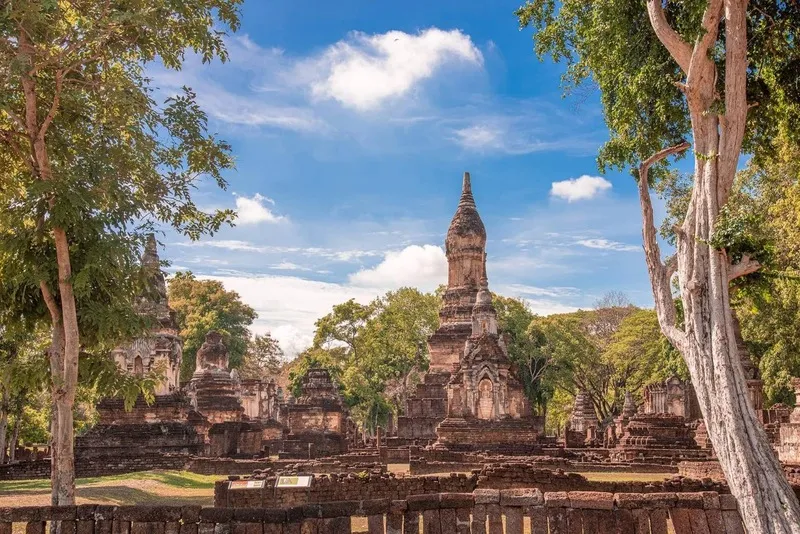
Si Satchanalai Historical Park is one of the most important cultural heritage destinations in Sukhothai Province and an essential place for understanding the wider civilization of the Sukhothai Kingdom. While Sukhothai Historical Park represents the ancient capital, Si Satchanalai reveals another major city that played a vital role in religion, art, urban development, ceramic production, trade, and regional history. The park preserves many ancient monuments in a calm natural setting, with laterite ruins, forested paths, hills, and the Yom River creating an atmosphere that feels quieter and more contemplative than many other historical sites in Thailand.
The park is located in Mueang Kao Subdistrict, Si Satchanalai District, Sukhothai Province, in the area known as Kaeng Luang. The ancient city covers parts of Si Satchanalai, Sarachit, Nong O, and Tha Chai subdistricts, with the old city area centered around Ban Phra Prang. The historical landscape covers approximately 45.14 square kilometers and contains a large number of archaeological sites and objects. The city was originally known as Chaliang before it developed into Si Satchanalai during the period of the Phra Ruang dynasty, when Sukhothai rose as a powerful kingdom.
Si Satchanalai was not merely a secondary town. It was a strategically and culturally important city within the Sukhothai world. Its location along the Yom River and near mountain landscapes made it suitable for settlement, trade, defense, religion, and craft production. The city also became strongly associated with Sangkhalok ceramics, one of the most famous craft traditions of ancient Thailand. This combination of temples, city planning, river culture, mountain temples, and ceramic production makes Si Satchanalai a rich and multi-layered destination.
Visitors entering Si Satchanalai Historical Park will notice a different atmosphere from Sukhothai Historical Park. Si Satchanalai feels more forested, quieter, and closely connected to its natural surroundings. Many monuments are surrounded by trees, laterite walls, soft walking paths, and shaded areas. This makes the park especially suitable for slow exploration by bicycle, walking, or tram. Its beauty is not only monumental but also atmospheric. The ruins seem to belong naturally to the land, creating a strong sense of time and continuity.
Si Satchanalai Historical Park forms part of the UNESCO World Heritage property Historic Town of Sukhothai and Associated Historic Towns, together with Sukhothai Historical Park and Kamphaeng Phet Historical Park. The value of the park lies in its evidence of ancient urban planning, Buddhist architecture, Sukhothai and later artistic styles, and long-term cultural development. The site shows influences from Khmer, Sri Lankan, Mon, Sukhothai, and Ayutthaya traditions, all adapted into a distinctive local heritage landscape.
One of the most important monuments associated with the area is Wat Phra Si Rattana Mahathat Chaliang, also known as Wat Phra Borommathat Mueang Chaliang or Wat Phra Prang. Located outside the old city walls to the southeast, this large temple complex is one of the most historically significant sites in the region. Its main laterite prang, covered with plaster, reflects architectural development that continued into the Ayutthaya period. Inside the prang are traces of wall paintings, while in front of it stands a large Buddha image in the subduing Mara posture. Nearby is an elegant walking Buddha image in stucco.
Wat Phra Si Rattana Mahathat Chaliang contains many important artistic and architectural details. Its enclosure wall is made of large laterite blocks and rounded stones arranged into a rectangular plan. Above the gateway is a roof-like superstructure, and above that appears a stucco face associated with Avalokitesvara imagery. These details show that the site was shaped by multiple artistic and religious influences over a long period. For travelers, this temple is essential for understanding the transition from Chaliang to Si Satchanalai.
Behind the main prang is Phra That Mutao, a Mon-style stupa. During archaeological work in 1992, gilded metal decoration was found at the upper part of the stupa. Behind it stands the mandapa of Phra Attharot, which may originally have been connected with a four-posture Buddha concept and was later modified. The area also includes the Wihan Phra Song Phi Nong, with 2 stucco Buddha images on the same base, and archaeological evidence showing that later structures were built over earlier brick remains. This complexity makes the temple a layered sacred landscape rather than a single-period monument.
Inside the old city walls, Wat Chang Lom is one of the most iconic sites of Si Satchanalai. It stands on the southern foothill of Khao Phanom Phloeng. The temple’s main monument is a Sri Lankan-style bell-shaped stupa set on a square circumambulatory base. Around the base are 39 stucco elephants standing with their backs against the wall. The corner elephants are especially elaborate, decorated as ceremonial elephants. The image of elephants supporting the stupa expresses strength, stability, Buddhist symbolism, and royal-cultural meaning.
The beauty of Wat Chang Lom lies not only in its elephant sculptures. The whole architectural composition is impressive: the staircase leading up to the circumambulatory platform, Buddha niches, the remaining sculptural details, the bell-shaped stupa, and the decorative figures around the upper structure. The temple clearly reflects the influence of Sri Lankan Buddhist architecture and the skill of Sukhothai craftsmen. It is one of the best places in the park for photography and art-historical observation.
In front of Wat Chang Lom stands Wat Chedi Chet Thaeo, one of the most beautiful temple complexes in Si Satchanalai. Its name refers to the many rows of chedis within the enclosure. The main stupa is a lotus-bud form, a classic feature of Sukhothai art, while the surrounding smaller monuments display a variety of architectural styles. The temple is often associated with royal remains or the memory of the Sukhothai royal family, giving it both artistic and symbolic importance. For visitors interested in temple layouts and stupa forms, this is one of the richest sites in the park.
Wat Nang Phaya is another site that should not be missed. It is famous for its delicate stucco decoration on the wall of the assembly hall, including floral motifs, kneeling celestial figures, and lively figures often described as half-human and half-monkey. These decorative elements reflect the refinement of early Ayutthaya-period stucco art blended with local Si Satchanalai traditions. The temple is particularly important for visitors interested in decorative art, craftsmanship, and the transition of styles between the Sukhothai and Ayutthaya periods.
Wat Khao Phanom Phloeng is located on the summit of Khao Phanom Phloeng inside the city walls. The temple includes a round main stupa and a laterite mandapa on a raised square base. Local people refer to the mandapa as the shrine of Chao Mae La-ong Samli. The temple can be reached by stairways from 2 directions, with rest shelters along the way. Reaching the top allows visitors to experience the relationship between religious monuments, high ground, and the old city landscape.
Wat Khao Suwan Khiri stands on another hill about 200 meters west of Khao Phanom Phloeng. Its main monument is a large round laterite stupa on a multi-tiered base used as a circumambulatory platform. The upper part includes walking Buddha images around the central shaft, similar in concept to Wat Chang Lom. The hilltop location gives the temple a peaceful and elevated atmosphere, making it especially rewarding for travelers who want to understand how ancient sacred spaces were integrated with natural geography.
Wat Suan Kaeo Utthayan Yai and Wat Suan Kaeo Utthayan Noi show the diversity of religious monuments within the old city. Wat Suan Kaeo Utthayan Yai has a round laterite main stupa and an assembly hall, while Wat Suan Kaeo Utthayan Noi, also known as Wat Sa Kaeo, has a lotus-bud stupa and a mandapa with a Buddha image. These medium-sized temples help visitors understand that Si Satchanalai was not defined only by its most famous monuments but by a wider network of temples serving the religious life of the city.
Wat Chom Chuen, located by the Yom River about 400 meters from Wat Phra Si Rattana Mahathat, is highly important archaeologically. Excavations uncovered 15 human skeletons at a depth of 7 to 8 meters, with evidence dating from around the 9th Buddhist century through the Dvaravati period and later into the Sukhothai period. Many Chaliang wares were also found. These discoveries show that the area had a long history of settlement before the full rise of Sukhothai and Si Satchanalai as major historical cities.
Wat Chom Chuen helps travelers understand the deep cultural layers of the area. The site includes a round laterite stupa, a front assembly hall, and a rear mandapa with a solid-room-like form and a pointed laterite roof. Its location near the Yom River reinforces the importance of riverside settlement in the development of Chaliang and Si Satchanalai. Visiting this temple together with Wat Phra Si Rattana Mahathat Chaliang gives a clearer understanding of the older historical foundation of the city.
Beyond temples, Si Satchanalai is also closely linked to Sangkhalok ceramic production. The Ban Ko Noi kiln area and the Thuriang kilns are not far from the historical park. These kiln sites show that Si Satchanalai was not only a religious and political center but also a major craft-production zone. Sangkhalok ceramics from this region reflect technical skill, kiln control, glazing knowledge, and wide trade connections. Including the kiln area in a Si Satchanalai itinerary makes the historical experience more complete.
A good visit to Si Satchanalai Historical Park should include the main temples inside the walls, the Chaliang group, the hill temples, and the kiln-related sites if time allows. A half-day visit can focus on Wat Chang Lom, Wat Chedi Chet Thaeo, Wat Nang Phaya, and Wat Khao Phanom Phloeng. A full-day visit should add Wat Phra Si Rattana Mahathat Chaliang, Wat Chom Chuen, and the Sangkhalok Kiln Study and Conservation Centre at Ban Ko Noi. This route shows the city’s religious, urban, riverside, and craft dimensions.
One of the best ways to explore the park is by bicycle. The area is broad, shaded in many places, and suitable for slow movement between monuments. Cycling allows visitors to stop for photographs, read information signs, rest under trees, and appreciate the atmosphere of the old city. For travelers who prefer convenience, tram services are also available and are useful for families, elderly visitors, or those who want an overview of the park without too much walking.
The best time to visit is early morning or late afternoon. The weather is more comfortable, and natural light enhances the texture of laterite, brick, stucco, and forest surroundings. Morning is excellent for visiting Wat Chang Lom and Wat Chedi Chet Thaeo, while late afternoon is suitable for photography around Wat Nang Phaya and other atmospheric ruins. During the rainy season or after rainfall, the park becomes especially green and peaceful.
Getting There from Sukhothai town is straightforward by road. Travelers can take Highway No. 101 on the Sukhothai-Sawankhalok-Si Satchanalai route, then turn toward the historical park after crossing the Yom River. The total distance from Sukhothai town is about 68 kilometers. Public buses on the Sukhothai-Uttaradit or Sukhothai-Chiang Rai routes can drop passengers near the road junction to the park, but travelers who want to visit several sites in one day will find a private car, rental car, or hired vehicle more convenient.
Visitors should prepare for an outdoor heritage landscape. A hat, drinking water, comfortable shoes, sun protection, and a camera are useful. Those cycling should check the bicycle before starting and ride carefully within the archaeological zone. Visitors should not climb on monuments, touch fragile stucco, write on laterite blocks, or disturb archaeological remains. These monuments are irreplaceable cultural heritage and should be treated with respect.
For international travelers, Si Satchanalai Historical Park provides a broader understanding of the Sukhothai civilization. It shows that the Sukhothai world was not limited to one capital city. It included important related cities with religious, artistic, economic, and craft functions. Visiting Si Satchanalai reveals the relationship between old cities, the Yom River, hill temples, Buddhist art, ceramic production, and local communities. This makes it one of the most rewarding heritage destinations in northern Thailand.
The park also supports the local economy today. Heritage tourism benefits restaurants, accommodations, local transport, tram services, bicycle rentals, craft shops, and community businesses. Responsible travel helps sustain both conservation and local livelihoods. Si Satchanalai is therefore not only a preserved historical zone but also a living cultural landscape where local communities continue to benefit from and care for their heritage.
Si Satchanalai Historical Park is a destination for travelers who want history with depth, atmosphere, and quiet beauty. It includes Wat Phra Si Rattana Mahathat Chaliang with its layered sacred history, Wat Chang Lom with its elephant-supported stupa, Wat Chedi Chet Thaeo with its diverse stupa forms, Wat Nang Phaya with delicate stucco work, hill temples such as Wat Khao Phanom Phloeng and Wat Khao Suwan Khiri, and Wat Chom Chuen with evidence of ancient riverside settlement. Together, these places form an open-air textbook of Thai history, art, architecture, and cultural memory.
Anyone visiting Sukhothai Province and wishing to understand its World Heritage landscape should include Si Satchanalai Historical Park in the itinerary. Its calm environment, laterite monuments, diverse temples, hilltop ruins, Yom River setting, and links to Sangkhalok ceramics reveal a side of Sukhothai heritage that is quieter but deeply powerful. A visit here offers not only beautiful scenery and historical knowledge, but also a strong sense of connection with Thailand’s ancient cultural roots.
| Name | Si Satchanalai Historical Park |
| Location | Mueang Kao Subdistrict, Si Satchanalai District, Sukhothai Province, in the Kaeng Luang area, covering parts of Si Satchanalai, Sarachit, Nong O, and Tha Chai subdistricts |
| Address | Si Satchanalai Historical Park, Si Satchanalai District, Sukhothai 64130 |
| Coordinates | 17.4289, 99.7886 |
| Highlights | Important ancient city of the Sukhothai Kingdom with Wat Chang Lom, Wat Chedi Chet Thaeo, Wat Nang Phaya, Wat Khao Phanom Phloeng, Wat Khao Suwan Khiri, Wat Chom Chuen, and Wat Phra Si Rattana Mahathat Chaliang |
| History | Formerly known as Chaliang and later developed into Si Satchanalai during the Phra Ruang dynasty; an important city of the Sukhothai Kingdom and part of a UNESCO World Heritage cultural property |
| Name Origin | The name Si Satchanalai refers to the important Sukhothai-period city that developed from the older city of Chaliang and became a major religious, artistic, and administrative center |
| Distinctive Features | Laterite monuments in a forested setting, Sri Lankan-style stupas, lotus-bud stupas, stucco decoration, hill temples, and historic riverside settlement along the Yom River |
| Key Evidence | Numerous monuments and archaeological objects, Wat Chang Lom, Wat Chedi Chet Thaeo, Wat Nang Phaya, Wat Chom Chuen, Chaliang wares, Sangkhalok kilns, and evidence of long-term settlement |
| Travel Information | From Sukhothai town, take Highway No. 101 on the Sukhothai-Sawankhalok-Si Satchanalai route, then turn toward the park after crossing the Yom River; total distance is about 68 km |
| Current Status | Open as a historical park and UNESCO World Heritage cultural site under the Fine Arts Department of Thailand |
| Open Days | Daily |
| Opening Hours | 08.30 – 16.30 |
| Fees | Thai nationals 20 THB, other nationalities 100 THB, with additional fees for vehicles or guided transport according to park rates |
| Facilities | Visitor center, parking area, restrooms, tram service, bicycle routes, interpretive signs, and rest areas inside the park |
| Main Areas / Zones | Central ancient city zone, Chaliang temple group, hill temple group, Yom River temple group, and areas connected with the Ban Ko Noi Sangkhalok kiln sites |
| Caretaker | The Fine Arts Department, Ministry of Culture / Si Satchanalai Historical Park Office |
| Main Contact Number | Si Satchanalai Historical Park Tel. 055-950-714 |
| Official Website / Official Page | finearts.go.th/sisatchanalaihistoricalpark |
| Nearby Tourist Attractions | 1. Wat Phra Si Rattana Mahathat Chaliang, about 3 km 2. Wat Chom Chuen, about 3.5 km 3. Sangkhalok Kiln Study and Conservation Centre, Ban Ko Noi, about 7 km 4. Kaeng Luang Si Satchanalai, about 1 km 5. Sawankhaworanayok National Museum, about 35 km 6. Sukhothai Historical Park, about 68 km |
| Nearby Restaurants | 1. Local restaurants near the park entrance, about 1 km 2. Restaurants and cafes in Si Satchanalai area, about 3 km 3. Restaurants in Hat Siao area, about 18 km 4. Local restaurants along Highway No. 101, about 5 km 5. Restaurants in Si Satchanalai District town, about 11 km |
| Nearby Accommodations | 1. Sisatchanalai Heritage Resort, about 1 km 2. Navy Sisatchanalai, about 3 km, Tel. 091-028-3253 3. Smile Loft Resort Hat Siao, about 18 km, Tel. 055-672-456, 086-449-7500 4. Downhill Resort, about 20 km 5. Accommodations in Si Satchanalai District town, about 11 km |
Frequently Asked Questions (FAQ)
Q: Where is Si Satchanalai Historical Park located?
A: Si Satchanalai Historical Park is located in Mueang Kao Subdistrict, Si Satchanalai District, Sukhothai Province, about 68 km from Sukhothai town.
Q: What are the opening hours of Si Satchanalai Historical Park?
A: The park is open daily from 08.30 to 16.30. Morning and late afternoon are the best times for walking, cycling, and photography.
Q: Is there an entrance fee for Si Satchanalai Historical Park?
A: Yes. Admission is 20 THB for Thai nationals and 100 THB for other nationalities, with additional fees for vehicles or guided transport according to park rates.
Q: Which temples should not be missed in Si Satchanalai Historical Park?
A: Key sites include Wat Chang Lom, Wat Chedi Chet Thaeo, Wat Nang Phaya, Wat Khao Phanom Phloeng, Wat Khao Suwan Khiri, Wat Chom Chuen, and Wat Phra Si Rattana Mahathat Chaliang.
Q: How much time should visitors spend at Si Satchanalai Historical Park?
A: A half-day is enough for the main zone, but a full day is recommended if visitors want to include the Chaliang group, hill temples, and Sangkhalok kiln sites.
Q: Should visitors walk, cycle, or take the tram?
A: Cycling is ideal for visitors who want a close and relaxed experience, while the tram is convenient for families, elderly visitors, or travelers who want an overview of the park.
Q: Why is Si Satchanalai Historical Park part of a UNESCO World Heritage property?
A: It is part of the Historic Town of Sukhothai and Associated Historic Towns, recognized for its outstanding evidence of Sukhothai-period urban planning, Buddhist art, architecture, and cultural development.
Q: What nearby places can be visited with Si Satchanalai Historical Park?
A: Visitors can combine the park with Wat Phra Si Rattana Mahathat Chaliang, Wat Chom Chuen, the Sangkhalok Kiln Study and Conservation Centre at Ban Ko Noi, Kaeng Luang, and Sukhothai Historical Park.
Tel : 055679211
 Tel : 055679211
 Category: ●Art, Culture and Heritage
 Group: ●Historical Sites and Monuments
Last Update : 4 MonthAgo
 Last Update : 4 MonthAgo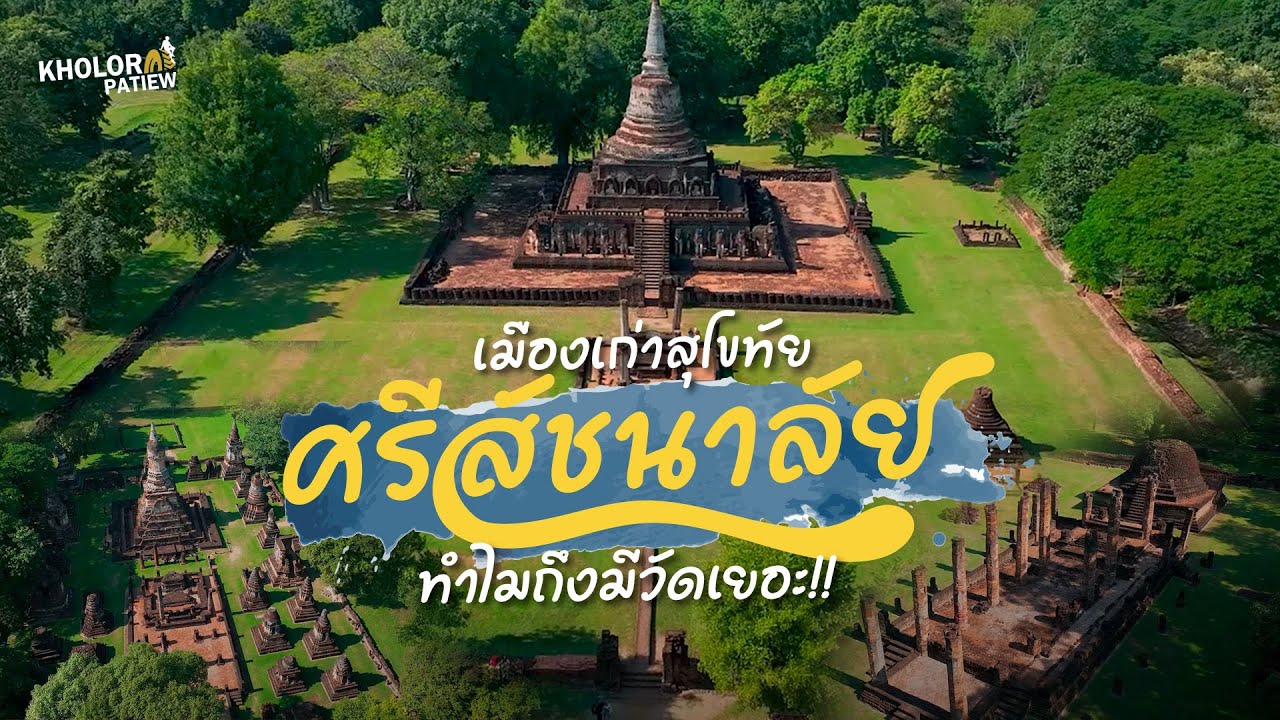
 Click to Access the Navigation Map GPS
Si Satchanalai Historical Park Map
Gellery
Recommend
 Historical Sites and Monuments(4)
 Landmarks and Memorials(5)
 Art, Craft Centres, Tradition(11)
 Museums(5)
 Places of Worship
 Temple(40)
 Other Sacred Sites(10)
 Suburban Living
 Village, Community(3)
 Nature and Wildlife
 National Parks and Marine Reserves(3)
 Mountain (Doi)(2)
 Dam, Reservoir, Lake(4)
 Waterfalls(8)
 Caves(4)
 River, Canal(2)
 Entertainment and Agricultural
 Farms, Parks and Ecotourism(3)
 Travel Articles, Recipes
 Travel Review, Food Review(1)


