
lovethailand home >North Travel Attractions >Sukhothai Travel Attractions >Khiri Mat >Thung Luang > Ban Thung Luang
TL;DR: Ban Thung Luang is located at Thung Luang Subdistrict, Khiri Mat District, Sukhothai Province, open Daily, hours Daytime.

Ban Thung Luang
Open Days: Daily
Opening Hours: Daytime
Ban Thung Luang in Thung Luang Subdistrict, Khiri Mat District, Sukhothai Province, is one of the most important pottery villages in Sukhothai. Located about 17 km from Sukhothai town, the village is widely known for its unglazed earthenware pottery, a craft that has been passed down through generations. For travelers interested in Thai handicrafts, community-based tourism, and living local wisdom, Ban Thung Luang offers a rare chance to see pottery-making not as a museum display, but as a way of life still practiced by real families in a working village.
In simple terms, Ban Thung Luang is a living pottery community where many households continue to make earthenware products from local clay. The pottery is traditionally unglazed and turns a natural reddish color after firing. Visitors can see pottery displayed in front of homes, observe the working atmosphere of local artisans, learn how clay is prepared and shaped, and buy handmade products directly from the community. This makes Ban Thung Luang both a craft village and a cultural learning destination.
The village is located in Thung Luang Subdistrict, Khiri Mat District, Sukhothai 64160. It is close enough to Sukhothai town for a half-day visit, yet different enough to show another side of the province. While many travelers associate Sukhothai mainly with ancient temples and historical parks, Ban Thung Luang reveals the everyday creativity of local people. The village shows how soil, agriculture, craftsmanship, and family knowledge have shaped a distinctive local identity.
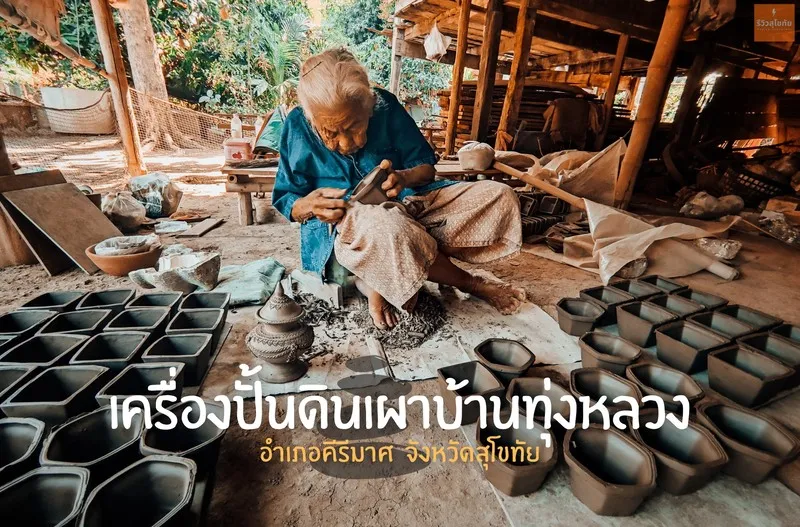
The most memorable feature of Ban Thung Luang is that pottery is part of the village landscape. Many homes are also small production spaces. Under the raised floors of houses or in work areas near the home, local artisans prepare clay, shape pottery, dry products, decorate surfaces, and prepare items for firing. Visitors may see pots, jars, garden ornaments, lamps, planters, and decorative figures placed in front of houses. The whole village feels like an open craft workshop.
The history of pottery in Ban Thung Luang goes back more than a century. In the past, villagers first made practical household items such as cooking pots, clay stoves, pans, and water jars. These objects were made for everyday use, especially during free time from rice farming. Over time, as skill and demand increased, the craft developed into a community industry. Today, Ban Thung Luang pottery includes both functional objects and decorative items for modern homes and gardens.
Local records show that pottery from Ban Thung Luang was already known in the early 20th century. This confirms that the craft is not a recent invention for tourism. It has long been part of the village economy and local way of life. The continued practice of pottery-making gives Ban Thung Luang strong cultural value because the craft has survived through real use, adaptation, and community transmission.
Knowledge of pottery-making in Ban Thung Luang is usually passed down within families and through hands-on experience. Children grow up seeing adults work with clay. Young people learn by watching, helping, and practicing. The craft is not only technical knowledge; it is also a rhythm of village life. The smell of wet clay, the sound of kneading, the turning of the wheel, and the heat of the kiln are all part of the community’s cultural memory.
The production process begins with clay selection. The clay is usually taken from rice fields around the village. After digging, the clay is soaked in water for about 1 day and 1 night so that it becomes soft and workable. It is then mixed with sand in an approximate ratio of 2 parts clay to 1 part sand. This mixture helps improve strength, reduce cracking, and make the pottery more durable after firing.
After the clay and sand are mixed, the clay must be kneaded until smooth and even. In the past, villagers used their feet to tread and mix the clay. This was a labor-intensive process that required strength and patience. Today, many households use machines to help knead the clay, but the purpose remains the same: to remove air pockets, create a consistent texture, and prepare the clay for shaping. Good clay preparation is essential because poorly prepared clay can crack, warp, or break during firing.
There are several shaping techniques used in Ban Thung Luang. One method is hand-beating or hand-forming, which requires careful control of pressure, thickness, and shape. This method clearly shows the skill of the artisan and is suitable for pieces with a strong handmade character. Another method is wheel throwing, which helps produce balanced rounded forms such as pots, jars, and planters. The spinning wheel allows the artisan to shape clay with both precision and rhythm.
A third method is slip casting, where liquid clay is poured into a mold. This technique is useful for products that require repeated shapes or more complex forms. A fourth method is detailed hand modeling, often used for decorative items, small sculptures, garden figures, and special designs. These techniques allow Ban Thung Luang to produce a wide variety of objects, from traditional household wares to contemporary decorative pieces.
After shaping, the surface of each piece may be decorated. Some designs are simple and emphasize the natural form of the object. Others include carved patterns, naga motifs, floral designs, perforated patterns, geometric details, or designs that create light and shadow when used as lamps. Decoration requires careful timing because the clay must be firm enough to hold detail but not so dry that it cracks.
The products of Ban Thung Luang include clay pots, traditional stoves, planters, water jars, vases, candle holders, perforated lamps, garden figures, decorative jars, and home ornaments. Their charm comes from the natural red color after firing, the tactile surface of unglazed clay, and the individuality of handmade work. No two handmade pieces are exactly the same, and that slight variation is part of their beauty.
Firing is one of the most important steps in pottery-making. Ban Thung Luang uses different types of kilns, including traditional open or piled firing, tunnel kilns, and gas kilns. Traditional firing reflects older local knowledge and depends heavily on the experience of the artisan. Tunnel kilns improve firing efficiency and are suitable for larger quantities. Gas kilns allow better control of temperature and help reduce the risk of damage in some types of products.
A typical firing process may take about 4 hours, depending on the size and type of the piece. After firing, the pottery must cool slowly for about 1 to 2 days. Cooling is very important because sudden temperature changes can cause cracking. Experienced artisans know when to open the kiln, how to move the pieces safely, and how to judge whether the firing has been successful.
The beauty of Ban Thung Luang pottery lies in the relationship between natural materials and human skill. Clay, sand, water, fire, and air all affect the final result. The artisan must understand how wet the clay should be, how much sand to add, how long a piece should dry, and how heat changes the color and strength of the pottery. This knowledge comes from generations of practice, not from theory alone.
Ban Thung Luang is also a strong example of a community turning traditional wisdom into a creative economy. What began as household production has developed into a local craft industry. Today, villagers create products for daily use, home decoration, gardens, hotels, and souvenirs. Items such as carved lamps, decorative planters, garden figures, and sculptural pieces show how the craft continues to adapt to modern demand while preserving its local roots.
For travelers, the village offers a different experience from visiting ancient ruins. Instead of only viewing finished objects, visitors can see the process behind them. They can observe raw clay being transformed into pottery, understand the labor behind each piece, and appreciate why handmade objects have value. A visit to Ban Thung Luang is therefore educational, sensory, and cultural at the same time.
The village learning area and local workshops help visitors understand the craft more clearly. Tools and equipment may be displayed, and visitors can ask local people about the process. Some groups may be able to arrange demonstrations or hands-on activities if contacted in advance. Buying directly from local artisans supports the village economy and helps keep the craft alive.
Visitors should remember that Ban Thung Luang is a real community, not only a tourist site. Many homes are both family residences and workspaces. Travelers should ask permission before photographing people, entering work areas, or touching unfinished pieces. Raw pottery can be fragile before firing. Respectful behavior helps maintain a good relationship between visitors and the community.
Ban Thung Luang is also valuable for education. It shows how traditional crafts can remain active within daily life. Students, artists, designers, and cultural travelers can learn from real artisans and real production spaces. The village demonstrates that craft knowledge is not only about making objects; it is also about environment, family, labor, economy, and identity.
The pottery of Ban Thung Luang reflects the life of an agricultural community. The clay comes from nearby fields, the work developed during free time from farming, and many early products were made for household use. This relationship between agriculture and craft is important because it shows how rural communities used local resources intelligently to support daily life and generate income.
Ban Thung Luang pottery makes meaningful souvenirs. Travelers can choose simple clay pots, planters, decorative lamps, garden ornaments, jars, or handmade figures. The natural texture and reddish tone of the fired clay give each piece a warm and earthy character. These products are suitable for people who appreciate handmade objects with a clear connection to place and community.
Getting There is easiest by private car, rental car, or hired local transport. From Sukhothai town, travel toward Khiri Mat District and continue to Thung Luang Subdistrict. The village is about 17 km from Sukhothai town. Travelers without a private vehicle can first reach Khiri Mat District and then continue by local transport or hired vehicle. A private vehicle is recommended for visitors who want to combine the village with nearby attractions.
The best time to visit is from morning to afternoon, when the village is active and it is easier to walk around, see pottery displays, and buy products. Visitors who want demonstrations or hands-on activities should contact the community or Thung Luang Subdistrict Municipality in advance. Morning is also a good time for photography because the light is softer and the weather is more comfortable.
For foreign travelers, Ban Thung Luang is an excellent example of a living craft community. The craft is not separated from everyday life; it exists in homes, yards, workshops, and family routines. Visitors can see how Thai folk art grows from necessity, local materials, and intergenerational knowledge. This makes the village an important cultural destination beyond the main historical sites of Sukhothai.
In summary, Ban Thung Luang is a pottery village of great cultural, artistic, and economic value in Sukhothai Province. Its unglazed red earthenware, local clay preparation, handmade shaping methods, firing traditions, and large number of artisan households make it one of the most distinctive craft communities in the region. For travelers who want to experience Sukhothai through living community heritage, Ban Thung Luang is a worthwhile and memorable destination.
| Name | Ban Thung Luang |
| Location | Thung Luang Subdistrict, Khiri Mat District, Sukhothai Province |
| Address | Thung Luang Subdistrict, Khiri Mat District, Sukhothai 64160, Thailand |
| Coordinates | 16.8768, 99.79975 |
| Highlights | A famous pottery village in Sukhothai known for unglazed red earthenware, local clay, handmade production, and a living craft tradition passed down through generations |
| History | A long-established pottery community with more than a century of craft history, originally producing household items such as clay pots, stoves, pans, and water jars before developing into a craft and souvenir production village |
| Name Origin | Named after Ban Thung Luang community in Thung Luang Subdistrict, Khiri Mat District, an area widely known for pottery production |
| Distinctive Features | Uses clay from local rice fields, mixed with sand, kneaded, shaped by hand, wheel throwing, slip casting, and detailed hand modeling, then fired into natural red earthenware |
| Main Products | Clay pots, clay stoves, planters, water jars, vases, pottery lamps, perforated jars, garden figures, candle holders, and home decoration pieces |
| Activities | Observe pottery-making, buy products from local artisans, learn about clay preparation, shaping, decoration, and firing techniques in the village |
| Travel Information | Travel from Sukhothai town toward Khiri Mat District and continue to Thung Luang Subdistrict. The village is about 17 km from Sukhothai town. Private car, rental car, or hired local transport is recommended |
| Current Status | A living pottery craft community open for cultural visits, learning activities, and direct purchase of local pottery products |
| Open Days | Daily |
| Opening Hours | Daytime |
| Facilities | Community craft areas, pottery shops in front of artisan homes, village learning center, parking areas arranged by the community, and local shops |
| Caretaker / Related Authority | Thung Luang Subdistrict Municipality, Tel. 055-943349 |
| Official Website / Official Page | Thung Luang Subdistrict Municipality Website |
| Nearby Tourist Attractions | 1. Khiri Mat District / Khiri Mat Market, about 8 km 2. Wat Si Khiri Suwannaram, about 10 km 3. Ramkhamhaeng National Park, about 20 km 4. Sukhothai Historical Park, about 24 km 5. Wat Si Chum, about 25 km 6. Ramkhamhaeng National Museum, about 24 km |
| Nearby Restaurants | 1. Khrua Ban Mae, about 8 km 2. Chill Coffee, about 8 km 3. The Bas Coffee, about 10 km, Tel. 082-405-8424 4. Tor Khao Tom, Khiri Mat District, about 10 km, Tel. 091-031-6214 5. Yai Chalo Traditional Thai Noodles, about 12 km 6. Je Phanom Old-Style Pad Thai, about 18 km |
| Nearby Accommodations | 1. Thung Luang Homestay Khiri Mat, about 1 km, Tel. 083-465-2451 2. Ban Piamsuk Resort Khiri Mat, about 8 km, Tel. 081-533-0389 3. Boonma Resort, about 10 km, Tel. 095-467-2373 4. Khirimat Resort, about 10 km, Tel. 080-511-2852 5. Accommodations near Sukhothai Old Town, about 24 km |
Frequently Asked Questions (FAQ)
Q: Where is Ban Thung Luang located?
A: Ban Thung Luang is located in Thung Luang Subdistrict, Khiri Mat District, Sukhothai Province, about 17 km from Sukhothai town.
Q: What is Ban Thung Luang famous for?
A: Ban Thung Luang is famous for unglazed earthenware pottery that turns a natural reddish color after firing. The craft has been passed down through generations.
Q: Can visitors see pottery-making in the village?
A: Yes. Visitors can observe pottery-making in the community and at local learning areas. Groups should contact the community or Thung Luang Subdistrict Municipality in advance for demonstrations or activities.
Q: What materials are used to make Ban Thung Luang pottery?
A: The pottery is made from local clay taken from rice fields around the village, soaked in water, mixed with sand, kneaded, shaped, decorated, and fired.
Q: What products can travelers buy at Ban Thung Luang?
A: Popular products include clay pots, clay stoves, planters, pottery lamps, garden figures, perforated jars, vases, and home decoration items.
Q: What is the best time to visit Ban Thung Luang?
A: Morning to afternoon is the best time to visit because it is easier to walk around the village, see local workshops, and buy pottery products.
Q: What nearby attractions can travelers visit after Ban Thung Luang?
A: Nearby attractions include Khiri Mat District, Wat Si Khiri Suwannaram, Ramkhamhaeng National Park, Sukhothai Historical Park, Wat Si Chum, and Ramkhamhaeng National Museum.
 Category: ●Suburban Living
 Group: ●Village, Community
Last Update : 3 MonthAgo
 Last Update : 3 MonthAgo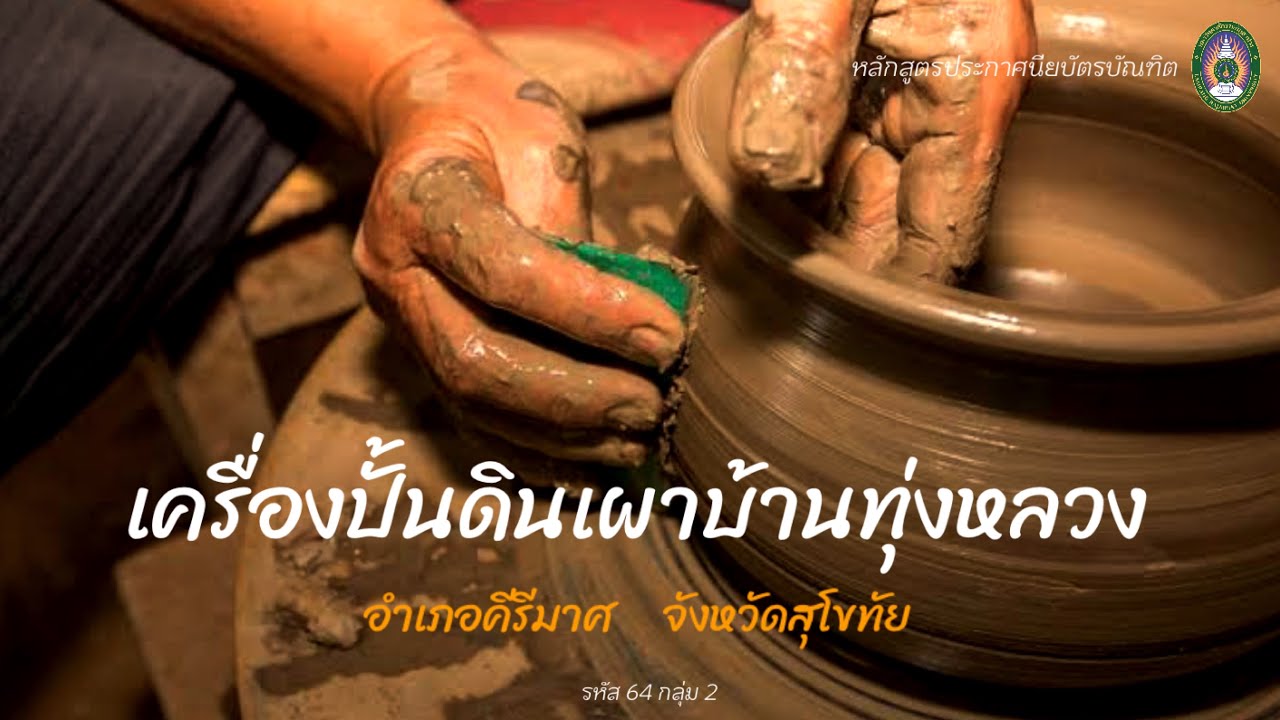
 Click to Access the Navigation Map GPS
Ban Thung Luang Map
Recommend

 Art, Culture and Heritage
 Historical Sites and Monuments(4)
 Landmarks and Memorials(5)
 Art, Craft Centres, Tradition(11)
 Museums(5)
 Places of Worship
 Temple(40)
 Other Sacred Sites(10)
Village, Community(3)
Other Sacred Sites(10)
Village, Community(3)
 Nature and Wildlife
 National Parks and Marine Reserves(3)
 Mountain (Doi)(2)
 Dam, Reservoir, Lake(4)
 Waterfalls(8)
 Caves(4)
 River, Canal(2)
 Entertainment and Agricultural
 Farms, Parks and Ecotourism(3)


