
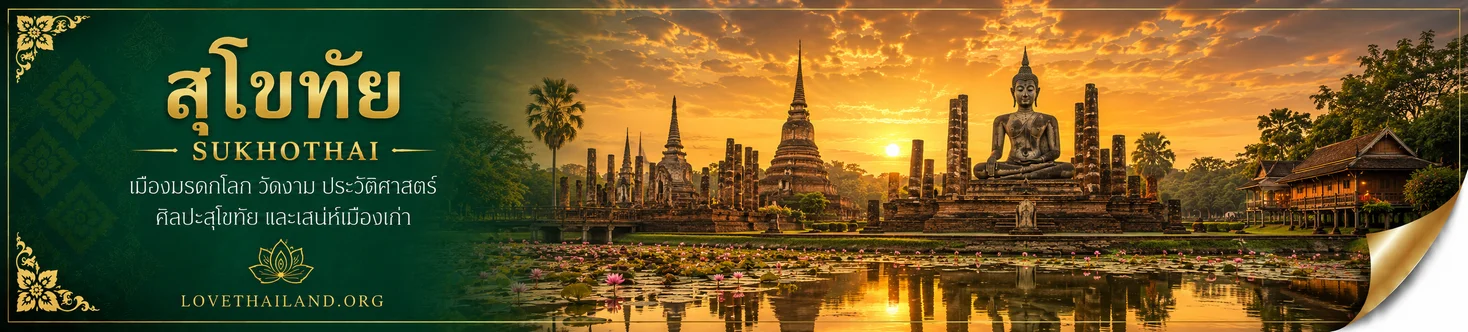
lovethailand home >North Travel Attractions >Sukhothai Travel Attractions >Sawan Khalok >Yan Yao > Pho Khun Si Inthrathit Monument
TL;DR: Pho Khun Si Inthrathit Monument is located at Wat Khung Wari, Ban Khung Wari, Moo 9, Yan Yao Subdistrict, Sawankhalok District, Sukhothai Province, open Daily, hours Recommended before 16.00.
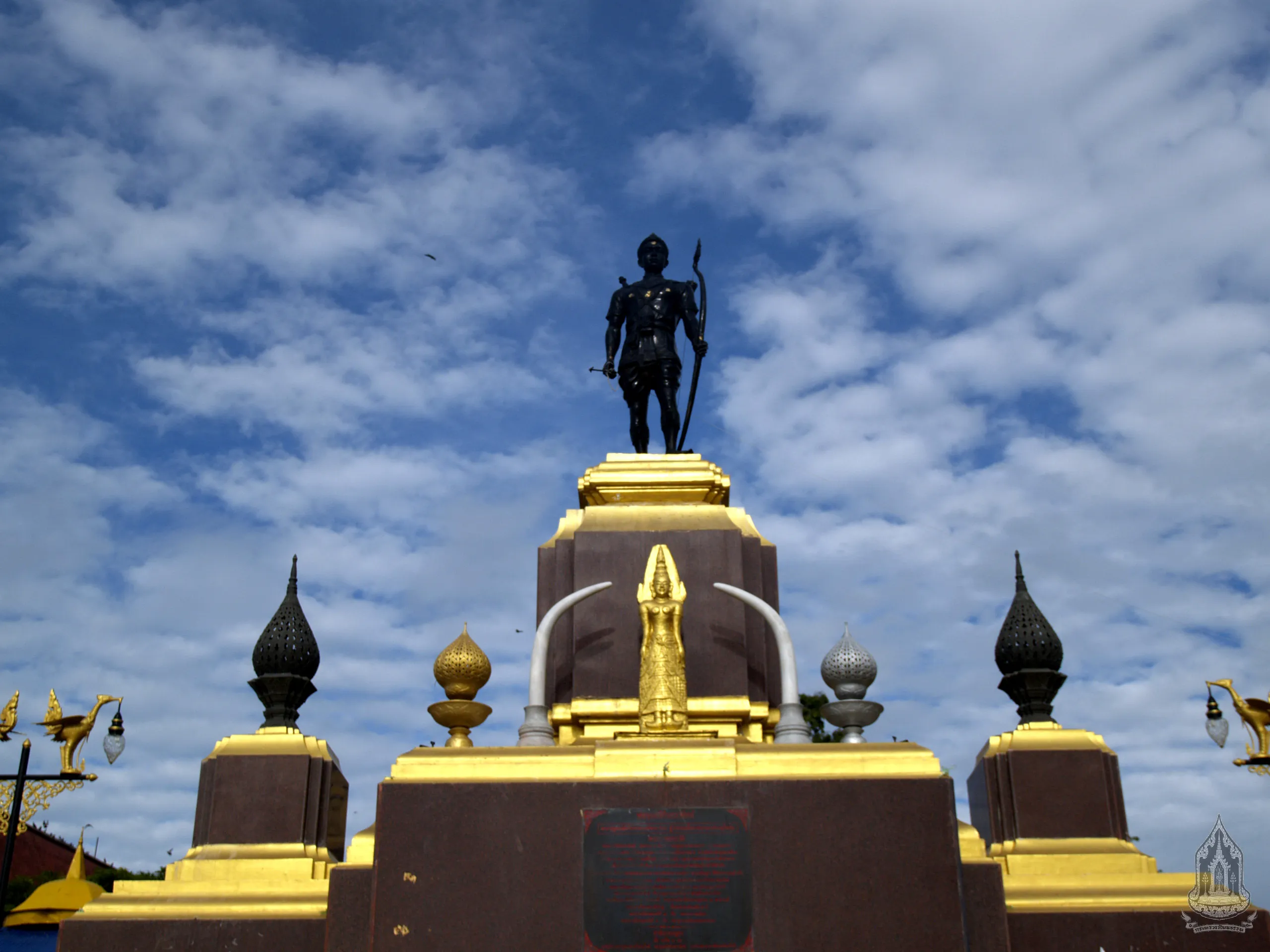
Pho Khun Si Inthrathit Monument
Open Days: Daily
Opening Hours: Recommended before 16.00
The Pho Khun Si Inthrathit Monument at Wat Khung Wari in Yan Yao Subdistrict, Sawankhalok District, Sukhothai Province, is a meaningful historical and spiritual landmark connected with the early formation of the Sukhothai Kingdom. For Thai visitors, it is a place of remembrance and respect. For foreign travelers, it offers a deeper understanding of how local memory, royal history, temple life, and community rituals continue to preserve the story of Sukhothai beyond the better-known historical parks.
TL;DR: The monument is located inside Wat Khung Wari, Ban Khung Wari, Moo 9, Yan Yao Subdistrict, Sawankhalok District, Sukhothai Province. It was built in 1974 by the Fine Arts Department to honor Pho Khun Si Inthrathit, the first king of the Phra Ruang Dynasty and a key figure in the establishment of Sukhothai power. The annual worship ceremony is held around January 15-16, making this site especially important for travelers interested in Thai history, Sukhothai heritage, and living local traditions.
Pho Khun Si Inthrathit is one of the most important royal figures in early Thai history. Before ascending the throne, he was known as Pho Khun Bang Klang Hao. His name is closely associated with the political transformation that led to the rise of Sukhothai as a powerful Tai kingdom in the Yom River basin. The monument at Wat Khung Wari therefore does not stand merely as a statue; it represents the beginning of a historical process that shaped the identity of Sukhothai and later became part of the broader narrative of Thai civilization.
According to local historical memory, the area around Wat Khung Wari was connected with the movement and encampment of Pho Khun Bang Klang Hao before the campaign against Khom Samat Khlon Lamphong, the Khmer authority who ruled Sukhothai at that time. Together with Pho Khun Pha Mueang, ruler of Mueang Rat, Pho Khun Bang Klang Hao used strategic bases such as Si Satchanalai and Bang Khlang to gather strength before launching the campaign to regain Sukhothai. This story gives Wat Khung Wari a special place in the historical geography of Sukhothai.
The landscape of Sawankhalok and the wider Yom River area was significant in the development of early Sukhothai. Rivers, settlements, old routes, and fortified communities played important roles in military movement, communication, and the growth of political power. Wat Khung Wari is valuable because it connects these large historical themes with a real local place that visitors can still reach today. Standing before the monument allows travelers to imagine how local geography and royal history once intersected in the formation of a kingdom.
After the victory over Khom Samat Khlon Lamphong, Pho Khun Pha Mueang is said to have arranged the marriage between Pho Khun Bang Klang Hao and Nang Sueang, his sister, and then established him as ruler of Sukhothai around 1238. From that moment, Pho Khun Bang Klang Hao became known as Pho Khun Si Inthrathit, the first king of the Phra Ruang Dynasty. This event is widely remembered as one of the decisive moments in the emergence of the Sukhothai Kingdom.
The importance of Pho Khun Si Inthrathit also extends through his royal family. He had three sons and two daughters. His eldest son passed away at a young age. His second son became Pho Khun Ban Mueang, and his third son became Pho Khun Ramkhamhaeng, one of the most celebrated kings in Thai history. Because of this royal lineage, the story of Pho Khun Si Inthrathit is often seen as the foundation from which later Sukhothai prosperity developed, especially in the fields of governance, trade, Buddhism, art, and the Thai script tradition associated with the Ramkhamhaeng period.
The monument at Wat Khung Wari was constructed in 1974 by the Fine Arts Department to honor the king’s historical role. Since then, it has remained a local center of respect and remembrance. The decision to place the monument at Wat Khung Wari is important because the site is linked with local memory of the king’s movement and encampment before the rise of Sukhothai. For this reason, the monument is not only an object of commemoration but also a marker of historical continuity between the past and the present community.
The statue portrays Pho Khun Si Inthrathit as a warrior king. He stands upright, facing forward with dignity. His right hand holds a bow, while his left hand holds an arrow. A sword and a quiver are carried on his back. The statue is cast in darkened metal and placed on a high pedestal, with space for offerings and worship nearby. These visual details communicate strength, bravery, leadership, and sacred authority. They also help visitors understand why the king is remembered not only as a founder but also as a protector and warrior.
From an artistic point of view, the monument emphasizes firmness and royal presence rather than decorative softness. The weapons shown with the figure act as symbolic language, pointing to a time when the formation of a kingdom required military skill, alliances, and courage. The high pedestal strengthens the atmosphere of reverence, making the area around the monument feel like a sacred memorial space within the temple compound.
Every year, around January 15-16, local people, officials, and devotees gather at Wat Khung Wari for the worship ceremony dedicated to Pho Khun Si Inthrathit. This annual event is both a religious act and a cultural tradition. It allows the community to express gratitude to the king and to pass historical memory from one generation to the next. For visitors, the ceremony is a rare opportunity to see how Sukhothai history remains active in local ritual life rather than existing only in textbooks or museum displays.
The annual ceremony usually includes offerings, ritual worship, community participation, and activities connected with honoring the king’s virtues. During this period, Wat Khung Wari becomes more than a temple. It becomes a living cultural space where history, faith, and local identity come together. Travelers who visit during the ceremony can observe the relationship between the people of Sawankhalok and the founding memory of Sukhothai in a direct and meaningful way.
One of the most memorable parts of the monument’s story involves the remarkable events said to have occurred during its transportation from Bangkok to Wat Khung Wari in April 1974. On April 14 at 05.30, while the statue was being placed on a vehicle in front of the Fine Arts Department in Bangkok, unexpected rain fell even though the previous day had been extremely hot. This unusual event became the beginning of a series of stories remembered by the people involved in the relocation.
When the convoy reached Kamphaeng Phet Province, the vehicle carrying the monument began to sway, and the driver could not control it normally. The convoy had to stop. Phra Khru Prasat Phutthikhun, a former abbot of Wat Khung Wari, then lit incense and performed a respectful invocation for a safe journey. After that, the convoy was able to continue. For local believers, this incident became part of the sacred memory surrounding the monument.
Another extraordinary event occurred when the convoy arrived in Sukhothai Province. All 23 vehicles in the procession stopped working at the same time. Phra Khru Prasat Phutthikhun again performed a ritual invocation and led the procession around the shrine of Phra Mae Ya, one of Sukhothai’s revered spiritual figures, before lighting incense and candles in respect. Only after this act of reverence did the journey continue. These stories have strengthened the monument’s sacred reputation among local people.
On April 15, 1974, at 10.00, the committee attempted to place the monument on its pedestal using a crane. Three corners fitted properly, but one corner did not settle into place. Exhausted workers stopped to rest. When they returned, they found that the monument had settled neatly and completely onto the pedestal. This incident left a strong impression on the committee and has been remembered as one of the remarkable stories associated with the installation of the monument at Wat Khung Wari.
Another story often connected with the monument concerns members of the Sukhothai Red Cross committee. One evening, after returning from Red Cross activities, a committee member hired a tricycle from the governor’s residence to return to her beauty school. During the ride, the tricycle driver behaved unusually and spoke about the need for Sukhothai to properly honor Pho Khun Si Inthrathit. That night, members of the Red Cross committee brought incense and candles to pay respect at the monument at Wat Khung Wari. The story has remained part of local belief and reflects how deeply the king is connected with the spiritual memory of Sukhothai.
For foreign travelers, these miraculous stories should be understood as part of living cultural memory. They reveal how Thai communities often connect history, kingship, temple space, and sacred belief. Whether approached as faith, folklore, or local heritage, these accounts add emotional depth to the monument. They help explain why visitors come not only to look at the statue, but also to pay respect, make offerings, and feel connected to the founding story of Sukhothai.
The atmosphere inside Wat Khung Wari is simple and calm. It is not as crowded as major tourist landmarks, which makes it suitable for travelers who prefer quiet historical sites. The area around the monument is appropriate for respectful worship, photography, and learning about early Sukhothai history. Visitors should dress modestly, speak softly, and avoid climbing onto the pedestal or touching sacred objects inappropriately.
Wat Khung Wari is also a practical stop for those exploring Sawankhalok. It can be combined with Sawankhalok Railway Station, Sawankhalok street art, Wat Sawang Arom Worawihan, Wat Sawankharam, Sawankhaworanayok National Museum, and San Lak Mueang Sawankhalok. Travelers with more time can continue to Si Satchanalai Historical Park, one of the most important ancient cities in Sukhothai Province and a rewarding destination for those interested in temples, ruins, and the wider Sukhothai cultural landscape.
Getting There is easiest by private car or rental car. From Sawankhalok town, visitors can drive toward Yan Yao Subdistrict and reach Wat Khung Wari within a short distance. Travelers coming from Sukhothai town can follow the route to Sawankhalok and then continue to Ban Khung Wari, Moo 9. Those arriving by train can get off at Sawankhalok Railway Station and continue by local transport or hired vehicle to the temple.
The best time to visit is in the morning or before 16.00, when the light is suitable for photography and the weather is more comfortable. During the annual worship ceremony in January, visitors should allow extra time for travel and parking because more people come to the temple. For those who want a quiet visit, ordinary weekdays are ideal. For those who want to experience local faith and ceremony, the January event offers a deeper cultural experience.
The Pho Khun Si Inthrathit Monument at Wat Khung Wari is therefore more than a local statue. It is a historical memorial, a sacred community landmark, and a meaningful destination for anyone who wants to understand the roots of Sukhothai beyond the main historical park. It is especially suitable for cultural travelers, history lovers, students, researchers, and foreign visitors seeking a more intimate connection with Thailand’s early royal history.
| Name | Pho Khun Si Inthrathit Monument at Wat Khung Wari |
| Location | Wat Khung Wari, Ban Khung Wari, Moo 9, Yan Yao Subdistrict, Sawankhalok District, Sukhothai Province |
| Address | 116 Ban Khung Wari, Moo 9, Charot Withi Thong Road, Yan Yao Subdistrict, Sawankhalok District, Sukhothai 64110, Thailand |
| Coordinates | 17.28333, 99.84302 |
| Highlights | A monument honoring Pho Khun Si Inthrathit, the first king of the Phra Ruang Dynasty and a founding figure of Sukhothai power |
| History | Linked with the rise of Sukhothai in the 13th century; the monument was built in 1974 by the Fine Arts Department |
| Name Origin | Named after Pho Khun Si Inthrathit, the royal name of Pho Khun Bang Klang Hao after he was established as ruler of Sukhothai |
| Distinctive Features | A standing dark-metal statue holding a bow and arrow, with a sword and quiver on the back, placed on a high pedestal |
| Important Ritual | Annual worship ceremony for Pho Khun Si Inthrathit, held around January 15-16 every year |
| Travel Information | Best reached by private car or rental car from Sawankhalok town; travelers arriving by train can continue from Sawankhalok Railway Station by local transport |
| Current Status | Open to visitors as a historical and spiritual attraction in Sawankhalok District |
| Open Days | Daily |
| Opening Hours | Recommended before 16.00 |
| Caretaker | Wat Khung Wari or Yan Yao Subdistrict Administrative Organization |
| Main Contact Number | 055-911-048, 089-460-7385 |
| Nearby Tourist Attractions | 1. Wat Khung Wari Community Market, about 0.2 km 2. Sawankhalok Railway Station, about 3 km 3. Sawankhalok Street Art, about 3 km 4. Wat Sawankharam / Wat Klang, about 4 km 5. Sawankhaworanayok National Museum, about 4 km 6. San Lak Mueang Sawankhalok, about 4 km 7. Si Satchanalai Historical Park, about 34 km |
| Nearby Restaurants | 1. Pad Thai Yai Thip, about 0.5 km, Tel. 089-643-6076 2. Noodle Shop Beside Wat Khung Wari, about 0.5 km, Tel. 080-771-5550 3. Wat Khung Wari Community Market, about 0.2 km 4. Sip Song Nuai Tat, about 4 km, Tel. 093-146-4657 5. Je Niao Thai Noodle Sawankhalok, about 4 km 6. Puu-Yaa House, about 5 km |
| Nearby Accommodations | 1. Wattanakham Apartment, about 3 km 2. Swankaburi Boutique Hotel, about 4 km 3. Ban SP Resort, about 5 km 4. Sawankhalok Two T Resort, about 6 km 5. 3sis Resort Sawankhalok-Sukhothai, about 8 km, Tel. 082-595-6699 6. Sukhothai Heritage Resort, about 15 km, Tel. 087-556-1385 |
Frequently Asked Questions (FAQ)
Q: Where is the Pho Khun Si Inthrathit Monument located?
A: It is located inside Wat Khung Wari, Ban Khung Wari, Moo 9, Yan Yao Subdistrict, Sawankhalok District, Sukhothai Province.
Q: When was the monument built?
A: The monument was built in 1974 by the Fine Arts Department to honor Pho Khun Si Inthrathit.
Q: Why is Pho Khun Si Inthrathit important in Thai history?
A: He is remembered as the first king of the Phra Ruang Dynasty and a key figure in the rise of the Sukhothai Kingdom.
Q: How is Wat Khung Wari connected with Pho Khun Si Inthrathit?
A: Local historical memory connects the area with the movement and encampment of Pho Khun Bang Klang Hao before the struggle for Sukhothai; today it houses his monument.
Q: When is the annual worship ceremony held?
A: The annual worship ceremony is held around January 15-16 every year.
Q: What is the best time to visit?
A: Morning or before 16.00 is recommended for comfortable weather, worship, and photography.
Q: What attractions can be visited nearby?
A: Nearby places include Wat Khung Wari Community Market, Sawankhalok Railway Station, Sawankhalok Street Art, Wat Sawankharam, Sawankhaworanayok National Museum, and Si Satchanalai Historical Park.
 Category: ●Art, Culture and Heritage
 Group: ●Landmarks and Memorials
Last Update : 3 MonthAgo
 Last Update : 3 MonthAgo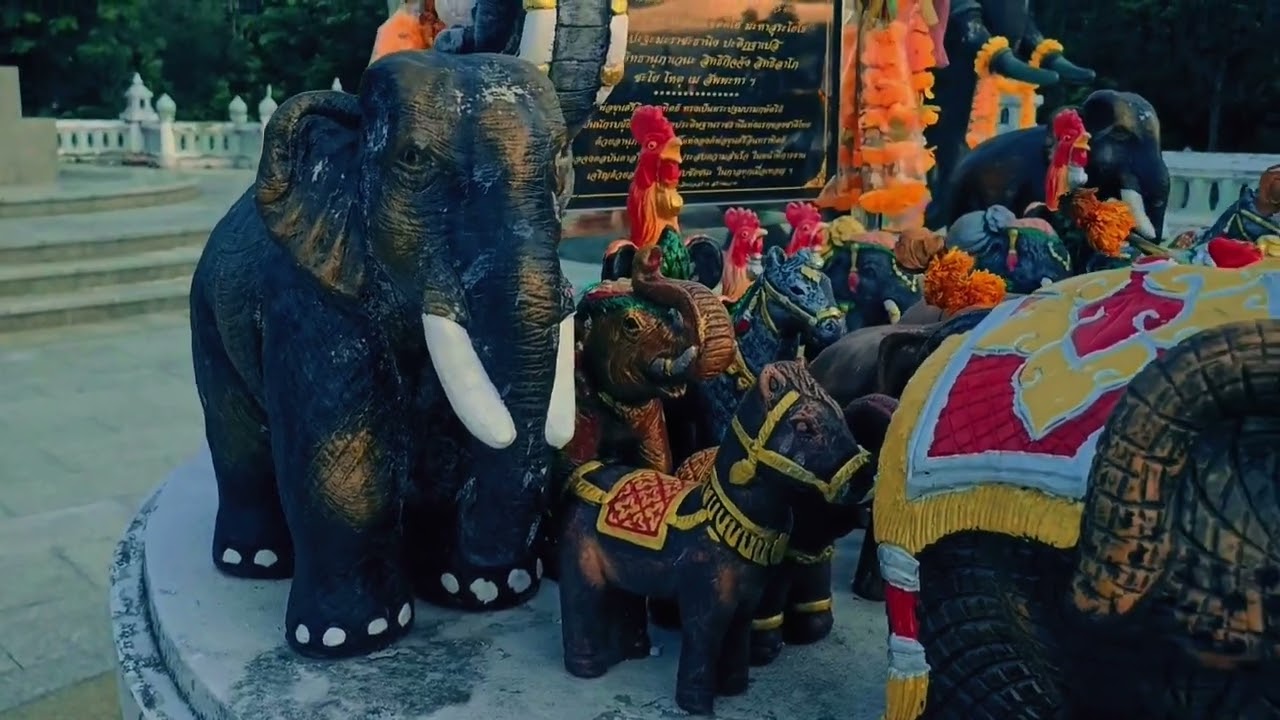
 Click to Access the Navigation Map GPS
Pho Khun Si Inthrathit Monument Map
Recommend

 Historical Sites and Monuments(4)
Landmarks and Memorials(5)
Historical Sites and Monuments(4)
Landmarks and Memorials(5)
 Art, Craft Centres, Tradition(11)
 Museums(5)
 Places of Worship
 Temple(40)
 Other Sacred Sites(10)
 Suburban Living
 Village, Community(3)
 Nature and Wildlife
 National Parks and Marine Reserves(3)
 Mountain (Doi)(2)
 Dam, Reservoir, Lake(4)
 Waterfalls(8)
 Caves(4)
 River, Canal(2)
 Entertainment and Agricultural
 Farms, Parks and Ecotourism(3)


