
lovethailand home >North Travel Attractions >Sukhothai Travel Attractions >Khiri Mat >Si Khirimat > Bee Blessing Ceremony
TL;DR: Bee Blessing Ceremony, Sukhothai attractions : Art, Culture and Heritage, Art, Craft Centres, Tradition.
Bee Blessing Ceremony
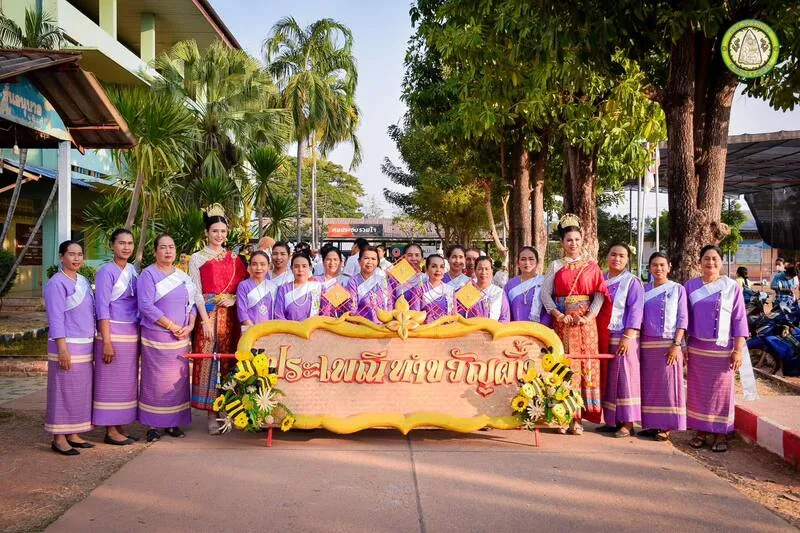
Open Days: Held annually on the 3rd waxing day of the 3rd lunar month
Opening Hours: The ritual is generally held from morning to late morning; visitors should check the annual schedule before traveling
The Bee Blessing Ceremony of Si Khiri Mat in Sukhothai Province, known in Thai as “Prapheni Kan Tham Khwan Phueng,” is a rare and meaningful local tradition that reflects the relationship between people, bees, forests, mountains, agriculture, and community life in northern Thailand. Practiced in the area of Si Khiri Mat, Khiri Mat District, this ceremony is rooted in the memory of forest honey, the Khao Luang landscape, and the old way of life in which honey was not merely a natural product but a valuable resource connected with duty, belief, and respect for nature.
The Bee Blessing Ceremony is held on the 3rd waxing day of the 3rd lunar month at the large yang tree, also known locally as the bee tree, within Wat Si Khiri Suwannaram in Si Khiri Mat, Khiri Mat District, Sukhothai Province. The ritual is linked to the historical practice of sending honey as a form of tribute and to the belief that people should ask forgiveness from bees, honor the bee spirit, and invite bees to return and build their hives. It is a distinctive community tradition that combines folk belief, ecological wisdom, honey harvesting, and respect for forest life.
The Si Khiri Mat area and the communities around Khao Luang have long been associated with natural abundance. Forests, mountains, streams, plants, and wild bees supported local life in many ways. Honey from this landscape was highly valued in the past and was connected with the old tribute system. Collecting honey was therefore not an ordinary activity. It required knowledge, caution, courage, and a respectful attitude toward bees and the forest. This background helps explain why the Bee Blessing Ceremony became such an important part of local culture.
In local memory, honey from the Khao Luang area was once sent as tribute in place of labor obligations. This historical connection gave honey a special status in the community. It was not simply food or medicine, but a natural product tied to social responsibility and royal administration. People who collected honey had to approach the bees carefully, harvest responsibly, and preserve the trees where bees built their hives. The ceremony of blessing the bees emerged from this relationship between human need and natural generosity.
The ritual centers on a large tree known locally as the ton prada phueng or ton yang, a tree where bees make their hives. This tree becomes the sacred focus of the ceremony because it represents the home of the bees and the abundance of the forest. Before the ceremony, villagers prepare the ritual area, clean the surroundings, arrange offerings, prepare food, fruits, sweets, flowers, candles, incense, and local ceremonial items. Some years may also include folk decorations, local music, and community activities that help create a sacred yet welcoming atmosphere.
The ceremony is held on the 3rd waxing day of the 3rd lunar month every year. This date functions as a cultural marker for the community. It is a time when people gather to remember the bees, the forest, the honey tribute tradition, and the wisdom of their ancestors. The ceremony is not only a ritual event but also a moment of collective memory. Elders, local leaders, monks, villagers, and younger generations can all take part in preserving the meaning of the tradition.
Wat Si Khiri Suwannaram is the main ritual venue. Located in Ban Non Pradu, Si Khiri Mat Subdistrict, Khiri Mat District, Sukhothai Province, the temple serves as both a religious center and a cultural space for the community. Holding the ceremony near the large bee tree inside the temple grounds allows folk belief and Buddhism to exist together naturally. This combination is common in Thai local culture, where temples often function not only as places of worship but also as centers of community heritage.
On the morning of the ceremony, villagers gather near the bee tree. The atmosphere is simple, respectful, and meaningful. The ritual usually includes an invocation to the bee spirit, words of apology, offerings, and prayers for the bees to remain healthy, return to build hives, produce honey, and help plants flourish. The act of asking forgiveness is central to the ritual. It reflects a worldview in which humans do not dominate nature without responsibility. Instead, people acknowledge that taking honey from bees is a form of disturbance and must be balanced by gratitude and respect.
The idea of “tham khwan,” or calling and blessing the spirit, is familiar in many Thai traditions. It may be performed for people, animals, tools, rice, or objects that sustain life. The Bee Blessing Ceremony is unique because it honors wild bees, small creatures whose ecological importance is enormous. By performing a blessing for bees, the community recognizes that bees are essential to pollination, fruit production, plant growth, and the balance of the natural world. This makes the ceremony both cultural and ecological.
After the morning invocation, villagers place local sweets, fruits, food, flowers, and ceremonial offerings around the bee tree. These offerings symbolize abundance and gratitude. The community asks the bees and the bee spirit to accept the offerings and continue to live in the area. Folk songs and dances may be performed to create auspiciousness and joy. These performances turn the ritual into a living cultural gathering, allowing visitors to experience sound, movement, rhythm, faith, and community warmth together.
Bees have deep importance in the agricultural life of Si Khiri Mat. They pollinate many plants and help maintain the fertility of local ecosystems. When bees are abundant, flowers, fruits, crops, and forest plants benefit. When forests decline or flowers disappear, bees also decline, and the community loses an important natural partner. The ceremony reminds villagers and visitors that protecting bees means protecting forests, farms, food sources, and future livelihoods.
Honey itself has long been valued as food, medicine, a household ingredient, a local product, and a symbol of forest abundance. Harvesting honey requires knowledge of seasons, bee behavior, hive locations, smoke use, climbing techniques, and safe collection methods. This knowledge was passed down through experience rather than written manuals. The Bee Blessing Ceremony helps keep this knowledge visible and meaningful, especially for younger generations who may no longer live as closely with forest resources as their ancestors did.
The ceremony also functions as an intergenerational classroom. Elders can explain how honey was collected in the past, why bees must be respected, how tribute honey shaped local memory, and why the bee tree is important. Young people can learn by observing, helping prepare offerings, recording the event, or participating in local performances. In this way, the tradition does not remain only in memory. It continues through action, conversation, and shared experience.
Socially, the Bee Blessing Ceremony strengthens community relationships. Preparing the site, making offerings, cooking food, organizing the ritual, welcoming visitors, and performing songs or dances all require cooperation. The ceremony allows monks, local leaders, elders, youth, families, and community members to take part. This collective participation keeps the tradition alive and gives local people a sense of shared ownership over their heritage.
For travelers, the ceremony offers a rare opportunity to understand Sukhothai beyond the historical park. Many visitors know Sukhothai through ancient temples and World Heritage sites, but Si Khiri Mat reveals another dimension of the province: forest culture, honey harvesting, ecological belief, and community ritual. Attending the Bee Blessing Ceremony allows visitors to see how local people relate to nature through gratitude rather than consumption alone.
Visitors should understand that this is a living community ritual, not a performance created only for tourism. Respectful behavior is essential. Travelers should dress modestly, remain quiet during important ritual moments, avoid touching offerings without permission, and stay away from bee hives or sacred trees unless guided by local organizers. Photography should be done politely and without disrupting the ceremony. This respectful attitude helps ensure that cultural tourism supports rather than harms the tradition.
The ceremony also has potential for educational and sustainable tourism. It can be connected with learning about wild honey, bee conservation, honey-based products, forest ecology, local food, and nearby natural attractions such as Khao Luang and Ramkhamhaeng National Park. If managed carefully, this tradition can help generate income for the community while encouraging environmental awareness and respect for local culture.
Getting There is most convenient by private car or rental car. From Sukhothai town, travelers can drive toward Khiri Mat District and continue to Si Khiri Mat Subdistrict. Because the ritual is a local cultural event, visitors should confirm the exact annual venue and schedule with Si Khiri Mat Subdistrict Administrative Organization before traveling. Those without private transport should arrange a hired vehicle from Sukhothai town or nearby areas for a smoother trip.
The trip can be combined with nearby attractions such as Wat Tham Phra Mae Ya, Ramkhamhaeng National Park, Ban Thung Luang pottery village, Sukhothai Historical Park, and Ramkhamhaeng National Museum. This route is suitable for travelers interested in nature, temples, local crafts, history, and community culture. Adding the Bee Blessing Ceremony to the itinerary gives a deeper and more diverse understanding of Sukhothai.
Economically, the ceremony can support local livelihoods through honey, honey-based products, local food, community goods, and cultural tourism. When visitors learn where honey comes from and how it is connected with the forest, they may better appreciate local products and the work behind them. If tourism is carefully managed, the ceremony can create income while preserving the values that make it meaningful.
In a time when pollinators and forests face environmental pressure, the Bee Blessing Ceremony feels especially relevant. It teaches that small creatures such as bees are essential to food security, agriculture, and ecological balance. It reminds people that forests must be protected, flowers must be allowed to grow, and human use of nature must be guided by gratitude and responsibility. The ceremony is therefore not only a cultural heritage practice but also a powerful environmental lesson.
In conclusion, the Bee Blessing Ceremony of Si Khiri Mat, Sukhothai Province, is a complete local tradition that combines belief, daily life, environmental wisdom, community bonding, and historical memory. Held on the 3rd waxing day of the 3rd lunar month at the bee tree near Wat Si Khiri Suwannaram, the ceremony honors bees, asks forgiveness, remembers the honey tribute tradition, and teaches respect for nature. It is a valuable cultural heritage of Sukhothai and an important example of how Thai communities preserve harmony between humans and the natural world.
| Name | Bee Blessing Ceremony of Si Khiri Mat |
| Location | Wat Si Khiri Suwannaram, Si Khiri Mat Subdistrict, Khiri Mat District, Sukhothai Province |
| Address | Moo 2, Ban Non Pradu, Si Khiri Mat Subdistrict, Khiri Mat District, Sukhothai 64160, Thailand |
| Festival Period | The 3rd waxing day of the 3rd lunar month every year |
| Highlights | A bee spirit blessing ritual at the large yang tree or bee tree, offerings to the mother bee, local songs and dances, and learning about wild honey culture in Si Khiri Mat |
| History | Rooted in the historical practice of sending honey as tribute in place of labor obligations since the Ayutthaya period, and connected with forest honey from the Khao Luang area |
| Key Evidence | Local cultural records state that the tradition was revived after disappearing for about 40 years and is connected with the honey tribute history of Si Khiri Mat |
| Name Origin | The name refers to a ritual of blessing the bees, asking forgiveness from the mother bee, and inviting bees to return and build their hives abundantly |
| Distinctive Features | A rare local tradition combining folk belief, spirit blessing, bee conservation, honey harvesting wisdom, and respect for nature |
| Main Activities | Preparing offerings, invoking the bee spirit, asking forgiveness from the mother bee, placing local sweets, fruits, and food around the bee tree, performing folk songs and dances, and sharing knowledge about honey harvesting |
| Travel Information | Best reached by private car or rental car from Sukhothai town toward Khiri Mat District and Si Khiri Mat Subdistrict; visitors should confirm the exact annual venue before traveling |
| Current Status | A living local cultural tradition of Si Khiri Mat community, continued as a community heritage activity |
| Abbot / Site Caretaker | Phra Khru Woratham Prayut, also known locally as Luang Pho Thurian, Abbot of Wat Si Khiri Suwannaram |
| Caretaker / Related Authorities | Wat Si Khiri Suwannaram, Si Khiri Mat Subdistrict Administrative Organization, Si Khiri Mat community, and local cultural agencies |
| Main Contact Number | Si Khiri Mat Subdistrict Administrative Organization, Tel. 055-947667 ext. 11 |
| Nearby Tourist Attractions | 1. Wat Si Khiri Suwannaram, about 0 km 2. Wat Tham Phra Mae Ya, about 6 km 3. Ramkhamhaeng National Park, about 10 km 4. Ban Thung Luang Pottery Village, about 15 km 5. Sukhothai Historical Park, about 30 km 6. Ramkhamhaeng National Museum, about 30 km |
| Nearby Restaurants | 1. Prom's Cafe & Eatery, about 3 km, Tel. 082-405-8424 2. Windmill Mountain Khao Luang Restaurant / Cafe, about 5 km, Tel. 062-149-5040 3. Local Food Shops in Si Khiri Mat, about 1 km 4. Restaurants in Khiri Mat Town, about 4 km 5. Chanda's Historical Garden Restaurant, about 30 km, Tel. 092-993-3408 |
| Nearby Accommodations | 1. Ban Piamsuk Resort Khiri Mat, about 4 km, Tel. 081-533-0389 2. Jib Fae Lae Khao Luang Resort, about 2 km, Tel. 093-254-2514 3. Boonma Resort, about 12 km, Tel. 095-467-2373 4. Thai Thai Sukhothai Resort, about 31 km 5. Sukhothai Garden, about 31 km |
Frequently Asked Questions (FAQ)
Q: Where is the Bee Blessing Ceremony held?
A: It is held near the large yang tree or bee tree at Wat Si Khiri Suwannaram, Si Khiri Mat Subdistrict, Khiri Mat District, Sukhothai Province.
Q: When is the ceremony held?
A: It is held on the 3rd waxing day of the 3rd lunar month every year. Visitors should check the annual local schedule before traveling.
Q: Why do local people bless the bees?
A: The ritual is performed to ask forgiveness from the mother bee, honor the bees, invite bees to return and build hives, and remind the community to respect nature.
Q: How is the ceremony connected with honey tribute?
A: In the past, Si Khiri Mat was associated with sending honey as tribute in place of labor obligations, making honey collection an important part of community life and memory.
Q: What activities take place during the ceremony?
A: Activities include preparing offerings, invoking the bee spirit, asking forgiveness from the mother bee, placing local sweets and fruits around the bee tree, and performing folk songs and dances.
Q: Can tourists attend the ceremony?
A: Yes, when the ceremony is organized. Visitors should dress modestly, behave respectfully, avoid disturbing the ritual, and confirm the schedule with Si Khiri Mat Subdistrict Administrative Organization before traveling.
Q: What nearby attractions can visitors combine with the trip?
A: Nearby places include Wat Tham Phra Mae Ya, Ramkhamhaeng National Park, Ban Thung Luang Pottery Village, Sukhothai Historical Park, and Ramkhamhaeng National Museum.
 Category: ●Art, Culture and Heritage
 Group: ●Art, Craft Centres, Tradition
Last Update : 3 MonthAgo
 Last Update : 3 MonthAgo
Recommend

 Historical Sites and Monuments(4)
 Landmarks and Memorials(5)
Art, Craft Centres, Tradition(11)
Landmarks and Memorials(5)
Art, Craft Centres, Tradition(11)
 Museums(5)
 Places of Worship
 Temple(40)
 Other Sacred Sites(10)
 Suburban Living
 Village, Community(3)
 Nature and Wildlife
 National Parks and Marine Reserves(3)
 Mountain (Doi)(2)
 Dam, Reservoir, Lake(4)
 Waterfalls(8)
 Caves(4)
 River, Canal(2)
 Entertainment and Agricultural
 Farms, Parks and Ecotourism(3)


