
lovethailand home >North Travel Attractions >Sukhothai Travel Attractions >Muang Sukhothai >Ban Suan > Wat Khung Yang Yai
TL;DR: Wat Khung Yang Yai is located at Moo 3, Ban Suan Subdistrict, Mueang Sukhothai District, Sukhothai Province, open Daily, hours 08.00 – 17.00.
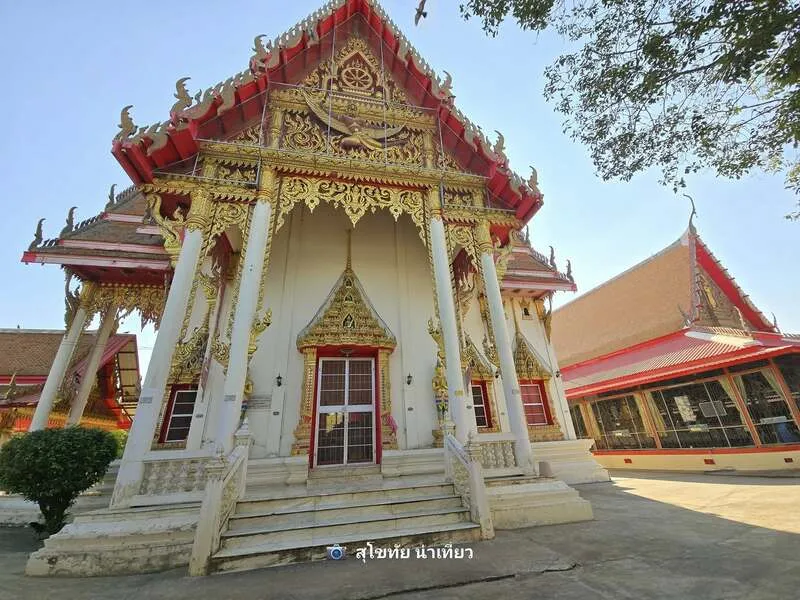
Wat Khung Yang Yai
Open Days: Daily
Opening Hours: 08.00 – 17.00
Wat Khung Yang Yai in Sukhothai Province is an important Buddhist temple in Ban Suan Subdistrict, Mueang Sukhothai District. It is valued not only as a local place of worship, but also as a living cultural site where history, Buddhist art, and community life continue to meet. The temple is best known for three Sukhothai-style Buddha images locally revered as “Luang Pho Sam Phi Nong,” or the Three Brother Buddha Images. These sacred images are seated in the Maravijaya posture and have long been respected by the people of Ban Suan as spiritual guardians of the community.
Wat Khung Yang Yai is located in Moo 3, Ban Suan Subdistrict, Mueang Sukhothai District, Sukhothai Province. The temple stands close to Ban Suan Market and the surrounding local community, making it an important social and religious center. Its location reflects the traditional role of Thai temples as community anchors. For local people, the temple is not only a place for merit-making and Buddhist ceremonies, but also a familiar public space connected with festivals, education, funerals, ordinations, community meetings, and everyday religious practice.
The history of Wat Khung Yang Yai dates back to around 1377 CE, or approximately Buddhist Era 1920, during the late Sukhothai period. This period is associated with King Lue Thai, also known as Maha Thammaracha II, one of the later rulers of the Sukhothai Kingdom. The establishment of the temple during this era reflects the strong role of Buddhism in Sukhothai society. Temples were places of worship, learning, moral guidance, and community organization. Wat Khung Yang Yai therefore represents a direct continuation of Sukhothai Buddhist heritage into the present-day life of Ban Suan.
The main highlight of the temple is Luang Pho Sam Phi Nong, a group of three Buddha images in the Maravijaya posture. In Buddhist symbolism, this posture represents the Buddha’s victory over temptation before enlightenment. The Sukhothai artistic style is widely admired for its graceful proportions, serene facial expression, and spiritual refinement. These three Buddha images are therefore significant both as religious objects and as artistic heritage. For the local community, however, their importance goes beyond art history. They are sacred images connected with memory, devotion, family tradition, and the identity of Ban Suan.
The name “Luang Pho Sam Phi Nong” gives the three Buddha images a warm and intimate character. Rather than being viewed only as ancient sacred objects, they are regarded by local devotees almost as protective elders of the community. People visit the temple to pay respect, make offerings, pray for peace of mind, and participate in Buddhist activities. This continuing devotion is what makes Wat Khung Yang Yai different from an archaeological site. It is a living temple where Sukhothai heritage remains active in the spiritual life of local people.
The temple occupies an area of 19 rai and 2 square wa. Within the compound are several important religious and community structures, including the ordination hall, sermon hall, the viharn of Luang Pho Sam Phi Nong, the viharn of Luang Pho Kiao Kovito, monks’ residences, ceremonial halls, a drum tower, a bell tower, a local folk museum, and a community library. These elements show that the temple functions as a complete religious and cultural center. Visitors can experience Buddhist devotion, local history, and community learning within the same compound.
The ordination hall is used for important monastic ceremonies, while the sermon hall serves as a shared space for religious events and community gatherings. The viharn housing Luang Pho Sam Phi Nong is the most meaningful area for visitors who come to pay respect to the temple’s sacred Buddha images. When entering this area, travelers should dress respectfully, speak softly, and behave with awareness that the temple is still actively used by monks and local devotees.
Wat Khung Yang Yai is also connected with local education through Wat Khung Yang Yai School, reflecting the historical role of temples in Thai society. Before modern schools became widespread, temples often served as centers of learning for children in local communities. This relationship between temple, school, and village life gives Wat Khung Yang Yai broader social meaning. It is not only a religious site, but also part of the long-term development of Ban Suan as a community.
Over the years, several monks have played important roles in developing and maintaining the temple. Phra Athikan Pae served as abbot from 1913 to 1951. Phra Khru Wimonkitkoson, also known locally as Luang Pho Kiao Kovito, served from 1951 to 1993 and is remembered for his contribution to the temple and local community. Phra Khru Adunwaraphon, Buntham Warapho, is also associated with the ecclesiastical administration of the Ban Suan area and Wat Khung Yang Yai. Current public temple information lists Phra Khru Samu Chakkarin Jattamalo as the present abbot of Wat Khung Yang Yai.
The role of monks at Wat Khung Yang Yai extends beyond ritual leadership. They help maintain sacred spaces, preserve religious objects, support community events, and provide a point of spiritual guidance for local people. In many Thai communities, the temple remains a place where people gather during Buddhist holidays, funerals, ordinations, Kathin ceremonies, robe-offering events, Songkran, and other local traditions. Wat Khung Yang Yai continues to serve this role for Ban Suan.
From a historical perspective, Wat Khung Yang Yai helps travelers understand Sukhothai beyond the famous historical park. Sukhothai is widely known as one of Thailand’s most important historical centers, especially for its Buddhist art, architecture, language, and royal history. While Sukhothai Historical Park preserves ancient monuments on a grand scale, Wat Khung Yang Yai offers a more intimate experience of Sukhothai heritage within a living local temple. It shows how the artistic and religious legacy of the Sukhothai period continues outside the old city walls.
The atmosphere of Wat Khung Yang Yai is quiet, modest, and community-oriented. It is not a large tourist complex, and that is part of its charm. Visitors can pay respect to Luang Pho Sam Phi Nong, make merit, observe the temple grounds, and appreciate the peaceful rhythm of a local Buddhist temple. For travelers who enjoy cultural depth, traditional temples, and local history, this temple offers a meaningful stop in Sukhothai.
A visit to Wat Khung Yang Yai can be included in a wider Sukhothai travel route. Travelers may begin the day at the temple, visit Ban Suan Market or the surrounding community, and then continue to Sukhothai Historical Park, Ramkhamhaeng National Museum, Wat Mahathat, Wat Si Chum, or Thung Talay Luang. This type of route combines local Buddhist life with major historical attractions, giving visitors a more complete understanding of Sukhothai as both an ancient kingdom and a living province.
Getting There is easiest by private car, rental car, or local transport from Mueang Sukhothai. The temple is located in Ban Suan Subdistrict near Ban Suan Market, making it relatively easy to find. Travelers staying in Sukhothai town can hire local transport or drive directly to the temple before continuing to other attractions. The distance from the town area is suitable for a short merit-making visit or as part of a half-day cultural itinerary.
Visitors should dress politely when visiting the temple. Sleeveless tops, very short clothing, and overly revealing outfits should be avoided. When entering the viharn or ordination hall area, visitors should speak softly and avoid touching Buddha images or religious objects without permission. Photography should be done respectfully, especially inside sacred buildings. These simple practices help preserve the dignity of the temple and show respect for the local community.
Wat Khung Yang Yai is suitable for several types of travelers: those seeking a peaceful place for merit-making, visitors interested in Sukhothai Buddhist art, cultural travelers looking for local temples, and international visitors who want to see how Buddhism remains part of everyday life in Thailand. Although the visit itself may not require a long time, the temple offers a deep sense of continuity between the Sukhothai past and the present-day community of Ban Suan.
For foreign travelers, Wat Khung Yang Yai provides an important perspective on Sukhothai heritage. It shows that Sukhothai art is not found only in UNESCO-style historical ruins or museum displays. It also lives in local temples where people continue to worship, make merit, and preserve sacred traditions. Paying respect to Luang Pho Sam Phi Nong is therefore both a spiritual experience and a cultural encounter with the living legacy of Sukhothai.
In summary, Wat Khung Yang Yai is a meaningful temple for anyone traveling through Sukhothai Province. Its long history, connection with the late Sukhothai period, revered Three Brother Buddha Images, community role, and calm local atmosphere make it a worthwhile stop. Travelers who want to understand Sukhothai beyond the major historical park will find this temple especially valuable.
| Name | Wat Khung Yang Yai |
| Location | Moo 3, Ban Suan Subdistrict, Mueang Sukhothai District, Sukhothai Province |
| Address | Moo 3, Ban Suan Subdistrict, Mueang Sukhothai District, Sukhothai 64220, Thailand |
| Highlights | Luang Pho Sam Phi Nong, three Sukhothai-style Buddha images in the Maravijaya posture revered by the Ban Suan community |
| History | Established around Buddhist Era 1920, during the late Sukhothai period associated with King Lue Thai, or Maha Thammaracha II |
| Distinctive Features | A living community temple with an ordination hall, sermon hall, viharn of Luang Pho Sam Phi Nong, viharn of Luang Pho Kiao Kovito, drum tower, bell tower, folk museum, and community library |
| Temple Area | 19 rai and 2 square wa |
| Travel Information | Accessible by private car, rental car, local hired vehicle, or songthaew from Sukhothai town; the temple is near Ban Suan Market |
| Current Status | Active Buddhist temple under the Mahanikai Sangha and a local religious center for the Ban Suan community |
| Open Days | Daily |
| Opening Hours | 08.00 – 17.00 |
| Fees | No admission fee |
| Facilities | Merit-making areas, viharn, ordination hall, sermon hall, monks’ residences, ceremonial halls, folk museum, community library, and parking space within or near the temple compound |
| Main Areas / Zones | Viharn of Luang Pho Sam Phi Nong, Ordination Hall, Sermon Hall, Viharn of Luang Pho Kiao Kovito, Drum Tower, Bell Tower, Folk Museum, Community Library |
| Abbot / Caretaker | Phra Khru Samu Chakkarin Jattamalo |
| Main Contact Number | 055-699-185 |
| Official Website / Official Page | Facebook Page: Wat Khung Yang Yai, Ban Suan, Mueang Sukhothai |
| Nearby Tourist Attractions | 1. Ban Suan Market, about 1 km 2. Thung Talay Luang, about 11 km 3. Ramkhamhaeng National Museum, about 16 km 4. Sukhothai Historical Park, about 17 km 5. Wat Mahathat Sukhothai, about 17 km 6. Wat Si Chum, about 19 km |
| Nearby Restaurants | 1. Mong Na Restaurant, Ban Suan Intersection, about 1 km 2. Krua Kuk Kaen, about 7 km, Tel. 063-565-3964 3. Lung Joi Pla Mae Nam, about 8 km, Tel. 081-475-3523 4. Ban Kru Eiw, about 8 km, Tel. 055-612-710, 063-665-5562 5. Fueng Fah Pla Mae Nam, about 9 km, Tel. 061-284-3800, 092-341-7926 6. Sam Saen Restaurant, about 9 km, Tel. 096-284-7974, 084-847-8826 |
| Nearby Accommodations | 1. Thanawong Pool Villa, about 6 km 2. Candy Bar Resort, about 6 km 3. Amorn Sukhothai Hotel, about 6 km, Tel. 055-610-444, 088-278-3079 4. Foresto Sukhothai Guesthome, about 8 km 5. Blue House Sukhothai, about 8 km 6. EZ House, about 8 km |
Frequently Asked Questions (FAQ)
Q: Where is Wat Khung Yang Yai located?
A: Wat Khung Yang Yai is located in Moo 3, Ban Suan Subdistrict, Mueang Sukhothai District, Sukhothai Province, near Ban Suan Market.
Q: Why is Wat Khung Yang Yai important?
A: The temple dates back to around Buddhist Era 1920 and has long served as a Buddhist, cultural, and community center for Ban Suan.
Q: What is Luang Pho Sam Phi Nong?
A: Luang Pho Sam Phi Nong refers to three Sukhothai-style Buddha images in the Maravijaya posture enshrined at the temple and revered by local devotees.
Q: Is there an admission fee to visit Wat Khung Yang Yai?
A: No. Visitors can enter the temple, pay respect to the Buddha images, and make merit without an admission fee.
Q: Who is the abbot of Wat Khung Yang Yai?
A: The abbot of Wat Khung Yang Yai is Phra Khru Samu Chakkarin Jattamalo.
Q: What should visitors wear when visiting the temple?
A: Visitors should wear polite clothing suitable for a Buddhist temple and should behave respectfully, especially inside the viharn and ordination hall areas.
Q: What nearby attractions can be visited with Wat Khung Yang Yai?
A: Nearby attractions include Ban Suan Market, Thung Talay Luang, Ramkhamhaeng National Museum, Sukhothai Historical Park, Wat Mahathat, and Wat Si Chum.
 Category: ●Places of Worship
 Group: ●Temple
Last Update : 4 MonthAgo
 Last Update : 4 MonthAgo
 Click to Access the Navigation Map GPS
 Art, Culture and Heritage
 Historical Sites and Monuments(4)
 Landmarks and Memorials(5)
 Art, Craft Centres, Tradition(11)
 Museums(5)
Temple(40)
Museums(5)
Temple(40)
 Other Sacred Sites(10)
 Suburban Living
 Village, Community(3)
 Nature and Wildlife
 National Parks and Marine Reserves(3)
 Mountain (Doi)(2)
 Dam, Reservoir, Lake(4)
 Waterfalls(8)
 Caves(4)
 River, Canal(2)
 Entertainment and Agricultural
 Farms, Parks and Ecotourism(3)


