
lovethailand home >North Travel Attractions >Phitsanulok Travel Attractions >Muang Phitsanulok >Nai Muang > Phra Buddha Chinnarat Celebration Festival
TL;DR: Phra Buddha Chinnarat Celebration Festival is located at 92/3 Phuttha Bucha Road, Nai Mueang Subdistrict, Mueang Phitsanulok District, Phitsanulok Province 65000, open Held Annually Around Makha Bucha Day, hours The Temple Is Open Daily From 05.00 – 19.00.
Phra Buddha Chinnarat Celebration Festival
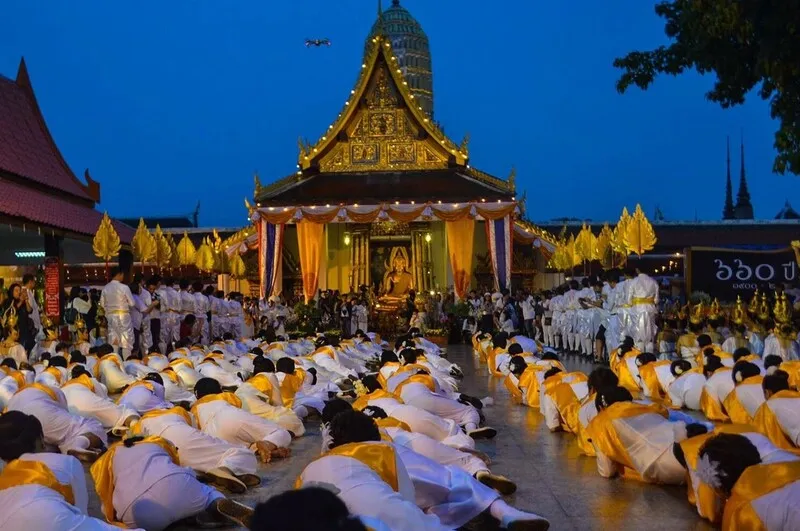
Open Days: Held Annually Around Makha Bucha Day
Opening Hours: The Temple Is Open Daily From 05.00 – 19.00
The Phra Buddha Chinnarat Celebration Festival in Phitsanulok Province is one of the most important annual Buddhist events in lower northern Thailand. It is held at Wat Phra Si Rattana Mahathat Woramahawihan, commonly known as Wat Yai, in Mueang Phitsanulok District. The festival takes place around Makha Bucha Day, on the full moon of the 3rd lunar month, and traditionally lasts for 7 days and 7 nights. This annual celebration honors Phra Buddha Chinnarat, the revered Buddha image of Phitsanulok and one of the most admired Buddha images in Thailand.
The festival brings together Buddhist faith, local history, cultural identity, and community life in one place. Visitors come to pay respect to Phra Buddha Chinnarat inside the main vihara, participate in Buddhist rituals, experience the atmosphere of a traditional Thai temple fair, enjoy local performances, and buy products from Phitsanulok and other provinces. For the people of Phitsanulok, this event is not only an annual festival. It is a living expression of devotion that has been passed down through generations.
In simple terms, the Phra Buddha Chinnarat Celebration Festival is an annual Buddhist event that allows people to worship Phra Buddha Chinnarat during the Makha Bucha period. The festival includes an opening ceremony, Buddhist chanting, merit-making, offerings to monks, public worship, traditional performances, temple fair entertainment, market stalls, local products, souvenirs, and food. Its roots are connected with royal visits to Phra Buddha Chinnarat in earlier times, when celebrations were held for 3, 5, or 7 days. The provincial annual event was later formalized by Phitsanulok Province in 1934.
Phra Buddha Chinnarat is enshrined in the main vihara of Wat Phra Si Rattana Mahathat Woramahawihan. The image is widely admired for its graceful features, serene expression, and distinctive flame-like halo. Many Thai Buddhists regard Phra Buddha Chinnarat as one of the most beautiful and sacred Buddha images in the country. People come throughout the year to pay respect, pray for blessings, and seek peace of mind. During the annual celebration, the number of devotees increases greatly, creating a powerful atmosphere of faith.
The importance of the festival lies in both religion and history. In earlier periods, when kings visited Phra Buddha Chinnarat, royal celebrations were sometimes held for 3 days, 5 days, or 7 days. Later, Phitsanulok Province established the celebration as an annual event beginning in 1934, using the full moon period of the 3rd lunar month as the main timing. Since then, the festival has become a major provincial tradition, allowing people from many areas to come and worship Phra Buddha Chinnarat together.
The timing around Makha Bucha Day is deeply meaningful. Makha Bucha is one of the major Buddhist holy days, commemorating an important event in the life of the Buddha and emphasizing Buddhist principles such as doing good, avoiding evil, and purifying the mind. When the celebration of Phra Buddha Chinnarat is held during this period, the event becomes more than a festival. It becomes a time for reflection, merit-making, and renewing one’s connection with Buddhist teachings.
The ceremonies of the festival can be understood in two main parts: the opening ceremony and the public worship of Phra Buddha Chinnarat. The opening ceremony is usually held in the evening before the main festival begins. Monks, senior officials, civil servants, local merchants, and the general public gather for Buddhist rites. The ceremony includes chanting, receiving the precepts, an official opening led by the provincial governor, the chanting of auspicious verses, offerings to monks, and blessings for the participants.
The opening ceremony reflects cooperation among the temple, the province, government agencies, and the public. Wat Phra Si Rattana Mahathat Woramahawihan serves as the spiritual center. Phitsanulok Province supports the event as a major cultural tradition. The people keep the tradition alive through participation, devotion, and continuity. The ceremony therefore shows how religion and civic life remain connected in Thai society.
During the 7-day festival, people come continuously to worship Phra Buddha Chinnarat. Devotees prepare flowers, incense, and candles, then enter the vihara respectfully to bow before the Buddha image and pray for blessings, safety, success, and peace. Many people travel from other provinces specifically for this occasion because they consider the annual celebration an especially auspicious time to pay respect to Phra Buddha Chinnarat.
In addition to worship, many visitors make merit, donate to the temple, listen to sermons, and take part in Buddhist activities according to their faith. Some traditional practices, such as releasing birds, fish, or turtles, were associated with merit-making in the past. Today, visitors should choose merit-making activities responsibly, considering animal welfare, environmental impact, and the guidance of the temple or relevant authorities.
The atmosphere of the festival differs from a normal temple visit. Throughout the event, people from Phitsanulok, nearby provinces, and other parts of Thailand come together. The area around the temple becomes lively with lights, vendors, announcements, music, and crowds. Yet inside the vihara, the atmosphere remains solemn and devotional. Visitors should behave respectfully, especially when entering the sacred space where people are praying and meditating.
Outside the vihara, the festival has the character of a large traditional Thai temple fair. Historically, after the harvest season, farmers and rural families would travel to the temple to make merit, rest, meet relatives, watch performances, and buy household goods. The celebration therefore became both a religious event and a community gathering. It combined merit-making, relaxation, trade, and entertainment in a way typical of Thai temple fairs.
Entertainment has long been part of the festival atmosphere. Music, films, likay performances, folk entertainment, and local shows help create a joyful environment for families and visitors. Although the forms of entertainment have changed over time, the main purpose remains the same: to make the merit-making occasion a shared community experience. Children experience the charm of a temple fair, adults buy food and goods, and families spend time together after worshipping the Buddha image.
Market stalls are another important part of the event. Visitors can buy local products, souvenirs, food, household goods, and handicrafts from Phitsanulok and many other provinces. Women’s groups, local producers, private organizations, and vendors from different regions participate in the fair. This makes the festival an important economic event as well as a religious one, supporting small businesses and local producers.
Culturally, the Phra Buddha Chinnarat Celebration Festival reflects the identity of lower northern Thailand and Phitsanulok’s position between northern and central Thai cultural spheres. The event combines Buddhist devotion, local trade, traditional entertainment, and provincial pride. People from different backgrounds gather under a shared reverence for Phra Buddha Chinnarat, making the festival both a religious and cultural gathering.
Phra Buddha Chinnarat is central to the identity of Phitsanulok. For many Thai people, the province is immediately associated with this Buddha image and Wat Phra Si Rattana Mahathat Woramahawihan. The annual celebration strengthens this identity. Travelers who attend the festival learn that Phitsanulok is not merely a transit city between the north and the central plains. It is a city of faith, history, art, and religious heritage.
Historically, Wat Phra Si Rattana Mahathat Woramahawihan is one of the most important temples in Phitsanulok. In addition to Phra Buddha Chinnarat, the temple complex is associated with important Buddhist images, a prang, and historic structures that reflect the religious and artistic significance of the old city. The annual festival therefore celebrates not only one sacred image but also the broader heritage of Phitsanulok.
First-time visitors should begin by paying respect to Phra Buddha Chinnarat inside the main vihara. Modest dress, quiet behavior, and respect for temple rules are essential. After worshipping, visitors can walk around the temple grounds, observe the prang and other historic areas, and then explore the festival stalls outside. During the festival period, visitors should allow extra time because crowds are usually much larger than on ordinary days.
Photography should be done respectfully. Inside the vihara, visitors should avoid blocking others, using flash in inappropriate areas, or disturbing those who are praying. Outside the temple, the evening atmosphere of lights, food stalls, performances, and crowds can be photographed beautifully. The best images of the festival often show the contrast between the sacred calm inside the vihara and the lively temple fair outside.
Getting There is convenient because Wat Phra Si Rattana Mahathat Woramahawihan is located in central Phitsanulok near the Nan River, Wat Nang Phaya, Wat Ratchaburana, Phitsanulok Railway Station, and many hotels. Visitors arriving by train can continue by local transport or ride-hailing services. Those arriving by plane can take a taxi or local vehicle from Phitsanulok Airport into the city. Travelers driving by private car should allow extra time for parking during the festival because the area around the temple becomes very crowded.
Visitors who want a comfortable experience should come in the morning for worship, when the crowd is usually lighter. The evening is better for enjoying the fair atmosphere, food, performances, and lights. Elderly visitors and families with children should avoid the most crowded periods when possible. It is helpful to bring drinking water, essential medicine, and agree on a meeting point if traveling in a group.
The festival is also suitable for foreign travelers interested in Thai culture. It offers a clear view of Buddhist worship, merit-making, temple fair culture, local products, and community life in one place. Foreign visitors should dress modestly, remove shoes before entering the vihara, sit respectfully, avoid pointing feet toward the Buddha image, and observe how local people behave in sacred areas.
Economically, the festival is important to Phitsanulok. It attracts visitors, supports hotels, restaurants, transport services, local vendors, and community producers. During the 7-day celebration, the city becomes especially active. The temple area, riverside, markets, hotels, and restaurants benefit from the movement of people who come to worship and enjoy the fair.
Yet the lasting value of the Phra Buddha Chinnarat Celebration Festival is not only its size or economic impact. Its true value lies in faith. Many people come not simply to shop or watch performances, but to bow before Phra Buddha Chinnarat, make merit, pray, and renew their connection with Buddhism. Seeing people of different ages sitting together in devotion before the Buddha image is one of the most powerful impressions of the festival.
The festival should continue to be preserved because it supports Buddhism, strengthens the identity of Phitsanulok, encourages local economy, and passes the atmosphere of traditional Thai temple fairs to younger generations. In a rapidly changing world, such traditions provide a shared space where people can make merit, meet others, rest, learn, and experience culture together.
In summary, the Phra Buddha Chinnarat Celebration Festival is a major annual tradition of Phitsanulok Province. It is held around Makha Bucha Day for 7 days and 7 nights at Wat Phra Si Rattana Mahathat Woramahawihan. The tradition has roots in earlier royal celebrations and became a provincial annual event in 1934. The festival includes Buddhist ceremonies, public worship, merit-making, performances, market stalls, local products, and community activities. It is a religious festival, a city celebration, a cultural gathering, and a living expression of the bond between Phra Buddha Chinnarat, Wat Yai, and the people of Phitsanulok.
| Festival Name | Phra Buddha Chinnarat Celebration Festival |
| Venue | Wat Phra Si Rattana Mahathat Woramahawihan, Mueang Phitsanulok District, Phitsanulok Province |
| Address | 92/3 Phuttha Bucha Road, Nai Mueang Subdistrict, Mueang Phitsanulok District, Phitsanulok Province 65000 |
| Reference Coordinates | 16.8239, 100.2627 |
| Festival Period | Around Makha Bucha Day, on the full moon of the 3rd lunar month, usually lasting 7 days and 7 nights |
| Importance | A major celebration honoring Phra Buddha Chinnarat, the revered Buddha image of Phitsanulok and one of Thailand’s most respected Buddha images |
| History | The tradition developed from royal celebrations when kings visited Phra Buddha Chinnarat, and was formalized as an annual provincial event in 1934 |
| Main Rituals | Opening ceremony, Buddhist chanting, receiving the precepts, auspicious chanting, offerings to monks, and public worship of Phra Buddha Chinnarat |
| Main Activities | Worship, merit-making, performances, music, films, likay, folk entertainment, market stalls, souvenirs, local food, and community products |
| Abbot / Caretaker | Phra Thep Rattanamuni, Abbot of Wat Phra Si Rattana Mahathat Woramahawihan, together with Phitsanulok Province and related agencies |
| Main Contact Number | Wat Phra Si Rattana Mahathat Woramahawihan Tel. 0-5525-8966 |
| Temple Open Days | Daily |
| Temple Opening Hours | 05.00 – 19.00 |
| Travel Information | The temple is located in central Phitsanulok near the Nan River and Phitsanulok Railway Station. Visitors can travel by private car, local transport, city bus, taxi, or from Phitsanulok Airport. |
| Current Status | A major annual religious and cultural festival of Phitsanulok Province |
| Facilities | Temple grounds, worship area, festival stalls, restrooms, nearby restaurants, hotels, and city transport services |
| Nearby Tourist Attractions | 1. Wat Nang Phaya, about 1 km 2. Wat Ratchaburana, about 1 km 3. Chan Palace, about 2 km 4. Shrine of King Naresuan the Great, about 2 km 5. Sgt. Maj. Thawee Folk Museum, about 4 km |
| Nearby Restaurants | 1. Guay Tiew Hoi Kha Rim Nan, about 200 m 2. Pa Yao Sticky Rice Behind Wat Yai, about 200 m 3. Khaotom Paknang, about 2 km, Tel. 055-258-681 4. Amore Restaurant At Yodia Heritage, about 2 km, Tel. 055-214-677 5. Restaurants And Cafés Around The Nan River Area, about 1 km |
| Nearby Accommodations | 1. Fortune D Hotel Phitsanulok, about 1 km, Tel. 055-303-833 2. Topland Hotel & Convention Centre, about 1 km, Tel. 055-247-801 3. Yodia Heritage Hotel, about 2 km, Tel. 055-214-677 4. Dragon River Avenue, about 2 km, Tel. 055-242-242, 091-151-7999 5. The Harmony Ville, about 2 km, Tel. 097-923-4272, 055-241-188 |
Frequently Asked Questions (FAQ)
Q: When is the Phra Buddha Chinnarat Celebration Festival held?
A: It is held annually around Makha Bucha Day, on the full moon of the 3rd lunar month, and usually lasts for 7 days and 7 nights.
Q: Where is the festival held?
A: It is held at Wat Phra Si Rattana Mahathat Woramahawihan, also known as Wat Yai, in Mueang Phitsanulok District, Phitsanulok Province.
Q: Why is the festival important?
A: It honors Phra Buddha Chinnarat, the revered Buddha image of Phitsanulok, and gives people the opportunity to worship, make merit, and continue an important Buddhist tradition.
Q: What rituals take place during the festival?
A: The festival includes an opening ceremony, Buddhist chanting, receiving the precepts, auspicious chanting, offerings to monks, and public worship of Phra Buddha Chinnarat.
Q: What can visitors see besides religious rituals?
A: Visitors can enjoy performances, music, films, likay, folk entertainment, market stalls, souvenirs, local food, and products from Phitsanulok and other provinces.
Q: How can travelers get to the festival?
A: The temple is in central Phitsanulok near the railway station and the Nan River. Visitors can travel by private car, local transport, city taxi, or from Phitsanulok Airport.
Q: What should visitors wear when worshipping Phra Buddha Chinnarat?
A: Visitors should dress modestly, avoid sleeveless tops or very short clothing, behave respectfully inside the vihara, and follow temple guidance.
Q: Can foreign travelers attend the festival?
A: Yes. The festival is suitable for foreign travelers who want to learn about Thai Buddhism, temple fair culture, local products, and the faith of the people of Phitsanulok.
 Category: ●Art, Culture and Heritage
 Group: ●Art, Craft Centres, Tradition
Last Update : 4 MonthAgo
 Last Update : 4 MonthAgo
 Click to Access the Navigation Map GPS
Phra Buddha Chinnarat Celebration Festival Map
Recommend

 Historical Sites and Monuments(1)
 Landmarks and Memorials(2)
Art, Craft Centres, Tradition(3)
Landmarks and Memorials(2)
Art, Craft Centres, Tradition(3)
 Museums(3)
 Educational Places
 Educational Gardens, Farm(1)
 Places of Worship
 Temple(29)
 Mosque(1)
 Other Sacred Sites(3)
 Research and Development
 Royal Project(1)
 Suburban Living
 Village, Community(1)
 Nature and Wildlife
 National Parks and Marine Reserves(7)
 Mountain (Doi)(4)
 Dam, Reservoir, Lake(5)
 Waterfalls(19)
 Caves(3)
 River, Canal(9)
 Other natural attractions(1)
 Entertainment and Agricultural
 Farms, Parks and Ecotourism(2)
 Outdoor and Adventure Activities(1)


