
lovethailand home >North Travel Attractions >Phitsanulok Travel Attractions >Muang Phitsanulok >Nai Muang > Thai Bird Garden
TL;DR: Thai Bird Garden is located at Wisut Kasat Road, Soi 17, Mueang Phitsanulok District, Phitsanulok Province, open Daily, hours 08.30 – 17.00.

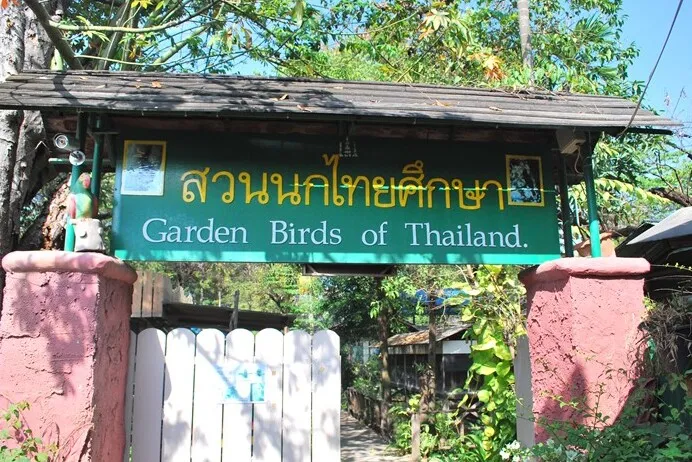
Thai Bird Garden
Open Days: Daily
Opening Hours: 08.30 – 17.00
Thai Bird Garden in Phitsanulok is an educational and conservation-oriented attraction located on Wisut Kasat Road, Soi 17, in Mueang Phitsanulok District. The garden introduces visitors to many bird species found in Thailand, including rare birds, endangered birds, birds known from Thai literature, and species that are important for understanding biodiversity and ecological balance. It is not only a place to see colorful birds. It is also a learning space where children, families, students, nature lovers, and foreign travelers can understand the role of birds in forests, gardens, wetlands, culture, and everyday human imagination.
In simple terms, Thai Bird Garden is a compact but meaningful nature-learning destination in Phitsanulok city. It displays around 120 bird species and is especially known for birds such as the Jambu fruit dove, the helmeted hornbill, and several birds that appear in Thai literature and cultural memory, including the yellow oriole, barbet, koel, green magpie, and other melodious or mimicking birds. The garden is located opposite Sgt. Maj. Thawee Folk Museum and near Buranathai Buddha Casting Foundry, making it easy to combine natural learning, folk culture, and local craftsmanship in one city itinerary.
The name Thai Bird Garden clearly suggests that this place is designed for learning. Visitors can observe the physical characteristics of birds, including color, body size, beak shape, legs, feathers, movement, and sound. These details help visitors understand how each bird is adapted to its way of life. A bird’s beak may reveal what it eats. Its legs may show whether it perches, walks, climbs, or catches prey. Its color may help attract a mate, warn others, or blend into its surroundings. For children, seeing real birds makes nature more understandable than studying pictures alone.
Birds play important roles in ecosystems. Some species disperse seeds, some control insects, and some act as indicators of healthy habitats. Birds are also connected with Thai culture, poetry, songs, folktales, and daily language. Visiting Thai Bird Garden therefore gives travelers more than a visual experience. It helps them see how wildlife, forests, language, and cultural imagination are connected.
One of the most attractive birds mentioned in connection with the garden is the Jambu fruit dove, known for its striking colors. Birds like this help visitors understand the beauty and diversity of tropical birdlife. Fruit-eating birds are also important for forest regeneration because they help spread seeds. Seeing such birds in an educational setting can help visitors understand why forest conservation matters.
Another remarkable bird is the helmeted hornbill, a large and unusual-looking bird with a prehistoric appearance, a bare throat, and a distinctive head structure. Hornbills are extremely important in tropical forest ecosystems because they disperse large seeds. Learning about hornbills also encourages visitors to think about forest protection, nesting trees, wildlife trade, and the need to protect natural habitats for large birds.
Thai Bird Garden is also interesting because it includes birds familiar from Thai literature and cultural memory. Birds such as orioles, barbets, koels, green magpies, and other songbirds appear in poems, songs, stories, and everyday expressions. These birds are not only biological species; they are part of the Thai soundscape and imagination. Seeing them in person helps visitors understand how nature has shaped Thai language, literature, and rural memory.
Some birds in the garden are known for melodious calls or the ability to imitate human sounds. This ability often fascinates children and families. However, bird calls are not just entertainment for people. They are communication tools used for attracting mates, defending territory, warning others, or keeping contact with a group. Listening carefully to birds can therefore become a lesson in animal behavior.
The garden atmosphere is shaded and planted with many trees, creating a more pleasant environment for both birds and visitors. Trees provide resting places, shade, and a more natural feeling within the display area. For visitors, the greenery makes the experience calmer than an ordinary urban attraction. A good nature-learning space should allow people to experience not only animals but also the surrounding environment of leaves, shade, air, and sound.
The walking layout allows visitors to observe birds at their own pace. Young children may focus on colors and sounds. Older students can compare species and physical features. Adults can observe behavior, read information, and connect what they see with broader issues such as habitat loss and wildlife conservation. A slow visit is more rewarding than a quick walk, because birds often reveal their behavior through small movements, calls, feeding, and resting patterns.
For families, Thai Bird Garden is a useful place to introduce children to wildlife. Parents can turn a visit into a conversation: why does one bird have a long beak, why does another bird have bright feathers, why do some birds call loudly, and why do birds need forests? These questions help children build curiosity and empathy toward living creatures. This kind of learning can create lasting respect for nature.
For schools and students, the garden can support learning in biology, environmental science, social studies, Thai literature, and cultural studies. Students can learn about classification, adaptation, ecology, animal behavior, conservation, and the cultural role of birds in Thailand. Seeing real animals helps connect classroom knowledge with direct experience.
Thai Bird Garden is also important for conservation awareness. Many bird species in Thailand face pressure from habitat loss, hunting, illegal wildlife trade, disturbance of nesting sites, and environmental change. When visitors see rare or endangered birds up close, conservation becomes easier to understand. They learn that every species needs food, shelter, space, and a healthy ecosystem.
Visitors should behave responsibly while walking through the garden. They should not knock on cages, feed birds without permission, make loud noises, use flash photography near birds, or disturb them for photos. Birds are sensitive to sound, movement, and stress. A respectful visit is part of conservation education.
The location of Thai Bird Garden is very convenient. It is opposite Sgt. Maj. Thawee Folk Museum and close to Buranathai Buddha Casting Foundry. Travelers can begin with the folk museum to learn about traditional Thai life, continue to Thai Bird Garden to learn about birds and nature, and then visit the Buddha casting area to understand local craftsmanship. This small route gives visitors culture, craft, and nature within the same neighborhood.
Within a broader Phitsanulok city itinerary, Thai Bird Garden adds variety. Many travelers know Phitsanulok for Wat Phra Si Rattana Mahathat Woramahawihan, Phra Buddha Chinnarat, Chan Palace, and the Nan River. Thai Bird Garden introduces another side of the city: a small learning space for wildlife and biodiversity. It is especially suitable for families who want a relaxed educational stop between temple visits and museum visits.
Getting There is easy because the garden is located in Phitsanulok city on Wisut Kasat Road, Soi 17. Visitors can travel by private car, local taxi, tuk-tuk, or ride-hailing service. From Phitsanulok Railway Station, the journey is short. From Phitsanulok Airport, travelers can take a taxi or local transport into the city and continue to the Wisut Kasat Road area.
The best time to visit is in the morning or later afternoon, when the weather is more comfortable for walking. Families with children or elderly visitors should bring drinking water, a hat, or an umbrella. Visitors who take their time will be able to notice more details, such as perching, wing movement, feeding behavior, calling, and interaction with the environment.
Photography should be done carefully. Visitors should avoid flash near birds, avoid knocking on enclosures to make birds move, and avoid sudden movements. Good wildlife photography is based on patience and respect. The goal should be to observe birds naturally, not to force them into a pose.
For foreign travelers, Thai Bird Garden is a useful introduction to tropical birds in Thailand. Many Thai birds have colors, forms, and sounds that differ greatly from birds in temperate countries. Seeing hornbills, colorful fruit doves, songbirds, and birds from Thai literature helps international visitors understand the richness of Thai nature and cultural imagination.
The relationship between birds and Thai literature is another valuable learning point. Thai bird names often carry beautiful sounds and cultural associations. Birds appear in poems, songs, folktales, and everyday expressions. By seeing real birds, visitors can better understand how nature has shaped Thai language and literary imagery.
Bird conservation cannot be separated from habitat conservation. Many birds need large trees, nesting sites, fruiting plants, insects, water sources, and quiet areas. A visit to Thai Bird Garden can lead to a broader understanding that planting trees, reducing chemical use, avoiding wildlife trade, and protecting natural habitats are all part of helping birds survive.
In summary, Thai Bird Garden in Phitsanulok is a valuable educational and conservation attraction in the city. It is suitable for families, students, nature lovers, cultural travelers, and foreign visitors who want to learn about Thai birds. With around 120 bird species, a shaded garden atmosphere, rare birds, birds from Thai literature, and a convenient location near Sgt. Maj. Thawee Folk Museum, the garden offers more than a simple sightseeing stop. It helps visitors understand the relationship between birds, nature, culture, and human responsibility toward the environment.
| Name | Thai Bird Garden |
| Location | Wisut Kasat Road, Soi 17, Mueang Phitsanulok District, Phitsanulok Province |
| Address | 26/43 Wisut Kasat Road, Soi 17, Mueang Phitsanulok District, Phitsanulok Province 65000 |
| Highlights | A learning and conservation garden displaying around 120 Thai bird species, including rare birds, endangered birds, birds from Thai literature, the Jambu fruit dove, and the helmeted hornbill |
| Importance | An educational attraction for learning about Thai birds, biodiversity, ecosystems, and wildlife conservation in Phitsanulok city |
| Distinctive Features | A shaded garden with many trees, designed to provide a more natural atmosphere for birds and a pleasant learning environment for visitors |
| Interesting Birds | Jambu Fruit Dove, Helmeted Hornbill, Orioles, Barbets, Koels, Green Magpies, and other Thai bird species |
| Open Days | Daily |
| Opening Hours | 08.30 – 17.00 |
| Admission Fee | Adults 50 Baht, Children 20 Baht |
| Travel Information | Located in Phitsanulok city on Wisut Kasat Road, Soi 17, opposite Sgt. Maj. Thawee Folk Museum. Accessible by private car, local taxi, tuk-tuk, or ride-hailing service. |
| Current Status | An educational and conservation-oriented bird attraction in Phitsanulok city |
| Facilities | Bird viewing areas, shaded garden, Thai bird learning areas, nearby museums, restaurants, cafés, and city accommodation options |
| Main Areas / Zones | Thai Bird Display Area, Rare Bird Area, Birds From Thai Literature Area, Shaded Garden, And Walking Route Inside The Bird Garden |
| Caretaker / Local Authority | Thai Bird Garden / Privately Managed Local Attraction In Phitsanulok City |
| Main Contact Number | 055-212-540 |
| Official Website / Official Page | Thai Bird Garden, Phitsanulok Province |
| Nearby Tourist Attractions | 1. Sgt. Maj. Thawee Folk Museum, about 100 m 2. Buranathai Buddha Casting Foundry, about 100 m 3. Phitsanulok Night Bazaar, about 2 km 4. Wat Phra Si Rattana Mahathat Woramahawihan, about 3 km 5. Chan Palace, about 4 km |
| Nearby Restaurants | 1. Krua Restaurant, Sanam Bin Road, about 1 km 2. Cafe Veggie, about 2 km 3. Kor Khaotom Kui 1, about 1 km 4. TASTETURE Pathum Thong, about 3 km, Tel. 062-363-2525 5. Restaurants And Cafés Around Sanam Bin-Wisut Kasat Area, about 1 km |
| Nearby Accommodations | 1. The 8 Factory Hotel Phitsanulok, about 600 m, Tel. 098-265-9656 2. Mayflower Grande Hotel Phitsanulok, about 1 km 3. The Park Hotel Phitsanulok, about 2 km, Tel. 055-252-955 4. Fortune D Hotel Phitsanulok, about 3 km, Tel. 055-303-833 5. The Harmony Ville, about 4 km, Tel. 097-923-4272, 055-241-188 |
Frequently Asked Questions (FAQ)
Q: Where is Thai Bird Garden located?
A: Thai Bird Garden is located at 26/43 Wisut Kasat Road, Soi 17, Mueang Phitsanulok District, Phitsanulok Province, opposite Sgt. Maj. Thawee Folk Museum.
Q: What birds can visitors see at Thai Bird Garden?
A: Visitors can see around 120 bird species, including the Jambu fruit dove, helmeted hornbill, orioles, barbets, koels, green magpies, and other Thai bird species.
Q: What are the opening hours of Thai Bird Garden?
A: Thai Bird Garden is open daily from 08.30 to 17.00.
Q: How much is the admission fee?
A: Admission is 50 baht for adults and 20 baht for children.
Q: Who should visit Thai Bird Garden?
A: It is suitable for families, children, students, nature lovers, bird enthusiasts, conservation travelers, and foreign visitors who want to learn about Thai birds.
Q: How can travelers get to Thai Bird Garden?
A: Travelers can reach the garden by private car, local taxi, tuk-tuk, or ride-hailing service from central Phitsanulok. It is located on Wisut Kasat Road in the city area.
Q: What should visitors avoid while visiting?
A: Visitors should avoid knocking on cages, feeding birds without permission, using flash near birds, making loud noises, or doing anything that may stress the birds.
Q: What nearby attractions can be visited on the same trip?
A: Visitors can combine the trip with Sgt. Maj. Thawee Folk Museum, Buranathai Buddha Casting Foundry, Wat Phra Si Rattana Mahathat Woramahawihan, Chan Palace, and Phitsanulok Night Bazaar.
Tel : 055212540
 Tel : 055212540
 Category: ●Educational Places
 Group: ●Educational Gardens, Farm
Last Update : 5 MonthAgo
 Last Update : 5 MonthAgo
 Click to Access the Navigation Map GPS
 Art, Culture and Heritage
 Historical Sites and Monuments(1)
 Landmarks and Memorials(2)
 Art, Craft Centres, Tradition(3)
 Museums(3)
Educational Gardens, Farm(1)
Museums(3)
Educational Gardens, Farm(1)
 Places of Worship
 Temple(29)
 Mosque(1)
 Other Sacred Sites(3)
 Research and Development
 Royal Project(1)
 Suburban Living
 Village, Community(1)
 Nature and Wildlife
 National Parks and Marine Reserves(7)
 Mountain (Doi)(4)
 Dam, Reservoir, Lake(5)
 Waterfalls(19)
 Caves(3)
 River, Canal(9)
 Other natural attractions(1)
 Entertainment and Agricultural
 Farms, Parks and Ecotourism(2)
 Outdoor and Adventure Activities(1)
 Travel Articles, Recipes
 Travel Review, Food Review(1)


