
lovethailand home >North Travel Attractions >Phitsanulok Travel Attractions >Muang Phitsanulok >Tha Pho > Naresuan University Textile Museum
TL;DR: Naresuan University Textile Museum is located at Naresuan University, Tha Pho Subdistrict, Mueang Phitsanulok District, Phitsanulok Province, open Monday-Friday, hours 08.30 – 16.30.

Naresuan University Textile Museum
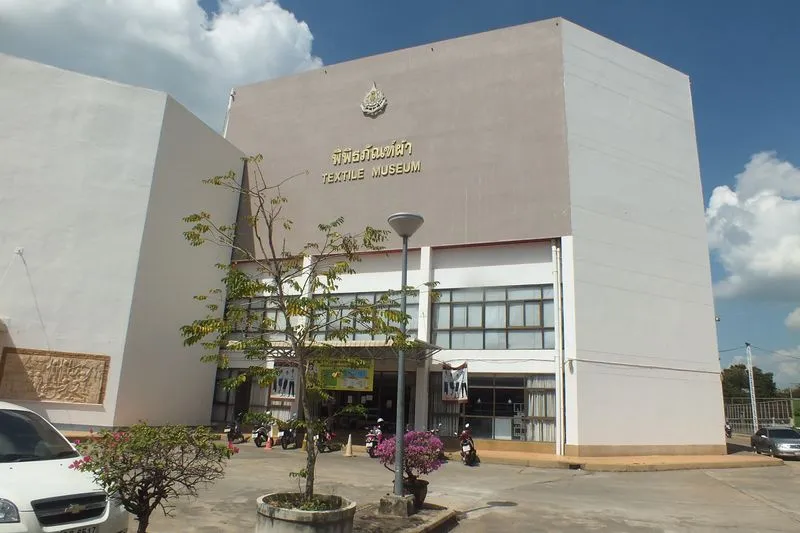
Open Days: Monday-Friday
Opening Hours: 08.30 – 16.30
Naresuan University Textile Museum in Phitsanulok Province is one of the most important learning centers for textiles, local wisdom, and cultural heritage in lower northern Thailand. Located within Naresuan University in Tha Pho Subdistrict, Mueang Phitsanulok District, the museum is not merely a place where old fabrics or textile products are displayed. It is a cultural space where visitors can learn how cloth connects with human life, community identity, ethnic traditions, craftsmanship, belief, daily use, and the wider history of Thai culture.
In simple terms, Naresuan University Textile Museum is a recommended destination for anyone interested in Thai textiles, handwoven fabrics, silk, cotton, ethnic clothing, Tai Khrang textiles, Tai Song Dam culture, Chitralada textiles, and the royal garments of Her Majesty Queen Sirikit The Queen Mother. The museum presents cloth not only as a beautiful material but also as cultural evidence. Through its exhibitions, visitors can understand how textiles reveal the knowledge, creativity, social values, religious practices, and ways of life of different communities.
The museum was established from Naresuan University’s recognition of the importance of preserving textile wisdom, especially handwoven fabrics and cotton-based products that are closely linked with rural life. The project also received support from Chitralada Shop, which is connected with the SUPPORT Foundation and royal initiatives encouraging supplementary occupations for rural communities. For this reason, the museum is not simply an exhibition venue. It is part of a larger effort to preserve Thai textile knowledge, support local craftsmanship, and pass cultural memory to future generations.
Textiles are among the most intimate objects in human life. People use cloth from birth to death. Cloth protects the body, marks social status, identifies ethnic groups, expresses beauty, supports religious rituals, and carries emotional memory. Naresuan University Textile Museum helps visitors see that fabric is more than clothing. It is a cultural language written in fiber, color, pattern, technique, and use.
The museum displays textiles and textile products from different regions of Thailand and beyond. Visitors can observe various materials such as cotton, silk, and other natural fibers, as well as different weaving techniques and patterns associated with particular communities. Each textile reflects the environment, resources, beliefs, and aesthetics of the people who made and used it. By looking closely at the fabrics, visitors can understand how communities transform natural materials into objects of meaning and beauty.
One of the most important parts of the museum is the exhibition on Tai Khrang textiles. The Tai Khrang, also known in some contexts as Lao Khrang, are an ethnic group with a strong textile tradition. Their history involves migration from Laos during the reign of King Rama III and settlement in several provinces of lower northern Thailand. The textile exhibition therefore helps visitors understand cloth as evidence of migration, settlement, identity preservation, and cultural continuity.
Tai Khrang textiles are known for strong and vivid colors, especially deep lac red, yellow, orange, indigo, and contrasting color combinations. These patterns are not made only for visual beauty. They are connected with belief, ritual, natural power, and community identity. The traditional tube skirts and supplementary-weft patterns of Tai Khrang women are especially meaningful because they reflect both technical mastery and symbolic value. Through these textiles, visitors can see how a community expresses its worldview on cloth.
Another important cultural group represented in the museum is the Tai Song Dam, also known as Tai Dam or Lao Song Dam. Their clothing culture is strongly associated with black garments, distinctive forms of dress, and ancestral beliefs. Exhibits include garments such as traditional shirts, wrappers, headcloths, bags, bedding, household textiles, and everyday objects. These items show how clothing and household fabrics are connected with family life, ritual practice, and spiritual belief.
The Tai Song Dam exhibition is valuable because it shows that dress and textile objects can reveal the structure of a society. Black clothing is not merely a color choice. It is a marker of group identity and cultural memory. Household objects and ritual items displayed together create a cultural classroom where visitors can read community life through real objects rather than abstract explanation alone.
Another highlight is the Chitralada Textile Museum room, which displays royal garments of Her Majesty Queen Sirikit The Queen Mother, ancient patterned textiles, and products from Chitralada Shop. This section connects Thai textiles with royal patronage, craftsmanship, and the movement to support rural supplementary occupations. The fabrics and garments displayed here have artistic, historical, and social value. They show how Thai textiles can express elegance, national identity, and the dignity of local craftsmanship.
The royal garments on display are among the most important highlights for visitors interested in Thai textiles. They demonstrate refined fabric selection, color harmony, pattern design, tailoring, and craftsmanship. Viewing these garments allows visitors to understand how Thai textiles can be elevated from local material culture into national cultural heritage. They also reflect the role of royal support in encouraging the preservation and development of Thai weaving traditions.
Chitralada Shop and the SUPPORT Foundation are central to the story of the museum. Their work encouraged rural families to use weaving, embroidery, sewing, and craft skills as supplementary occupations. This gave local people additional income while helping preserve traditional knowledge. Learning about this background helps visitors understand that behind beautiful textiles are the lives of farmers, weavers, craftswomen, and communities who turned local skill into cultural and economic value.
The museum also includes a learning and information section with books, articles, research materials, videos, and other media related to textiles. This makes it useful not only for general visitors but also for students, researchers, designers, teachers, and anyone who wants to study textile knowledge in greater depth. The museum therefore functions as both a cultural attraction and an academic resource.
Visitors interested in weaving techniques, natural dyeing, fiber selection, and pattern creation will find the museum especially meaningful. A single piece of cloth may begin with planting cotton, collecting fibers, spinning thread, dyeing, setting up the loom, weaving, finishing the edges, and finally using the cloth in daily life or ritual. Each stage requires skill, patience, and cultural understanding. The museum helps make these hidden processes visible.
Naresuan University Textile Museum is also important in the present day because many traditional ways of life are changing rapidly. Younger generations may no longer see handweaving as part of everyday life, and modern clothing has reduced the use of local textiles in some settings. A museum like this preserves the memory of weavers and communities while showing that traditional textiles remain relevant as inspiration for design, fashion, craft, and contemporary art.
As a university-based museum, it links education with community heritage. Students from many fields can use it as a learning space, including fine arts, textile design, history, anthropology, cultural studies, tourism, and museum studies. At the same time, general visitors can enjoy the exhibitions without academic background because textiles are part of everyone’s daily experience.
For travelers visiting Phitsanulok, the museum adds an important cultural dimension to the province. Many visitors know Phitsanulok through Wat Phra Si Rattana Mahathat, Phra Buddha Chinnarat, the Nan River, or natural routes outside the city. The Textile Museum shows another side of the province: a city of knowledge, university culture, craftsmanship, and local wisdom. It is suitable for travelers who want a more thoughtful and educational travel experience.
Visitors should allow around 1-2 hours to explore the museum at a comfortable pace. Those who want to study Tai Khrang textiles, Tai Song Dam culture, Chitralada textiles, or textile research materials in greater detail may need more time. Textile viewing rewards patience. Small details such as color, thread, border pattern, weaving density, and finishing technique often reveal much about the maker and the community behind the cloth.
Museum etiquette is important. Visitors should follow the rules, avoid touching textiles or display objects unless permitted, avoid flash photography if restricted, and keep a respectful distance from fragile materials. Textiles are sensitive to light, humidity, dust, and touch. Proper visitor behavior helps preserve the objects for future study and appreciation.
Getting There is convenient by private car from Phitsanulok city. The museum is located inside Naresuan University in Tha Pho Subdistrict. Visitors traveling from Phitsanulok Railway Station or Phitsanulok Airport can use local transport or ride-hailing services. The distance from central Phitsanulok to Naresuan University is around 13-15 km, depending on the starting point and route.
The area around Naresuan University has restaurants, cafés, accommodation, and student-oriented services, making the museum easy to include in a half-day or full-day itinerary. Visitors who want to continue sightseeing in Phitsanulok can combine the museum with Wat Chulamani, Sgt. Maj. Thawee Folk Museum, Wat Phra Si Rattana Mahathat Woramahawihan, Wat Nang Phaya, Chan Palace, and the Nan River old town area.
For foreign visitors, the museum provides an accessible way to understand Thai culture through physical objects. Textiles, colors, patterns, clothing, and traditional tools can communicate even when visitors do not know Thai language deeply. Seeing Tai Khrang textiles, Tai Song Dam garments, and Chitralada textiles in one place helps international visitors understand the diversity of Thai culture at royal, local, and ethnic levels.
The museum also offers inspiration for designers and contemporary artists. Traditional patterns, natural colors, and weaving techniques can be studied and respectfully reinterpreted in new creative work. A visit may inspire fashion design, graphic design, craft development, interior decoration, or community product development while still honoring cultural roots.
As a cultural tourism destination, the museum is suitable for many groups. Families can introduce children to textiles and local life. Students can use the museum as an educational site outside the classroom. Researchers can explore deeper information. Craft lovers can appreciate the skill of woven textiles. The museum is not limited to specialists; it is open to anyone who wants to understand culture through cloth.
Naresuan University Textile Museum is therefore an exhibition space, a conservation space, a learning center, and a source of inspiration at the same time. Its value lies in making ordinary-looking fabric visible as living cultural evidence. Every textile has a story of the maker, the wearer, the community, belief, and time. Walking through the museum is like walking through histories woven in thread.
In summary, Naresuan University Textile Museum in Phitsanulok Province is a valuable destination for anyone interested in Thai textiles, local weaving, ethnic communities, natural dyeing, royal textile heritage, and lower northern Thai culture. The museum features handwoven fabrics, silk, cotton, Tai Khrang textiles, Tai Song Dam clothing, royal garments of Her Majesty Queen Sirikit The Queen Mother, Chitralada products, academic textile resources, and Thai textile products. A visit here provides knowledge, cultural insight, and appreciation for the creativity and wisdom of Thai weavers from the past to the future.
| Name | Naresuan University Textile Museum |
| Location | Naresuan University, Tha Pho Subdistrict, Mueang Phitsanulok District, Phitsanulok Province |
| Address | Division Of Art And Culture Promotion, Naresuan University, Wisutkasat Building, 99 Moo 9, Tha Pho Subdistrict, Mueang Phitsanulok District, Phitsanulok Province 65000 |
| Reference Coordinates | 16.7528, 100.1922 |
| Highlights | Thai textiles, local woven fabrics, Tai Khrang textiles, Tai Song Dam garments, Chitralada Textile Museum room, royal garments of Her Majesty Queen Sirikit The Queen Mother, and Chitralada textile products |
| History / Importance | The museum was established to preserve textile wisdom and was supported by Chitralada Shop. It officially opened on December 1, 1999. |
| Distinctive Features | A textile learning center presenting Thai textiles, ethnic fabrics, textile research materials, videos, books, and knowledge about weaving, dyeing, patterns, and textile culture |
| Key Cultural Groups | Tai Khrang, Tai Song Dam, and local weaving communities of lower northern Thailand |
| Open Days | Monday-Friday |
| Opening Hours | 08.30 – 16.30 |
| Fees | Free Admission |
| Travel Information | Travel from central Phitsanulok to Naresuan University in Tha Pho Subdistrict by private car, local transport, or ride-hailing service. The trip usually takes about 20-30 minutes depending on traffic. |
| Current Status | A textile and cultural learning center under the Division Of Art And Culture Promotion, Naresuan University |
| Facilities | Exhibition areas, Chitralada Textile Museum room, rotating exhibition room, textile information library, Thai textile product shop, and university facilities |
| Main Areas / Zones | Tai Khrang Textile Room, Tai Song Dam Textile Room, Chitralada Textile Museum Room, Rotating Exhibition Area, Textile Information Library, And Thai Textile Product Sales Area |
| Caretaker / Local Authority | Division Of Art And Culture Promotion, Naresuan University |
| Main Contact Number | Learning Resource Unit Tel. 055-961207 General Affairs Tel. 055-961143, 055-961148 NU Souvenir And Textiles Tel. 055-961217, 055-961218 |
| Official Website / Official Page | Division Of Art And Culture Promotion, Naresuan University, And Naresuan University Textile Museum |
| Nearby Tourist Attractions | 1. Wat Chulamani, about 8 km 2. Sgt. Maj. Thawee Folk Museum, about 13 km 3. Wat Phra Si Rattana Mahathat Woramahawihan, about 16 km 4. Wat Nang Phaya, about 16 km 5. Chan Palace, about 17 km |
| Nearby Restaurants | 1. HaremBell Near Naresuan University, about 1 km 2. TEA SHAKE Milk Tea, about 1 km 3. On At Rot Restaurant, Naresuan University Gate 4, about 1 km 4. Restaurants And Cafés Around Naresuan University Gate 4, about 1 km 5. Local Restaurants In Tha Pho Community, about 2 km |
| Nearby Accommodations | 1. Kresident Hotel, about 1 km, Tel. 055-331192, 093-6649191 2. The State Resort, about 7 km 3. Phitsanulok United Hotel, about 7 km, Tel. 055-218800 4. Taman Resort, about 12 km, Tel. 095-5072989 5. The Zense Boutique Hotel, about 14 km, Tel. 053-249820, 053-249824, 087-7817777 |
Frequently Asked Questions (FAQ)
Q: Where is Naresuan University Textile Museum located?
A: It is located inside Naresuan University in Tha Pho Subdistrict, Mueang Phitsanulok District, Phitsanulok Province, under the Division Of Art And Culture Promotion.
Q: What can visitors see inside the museum?
A: Visitors can see handwoven textiles, silk, cotton, Tai Khrang textiles, Tai Song Dam garments, the Chitralada Textile Museum room, royal garments of Her Majesty Queen Sirikit The Queen Mother, and exhibitions on Thai textile culture.
Q: When is the museum open?
A: The museum is open Monday-Friday from 08.30 to 16.30. Visitors should contact the Learning Resource Unit before visiting as a group or during special activities.
Q: Is there an admission fee?
A: No. Admission is free, making the museum suitable for students, researchers, families, travelers, and anyone interested in Thai textiles and local wisdom.
Q: What is the main highlight of the museum?
A: The highlights include the Chitralada Textile Museum room, royal garments of Her Majesty Queen Sirikit The Queen Mother, ancient patterned textiles, Chitralada products, and textile exhibitions of ethnic groups such as Tai Khrang and Tai Song Dam.
Q: Who should visit Naresuan University Textile Museum?
A: It is suitable for textile lovers, designers, artists, students, researchers, cultural travelers, families, and foreign visitors who want to understand Thai culture through fabric and weaving.
Q: How much time should visitors spend at the museum?
A: Visitors should allow around 1-2 hours. Those who want to study Tai Khrang textiles, Tai Song Dam culture, Chitralada textiles, and academic textile resources may need more time.
Q: What nearby attractions can be combined with a visit?
A: Visitors can combine the museum with Wat Chulamani, Sgt. Maj. Thawee Folk Museum, Wat Phra Si Rattana Mahathat Woramahawihan, Wat Nang Phaya, Chan Palace, and the Nan River old town area.
Tel : 0552610004
 Tel : 0552610004
 Category: ●Art, Culture and Heritage
 Group: ●Museums
Last Update : 4 MonthAgo
 Last Update : 4 MonthAgo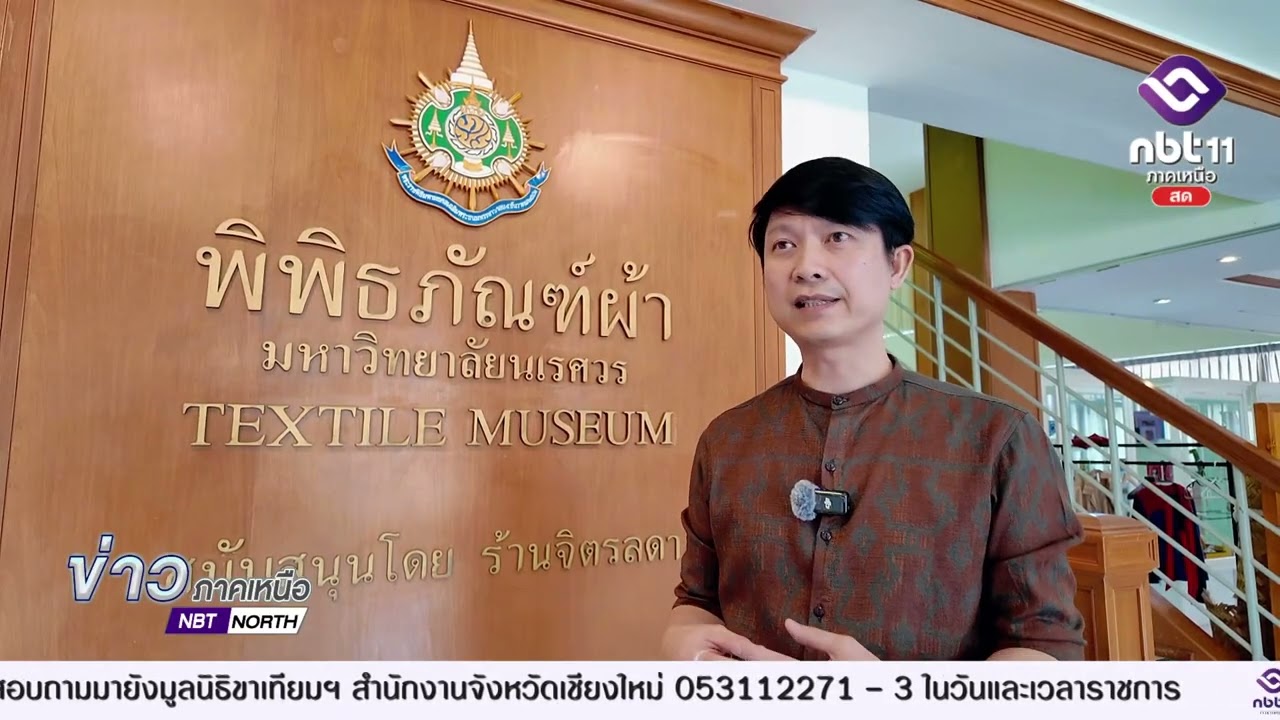
 Click to Access the Navigation Map GPS
Naresuan University Textile Museum Map
Recommend

 Historical Sites and Monuments(1)
 Landmarks and Memorials(2)
 Art, Craft Centres, Tradition(3)
Museums(3)
Art, Craft Centres, Tradition(3)
Museums(3)
 Educational Places
 Educational Gardens, Farm(1)
 Places of Worship
 Temple(29)
 Mosque(1)
 Other Sacred Sites(3)
 Research and Development
 Royal Project(1)
 Suburban Living
 Village, Community(1)
 Nature and Wildlife
 National Parks and Marine Reserves(7)
 Mountain (Doi)(4)
 Dam, Reservoir, Lake(5)
 Waterfalls(19)
 Caves(3)
 River, Canal(9)
 Other natural attractions(1)
 Entertainment and Agricultural
 Farms, Parks and Ecotourism(2)
 Outdoor and Adventure Activities(1)


