
lovethailand home >North Travel Attractions >Phitsanulok Travel Attractions >Wat Bot >Ban Yang > Khao Noi-Khao Pradu Non-Hunting Area
TL;DR: Khao Noi-Khao Pradu Non-Hunting Area is located at Ban Pa Khai, Village No. 2, Ban Na Yang Subdistrict, Wat Bot District, Phitsanulok Province, open Daily, hours 08.30 – 16.30.

Khao Noi-Khao Pradu Non-Hunting Area
Open Days: Daily
Opening Hours: 08.30 – 16.30
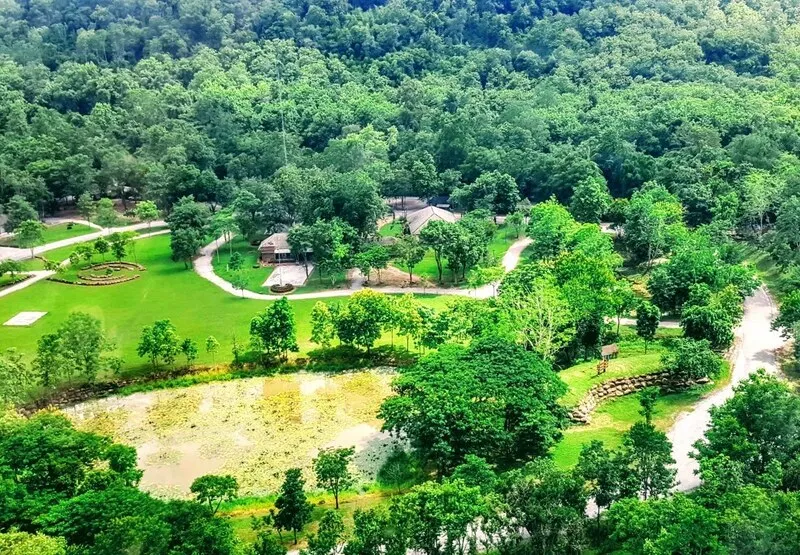
Khao Noi-Khao Pradu Non-Hunting Area in Phitsanulok Province is a large protected natural area in Wat Bot District, ideal for nature lovers, ecology students, landscape photographers, and travelers who want to experience a quieter and more authentic side of northern Thailand. The area is located around Ban Pa Khai, Village No. 2, Ban Na Yang Subdistrict, Wat Bot District, about 45 kilometers from Phitsanulok city. Covering more than 80,000 rai, it was officially designated as a non-hunting area on 28 May 1998 to protect wildlife, natural habitats, and forest ecosystems. With elevations ranging from about 100 to 500 meters above mean sea level, the landscape includes low mountains, dry evergreen forest, mixed deciduous forest, dry dipterocarp forest, grassland, small streams, and seasonally moist habitats. This makes the area one of the important ecological learning sites in Wat Bot District.
The main appeal of Khao Noi-Khao Pradu is not only its size, but also the diversity of its forest types. Dry evergreen forest helps maintain moisture and offers shelter for many kinds of wildlife. Mixed deciduous forest changes with the seasons as trees shed and regrow leaves. Dry dipterocarp forest allows more sunlight to reach the forest floor, supporting seasonal herbs and wildflowers. Open grassland adds another layer of ecological diversity and gives the landscape a wider, more spacious character. Travelers visiting during the rainy season or early cool season can see the forest at its most vivid, with refreshed vegetation, seasonal flowers, and a calmer atmosphere that differs greatly from urban sightseeing.
The best period for an ecological visit is from May to December, when the forest becomes greener and more active after the rains. During this time, seasonal plants such as Siam tulips and wild orchids may appear in suitable areas, while streams and moist habitats regain life. For visitors interested in learning about ecology, this area functions as an outdoor classroom where they can observe how forest, soil, water, plants, and wildlife interact. It also demonstrates the importance of a non-hunting area, which protects wildlife habitats and reduces pressure from unsustainable resource use.
One of the most significant natural stories connected with this area is the presence of Pu Paeng, also known as Pu Song Khwae, a rare forest crab associated with the moist forest ecosystems of Phitsanulok. This crab reflects the ecological richness of the area because forest crabs require clean water, humidity, shaded habitats, and safe hiding places around streams or rocks. The presence of such wildlife makes Khao Noi-Khao Pradu more than a scenic forest destination; it is also a biologically important conservation area. Visitors should observe nature carefully, avoid touching or capturing wildlife, and never remove animals or plants from the forest.
The atmosphere at Khao Noi-Khao Pradu is calm, simple, and close to nature. It is not a heavily commercialized attraction with large-scale facilities, but a protected landscape where visitors can appreciate the forest in a more natural condition. The experience includes quiet trails, the sound of insects and birds, the smell of moist soil after rain, and the visual contrast between forest, grassland, and low hills. For travelers who prefer meaningful nature trips over crowded sightseeing spots, this area offers a rewarding and contemplative experience.
For photographers, Khao Noi-Khao Pradu offers several natural subjects: grassland against mountain ridges, dry dipterocarp forest in soft morning or late-afternoon light, seasonal flowers, forest paths covered with leaves and stones, and the rural landscape along the route from Phitsanulok city to Wat Bot District. Its photographic appeal lies in its natural and unpolished character. Visitors should bring a camera or a fully charged phone and, when possible, plan their visit during softer light for better landscape images.
A visit to this non-hunting area can be planned as a half-day or full-day nature trip, especially for travelers staying in Phitsanulok city or passing through Wat Bot District. Basic preparation is important. Visitors should bring drinking water, suitable walking shoes, a hat, insect repellent, and a bag for carrying personal waste out of the area. Some parts of the site are natural and less developed than city attractions, so good preparation makes the trip safer and reduces disturbance to the protected environment.
Road conditions should be considered carefully. The final access sections include dirt roads and areas where vehicles may need to pass shallow streams, particularly during the rainy season. A vehicle suitable for rougher terrain is recommended during wet periods. Travelers should contact local staff before visiting to check the latest road conditions. In natural areas, weather, slippery ground, temporary water flow, and changing road surfaces can affect safety and travel time.
From a conservation perspective, Khao Noi-Khao Pradu is much more than a tourist destination. It protects wildlife habitats, reduces illegal hunting pressure, preserves biodiversity, and functions as a natural buffer that supports the wider ecosystem of Phitsanulok Province. Forested landscapes in this region play an important role in soil moisture, local water systems, and ecological balance. Responsible travel therefore directly supports conservation. Visitors should stay on permitted routes, avoid loud noise, never feed wildlife, never collect plants, and take all waste back with them.
The most suitable travel period is from May to December. Those who want to see lush greenery and seasonal wildflowers should consider the rainy season or early cool season, while travelers who prefer easier road access may choose the late rainy season when the forest remains green but road conditions may be more manageable. Small-group travel is especially suitable because it reduces environmental impact and makes safety management easier.
Khao Noi-Khao Pradu is also a valuable site for educational field trips. Students can learn about forest types, elevation, seasonal plant life, endemic or rare wildlife, the role of wildlife officers, and the relationship between local communities and natural resources. Learning in the actual landscape helps visitors understand that a forest is not simply a collection of trees, but a living system made up of many interdependent elements.
Travelers can also combine Khao Noi-Khao Pradu with other attractions in Phitsanulok Province. A well-planned itinerary may include Kaeng Chet Khwae National Park, Wat Phra Si Rattana Mahathat Woramahawihan, Sergeant Major Thawee Folk Museum, Wat Ratchaburana, and the old urban area of Phitsanulok. This kind of route allows visitors to experience nature, history, Buddhist art, local culture, and regional food in a single trip. One practical plan is to visit the natural area in Wat Bot District during the morning and return to Phitsanulok city for temples, museums, and dinner in the evening.
Getting There from Phitsanulok city, travelers can head toward Wat Bot District using Highway 12, continue via Highway 11, and then follow the route toward Ban Na Kham and Highway 1220 before entering the non-hunting area. The distance from the city is about 45 kilometers. The last section includes natural road conditions and dirt surfaces, so visitors should check the vehicle, prepare enough fuel, and ask local staff or nearby communities for the latest route information before traveling, especially during the rainy season.
Upon arrival, visitors should first contact staff at the non-hunting area office to ask about nature trails, permitted areas, current conditions, and visitor guidelines. Entering the forest without checking with staff is not recommended because conditions can change by season. Guidance from local officers helps make the trip safer and keeps visitor activities aligned with conservation rules.
Khao Noi-Khao Pradu Non-Hunting Area is therefore a meaningful destination for travelers who want to understand the natural depth of Phitsanulok. It is not just a beautiful green space; it is a place to learn how forests support people, wildlife, water, soil, and biodiversity. Its value lies in conservation, ecological education, rare wildlife, and peaceful nature experiences. Visiting with respect helps preserve this important green landscape for future generations.
| Name | Khao Noi-Khao Pradu Non-Hunting Area |
| Location | Ban Pa Khai, Village No. 2, Ban Na Yang Subdistrict, Wat Bot District, Phitsanulok Province |
| Address | Village No. 2, Ban Na Yang Subdistrict, Wat Bot District, Phitsanulok 65160, Thailand |
| Highlights | Protected natural area covering more than 80,000 rai, with dry evergreen forest, mixed deciduous forest, dry dipterocarp forest, grassland, Siam tulips, wild orchids, and the rare Pu Paeng or Pu Song Khwae forest crab |
| History | Officially designated as a non-hunting area on 28 May 1998 |
| Distinctive Features | Elevation ranges from about 100 to 500 meters above mean sea level, with diverse forest ecosystems suitable for ecological study |
| Travel Information | About 45 km from Phitsanulok city via Highway 12, Highway 11, and Highway 1220. The final section includes dirt roads and stream crossings; a suitable vehicle is recommended during the rainy season |
| Current Status | Open as a nature-based attraction and conservation area under wildlife authority supervision |
| Open Days | Daily |
| Opening Hours | 08.30 – 16.30 |
| Facilities | Non-hunting area office, nature study routes, and staff contact point before entering the area |
| Main Areas / Zones | Dry evergreen forest, mixed deciduous forest, dry dipterocarp forest, grassland, seasonal wildflower areas, and nature study routes |
| Caretaker | Khao Noi-Khao Pradu Non-Hunting Area Office under the Department of National Parks, Wildlife and Plant Conservation |
| Main Contact Number | 055-252742 ext. 3 |
| Nearby Tourist Attractions | 1. Kaeng Chet Khwae National Park, about 18 km 2. Wat Bot, Wat Bot District, about 20 km 3. Khwae Noi Bamrung Daen Dam, about 35 km 4. Wat Phra Si Rattana Mahathat Woramahawihan, about 45 km 5. Sergeant Major Thawee Folk Museum, about 48 km |
| Nearby Restaurants | 1. Ban Suan Rim Khlong Restaurant, about 20 km 2. The Bakery House, about 20 km 3. Krua Ban Suan, about 20 km 4. Kuay Tiew Thai Yai Nan, about 21 km 5. Suan Ban Na Cafe, about 22 km, Tel. 063-080-3572, 099-461-2789 6. Krua Nai Suan at Suan Krong Thong, about 25 km |
| Nearby Accommodations | 1. Da Wan Resort, about 20 km, Tel. 080-176-9653, 062-347-9142 2. Farm Thammaphan, about 25 km 3. Ton Wai Modern Place, about 45 km 4. Fa Sai Hut and Resort, about 45 km 5. Rattana Park Phitsanulok, about 47 km 6. Clear Place Phitsanulok, about 47 km |
Frequently Asked Questions (FAQ)
Q: Where is Khao Noi-Khao Pradu Non-Hunting Area located?
A: It is located around Ban Pa Khai, Village No. 2, Ban Na Yang Subdistrict, Wat Bot District, Phitsanulok Province, about 45 kilometers from Phitsanulok city.
Q: When is the best time to visit Khao Noi-Khao Pradu?
A: The best period for ecological travel is from May to December, when the forest is greener, seasonal plants are more visible, and the area is suitable for nature study.
Q: What makes Khao Noi-Khao Pradu special?
A: It covers more than 80,000 rai and includes several forest types, grassland, seasonal wildflowers, wild orchids, and the rare Pu Paeng or Pu Song Khwae forest crab.
Q: Is the road to Khao Noi-Khao Pradu difficult?
A: The area is about 45 kilometers from Phitsanulok city. The final section includes dirt roads and stream crossings, so travelers should use a suitable vehicle and check with staff before visiting during the rainy season.
Q: Why is Pu Song Khwae important to this area?
A: Pu Song Khwae, also known as Pu Paeng, is a rare forest crab associated with moist forest habitats in Phitsanulok. Its presence reflects the ecological richness of the area.
Q: What should travelers prepare before visiting?
A: Visitors should bring drinking water, suitable walking shoes, a hat, insect repellent, a waste bag, and should check road and trail conditions with staff before entering the area.
Q: Can Khao Noi-Khao Pradu be visited as a day trip from Phitsanulok city?
A: Yes. It can be visited as a day trip if travelers leave early, plan the route in advance, and allow enough time for road conditions near the protected area.
Q: What nearby places can be combined with this trip?
A: Travelers can combine the visit with Kaeng Chet Khwae National Park, Wat Bot, Khwae Noi Bamrung Daen Dam, Wat Phra Si Rattana Mahathat Woramahawihan, and Sergeant Major Thawee Folk Museum.
 Category: ●Nature and Wildlife
 Group: ●National Parks and Marine Reserves
Last Update : 2 MonthAgo
 Last Update : 2 MonthAgo
 Click to Access the Navigation Map GPS
Khao Noi-Khao Pradu Non-Hunting Area Map
Recommend

 Art, Culture and Heritage
 Historical Sites and Monuments(1)
 Landmarks and Memorials(2)
 Art, Craft Centres, Tradition(3)
 Museums(3)
 Educational Places
 Educational Gardens, Farm(1)
 Places of Worship
 Temple(29)
 Mosque(1)
 Other Sacred Sites(3)
 Research and Development
 Royal Project(1)
 Suburban Living
 Village, Community(1)
National Parks and Marine Reserves(7)
Village, Community(1)
National Parks and Marine Reserves(7)
 Mountain (Doi)(4)
 Dam, Reservoir, Lake(5)
 Waterfalls(19)
 Caves(3)
 River, Canal(9)
 Other natural attractions(1)
 Entertainment and Agricultural
 Farms, Parks and Ecotourism(2)
 Outdoor and Adventure Activities(1)


