
lovethailand home >North Travel Attractions >Phitsanulok Travel Attractions >Nakhon Thai >Nakhon Thai > Phu Hin Rong Kla National Park
TL;DR: Phu Hin Rong Kla National Park is located at Border area of Phitsanulok, Phetchabun, and Loei Provinces, open Daily, hours 06.00 – 18.00.

Phu Hin Rong Kla National Park
Open Days: Daily
Opening Hours: 06.00 – 18.00
Phu Hin Rong Kla National Park in Phitsanulok Province is one of Thailand’s most distinctive national parks, combining dramatic mountain scenery, unusual rock formations, waterfalls, highland forests, biodiversity, and an important chapter of modern Thai political history. Located where Phitsanulok, Phetchabun, and Loei Provinces meet, the park covers approximately 191,875 rai and was officially declared a national park on 26 July 1984. It is a rare destination where visitors can walk through nature and history at the same time, from pine forests and stone fields to former communist strongholds, shelters, and historical learning sites.
The park rises to about 1,617 meters above sea level, giving it a cool mountain climate, especially during the cold season. Travelers come here for misty mornings, fresh air, wildflowers, forest trails, waterfalls, and historical landmarks. Unlike many national parks that focus mainly on scenery, Phu Hin Rong Kla offers a layered travel experience. Visitors can study geology at Lan Hin Pum and Lan Hin Taek, learn political history at the museum and former communist sites, enjoy waterfalls, and spend the night in the cool atmosphere of the mountain.
The landscape of Phu Hin Rong Kla is highly varied. It includes high mountains, cliffs, rock fields, cracks in stone surfaces, streams, waterfalls, dry dipterocarp forest, hill evergreen forest, and pine forest. Two-needle and three-needle pines grow in parts of the park, creating a cool and open forest atmosphere. In the early morning, mist often moves through the trees and across the mountain slopes, making the park a favorite place for photographers and travelers who enjoy quiet highland scenery.
The park’s plant life is especially interesting around the rock fields. Orchids, ferns, mosses, lichens, and seasonal wildflowers can be found growing in cracks and moist pockets between rocks. These small plants reveal how life adapts to difficult surfaces and changing mountain conditions. For this reason, walking through Lan Hin Taek and Lan Hin Pum is not only a scenic experience; it is also a chance to observe a delicate micro-ecosystem that survives on stone, mist, and seasonal moisture.
Phu Hin Rong Kla is also a major historical site. In the past, the area was one of the most important strongholds of the Communist Party of Thailand in the northern region. It functioned as a center for political movement, communication, training, and survival in the mountains. Later, the area was transformed into a national park and a place of learning. This transformation from a conflict zone into a protected landscape makes Phu Hin Rong Kla one of the most meaningful national parks in Thailand.
The museum near the visitor center is the best place to begin a visit. It presents the history of Phu Hin Rong Kla, the daily life of members of the Communist Party of Thailand, tools, weapons, documents, and objects used during the period of conflict. Starting at the museum helps visitors understand the context before walking to the real historical sites. Without this background, many locations may appear to be simple forest paths or old structures, but with the historical explanation, they become powerful evidence of a difficult era.
The historical nature trail known as the Third World Trail connects natural scenery with former communist sites. Along the route, visitors can see the former state authority office, punishment area, weaving area, machinery repair zone, and other places that reflect how people organized daily life in the forest. This trail is important because it shows that the mountain was not only a hiding place, but also a community with systems of work, education, discipline, and survival.
The air-raid shelter is another important historical point. It is a large cave-like space that could hold many people during aerial attacks. Seeing the shelter in person allows visitors to understand the reality of living in a conflict zone far more clearly than reading about it. The site is especially valuable for students, researchers, and travelers interested in modern Thai history.
Pha Chu Thong is both a viewpoint and a symbolic historical site. Its name is connected with the practice of raising a red flag after victories by communist members in the past. Today, it is a popular viewpoint where visitors can see mountain scenery and take photographs. The strength of this location lies in the way history and nature overlap in one place. Travelers stand on a beautiful cliff while also standing in a location that carries strong historical meaning.
Lan Hin Pum is one of the park’s most famous landmarks. The stone field is covered with rounded rock knobs that were formed by natural weathering and erosion over long periods of time. Its unusual surface makes it highly photogenic and geologically valuable. In the past, the area was also used as a resting place for patients, adding another historical layer to its natural identity.
Lan Hin Taek is another must-see site. This wide stone field contains deep cracks and gaps that look like the earth has split apart. These formations were created by geological processes and natural weathering. Within the cracks, visitors may find mosses, lichens, ferns, and wild orchids. The site is visually dramatic but requires careful walking. Visitors should stay on designated paths and avoid risky edges or deep gaps.
The Political and Military School is located about 6 kilometers from the park office. It was once used for political and military education. The site includes civilian houses, supply units, a medical area, a soldiers’ cemetery, and a water wheel used for rice milling. The structures are scattered under dense trees, giving visitors a clear sense of how people once lived and worked in the forest. This is one of the most important places in the park for understanding daily life during the conflict period.
Rom Klao and Phra Don Waterfalls are natural attractions connected with the historical area. Rom Klao Waterfall can be reached by a short walk, and visitors can continue another 200 meters to Phra Don Waterfall. Both waterfalls come from the same stream and are surrounded by shady forest. They are suitable for relaxing, photography, and refreshing after exploring historical sites.
Sri Phatcharin Waterfall is another significant waterfall in the park. It was named in memory of soldiers from Sri Phatcharin Camp in Khon Kaen, who were among the first military units to reach Phu Hin Rong Kla. The waterfall is about 20 meters high and has a large pool, making it a scenic and meaningful place where natural beauty and historical memory meet.
Man Daeng Waterfall is one of the park’s more adventurous destinations. It has 32 levels and is formed by Huai Nam Man, a stream that flows throughout the year. The trail to the waterfall is about 3.5 kilometers from the Phu Hin Rong Kla-Lom Kao road at kilometer 18. The route passes through lush forest and requires proper footwear, physical readiness, and current information from park staff, especially during the rainy season.
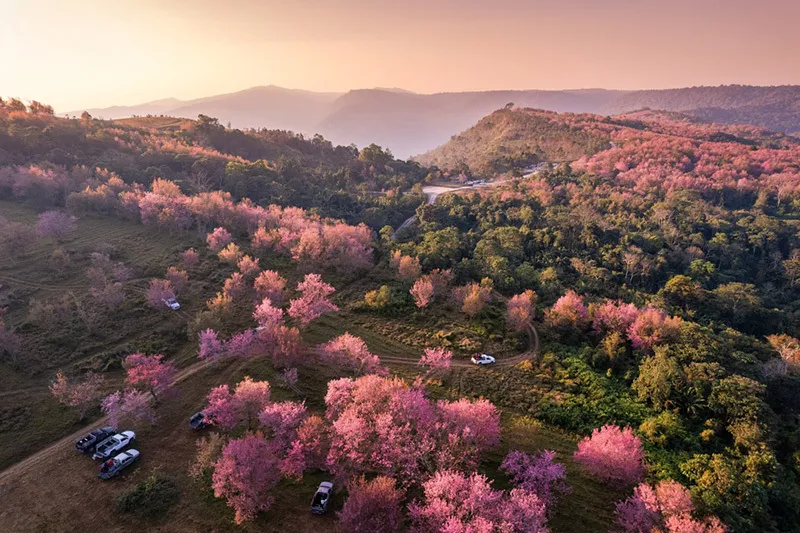
During the cool season, Phu Hin Rong Kla is known for cold weather, mountain mist, wildflowers, and colorful paper flowers in some developed areas. Around the Royal Forest Development Project area and nearby viewpoints, visitors often stop for photographs and cool-weather scenery. The period from late year to early year is therefore especially popular among travelers who want both scenic views and a winter atmosphere.
From a geological perspective, Phu Hin Rong Kla is an outdoor classroom. Lan Hin Pum, Lan Hin Taek, rock cracks, cliffs, and weathered stone surfaces all show the long-term power of natural erosion and rock formation. Observing these features helps travelers understand that landscapes are shaped over vast periods of time. The park is therefore valuable not only for tourism, but also for students and researchers interested in geology, ecology, and natural history.
The biodiversity of the park is another major attraction. Hill evergreen forests help retain moisture and support water sources, while pine forests and dry dipterocarp forests create different habitats within the same protected area. Wild orchids, ferns, mosses, lichens, wildflowers, birds, reptiles, and small mammals all contribute to the park’s ecological richness. Visitors should observe nature respectfully, avoid collecting plants, and keep noise levels low to protect wildlife.
Getting There from Phitsanulok city is convenient by private car or rental car. Travelers can use Highway 12, the Phitsanulok-Lom Sak route, then follow signs toward the national park. The distance is about 120 kilometers and the trip takes around 2.5 – 3 hours. The road is mostly paved, but there are mountain sections and curves, so drivers should check brakes, tires, fuel, and weather conditions before departure.
Public transport is possible but less convenient. Travelers can take a bus on the Phitsanulok-Lom Sak route or routes passing Nakhon Thai and Lom Kao, then continue by local transport to the park. A private car gives visitors more flexibility because attractions inside the park are spread out. Those planning to visit Man Daeng Waterfall or deeper trails should contact park staff in advance for current trail conditions and safety requirements.
Visitors should prepare suitable walking shoes, warm clothing, rain protection, a hat, drinking water, snacks, a flashlight, personal medicine, and camera equipment. For overnight stays, travelers should book park accommodation or camping space in advance through the national park system or by contacting the park directly. During the cool season and long holidays, accommodation can fill quickly.
Responsible travel is essential at Phu Hin Rong Kla. Visitors should not litter, write on rocks or historical structures, collect plants or flowers, climb cliffs unnecessarily, enter restricted areas, or disturb wildlife. Because the park contains both fragile natural features and important historical remains, even small damage can reduce the value of the site for future generations.
The best time to visit depends on the experience travelers want. The cool season from November to February is ideal for mist, cold weather, wildflowers, and comfortable walking. The rainy season from June to October is best for lush forest and waterfalls, although trails may be slippery. The hot season is quieter and suitable for travelers who want to study rock formations and historical sites with fewer crowds.
In summary, Phu Hin Rong Kla National Park is one of Thailand’s most complete destinations for travelers who want nature, history, geology, and learning in one journey. Within a single protected area, visitors can explore rock fields, waterfalls, forests, viewpoints, former communist sites, a museum, and highland scenery. A visit here is more than sightseeing; it is a journey through landscape, memory, and the transformation of a former conflict zone into a place of peace, conservation, and public education.
| Name | Phu Hin Rong Kla National Park |
| Location | Border area of Phitsanulok, Phetchabun, and Loei Provinces |
| Address | Moo 10, Noen Phoem Subdistrict, Nakhon Thai District, Phitsanulok 65120, Thailand |
| Highlights | Lan Hin Pum, Lan Hin Taek, Pha Chu Thong, Third World Trail, Political and Military School, Rom Klao-Phra Don Waterfalls, Sri Phatcharin Waterfall, Man Daeng Waterfall, pine forests, and seasonal wildflowers |
| History | Declared a national park on 26 July 1984, covering about 191,875 rai; formerly an important stronghold of the Communist Party of Thailand |
| Distinctive Features | A national park that combines mountain nature, political history, geology, pine forests, waterfalls, rock fields, and historical learning routes |
| Elevation | The highest point is about 1,617 meters above sea level |
| Plants and Ecosystems | Dry dipterocarp forest, hill evergreen forest, pine forest, two-needle pine, three-needle pine, orchids, ferns, mosses, lichens, and seasonal wildflowers |
| Recommended Activities | Rock field walks, historical study, trekking, birdwatching, nature photography, waterfall visits, camping, and geology learning |
| Travel Information | From Phitsanulok city, take Highway 12 toward Lom Sak and follow signs to the park. Distance is about 120 km and travel time is about 2.5 – 3 hours. Private car or rental car is recommended. |
| Current Status | Open for tourism and overnight stays daily throughout the year |
| Open Days | Daily |
| Opening Hours | 06.00 – 18.00 |
| Fees | Thai visitors: adults 60 baht, children 40 baht / Foreign visitors: adults 500 baht, children 300 baht |
| Facilities | Visitor center, museum, park accommodation, camping area, welfare restaurant/shop, restrooms, parking area, and nature trails |
| Main Areas / Zones | Visitor center, museum, Third World Trail, former state authority office, air-raid shelter, Pha Chu Thong, Lan Hin Pum, Lan Hin Taek, Political and Military School, Rom Klao-Phra Don Waterfalls, Sri Phatcharin Waterfall, and Man Daeng Waterfall |
| Caretaker / Related Authorities | Department of National Parks, Wildlife and Plant Conservation, through Phu Hin Rong Kla National Park. Park Chief: Mr. Lamyong Sri Sawek |
| Main Contact Number | 096-0200992, 081-5965977 |
| Official Website / Official Page | Phu Hin Rong Kla National Park Official Page |
| Nearby Tourist Attractions | 1. Lan Hin Taek, about 0.4 km 2. Lan Hin Pum, about 1.2 km 3. Pha Chu Thong, about 1.6 km 4. Paper Flower Field at Phu Hin Rong Kla, about 2 km 5. Royal Forest Development Project Phu Hin Rong Kla, about 2 km 6. Political and Military School, about 6 km 7. Man Daeng Waterfall, about 18 km |
| Nearby Restaurants | 1. Rang Thong Restaurant Phu Hin Rong Kla, about 0.5 km, Tel. 055-259973, 081-9620962 2. Phu Hin Rong Kla National Park Welfare Restaurant, about 0 km, Tel. 096-0200992, 081-5965977 3. Duangjai Restaurant Phu Hin Rong Kla, about 0.7 km 4. Ban Coffee Phu Hin Rong Kla, about 1 km 5. Ban Rong Kla Local Restaurants, about 3 km |
| Nearby Accommodations | 1. Phu Hin Rong Kla National Park Accommodation, about 0.5 km, Tel. 096-0200992, 081-5965977 2. Phu Hin Rong Kla National Park Camping Area, about 0 km, Tel. 096-0200992, 081-5965977 3. Rong Kla Green View, about 3 km 4. Rong Kla Land 2, about 3 km 5. Ban Rai Sai Mok Ban Rong Kla, about 4 km 6. Dao Pan Saeng Phu Thap Boek, about 16 km 7. Rai Panya Phu Thap Boek, about 17 km |
Frequently Asked Questions (FAQ)
Q: Where is Phu Hin Rong Kla National Park located?
A: Phu Hin Rong Kla National Park is located where Phitsanulok, Phetchabun, and Loei Provinces meet, with its main area in Noen Phoem Subdistrict, Nakhon Thai District, Phitsanulok Province.
Q: What are the main highlights of Phu Hin Rong Kla?
A: Highlights include the museum, Third World Trail, former state authority office, air-raid shelter, Pha Chu Thong, Lan Hin Pum, Lan Hin Taek, Political and Military School, Rom Klao-Phra Don Waterfalls, Sri Phatcharin Waterfall, and Man Daeng Waterfall.
Q: How much is the entrance fee?
A: Thai visitors pay 60 baht for adults and 40 baht for children. Foreign visitors pay 500 baht for adults and 300 baht for children.
Q: What are the opening hours?
A: The park is open daily from 06.00 to 18.00. Overnight stays are available under park conditions, and visitors should contact the park before traveling.
Q: When is the best time to visit Phu Hin Rong Kla?
A: The cool season is best for mist, cold weather, wildflowers, and comfortable walking. The rainy season is good for waterfalls and lush forest, while the hot season is quieter for rock-field and history-focused visits.
Q: Who should visit Phu Hin Rong Kla National Park?
A: It is suitable for nature lovers, trekkers, photographers, history enthusiasts, students, families, and travelers who want a national park that combines nature and historical learning.
Q: Can travelers reach the park by public transport?
A: Yes. Travelers can take buses on the Phitsanulok-Lom Sak route or routes passing Nakhon Thai and Lom Kao, then continue by local transport. A private car or rental car is more convenient because park attractions are spread out.
Q: What should visitors prepare before going to Phu Hin Rong Kla?
A: Visitors should prepare walking shoes, warm clothing, rain protection, drinking water, snacks, a flashlight, personal medicine, and check with park staff before visiting Man Daeng Waterfall or staying overnight.
Tel : 025620760
 Tel : 025620760
Mobile : 0960200992
 Mobile : 0960200992
 Category: ●Nature and Wildlife
 Group: ●National Parks and Marine Reserves
Last Update : 3 MonthAgo
 Last Update : 3 MonthAgo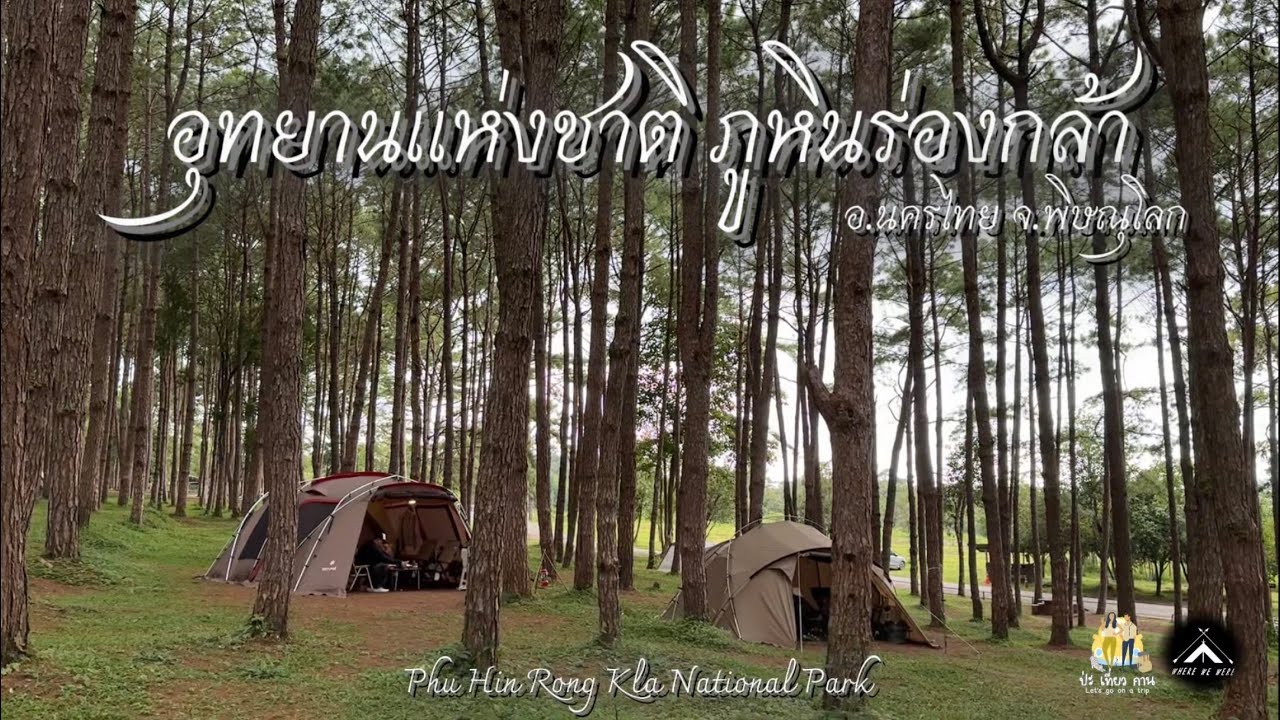
 Click to Access the Navigation Map GPS
Phu Hin Rong Kla National Park Map
Gellery
Recommend

 Art, Culture and Heritage
 Historical Sites and Monuments(1)
 Landmarks and Memorials(2)
 Art, Craft Centres, Tradition(3)
 Museums(3)
 Educational Places
 Educational Gardens, Farm(1)
 Places of Worship
 Temple(29)
 Mosque(1)
 Other Sacred Sites(3)
 Research and Development
 Royal Project(1)
 Suburban Living
 Village, Community(1)
National Parks and Marine Reserves(7)
Village, Community(1)
National Parks and Marine Reserves(7)
 Mountain (Doi)(4)
 Dam, Reservoir, Lake(5)
 Waterfalls(19)
 Caves(3)
 River, Canal(9)
 Other natural attractions(1)
 Entertainment and Agricultural
 Farms, Parks and Ecotourism(2)
 Outdoor and Adventure Activities(1)


