
lovethailand home >North Travel Attractions >Phitsanulok Travel Attractions >Muang Phitsanulok >Wat Phrik > Wat Lom
TL;DR: Wat Lom is located at Moo 5, Wat Phrik Subdistrict, Mueang Phitsanulok District, Phitsanulok Province, open Daily, hours 08.00 – 17.00.

Wat Lom
Open Days: Daily
Opening Hours: 08.00 – 17.00
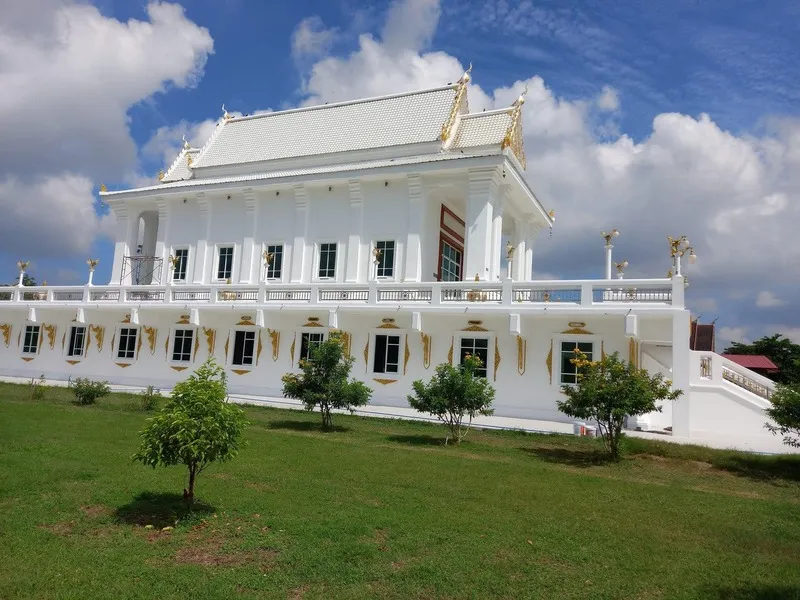
Wat Lom in Phitsanulok Province is an important local Buddhist temple in Wat Phrik Subdistrict, Mueang Phitsanulok District. Located in Moo 5, the temple is valued for its community faith, connection with Luang Pu Sum, peaceful atmosphere, and distinctive folk-style stucco sculptures known as the Sleeping Giant and the Awakened Giant. Although Wat Lom is not a large royal temple in the city center, it offers a meaningful local experience for visitors who want to understand Phitsanulok through community Buddhism, local devotion, and unique temple art.
Wat Lom stands in Wat Phrik Subdistrict, a local area of Mueang Phitsanulok that contains several community temples and riverside settlements. This part of Phitsanulok is closely connected with rural life, Buddhist ceremonies, agriculture, and local traditions. Temples in this area are not only places of worship; they also serve as social centers where villagers make merit, listen to sermons, join festivals, and maintain a shared sense of community identity. Wat Lom is one of these important community temples.
The temple is especially associated with Luang Pu Sum, a respected monk remembered by local people for his devotion, spiritual discipline, and role in supporting Buddhism in the community. Many devotees come to Wat Lom to pay respect to him, ask for blessings, and reflect on the virtues of a monk who became deeply connected with the temple’s identity. For local worshippers, Luang Pu Sum is not only a historical figure but also a spiritual presence that continues to inspire faith.
In Thai local Buddhism, revered monks often play a central role in the life of a temple. They teach moral conduct, guide laypeople, support rituals, and become anchors of community memory. The faith surrounding Luang Pu Sum at Wat Lom helps visitors understand how local Buddhist devotion works beyond the major pilgrimage temples. It is a form of faith rooted in personal memory, gratitude, and the long relationship between monks and villagers.
Another remarkable feature of Wat Lom is its stucco sculptures of the Sleeping Giant and the Awakened Giant. These figures are considered one of the temple’s most distinctive visual landmarks and have been associated with the temple for more than 50 years. Unlike the formal guardian giants seen at many large temples, the giants at Wat Lom have a more local, expressive, and folk-art character. They give the temple a unique identity and have become a point of interest for visitors and photographers.
The Sleeping Giant and Awakened Giant show that Thai temple art is not limited to Buddha images, ordination halls, or royal-style decoration. It also includes local stucco work, symbolic guardians, and imaginative forms created by community artists and monks. Such works may not follow the strict elegance of royal craftsmanship, but they carry strong local charm. They reflect the creativity, humor, belief, and artistic confidence of the people who built and preserved them.
Symbolically, the giants can be interpreted in several ways. The Awakened Giant may suggest vigilance, awareness, and protection of the sacred space. The Sleeping Giant may remind visitors of the need for mindfulness and the danger of spiritual carelessness. Together, the 2 figures can be read as a visual lesson about awareness and non-negligence, key ideas in Buddhist practice. They are therefore more than unusual sculptures; they can also be understood as folk-style moral symbols.
The temple atmosphere is calm and approachable. Wat Lom has the character of a local temple rather than a crowded tourist landmark. Visitors can pay respect to Luang Pu Sum, walk through the temple grounds, view the giant sculptures, and spend time in quiet reflection. The temple’s simplicity is part of its appeal. It allows visitors to experience a living community temple where faith is practiced naturally in daily life.
Wat Lom continues to support Buddhist activities throughout the year. Local people come for Buddhist holy days, merit-making, robe-offering ceremonies, Kathin, Songkran activities, chanting, and community events. Such activities keep the temple active and maintain the relationship between monks, villagers, elders, families, and younger generations. The temple is therefore not only a place of memory but also a functioning Buddhist center.
One important recent event at the temple was the ceremony related to the consecrated boundary and the gilding and burial of sacred boundary markers. Such ceremonies are important in Thai Buddhism because they define the sacred area used for formal monastic rites. They also show the collective faith of the community, as villagers and supporters often come together to help organize and support the event.
For visitors interested in Thai monks and local devotion, Wat Lom is a meaningful place to visit because of its connection with Luang Pu Sum. Devotees often come to pay respect, make offerings, and seek encouragement. The deeper value of visiting a revered monk’s temple is not only asking for blessings, but also remembering the virtues of discipline, compassion, patience, mindfulness, and ethical living that monks teach through their lives.
For cultural travelers, Wat Lom offers several layers of experience. It is a Buddhist temple, a community faith center, a place connected with a revered local monk, and a site with unusual folk-style temple sculpture. These elements make the temple different from the major royal temples of Phitsanulok. It gives visitors a more local view of how Buddhism, art, and community memory come together outside the city’s most famous landmarks.
The temple is also suitable for quiet photography, especially for those interested in folk art and local temple details. Visitors should photograph respectfully, avoid climbing on the sculptures, and remember that the site is still an active place of worship. The Sleeping Giant and Awakened Giant are cultural objects of the community, not merely decorative props. Respectful behavior helps preserve both the objects and the dignity of the temple.
Wat Lom can be combined with other places in Wat Phrik Subdistrict, such as Wat Sao Hin, Wat Tha Rong Tawan Tok, Wat Tha Rong Tawan Ok, and Wat In. Visitors can also continue to the city center to visit Wat Phra Si Rattana Mahathat Woramahawihan, Wat Nang Phaya, and Wat Ratchaburana. This route helps travelers see different levels of Phitsanulok Buddhist culture: royal temples, historic city temples, local community temples, and distinctive folk-art sites.
Getting There is convenient from Phitsanulok city. Visitors can travel along the Phitsanulok–Bang Krathum road or routes leading toward Wat Phrik Subdistrict. When reaching the Wat Lom intersection, turn right and follow the local signs to the temple. The temple is located in Moo 5, Wat Phrik Subdistrict, Mueang Phitsanulok District. Private car, local taxi, songthaew, or ride-hailing service can be used.
The best time to visit is in the morning or late afternoon, when the weather is more comfortable and the light is suitable for walking and photography. Visitors should allow about 45 minutes to 1 hour to pay respect to Luang Pu Sum, see the giant sculptures, and walk around the temple grounds. Respectful dress and quiet behavior are recommended because the temple remains an active religious site.
Wat Lom is suitable for Buddhist pilgrims, visitors interested in Luang Pu Sum, travelers who enjoy local temples, photographers, families, and cultural travelers who want to explore Phitsanulok beyond the main tourist route. Its value lies in its calm atmosphere, local faith, and distinctive folk sculpture. The temple is especially interesting for those who appreciate places that preserve community memory in a simple but meaningful way.
Overall, Wat Lom is a meaningful local temple in Phitsanulok. It combines devotion to Luang Pu Sum, active community Buddhism, peaceful temple grounds, and the unique Sleeping Giant and Awakened Giant sculptures. A visit here offers spiritual calm, local cultural insight, and a closer look at the living Buddhist heritage of Wat Phrik Subdistrict.
| Name | Wat Lom |
| Location | Moo 5, Wat Phrik Subdistrict, Mueang Phitsanulok District, Phitsanulok Province |
| Address | Moo 5, Wat Phrik Subdistrict, Mueang Phitsanulok District, Phitsanulok 65230 |
| Highlights | Paying respect to Luang Pu Sum, viewing the Sleeping Giant and Awakened Giant stucco sculptures, and experiencing a peaceful local temple in Wat Phrik Subdistrict |
| History | An old local Buddhist temple of Wat Phrik Subdistrict, associated with Luang Pu Sum and continuing to serve as a community faith center. |
| Name Origin | The name is connected with the Wat Lom Tawan Ok community in Wat Phrik Subdistrict, a local community of Mueang Phitsanulok District. |
| Distinctive Features | Community temple connected with Luang Pu Sum, peaceful atmosphere, and the folk-style Sleeping Giant and Awakened Giant sculptures created more than 50 years ago |
| Key Evidence | Wat Lom information from Wat Phrik Subdistrict, DMC temple record, public reports about the Sleeping Giant and Awakened Giant sculptures, and local devotional memory of Luang Pu Sum |
| Travel Information | Use the Phitsanulok–Bang Krathum road or local routes toward Wat Phrik Subdistrict. At the Wat Lom intersection, turn right and follow signs to the temple. |
| Current Status | Active local Buddhist temple and faith-based cultural attraction, open for merit-making, worship, paying respect to Luang Pu Sum, and viewing the stucco sculptures |
| Open Days | Daily |
| Opening Hours | 08.00 – 17.00 |
| Facilities | Temple courtyard, worship areas, pavilion, viewing area for stucco sculptures, nearby or on-site parking, and Buddhist activity spaces |
| Main Areas / Zones | Luang Pu Sum worship area, Sleeping Giant and Awakened Giant sculptures, religious buildings, pavilion, temple courtyard, and community activity areas |
| Abbot / Caretaker | Phra Son |
| Official Website / Official Page | Wat Lom, Wat Phrik Subdistrict, Phitsanulok Province |
| Nearby Tourist Attractions | 1. Wat Sao Hin, about 4 km 2. Wat Tha Rong Tawan Tok, about 5 km 3. Wat Tha Rong Tawan Ok, about 6 km 4. Wat Phra Si Rattana Mahathat Woramahawihan, about 15 km 5. Wat Nang Phaya, about 15 km |
| Nearby Restaurants | 1. Som Tam Pu Suea, Wat Phrik Subdistrict, about 5 km, Tel. 081-971-3948, 081-532-9627 2. KOI Cafe, Wat Phrik Subdistrict, about 6 km 3. Lung Cham Pa Fon Wild Food Restaurant near Wat Phrik, about 7 km 4. Dragon River Avenue Restaurant, about 15 km, Tel. 099-374-7447, 055-242-242 5. Amore Restaurant at Topland Hotel, about 16 km |
| Nearby Accommodations | 1. The State Resort, about 9 km, Tel. 093-138-5055, 055-000-456 2. Shinnabhura Historic Boutique Hotel, about 13 km, Tel. 055-219-888 3. Pattara Resort & Spa, about 14 km, Tel. 055-282-966 4. Topland Hotel, about 16 km, Tel. 055-247-800 5. Dragon River Avenue Hotel, about 16 km, Tel. 099-374-7447, 055-242-242 |
Frequently Asked Questions (FAQ)
Q: Where is Wat Lom located?
A: Wat Lom is located in Moo 5, Wat Phrik Subdistrict, Mueang Phitsanulok District, Phitsanulok Province.
Q: Why is Wat Lom important?
A: Wat Lom is a local Buddhist temple associated with Luang Pu Sum and known for its distinctive Sleeping Giant and Awakened Giant stucco sculptures.
Q: Who was Luang Pu Sum of Wat Lom?
A: Luang Pu Sum was a revered monk closely connected with Wat Lom. Local devotees remember him for his spiritual discipline and role in supporting Buddhist faith in the community.
Q: What is the main highlight of Wat Lom?
A: The main highlights are paying respect to Luang Pu Sum and viewing the Sleeping Giant and Awakened Giant sculptures, which have been part of the temple for more than 50 years.
Q: Who is the current abbot of Wat Lom?
A: The current abbot of Wat Lom is Phra Son.
Q: What are the opening hours of Wat Lom?
A: Wat Lom is open daily from 08.00 to 17.00.
Q: How can visitors travel to Wat Lom?
A: Visitors can use the Phitsanulok–Bang Krathum road or local routes toward Wat Phrik Subdistrict. At the Wat Lom intersection, turn right and follow local signs to the temple.
Q: What nearby attractions can be visited with Wat Lom?
A: Nearby attractions include Wat Sao Hin, Wat Tha Rong Tawan Tok, Wat Tha Rong Tawan Ok, Wat Phra Si Rattana Mahathat Woramahawihan, and Wat Nang Phaya.
 Category: ●Places of Worship
 Group: ●Temple
Last Update : 3 MonthAgo
 Last Update : 3 MonthAgo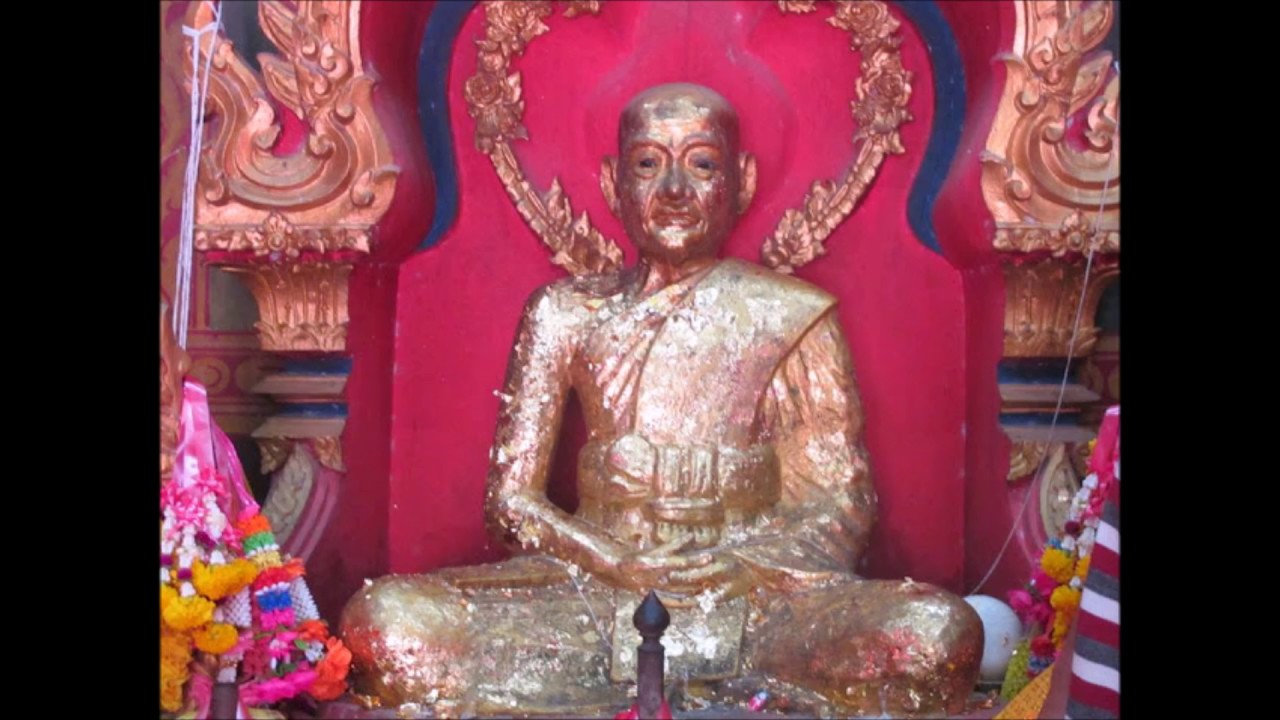
 Click to Access the Navigation Map GPS
 Art, Culture and Heritage
 Historical Sites and Monuments(1)
 Landmarks and Memorials(2)
 Art, Craft Centres, Tradition(3)
 Museums(3)
 Educational Places
 Educational Gardens, Farm(1)
Temple(29)
Educational Gardens, Farm(1)
Temple(29)
 Mosque(1)
 Other Sacred Sites(3)
 Research and Development
 Royal Project(1)
 Suburban Living
 Village, Community(1)
 Nature and Wildlife
 National Parks and Marine Reserves(7)
 Mountain (Doi)(4)
 Dam, Reservoir, Lake(5)
 Waterfalls(19)
 Caves(3)
 River, Canal(9)
 Other natural attractions(1)
 Entertainment and Agricultural
 Farms, Parks and Ecotourism(2)
 Outdoor and Adventure Activities(1)


