
lovethailand home >North Travel Attractions >Phitsanulok Travel Attractions >Phrom Phi Ram >Phrom Phi Ram > Naresuan Dam
TL;DR: Naresuan Dam, Phitsanulok attractions : Nature and Wildlife, Dam, Reservoir, Lake.

Naresuan Dam
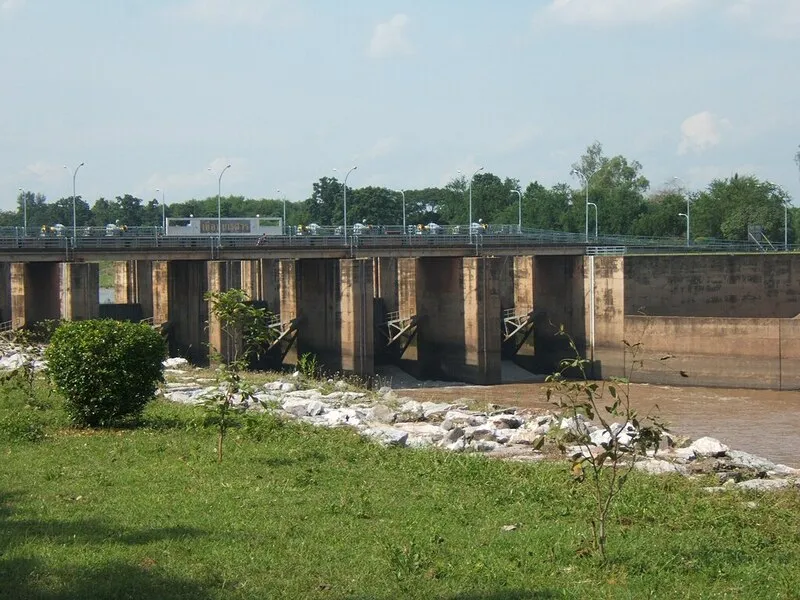
Open Days: Contact the Naresuan Operation and Maintenance Project before visiting the site
Opening Hours: Contact the Naresuan Operation and Maintenance Project before visiting the site
Naresuan Dam in Phitsanulok Province is one of the most important irrigation diversion dams in Thailand’s lower northern region. Located in Phrom Phiram Subdistrict, Phrom Phiram District, the dam stands across the Nan River, a major river that supports agricultural land in Phitsanulok, Phichit, and the upper part of Nakhon Sawan. For foreign travelers, Naresuan Dam is not only a scenic riverside stop; it is also a meaningful place to understand Thailand’s water management, royal development projects, irrigation engineering, and the relationship between rivers and rural livelihoods.
Naresuan Dam is a reinforced concrete diversion dam designed to raise the water level of the Nan River and distribute water into the irrigation system. The dam has 5 spillway gates, each 12.50 meters wide. The structure is approximately 16 meters high, with a crest level of 52.50 meters above mean sea level. Its total length is about 156 meters, and it can discharge approximately 1,600 cubic meters of water per second. These technical features make the dam a major water-control structure for irrigation, flood mitigation, and agricultural water distribution in the lower Nan River Basin.
The importance of Naresuan Dam began with the royal initiative of His Majesty King Bhumibol Adulyadej The Great, who recognized the recurring problems of drought and flooding in agricultural areas along the Nan River. In the rainy season, farmland often suffered from flooding, while in the dry season, farmers faced water shortages that affected crop production. The dam was developed as part of a systematic approach to improve water security, support agriculture, and enhance the quality of life for people living in the river basin.
Construction of Naresuan Dam began in 1977 and was completed in 1980. The dam was originally known as Phitsanulok Dam. Later, royal permission was granted to rename it Naresuan Dam in honor of King Naresuan The Great, one of Thailand’s most revered monarchs. His Majesty King Bhumibol Adulyadej The Great and Her Majesty Queen Sirikit The Queen Mother presided over the official opening ceremony on February 25, 1982. This event remains an important part of the history of Phitsanulok Province and the Nan River Basin.
In terms of irrigation, Naresuan Dam plays a crucial role in delivering water to more than 150,000 rai of agricultural land along both sides of the Nan River. The areas benefiting from this irrigation system include parts of Phitsanulok, Phichit, and upper Nakhon Sawan. Reliable water distribution allows farmers to plan their crops more effectively, reduce risks from dry-season water shortages, and improve agricultural productivity. Rice fields, field crops, and other economic crops depend on this irrigation network to maintain stable production.
Naresuan Dam also helps reduce the impact of seasonal flooding. Its large gates allow water flow to be regulated according to river conditions and irrigation needs. Although it is not a large storage dam like Bhumibol Dam or Sirikit Dam, Naresuan Dam is highly significant as a diversion dam. It controls river levels, diverts water into canals, and supports water management in the lower Nan River Basin. This makes it essential to both agriculture and flood-risk reduction.
For travelers interested in irrigation engineering, Naresuan Dam is a valuable example of how a diversion dam works with a wider canal network. The dam raises the water level in the river so that water can enter the irrigation system and be distributed to farmland. This process connects the river, concrete structure, control gates, canals, and agricultural fields into one functional system. Seeing the dam in person helps visitors understand how water management infrastructure supports rural life in Thailand.
Beyond its engineering role, Naresuan Dam is also a local attraction for sightseeing and learning. Visitors can view the Nan River, observe the dam structure from safe areas, and learn about the historical importance of the project. The landscape is simple but impressive: a wide river, large concrete gates, flowing water, and the surrounding rural environment of Phrom Phiram District. During periods of higher water flow, the dam becomes especially striking as water passes through the gates with strong force.
The area around the dam reflects the lifestyle of riverside communities in Phrom Phiram. The Nan River is not only a waterway but also a source of food, agriculture, recreation, and local identity. Farmers, local residents, anglers, restaurants, and small businesses are all connected to the river in different ways. Visiting Naresuan Dam therefore gives travelers a broader picture of how water infrastructure and community life are closely linked.
Historically, Naresuan Dam is meaningful because it was developed to solve real problems faced by local people. Flooding and drought affected farmers directly, and the irrigation system helped transform uncertain agricultural land into more reliable farmland. The dam therefore stands as a practical example of development guided by long-term water planning and royal concern for rural livelihoods.
As a travel destination, Naresuan Dam is best appreciated by those who enjoy educational, historical, and riverside experiences. It is suitable for families, students, photographers, and travelers interested in water management or local agriculture. Visitors can stop by while traveling through Phrom Phiram District, take photographs, observe the river scenery, and combine the visit with nearby food stops or local attractions.
The best times to visit are early morning and late afternoon, when the light is softer and the weather is more pleasant. The rainy season and post-rainy season can make the river scenery more dramatic due to higher water volume, while the dry season offers a clearer view of how the diversion structure supports irrigation. Visitors should always follow official guidance and avoid restricted operational areas, especially near spillway gates and fast-flowing water.
Getting There is most convenient by private car or rental vehicle. From Phitsanulok City, drive toward Phrom Phiram District and continue to Phrom Phiram Subdistrict, where the Naresuan Operation and Maintenance Project is located. The dam can be visited as a half-day or day trip from Phitsanulok City. Travelers visiting for the first time should check the route in advance and contact the project office before entering operational areas.
Naresuan Dam can also be included in a local travel route around Phrom Phiram District. Nearby points of interest include the riverside swimming and recreation area at Ban Khung Tao Lao downstream of the dam, local fish restaurants, Phrom Phiram Suannam and Golf Club, and other community areas along the Nan River. Travelers who prefer to stay overnight can choose accommodations in Phrom Phiram or return to Phitsanulok City, where hotel choices are wider.
Food is another part of the local experience around the dam. Restaurants near the dam and along the access route often serve river fish, Thai dishes, spicy local food, and forest-style dishes. A meal before or after visiting the dam makes the trip more complete, especially for travelers who want to experience the taste of a riverside community. Local restaurants are generally simple, practical, and closely connected with the agricultural and river landscape.
For photography, Naresuan Dam offers several interesting angles: the dam crest, spillway gates, the Nan River, water movement, and rural river views. The contrast between the strong concrete structure and the flowing river creates a powerful visual composition. In the late afternoon, warm light over the water can make the scenery more memorable and atmospheric.
Visitors should follow safety rules carefully. Do not enter restricted areas, do not climb barriers or dam structures, do not swim near the spillway gates, and do not throw rubbish into the river or public areas. Since Naresuan Dam is an active irrigation structure, tourism must not disturb official operations. Respecting safety signs and staff instructions is essential.
Environmentally, Naresuan Dam demonstrates how water resources can be managed for human needs while still requiring responsibility toward the river ecosystem. Regulating water levels affects agriculture, riverside communities, fisheries, and downstream areas. The dam is therefore a useful place to learn about the balance between development, water security, and environmental care.
Compared with mountains, waterfalls, or national parks, Naresuan Dam may appear quieter and more functional. However, its value lies in its real-world importance. It shows how irrigation infrastructure supports food production, reduces water-related risks, and helps communities maintain stable livelihoods. For travelers who want to understand Phitsanulok beyond temples and city landmarks, the dam offers a deeper view of the province’s agricultural foundation.
Naresuan Dam is therefore suitable for travelers who want to combine learning and relaxation. Families can use the visit to teach children about rivers and water management. Photographers can capture the river and dam structure. Travelers interested in Thai royal development projects can understand how the dam contributed to rural transformation. Local food lovers can add nearby restaurants to the itinerary.
In summary, Naresuan Dam is one of Phitsanulok’s most important irrigation landmarks. It combines engineering, history, agriculture, flood control, and riverside scenery in one destination. With its strong concrete structure, 5 large spillway gates, major water-diversion role, and historical connection to royal development, Naresuan Dam is more than a viewpoint on the Nan River. It is a living part of Thailand’s water management system and a meaningful place to understand the relationship between water, agriculture, and community life in the lower northern region.
| Name | Naresuan Dam |
| Location | Phrom Phiram Subdistrict, Phrom Phiram District, Phitsanulok Province |
| Address | 57 Moo 7, Phrom Phiram Subdistrict, Phrom Phiram District, Phitsanulok Province 65150 |
| Caretaker / Local Authority | Naresuan Operation and Maintenance Project, Regional Irrigation Office 3, Royal Irrigation Department |
| Main Contact Number | Naresuan Operation and Maintenance Project Tel. 0-5536-9040 |
| Highlights | Diversion dam on the Nan River, large spillway gates, dam crest, riverside views, and irrigation learning site |
| History | Construction began in 1977, was completed in 1980, and the official opening ceremony took place on February 25, 1982 |
| Name Origin | Originally called Phitsanulok Dam, it was later renamed Naresuan Dam in honor of King Naresuan The Great |
| Distinctive Features | Reinforced concrete diversion dam with 5 spillway gates, each 12.50 meters wide; approximately 16 meters high, 156 meters long, and able to discharge about 1,600 cubic meters per second |
| Benefits | Supports agricultural irrigation along both sides of the Nan River, controls river levels, reduces flood impacts, and assists water management in the lower Nan River Basin |
| Travel Information | Travel from Phitsanulok City to Phrom Phiram District, then continue to Phrom Phiram Subdistrict and the Naresuan Operation and Maintenance Project. Private car or rental car is recommended. |
| Current Status | An active irrigation diversion dam and operational water-management site under the Royal Irrigation Department |
| Facilities | Irrigation project area, road access, and local services in Phrom Phiram District. Visitors should contact the project before entering operational areas. |
| Main Areas / Zones | Dam crest, spillway gates, Nan River, Naresuan Operation and Maintenance Project area, and downstream area |
| Nearby Tourist Attractions | 1. Ban Khung Tao Lao Riverside Recreation Area, downstream of Naresuan Dam, about 3 km 2. Phitsanulok Inland Fisheries Research and Development Center, about 3 km 3. Phrom Phiram Suannam and Golf Club, about 12 km 4. Wat Bot, Phitsanulok, about 18 km 5. Wat Phra Si Rattana Mahathat Woramahawihan, about 30 km |
| Nearby Restaurants | 1. Khrua Wan Di, about 1 km, Tel. 081-7851340 2. Zab Khiang Khuean, about 2 km, Tel. 098-7961223 3. Local Restaurants in Phrom Phiram, about 8 km 4. Roadside Restaurants near Highway 1275 and the Naresuan Dam Entrance, about 3 km 5. Restaurants in Phitsanulok City, about 30 km |
| Nearby Accommodations | 1. Phrom Phiram Suannam Resort and Golf Club, about 12 km, Tel. 094-6359238, 086-4517781 2. Sri Pirom Resort, about 15 km, Tel. 061-5455499 3. Chomyieam Fishingpark Resort, about 30 km 4. ThaiSomboon BigHome Resort, about 35 km 5. Topland Hotel Phitsanulok, about 30 km, Tel. 055-247800 |
Frequently Asked Questions (FAQ)
Q: Where is Naresuan Dam located?
A: Naresuan Dam is located in Phrom Phiram Subdistrict, Phrom Phiram District, Phitsanulok Province, across the Nan River.
Q: What type of dam is Naresuan Dam?
A: It is a reinforced concrete diversion dam designed to raise the water level and distribute water into the irrigation system.
Q: When was Naresuan Dam built?
A: Construction began in 1977, was completed in 1980, and the official opening ceremony was held on February 25, 1982.
Q: Who manages Naresuan Dam?
A: The dam is managed by the Naresuan Operation and Maintenance Project under Regional Irrigation Office 3, Royal Irrigation Department.
Q: Why is Naresuan Dam important?
A: The dam supports irrigation, controls river levels, reduces flood impacts, and supplies water to agricultural areas along both sides of the Nan River.
Q: Can tourists visit Naresuan Dam?
A: Visitors can view the surrounding area, but they should contact the Naresuan Operation and Maintenance Project before visiting and follow all staff instructions.
Q: What is the best time to visit Naresuan Dam?
A: Early morning and late afternoon are the best times for sightseeing and photography because the light is softer and the riverside atmosphere is more comfortable.
Q: What should visitors prepare before visiting?
A: Visitors should check the route, contact the project office before entering the area, bring drinking water and a camera, and avoid going near spillway gates or operational zones.
 Category: ●Nature and Wildlife
 Group: ●Dam, Reservoir, Lake
Last Update : 4 MonthAgo
 Last Update : 4 MonthAgo
 Click to Access the Navigation Map GPS
Naresuan Dam Map
Recommend

 Art, Culture and Heritage
 Historical Sites and Monuments(1)
 Landmarks and Memorials(2)
 Art, Craft Centres, Tradition(3)
 Museums(3)
 Educational Places
 Educational Gardens, Farm(1)
 Places of Worship
 Temple(29)
 Mosque(1)
 Other Sacred Sites(3)
 Research and Development
 Royal Project(1)
 Suburban Living
 Village, Community(1)
 National Parks and Marine Reserves(7)
 Mountain (Doi)(4)
Dam, Reservoir, Lake(5)
Mountain (Doi)(4)
Dam, Reservoir, Lake(5)
 Waterfalls(19)
 Caves(3)
 River, Canal(9)
 Other natural attractions(1)
 Entertainment and Agricultural
 Farms, Parks and Ecotourism(2)
 Outdoor and Adventure Activities(1)


