
lovethailand home >North Travel Attractions >Phitsanulok Travel Attractions >Noen Maprang >Sai Yoi > Tham Pha Luang
TL;DR: Tham Pha Luang is located at Moo 12, Ban Khlong Sap Rang, Sai Yoi Subdistrict, Noen Maprang District, Phitsanulok Province, open Contact the local caretaker before visiting, hours Contact the local caretaker before visiting.
Tham Pha Luang
Open Days: Contact the local caretaker before visiting
Opening Hours: Contact the local caretaker before visiting
Tham Pha Luang, also known as the large cave of Khao Pha Luang, is a distinctive cave attraction in Ban Khlong Sap Rang, Moo 12, Sai Yoi Subdistrict, Noen Maprang District, Phitsanulok Province. It is part of the limestone landscape that makes Noen Maprang one of the most visually memorable districts in lower northern Thailand. The cave is medium to large in scale, with a broad and relatively open interior that feels like a natural hall. It is valued not only for its limestone formations and quiet atmosphere but also for its connection with Buddhist practice, local discovery, and community-based conservation.
Tham Pha Luang is located in the Khao Pha Luang limestone area, where several small and large caves are found close to one another. Local information records that villagers from Ban Khlong Sap Rang discovered and explored this cave area around 15 years ago. Nearby caves include Tham Manao, Tham Yai, Tham Khang Khao, Tham Air, and other natural cavities in the same limestone mountain. Among them, Tham Pha Luang or Tham Yai Khao Pha Luang stands out because of its larger size, wider interior space, and strong connection with meditation practice during the Buddhist Lent period.
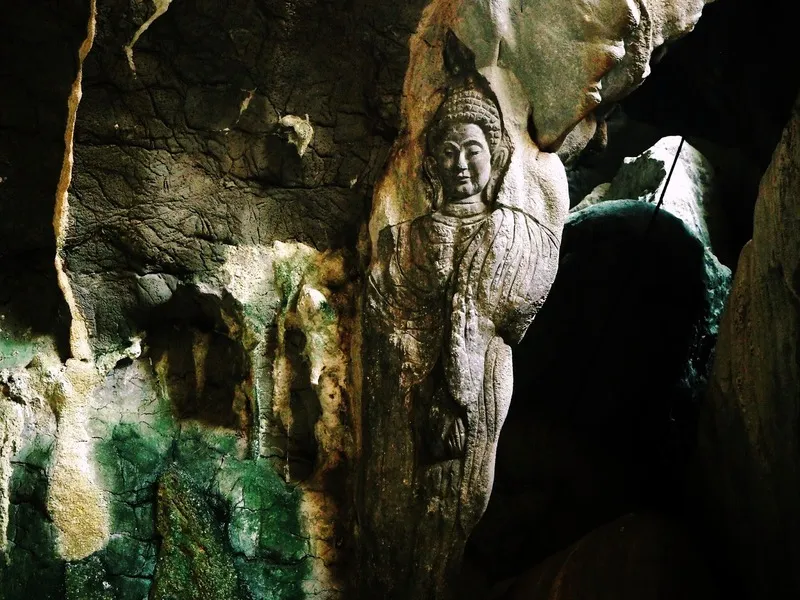
The cave is important in both natural and cultural terms. It is a limestone cave formed by long-term geological processes, but it is also a quiet spiritual space used by Buddhist monks and forest monks. Local records mention that in 1997, a monk stayed in Tham Yai Khao Pha Luang during the Buddhist Lent period and practiced Vipassana meditation there. During his free time after monastic duties, he carved an image of the Buddha into a stone wall inside the cave. This act transformed the cave from a natural chamber into a place of Buddhist art, devotion, and memory.
The physical character of Tham Pha Luang is one of its main attractions. Although it is not the largest cave in Thailand, its interior has a spacious hall-like area that gives visitors a strong sense of calm and scale. The cave floor in some sections is relatively open, while the walls and ceiling show natural limestone textures. Stalactites, stalagmites, layered rock surfaces, and mineral colors can be observed in different areas. When light from the entrance or from a flashlight touches the rock surfaces, the cave reveals shades, shadows, and textures that make the space feel alive.
Noen Maprang’s limestone mountains were shaped by natural processes over a very long period of time. Rainwater and underground water slowly dissolved the limestone, creating cracks, cavities, chambers, stalactites, and stalagmites. The formations inside Tham Pha Luang grew gradually through the deposition of minerals carried by dripping water. Because these formations grow extremely slowly, visitors should never touch, break, or climb on them. A small act of damage can destroy natural features that took generations to form.
Tham Pha Luang is also interesting because of the other caves nearby. One of the best-known nearby caves is Tham Air, named for the cool air felt around the cave entrance, which local visitors compare to air conditioning. This cool airflow is caused by the natural circulation of air inside the limestone cavities and the temperature difference between the interior and exterior of the cave. Visiting Tham Pha Luang therefore allows travelers to understand that caves in the same mountain can have very different characters: some are wide, some are cool, some are associated with bats, and some are known for spiritual use.
Culturally, Tham Pha Luang is a place shaped by community care. The cave was discovered and made known by local villagers, and it continues to be connected with Ban Khlong Sap Rang. It is not a heavily commercial tourist site. Instead, it keeps the feeling of a local natural and religious place where visitors should behave respectfully. The presence of monks during Buddhist Lent shows how caves in Thailand are often used as places for seclusion, meditation, and spiritual discipline.
For those interested in Buddhist practice, Tham Pha Luang offers a different atmosphere from ordinary temples. The silence, cool air, dim light, and natural enclosure of the cave create a setting suitable for contemplation. Forest monks and meditation practitioners often choose quiet caves because they reduce distractions and bring the mind closer to nature. Visiting this cave helps travelers see how natural places can become part of Thai Buddhist practice and spiritual culture.
Tham Pha Luang is suitable for travelers who enjoy quiet, less-crowded places with local character. Visitors can observe the cave hall, limestone textures, stalactites, stalagmites, Buddhist carving, and the calm atmosphere inside. This type of visit is different from a fully developed tourist attraction. It requires preparation, care, and respect. The reward is a more authentic experience of a community cave in the limestone landscape of Noen Maprang.
Traveling to Tham Pha Luang is most convenient by private car or rental car. From Phitsanulok City, travelers head toward Noen Maprang District and continue to Sai Yoi Subdistrict and Ban Khlong Sap Rang. The route passes through rural landscapes, fields, villages, limestone hills, and local roads. Before entering the cave area, visitors should contact Sai Yoi Subdistrict Municipality or ask local residents for the current access route, because some sections may be local roads and conditions can vary by season.
Travelers without a private car can take public transport toward Noen Maprang District and then arrange a local vehicle to Ban Khlong Sap Rang. However, public transport may not reach the cave directly. A private vehicle is more practical, especially for travelers who want to visit several nearby attractions such as Ban Mung, the Ban Mung bat viewpoint, Tham Duean Tham Dao, Tham Pha Luang, and nearby cafés or viewpoints in Noen Maprang.
Useful equipment includes a flashlight or headlamp, non-slip shoes, comfortable clothing, drinking water, a hat, a personal trash bag, and any personal medicine. During the rainy season, visitors should be extra careful because paths near caves may be damp or slippery. A headlamp is useful because it keeps both hands free when walking over uneven ground. Cameras and phones should be secured with a strap or protective bag to prevent them from falling onto hard rock surfaces.
Safety is essential when visiting Tham Pha Luang. Visitors should not enter deep sections of the cave without someone who knows the route. They should not separate from the group, climb high rocks, enter narrow passages, or walk on wet surfaces without proper footwear. If monks, local caretakers, or villagers are present, visitors should ask for advice before entering. A good cave visit should prioritize safety and respect rather than trying to explore as deeply as possible.
Proper manners inside the cave include keeping noise low, avoiding litter, not writing on cave walls, not touching or breaking formations, not disturbing monks who may be practicing, and not disturbing bats or small animals. Cave environments recover slowly from human disturbance. Small damage caused by many visitors can become a long-term problem. Responsible travel helps preserve both the natural and spiritual value of Tham Pha Luang.
The cave is also suitable for photography, especially for visitors interested in light, shadow, and natural textures. The rock walls, pillars, ceiling, and wide chamber can create dramatic images when photographed carefully. However, photographers should avoid using flash in ways that disturb monks, animals, or other visitors. Tripods or camera equipment should be placed safely and should not block walkways.
From an educational perspective, Tham Pha Luang can be used to learn about geology, cave ecology, Buddhist culture, local art, and community conservation. Students and nature groups can study how limestone caves form, why stalactites and stalagmites are fragile, how caves become places of meditation, and how local communities help protect natural resources. Learning directly from the site gives a deeper understanding than reading about caves from a distance.
Several nearby attractions can be included in the same trip. Around Khao Pha Luang, visitors may find Tham Air, Tham Khang Khao, Tham Manao, and other local cave sites. In the wider Noen Maprang area, travelers can visit Wat Tham Pha Phakhin, Ban Mung, the Ban Mung bat viewpoint, Tham Nang Sip Song at Wat Ban Mung, and Tham Duean Tham Dao. A short trip can focus on Tham Pha Luang and nearby caves, while a full-day or overnight trip can include Ban Mung and the bat viewpoint.
Food options near Sai Yoi and Noen Maprang are mostly local restaurants, made-to-order food shops, noodle shops, cafés, and small community eateries. Visitors should bring water and light snacks, especially when traveling on weekdays or outside peak travel periods. More dining options are available around Noen Maprang town and Ban Mung than directly at the cave, so it is practical to plan meals before or after the cave visit.
Accommodation near Tham Pha Luang includes local homestays, small resorts, mountain-view guesthouses, and places in Ban Mung or Noen Maprang. Travelers who want to experience the limestone landscape and local atmosphere should stay in Noen Maprang or Ban Mung. Those who prefer city convenience may stay in Phitsanulok City and visit the cave as a day trip, but staying overnight in the district gives more time to explore caves, viewpoints, and village life.
For foreign travelers, Tham Pha Luang is a valuable place for understanding the relationship between nature and Buddhism in Thailand. Caves are often used in Thai culture as places of meditation because they are quiet, secluded, and close to nature. Seeing a cave where monks have stayed and where a Buddha image was carved into the wall helps visitors understand that nature is not separate from Thai spiritual life. It can become a place of practice, art, and reflection.
Tham Pha Luang is best visited slowly. Rather than rushing in and out, visitors should take time to notice the texture of the rock, the cool air, the silence, the echo, and the atmosphere around the cave. If accompanied by local residents or knowledgeable guides, listening to their stories will make the visit more meaningful. Each cave in the Khao Pha Luang area has its own character and story, and local knowledge helps reveal those details.
Conservation of Tham Pha Luang depends on cooperation among the community, local authorities, monks, and visitors. Local people help maintain knowledge of the place. Visitors help by following rules, avoiding damage, and supporting local services. Local authorities help by providing information and coordination. Good tourism should not weaken the cave environment; it should make more people understand why the cave should be protected.
Overall, Tham Pha Luang in Ban Khlong Sap Rang is a meaningful cave destination that combines nature, religion, art, and community identity. Its spacious cave hall, limestone formations, Buddha carving on the cave wall, connection with Buddhist Lent practice, and setting in the limestone landscape of Noen Maprang make it different from ordinary cave attractions. With proper preparation, respect for the site, and contact with local caretakers before traveling, Tham Pha Luang can become one of the most memorable nature-and-culture experiences in Phitsanulok Province.
| Name | Tham Pha Luang / Tham Yai Khao Pha Luang |
| Location | Moo 12, Ban Khlong Sap Rang, Sai Yoi Subdistrict, Noen Maprang District, Phitsanulok Province |
| Address | Ban Khlong Sap Rang, Moo 12, Sai Yoi Subdistrict, Noen Maprang District, Phitsanulok 65190, Thailand |
| Highlights | Limestone cave in Khao Pha Luang with a wide natural hall, stalactites, stalagmites, a carved Buddha image on the cave wall, and a peaceful atmosphere suitable for meditation |
| History | The cave area was discovered by villagers of Ban Khlong Sap Rang around 15 years ago. In 1997, a monk stayed in Tham Yai Khao Pha Luang during Buddhist Lent, practiced Vipassana meditation, and carved a Buddha image on the cave wall |
| Name Origin | The name is connected with Khao Pha Luang, a limestone mountain in Ban Khlong Sap Rang that contains several caves of different sizes and characteristics |
| Distinctive Features | A medium-to-large limestone cave with a broad hall-like interior, limestone formations, natural rock textures, and a calm religious atmosphere |
| Travel Information | Travel from Phitsanulok City toward Noen Maprang District, continue to Sai Yoi Subdistrict and Ban Khlong Sap Rang. A private car or rental car is recommended, and visitors should ask Sai Yoi Subdistrict Municipality or local residents for current access information |
| Current Status | A local natural attraction and meditation-related cave site in Ban Khlong Sap Rang. Visitors should contact local caretakers or Sai Yoi Subdistrict Municipality before traveling |
| Open Days | Contact the local caretaker before visiting |
| Opening Hours | Contact the local caretaker before visiting |
| Facilities | Basic parking area, local cave access route, quiet cave space, and coordination through the community or Sai Yoi Subdistrict Municipality |
| Main Areas / Zones | Tham Pha Luang cave hall, limestone formations, carved Buddha image wall, meditation area, Tham Air, Tham Khang Khao, Tham Manao, and nearby caves in Khao Pha Luang |
| Caretaker | Ban Khlong Sap Rang community together with Sai Yoi Subdistrict Municipality, Noen Maprang District, Phitsanulok Province |
| Main Contact Number | Sai Yoi Subdistrict Municipality Tel. 055-906-080 |
| Official Website / Official Page | Sai Yoi Subdistrict Municipality, Noen Maprang District, Phitsanulok Province |
| Nearby Tourist Attractions | 1. Tham Air, Khao Pha Luang, about 0.5 km 2. Tham Khang Khao, Khao Pha Luang, about 1 km 3. Tham Manao, Khao Pha Luang, about 1 km 4. Wat Tham Pha Phakhin, about 12 km 5. Ban Mung Bat Viewpoint, about 25 km 6. Tham Nang Sip Song at Wat Ban Mung, about 26 km 7. Tham Duean Tham Dao, about 30 km |
| Nearby Restaurants | 1. Local restaurants in Sai Yoi Subdistrict, about 5 km 2. Restaurants in Noen Maprang town area, about 15 km 3. Hug Cafe Noen Maprang, about 18 km 4. Krua Im Plae Lae Khao, Ban Mung, about 25 km, Tel. 088-5061670 5. Ban Mung Steakhouse, about 26 km 6. See Mountain Ban Mung, about 27 km |
| Nearby Accommodations | 1. Noen Thong House, about 18 km, Tel. 087-9423434 2. Nutcha Na Mung Homestay, about 25 km, Tel. 081-2053554 3. Ban Mung Homestay Network, about 25 km, Tel. 095-6202760, 090-6965810, 094-6410309 4. Accommodation near Ban Mung School, about 25 km, Tel. 062-8255355 5. The Mountain Deer View Lodge & Hashery, Ban Mung, about 26 km 6. Wantana Homestay Ban Mung, about 26 km |
Frequently Asked Questions (FAQ)
Q: Where is Tham Pha Luang located?
A: Tham Pha Luang is located in Ban Khlong Sap Rang, Moo 12, Sai Yoi Subdistrict, Noen Maprang District, Phitsanulok Province.
Q: What is special about Tham Pha Luang?
A: It is a limestone cave with a broad hall-like interior, stalactites, stalagmites, a carved Buddha image on the cave wall, and a peaceful atmosphere associated with meditation practice.
Q: How is Tham Pha Luang connected with Buddhist monks?
A: The cave has been used by monks during Buddhist Lent for meditation, and local information records that a monk carved a Buddha image on the cave wall in 1997.
Q: Who should visitors contact before going to Tham Pha Luang?
A: Visitors should contact Sai Yoi Subdistrict Municipality or ask the Ban Khlong Sap Rang community before traveling to confirm access and local conditions.
Q: Who is Tham Pha Luang suitable for?
A: It is suitable for travelers interested in caves, limestone formations, Buddhist meditation culture, local art, quiet nature, and community-based tourism.
Q: What should visitors prepare for a trip to Tham Pha Luang?
A: Visitors should bring a flashlight, non-slip shoes, drinking water, comfortable clothing, a personal trash bag, and preferably travel with someone who knows the local route.
Q: Are there other caves near Tham Pha Luang?
A: Yes. Nearby caves in the Khao Pha Luang area include Tham Air, Tham Khang Khao, Tham Manao, Tham Yai, and other local cave sites.
Q: What nearby attractions can be visited with Tham Pha Luang?
A: Nearby attractions include Tham Air, Wat Tham Pha Phakhin, Ban Mung Bat Viewpoint, Tham Nang Sip Song at Wat Ban Mung, and Tham Duean Tham Dao.
 Category: ●Nature and Wildlife
 Group: ●Caves
Last Update : 4 MonthAgo
 Last Update : 4 MonthAgo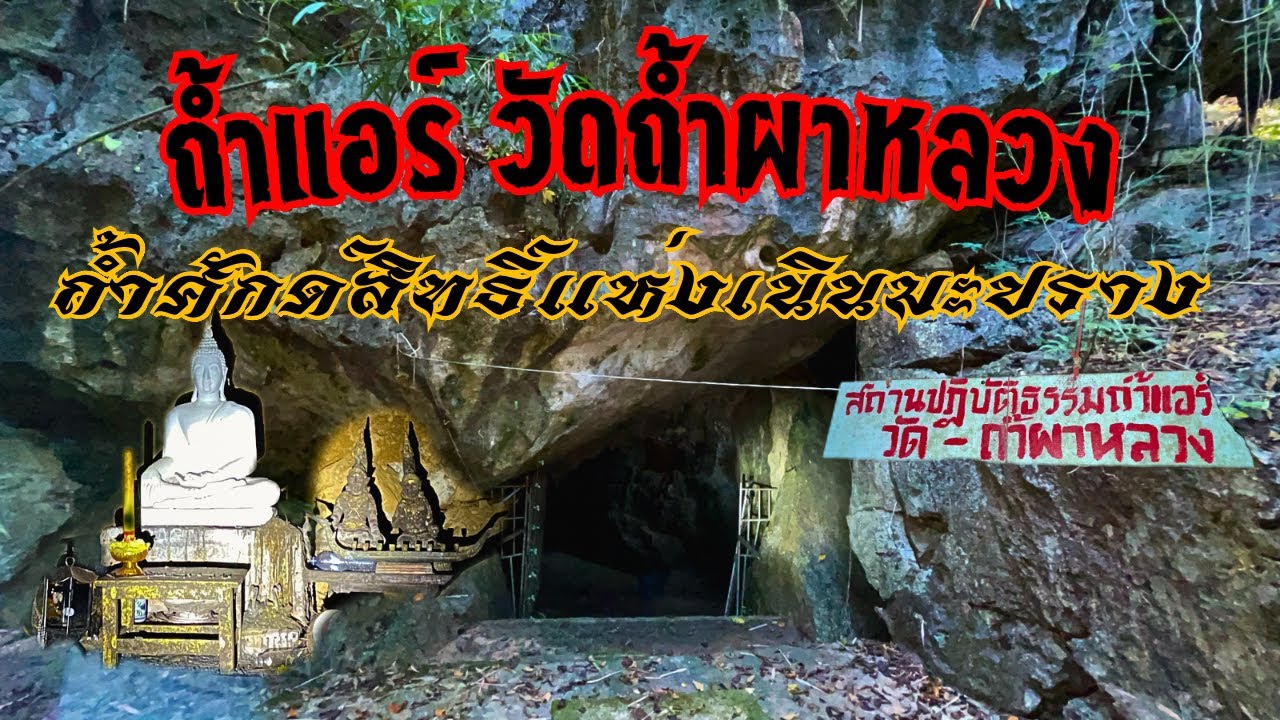
 Click to Access the Navigation Map GPS
Tham Pha Luang Map
Recommend

 Art, Culture and Heritage
 Historical Sites and Monuments(1)
 Landmarks and Memorials(2)
 Art, Craft Centres, Tradition(3)
 Museums(3)
 Educational Places
 Educational Gardens, Farm(1)
 Places of Worship
 Temple(29)
 Mosque(1)
 Other Sacred Sites(3)
 Research and Development
 Royal Project(1)
 Suburban Living
 Village, Community(1)
 National Parks and Marine Reserves(7)
 Mountain (Doi)(4)
 Dam, Reservoir, Lake(5)
 Waterfalls(19)
Caves(3)
Waterfalls(19)
Caves(3)
 River, Canal(9)
 Other natural attractions(1)
 Entertainment and Agricultural
 Farms, Parks and Ecotourism(2)
 Outdoor and Adventure Activities(1)


