
lovethailand home >North Travel Attractions >Phitsanulok Travel Attractions >Bang Krathum >Nakhon Pa Mak > Wat Sam Ruean
TL;DR: Wat Sam Ruean is located at Ban Sam Ruean, Nakhon Pa Mak Subdistrict, Bang Krathum District, Phitsanulok Province, open Daily, hours 08.00 – 18.00.
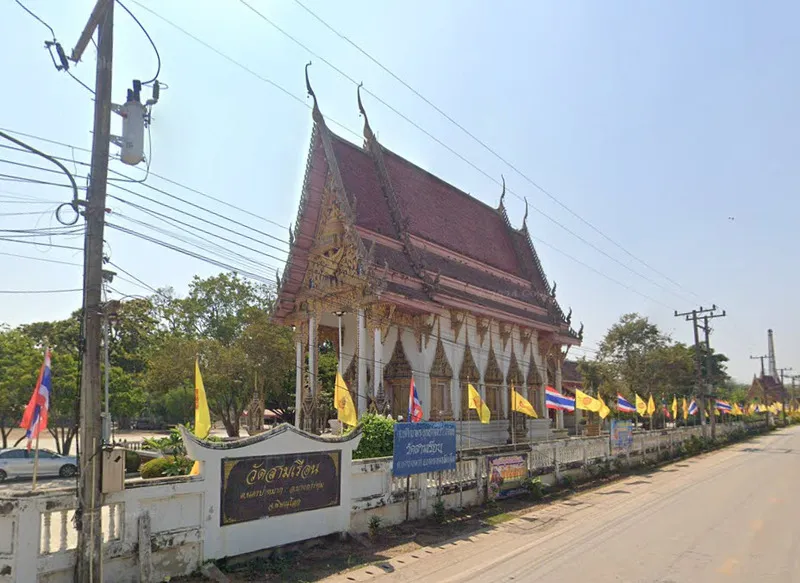
Wat Sam Ruean
Open Days: Daily
Opening Hours: 08.00 – 18.00
Wat Sam Ruean is an old Buddhist temple located beside the Wang Thong River on Rural Road 4029 in Ban Sam Ruean, Nakhon Pa Mak Subdistrict, Bang Krathum District, Phitsanulok Province. Founded around B.E. 2450, the temple was originally known as Wat Photharam before later being renamed Wat Sam Ruean after the local village. It is a public temple under the Mahanikaya order and remains an important spiritual, historical, and cultural center for the local community. The temple is especially valued for its old and new ordination halls, distinctive folk murals, and the unique kaffir lime merit-giving tradition that reflects the generosity and social role of the temple.
Wat Sam Ruean stands in a riverside community closely connected with the Wang Thong River. In the past, rivers and waterways shaped settlement, farming, travel, and local trade in this part of Phitsanulok. Temples located beside rivers often became natural centers of village life because they were accessible and meaningful to the people who lived around them. Wat Sam Ruean reflects this pattern clearly. It is not only a place for worship, but also a space where religious faith, local art, community memory, and everyday village life come together.
The founding history of Wat Sam Ruean shows the collective faith of the local community. Nai Bun Bunthueng donated more than 6 rai of land for the construction of the temple. Nang Chin Siao and Nang Mao, 2 female merchants in the community, led the effort to establish the temple. Their role is especially meaningful because it shows that the temple was created not by a single authority, but by local people who wanted a shared sacred place for merit-making, Buddhist practice, and community unity.
The temple was first called Wat Photharam, a name associated with Buddhist calm and the symbolism of the Bodhi tree. Later, the temple became known as Wat Sam Ruean after the village. This change strengthened the relationship between the temple and the local identity of Ban Sam Ruean. Like many Thai village temples, the name of the temple carries both religious meaning and community memory. For local residents, Wat Sam Ruean is therefore not simply a religious site, but a familiar place tied to generations of family and village life.
Wat Sam Ruean received its royal ordination boundary around B.E. 2453. This was an important milestone because it allowed the temple to use its ordination hall for formal monastic ceremonies according to Buddhist discipline. The consecrated boundary made the ordination hall a sacred space for ordination, monastic observances, and other Sangha rites. For the community, this confirmed the temple’s role as a fully established Buddhist institution.
A major stage in the temple’s development occurred around B.E. 2470, when Phra Upatcha Bang Kesarangsi, the abbot at that time, restored the old ordination hall with the assistance of Phra In Tissavaro. This restoration helped preserve one of the temple’s most important religious buildings. After Phra Upatcha Bang passed away in B.E. 2477, Luang Pho Rang Yasawanto became abbot and played a major role in the later development of Wat Sam Ruean.
Luang Pho Rang Yasawanto is closely associated with the mural paintings at Wat Sam Ruean. He helped restore and develop murals depicting the life of the Buddha and the local way of life of the Nakhon Pa Mak community. These murals appear both inside and outside the old ordination hall and have become one of the temple’s most distinctive features. Created as an offering to the Buddha and in gratitude to Phra Upatcha Bang in B.E. 2490, the murals are valuable examples of local folk art in Phitsanulok.
The murals at Wat Sam Ruean are important because they combine Buddhist narratives with details of local life. Unlike court-style religious art, these folk paintings have a direct and expressive quality. Their figures, scenes, compositions, and everyday details reveal the worldview of local artists and villagers. They are therefore valuable not only as Buddhist art, but also as visual records of community memory, religious imagination, and rural culture.
The murals in the old ordination hall can be divided into several sections. On the exterior front wall, Buddhist scenes appear on both sides of the doorway. The central area shows the Buddha in a reflective posture, while the upper section depicts Phra Malai ascending to worship the Chulamani Chedi in heaven. These images reflect Thai Buddhist beliefs about merit, heaven, moral conduct, and the spiritual consequences of human actions. The story of Phra Malai was especially meaningful in traditional communities because it encouraged people to live virtuously and make merit.
On the rear exterior wall of the old ordination hall, only 3 paintings remain. The large upper image depicts the Buddha’s enlightenment, while a smaller lower image shows a boxing scene. Another small image is believed to possibly represent the painter. The presence of a boxing scene alongside Buddhist narrative is particularly interesting because it shows how local artists included everyday cultural life within a sacred setting. This makes the murals at Wat Sam Ruean especially valuable for understanding the relationship between religion and community life.
The interior walls of the old ordination hall originally contained Buddhist life scenes on all 4 sides. Today, the most complete surviving murals are on the right side of the main Buddha image and behind the principal Buddha image. On the left side, only fragments remain. Some narrative sections are missing, from the scene of King Bimbisara offering Veluvana Monastery to later scenes near the entrance showing the Buddha’s passing into Parinirvana. Even with some damage, the surviving murals remain highly valuable as evidence of local craftsmanship and Buddhist storytelling.
The newer ordination hall contains a different mural program. Above the windows and doors are paintings of the Ten Jataka stories, especially all 13 chapters of the Vessantara Jataka. This story is central to Thai Buddhist culture because it teaches the perfection of generosity and self-sacrifice. By placing these scenes inside the ordination hall, the temple turns its walls into a visual Dhamma lesson for villagers and visitors.
The new ordination hall also contains scenes based on the Buddha’s victories described in the Phra Phuttha Chai Mongkhon chants, often known as the Bahung chant. These scenes tell of the Buddha overcoming obstacles, enemies, and inner defilements through wisdom, compassion, and spiritual power. Between the doors and windows are guardian figures, adding a traditional sacred atmosphere to the building. Together, these murals show how older Buddhist beliefs and local artistic expression continue to live within the temple.
Another distinctive feature of Wat Sam Ruean is its kaffir lime merit-giving tradition. This local tradition uses kaffir limes in a merit-giving activity connected with generosity and social support. The fruits are distributed or offered as part of the event and are later exchanged for rice and dried food to help people in need. The tradition reflects the Buddhist value of giving and shows how the temple functions as a bridge between religious faith and social welfare.
The kaffir lime merit-giving tradition gives Wat Sam Ruean a strong community identity. Merit-making here is not limited to ritual; it extends into practical assistance for people facing hardship. The event brings together monks, villagers, elders, young people, and visitors, creating a shared experience of generosity. This is one reason Wat Sam Ruean remains important not only as a religious site, but also as a place where compassion and community support are actively practiced.
Wat Sam Ruean remains an active temple with resident monks. Recent Kathin information identifies the abbot as Phra Khru Wibun Thammachot and records 7 monks in residence. The role of the abbot and resident monks is essential for maintaining the temple, preserving religious traditions, organizing Buddhist activities, and supporting the local community. Wat Sam Ruean is therefore a living temple, not simply a historical art site.
As a learning site, Wat Sam Ruean is especially suitable for visitors interested in local history, folk murals, Buddhist art, and rural culture. A visit can include the story of the temple’s founding, the restoration of the old ordination hall, the roles of Phra Upatcha Bang and Luang Pho Rang, and the interpretation of murals showing the Buddha’s life, Phra Malai, the Ten Jataka stories, the Bahung victories, and scenes of local life. The temple is best experienced slowly and respectfully, with close attention to the details of the murals.
The riverside setting along the Wang Thong River adds to the temple’s peaceful atmosphere. Visitors can pay respect to Buddha images, make merit, view the old and new ordination halls, and spend time observing the temple’s surroundings. The quiet environment makes the temple suitable for reflection, cultural study, and calm travel. For art lovers, the murals offer rare local detail. For spiritual visitors, the temple offers a peaceful place to reconnect with Buddhist values.
Getting There is convenient by private car or rental car. From Phitsanulok city, travel toward Bang Krathum District and continue to Nakhon Pa Mak Subdistrict, Ban Sam Ruean. The temple is located on Rural Road 4029 beside the Wang Thong River. Travelers using public transport can first reach Bang Krathum District and then arrange local transport to Ban Sam Ruean. Those planning a cultural route can combine the visit with other temples and attractions in Bang Krathum District.
Wat Sam Ruean can be included in a cultural route through lower Phitsanulok with Wat Chulamanee, Wat Huai Kaew, the King Naresuan Shrine in Bang Krathum, Wat Phrai Suwan, Wat Khok Salud, and Wat Phra Si Rattana Mahathat Woramahawihan in Phitsanulok city. This route is suitable for travelers who want to understand old temples, riverside communities, mural paintings, and the role of community temples in Phitsanulok Province.
Visitors should dress modestly, speak quietly, and respect sacred areas, especially the old ordination hall, new ordination hall, mural paintings, and places used by monks for religious activities. Those who wish to photograph the murals should avoid using flash, avoid touching the painted walls, and avoid disturbing people who are worshipping or meditating. Respectful conduct helps preserve both the artwork and the peaceful atmosphere of the temple for future generations.
Wat Sam Ruean is therefore a temple of exceptional cultural value. Its importance lies not only in its age of more than 100 years, but also in its folk murals, community history, riverside atmosphere, and distinctive kaffir lime merit-giving tradition. Visitors who come here can experience a living temple where Buddhist faith, local art, generosity, and village memory remain closely connected. For travelers seeking a meaningful cultural destination in Phitsanulok, Wat Sam Ruean is a place that deserves careful and respectful attention.
| Name | Wat Sam Ruean |
| Location | Ban Sam Ruean, Nakhon Pa Mak Subdistrict, Bang Krathum District, Phitsanulok Province |
| Address | No. 30, Village No. 3, Nakhon Pa Mak Subdistrict, Bang Krathum District, Phitsanulok 65110, Thailand |
| Type | Public Buddhist temple under the Mahanikaya order |
| Highlights | Old riverside temple beside the Wang Thong River, with old and new ordination halls, folk murals depicting the Buddha’s life, Phra Malai, the Ten Jataka stories, Vessantara Jataka, Bahung scenes, and the kaffir lime merit-giving tradition |
| History | Founded around B.E. 2450 as Wat Photharam before later being renamed Wat Sam Ruean after the village. It received its royal ordination boundary around B.E. 2453 |
| Key Founders | Nai Bun Bunthueng donated more than 6 rai of land, while Nang Chin Siao and Nang Mao led the community effort to establish the temple |
| Name Origin | Originally called Wat Photharam, later renamed Wat Sam Ruean after Ban Sam Ruean village |
| Distinctive Features | A community temple beside the Wang Thong River with folk murals that reflect Buddhist stories, moral teachings, and the local way of life in Nakhon Pa Mak |
| Important Murals | The old ordination hall includes murals of the Buddha’s life, the reflective Buddha, Phra Malai, the enlightenment scene, a boxing scene, and local life. The new ordination hall includes the Ten Jataka stories, all 13 chapters of Vessantara Jataka, Bahung victory scenes, and guardian figures |
| Related Traditions | Kaffir lime merit-giving tradition, Buddhist holy day merit-making, Kathin, robe-offering ceremonies, and local community merit events |
| Travel Information | From Phitsanulok city, travel toward Bang Krathum District and continue to Nakhon Pa Mak Subdistrict, Ban Sam Ruean. The temple is located on Rural Road 4029 beside the Wang Thong River. Private car, rental car, or local transport from Bang Krathum is recommended |
| Current Status | An active Buddhist temple with resident monks, a community spiritual center, and an important folk mural learning site in Phitsanulok Province |
| Open Days | Daily |
| Opening Hours | 08.00 – 18.00 |
| Fees | No admission fee |
| Facilities | Old ordination hall, new ordination hall, worship area, merit-making area, temple hall, community activity area, and parking space within the temple grounds |
| Main Areas / Zones | Old ordination hall, old ordination hall murals, new ordination hall, Ten Jataka and Bahung murals, merit-making area, and Wang Thong River side |
| Abbot / Caretaker | Phra Khru Wibun Thammachot |
| Main Contact Number | 055-296-224 |
| Nearby Tourist Attractions | 1. Wat Chulamanee Phitsanulok, about 10 km 2. King Naresuan Shrine Bang Krathum, about 12 km 3. Wat Huai Kaew Bang Krathum, about 13 km 4. Wat Phrai Suwan, about 20 km 5. Wat Khok Salud, about 24 km 6. Wat Phra Si Rattana Mahathat Woramahawihan, about 28 km 7. Sergeant Major Thawee Folk Museum, about 30 km |
| Nearby Restaurants | 1. Ban Rai Phuwasin 159, about 22 km, Tel. 097-202-1159, 080-608-7197 2. Rom Chamchuri Bang Krathum, about 13 km 3. Krua Na Nin, about 16 km, Tel. 081-675-5519, 081-575-5699 4. Muse Cafe & Studio, about 13 km 5. Pan Cafe, about 13 km 6. Lan Isan, about 13 km |
| Nearby Accommodations | 1. Topland Hotel & Convention Centre, about 28 km, Tel. 055-247-800 2. iDUS Hotel, about 29 km, Tel. 094-641-8226 3. Pattara Resort & Spa, about 30 km, Tel. 055-282-966 4. B2 Phitsanulok Premier Hotel, about 30 km, Tel. 052-009-161, 088-263-2897 5. Ban Rai Phuwasin 159, about 22 km, Tel. 090-889-1159, 080-608-7197 |
Frequently Asked Questions (FAQ)
Q: Where is Wat Sam Ruean located?
A: Wat Sam Ruean is located beside the Wang Thong River on Rural Road 4029 in Ban Sam Ruean, Nakhon Pa Mak Subdistrict, Bang Krathum District, Phitsanulok Province.
Q: What was the original name of Wat Sam Ruean?
A: Wat Sam Ruean was originally known as Wat Photharam before later being renamed after Ban Sam Ruean village.
Q: What makes Wat Sam Ruean special?
A: The temple is known for its folk murals in both the old and new ordination halls, including scenes from the Buddha’s life, Phra Malai, the Ten Jataka stories, Vessantara Jataka, Bahung scenes, guardian figures, and local life.
Q: What is the kaffir lime merit-giving tradition at Wat Sam Ruean?
A: It is a unique merit-making tradition using kaffir limes in a giving ceremony. The fruits are connected with donations and support for people in need, reflecting the Buddhist value of generosity.
Q: Who is the abbot of Wat Sam Ruean?
A: The current abbot of Wat Sam Ruean is Phra Khru Wibun Thammachot.
Q: What are the opening hours of Wat Sam Ruean?
A: Wat Sam Ruean is open daily from 08.00 to 18.00. Visitors should dress modestly and behave respectfully inside the temple grounds.
Q: How can travelers get to Wat Sam Ruean?
A: From Phitsanulok city, travel toward Bang Krathum District and continue to Nakhon Pa Mak Subdistrict, Ban Sam Ruean. The temple is located on Rural Road 4029 beside the Wang Thong River.
Q: What nearby attractions can travelers visit after Wat Sam Ruean?
A: Nearby attractions include Wat Chulamanee, King Naresuan Shrine Bang Krathum, Wat Huai Kaew, Wat Phrai Suwan, Wat Khok Salud, Wat Phra Si Rattana Mahathat Woramahawihan, and Sergeant Major Thawee Folk Museum.
 Category: ●Places of Worship
 Group: ●Temple
Last Update : 3 MonthAgo
 Last Update : 3 MonthAgo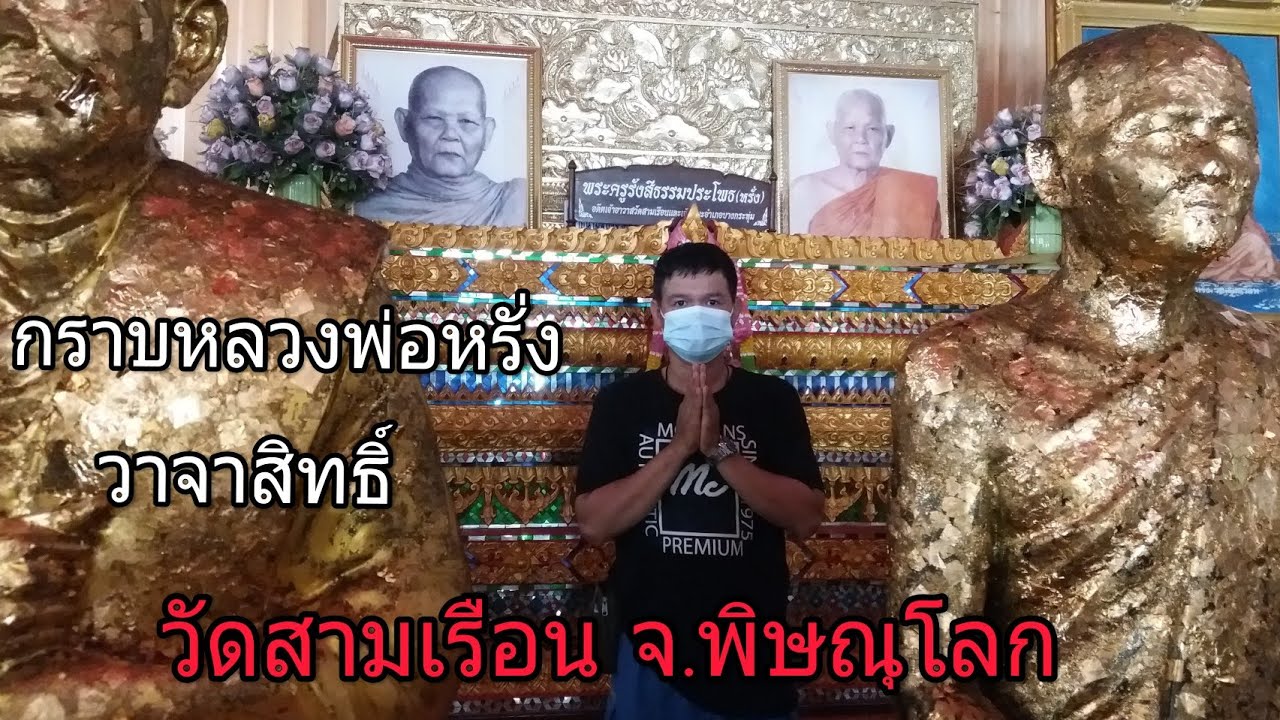
 Click to Access the Navigation Map GPS
Wat Sam Ruean Map
Recommend

 Art, Culture and Heritage
 Historical Sites and Monuments(1)
 Landmarks and Memorials(2)
 Art, Craft Centres, Tradition(3)
 Museums(3)
 Educational Places
 Educational Gardens, Farm(1)
Temple(29)
Educational Gardens, Farm(1)
Temple(29)
 Mosque(1)
 Other Sacred Sites(3)
 Research and Development
 Royal Project(1)
 Suburban Living
 Village, Community(1)
 Nature and Wildlife
 National Parks and Marine Reserves(7)
 Mountain (Doi)(4)
 Dam, Reservoir, Lake(5)
 Waterfalls(19)
 Caves(3)
 River, Canal(9)
 Other natural attractions(1)
 Entertainment and Agricultural
 Farms, Parks and Ecotourism(2)
 Outdoor and Adventure Activities(1)


