
lovethailand home >North Travel Attractions >Phitsanulok Travel Attractions >Bang Krathum >Ban Rai > Wat Phrai Suwan
TL;DR: Wat Phrai Suwan is located at Ban Phrai Suwan, Village No. 9, Ban Rai Subdistrict, Bang Krathum District, Phitsanulok Province, open Daily, hours 08.00 – 17.00.
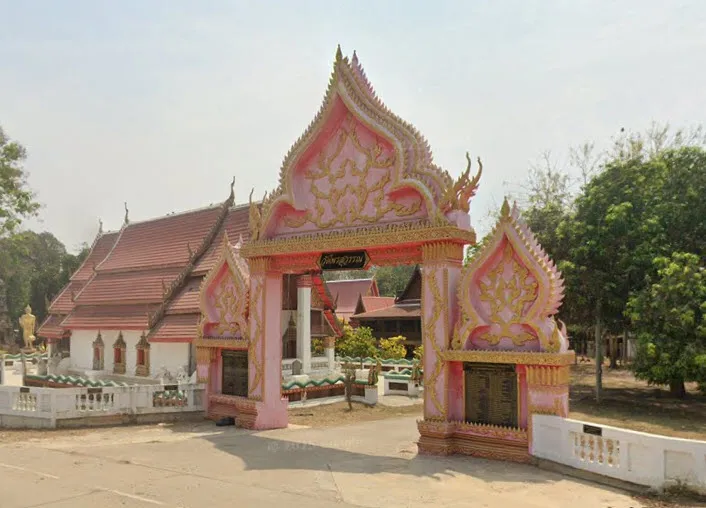
Wat Phrai Suwan
Open Days: Daily
Opening Hours: 08.00 – 17.00
Wat Phrai Suwan is an ancient Buddhist temple located at Ban Phrai Suwan, Village No. 9, Ban Rai Subdistrict, Bang Krathum District, Phitsanulok Province. It is a public temple under the Mahanikaya order and has been an important spiritual center for the local community for more than 100 years. The temple is especially known for Luang Pho Phet, a bronze Buddha image in the Mara Vichai posture, and for its old ordination hall associated with traditional craftsmanship and restoration work. Set on the eastern side of the Nan River, Wat Phrai Suwan offers a calm riverside atmosphere suitable for merit-making, cultural learning, and quiet reflection.
Wat Phrai Suwan is located in Ban Rai Subdistrict, an area of Bang Krathum District where local communities have long lived in connection with the Nan River. In the past, rivers were essential routes for travel, farming, trade, and settlement. Temples built along rivers often became natural centers of village life. Wat Phrai Suwan reflects this pattern clearly. It is not only a religious site, but also a place where local history, faith, community memory, and riverside culture continue to meet.
Local records state that the temple land covers approximately 32 rai and 80 square wa. The northern boundary adjoins private land, the southern boundary adjoins the Nan River, and the eastern and western boundaries adjoin private land. The temple land is recorded under Nor Sor 3 No. 8517, and there is one additional monastic land plot covering 2 rai and 58 square wa. The temple sits on lowland beside the Nan River, making it suitable for religious ceremonies, community gatherings, and cultural visits. The riverside setting gives the temple a peaceful and open atmosphere.
The temple was once deserted before Phra Achan Son came to restore it in B.E. 2455. Later abbots continued to develop the temple and build larger, more beautiful religious structures. This history shows that Wat Phrai Suwan is a temple revived through devotion. It is not merely an old place preserved as a relic of the past; it is a living temple that continues to have resident monks, merit-making activities, and a close relationship with the surrounding community.
The most important sacred image at Wat Phrai Suwan is Luang Pho Phet, a bronze Buddha image in the Mara Vichai posture. The image measures 19 inches across the lap and has long been enshrined at the temple. Luang Pho Phet is respected by local people as a sacred Buddha image and as the spiritual heart of the temple. Devotees come to pay homage, ask for blessings, and seek peace of mind. The image represents both Buddhist devotion and the deep emotional bond between the temple and the community.
Luang Pho Phet originally had a topknot made of gold, but it was later stolen. The image was subsequently restored to preserve its completeness and sacred value. This story adds historical depth to the Buddha image. It shows that Luang Pho Phet has been important enough for the community to protect, restore, and continue venerating. The restoration of the image was not simply a repair of an object; it was an act of preserving faith, memory, and continuity.
The Mara Vichai posture has deep meaning in Buddhist tradition. It represents the moment when the Buddha conquered Mara and attained enlightenment. This posture symbolizes determination, patience, inner strength, and victory over obstacles. For visitors who come to pay respect to Luang Pho Phet, the experience is therefore not only about asking for good fortune, but also about reflecting on perseverance and the ability to overcome difficulties through mindfulness and wisdom.
Another major highlight of Wat Phrai Suwan is its old ordination hall. The hall is associated with the restoration work of Phra Athikan Rueang, a monk from Sukhothai who devoted his effort to restoring and decorating the ordination hall and carving the doors and gables of temple buildings. These details make the ordination hall an important example of local religious craftsmanship. For visitors interested in traditional Thai artisan work, the hall offers a meaningful opportunity to observe the connection between Buddhist faith and handcraft.
The ordination hall measures 12 meters wide and 20 meters long and was built in B.E. 2518. In Thai Buddhist tradition, the ordination hall is one of the most sacred buildings in a temple because it is used for formal monastic ceremonies and important religious rites. Visitors should treat this area with special respect. The hall is not only a religious structure, but also a visible sign of the temple’s development and the community’s commitment to maintaining Buddhist practice.
The main assembly hall measures 24 meters wide and 32 meters long and was built in B.E. 2511. This building supports merit-making, Dhamma listening, community meetings, and annual temple events. During Kathin ceremonies, robe-offering events, Songkran merit-making, and other Buddhist occasions, local residents gather in the hall to make offerings, listen to sermons, and work together. The assembly hall is therefore both a religious and social center of the temple.
Wat Phrai Suwan also has 7 wooden monks’ residences. These buildings provide living space for monks and reflect the simple character of rural Thai temple architecture. Their wooden form harmonizes with the riverside setting and the agricultural landscape around the temple. The presence of resident monks confirms that Wat Phrai Suwan remains an active religious place rather than only a historical attraction.
Recent Kathin information identifies the abbot of Wat Phrai Suwan as Phra Khru Phiphit Chayaphon, with 5 monks in residence. The abbot plays an important role in temple administration, religious activities, preservation of sacred places, and coordination with the community. In a village temple such as Wat Phrai Suwan, the cooperation between monks and local residents is essential for keeping the temple active and meaningful.
Merit-making traditions at Wat Phrai Suwan help keep the local community connected. Activities such as alms-giving, Sangha offerings, robe-offering ceremonies, Kathin, Dhamma listening, and community temple work allow villagers to gather regularly. These activities are not only religious rituals; they also strengthen relationships among residents and pass on values such as generosity, gratitude, and support for Buddhism to younger generations.
The beauty of Wat Phrai Suwan lies in the combination of history, sacred art, craftsmanship, and local life. Visitors can begin by paying respect to Luang Pho Phet, then observe the ordination hall and the craft details linked to earlier restoration work. Walking quietly through the temple grounds allows visitors to appreciate the calm riverside atmosphere and the way the temple continues to serve the local community. The temple’s value is not limited to its art; it also lies in the devotion that has preserved it for generations.
As a cultural destination, Wat Phrai Suwan is suitable for travelers interested in old temples, local Buddhist art, community faith, and the history of lower Phitsanulok. It is not a crowded commercial tourist attraction, but rather a quiet temple for people who want to make merit, learn about Luang Pho Phet, observe traditional craftsmanship, and experience a peaceful riverside setting. The calm environment encourages visitors to slow down and experience the temple respectfully.
Wat Phrai Suwan can also be combined with other cultural sites in Ban Rai Subdistrict and Bang Krathum District. Nearby places include Wat Khok Salud, Wat Sirisutthawat, Wat Rat Sattha Tham, Wat Huai Kaew, King Naresuan Shrine in Bang Krathum, and Wat Phra Si Rattana Mahathat Woramahawihan in Phitsanulok city. This makes the temple suitable for a one-day cultural route focused on temples, riverside communities, local food, and the history of Phitsanulok Province.
Getting There is convenient by private car or rental car. From Phitsanulok city, take the Phitsanulok – Wat Chulamanee – Bang Krathum route, then turn right for about 1 kilometer to reach the temple. The distance from Phitsanulok city is about 28 kilometers. Wat Phrai Suwan is located on the eastern side of the Nan River. Travelers using public transport should first reach Bang Krathum District or a nearby community and then arrange local transport to Ban Rai Subdistrict.
Visitors should dress modestly, speak quietly, and respect sacred areas, especially the ordination hall, Luang Pho Phet, and places used by monks for religious activities. If a temple ceremony or community merit-making event is taking place, visitors should keep a respectful distance and avoid disturbing participants. Photography should be done thoughtfully, particularly around Buddha images and old religious buildings. Respectful behavior helps preserve the peaceful atmosphere of the temple and honors the local community.
Wat Phrai Suwan is therefore a valuable old temple with religious, historical, artistic, and community significance. Its importance comes from the faith surrounding Luang Pho Phet, the craftsmanship of the ordination hall, the temple’s revival from a deserted site, and its continuing role as the spiritual center of Ban Phrai Suwan. Visitors who come here can experience the calm of a riverside temple, learn about local history, and understand how community temples preserve the deep roots of Thai Buddhist culture.
| Name | Wat Phrai Suwan |
| Location | Ban Phrai Suwan, Village No. 9, Ban Rai Subdistrict, Bang Krathum District, Phitsanulok Province |
| Type | Public Buddhist temple under the Mahanikaya order |
| Highlights | Ancient riverside temple with Luang Pho Phet, a bronze Buddha image in the Mara Vichai posture measuring 19 inches across the lap, and an ordination hall with traditional craftsmanship |
| History | Formerly a deserted temple before Phra Achan Son restored it in B.E. 2455. The temple later developed through the work of several abbots and the faith of the local community |
| Temple Area | About 32 rai and 80 square wa, with one additional monastic land plot of 2 rai and 58 square wa |
| Distinctive Features | Located on lowland beside the eastern side of the Nan River, with a peaceful riverside atmosphere suitable for merit-making, meditation, and cultural learning |
| Main Sacred Image | Luang Pho Phet, a bronze Buddha image in the Mara Vichai posture, 19 inches across the lap |
| Main Buildings | Ordination hall measuring 12 x 20 meters, built in B.E. 2518; assembly hall measuring 24 x 32 meters, built in B.E. 2511; and 7 wooden monks’ residences |
| Important Craftsmanship | Restoration and decoration of the ordination hall, including carved doors and gables associated with Phra Athikan Rueang from Sukhothai |
| Travel Information | From Phitsanulok city, take the Phitsanulok – Wat Chulamanee – Bang Krathum route, then turn right for about 1 km. The total distance is about 28 km. Private car, rental car, or local transport from Bang Krathum is recommended |
| Current Status | An active Buddhist temple with resident monks, a spiritual center for the local community, and a cultural attraction of Ban Rai Subdistrict |
| Open Days | Daily |
| Opening Hours | 08.00 – 17.00 |
| Fees | No admission fee |
| Facilities | Ordination hall, assembly hall, monks’ residences, worship area, merit-making area, religious activity area, and community activity space |
| Main Areas / Zones | Ordination hall, Luang Pho Phet worship area, assembly hall, wooden monks’ residences, sacred object areas, and Nan River side |
| Abbot / Caretaker | Phra Khru Phiphit Chayaphon |
| Official Website / Official Page | Wat Phrai Suwan, Ban Rai Subdistrict, Bang Krathum District, Phitsanulok Province |
| Nearby Tourist Attractions | 1. Wat Khok Salud, about 7 km 2. Wat Sirisutthawat, also known as Wat Khwang, about 9 km 3. Ban Rai Phuwasin 159, about 10 km 4. Wat Rat Sattha Tham, about 10 km 5. Wat Huai Kaew Bang Krathum, about 12 km 6. King Naresuan Shrine Bang Krathum, about 13 km 7. Wat Phra Si Rattana Mahathat Woramahawihan, about 28 km |
| Nearby Restaurants | 1. Ban Rai Phuwasin 159, about 10 km, Tel. 097-202-1159 2. Rom Chamchuri Bang Krathum, about 14 km, Tel. 086-927-4222, 091-382-6411, 062-039-9727 3. Krua Na Nin, about 17 km, Tel. 081-675-5519, 081-575-5699 4. Muse Cafe & Studio, about 14 km 5. Pan Cafe, about 14 km 6. Lan Isan, about 14 km |
| Nearby Accommodations | 1. Ban Rai Phuwasin 159, about 10 km, Tel. 097-202-1159 2. Topland Hotel & Convention Centre, about 28 km, Tel. 055-247-800, 086-440-9016 3. iDUS Hotel, about 30 km, Tel. 094-641-8226 4. Pattara Resort & Spa, about 31 km, Tel. 055-282-966 5. B2 Phitsanulok Premier Hotel, about 31 km, Tel. 052-009-161, 088-263-2897 |
Frequently Asked Questions (FAQ)
Q: Where is Wat Phrai Suwan located?
A: Wat Phrai Suwan is located at Ban Phrai Suwan, Village No. 9, Ban Rai Subdistrict, Bang Krathum District, Phitsanulok Province, on the eastern side of the Nan River.
Q: Why is Wat Phrai Suwan important?
A: Wat Phrai Suwan is an old temple more than 100 years old. It is a spiritual center for the Ban Phrai Suwan community and an important place for studying local Buddhist art, history, and culture.
Q: What is Luang Pho Phet at Wat Phrai Suwan?
A: Luang Pho Phet is a bronze Buddha image in the Mara Vichai posture, measuring 19 inches across the lap. It is the temple’s most important sacred image and is highly revered by local people.
Q: What is special about the ordination hall at Wat Phrai Suwan?
A: The ordination hall is important for both religious and artistic reasons. It is associated with the restoration work of Phra Athikan Rueang from Sukhothai, including carved doors and gables of temple buildings.
Q: Who is the abbot of Wat Phrai Suwan?
A: The current abbot of Wat Phrai Suwan is Phra Khru Phiphit Chayaphon.
Q: What are the opening hours of Wat Phrai Suwan?
A: Wat Phrai Suwan is open daily from 08.00 to 17.00. Visitors should dress modestly and behave respectfully inside the temple grounds.
Q: How can travelers get to Wat Phrai Suwan?
A: From Phitsanulok city, take the Phitsanulok – Wat Chulamanee – Bang Krathum route, then turn right for about 1 km. The total distance is about 28 km.
Q: What nearby attractions can travelers visit after Wat Phrai Suwan?
A: Nearby attractions include Wat Khok Salud, Wat Sirisutthawat, Ban Rai Phuwasin 159, Wat Rat Sattha Tham, Wat Huai Kaew, King Naresuan Shrine Bang Krathum, and Wat Phra Si Rattana Mahathat Woramahawihan.
 Category: ●Places of Worship
 Group: ●Temple
Last Update : 3 MonthAgo
 Last Update : 3 MonthAgo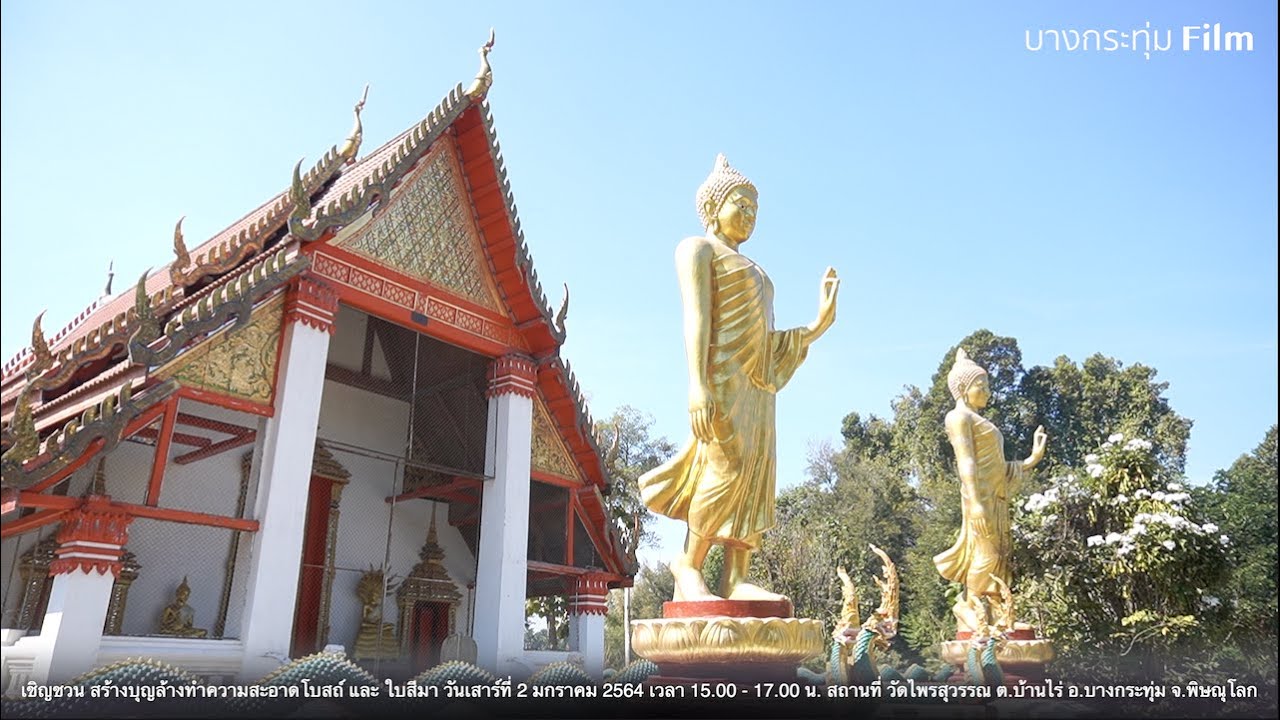
 Click to Access the Navigation Map GPS
Wat Phrai Suwan Map
Recommend

 Art, Culture and Heritage
 Historical Sites and Monuments(1)
 Landmarks and Memorials(2)
 Art, Craft Centres, Tradition(3)
 Museums(3)
 Educational Places
 Educational Gardens, Farm(1)
Temple(29)
Educational Gardens, Farm(1)
Temple(29)
 Mosque(1)
 Other Sacred Sites(3)
 Research and Development
 Royal Project(1)
 Suburban Living
 Village, Community(1)
 Nature and Wildlife
 National Parks and Marine Reserves(7)
 Mountain (Doi)(4)
 Dam, Reservoir, Lake(5)
 Waterfalls(19)
 Caves(3)
 River, Canal(9)
 Other natural attractions(1)
 Entertainment and Agricultural
 Farms, Parks and Ecotourism(2)
 Outdoor and Adventure Activities(1)


