
lovethailand home >North Travel Attractions >Phitsanulok Travel Attractions >Bang Krathum >Ban Rai > Wat Rat Sattha Tham
TL;DR: Wat Rat Sattha Tham is located at Village No. 6, Ban Rai Subdistrict, Bang Krathum District, Phitsanulok Province, open Daily, hours 08.00 – 17.00.
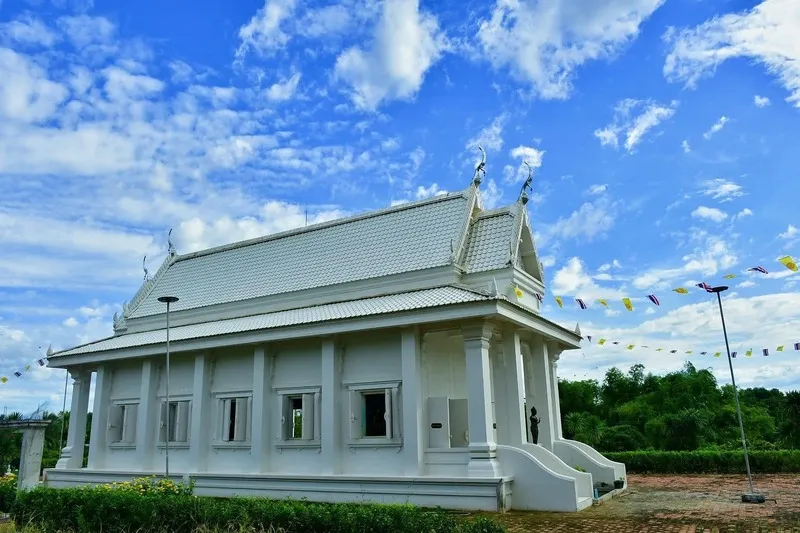
Wat Rat Sattha Tham
Open Days: Daily
Opening Hours: 08.00 – 17.00
Wat Rat Sattha Tham is located in Village No. 6, Ban Rai Subdistrict, Bang Krathum District, Phitsanulok Province. It is a public Buddhist temple under the Mahanikaya order and holds an important place in the religious and cultural life of the local community. Set in a quiet rural environment surrounded by rice fields, greenery, and village scenery, the temple offers a calm atmosphere for merit-making, prayer, meditation, and cultural learning. For travelers who want to experience a local Thai temple beyond the major tourist routes, Wat Rat Sattha Tham provides a meaningful look at how Buddhism remains closely connected with everyday community life.
The temple is important not only as a place of worship, but also as a gathering point for residents of Ban Rai Subdistrict. Local people come here to make merit, offer alms, present Sangha offerings, listen to Dhamma teachings, and participate in Buddhist ceremonies during important religious occasions. The temple helps preserve traditional values and strengthens relationships among villagers. In this sense, Wat Rat Sattha Tham is not merely a sacred place; it is also a social and cultural space that supports community unity.
The atmosphere of Wat Rat Sattha Tham is peaceful, simple, and welcoming. It is a community temple that still reflects the rhythm of rural life rather than a crowded commercial attraction. The surrounding rice fields, trees, and green areas create a sense of quietness that is suitable for reflection. Visitors can spend time paying respect to Buddha images, sitting quietly, or observing how a local temple functions as part of everyday village life. The charm of the temple lies in its modesty and sincerity.
Inside the temple are important religious buildings such as the ordination hall and the main assembly hall. The ordination hall has a simple architectural style that reflects the faith and effort of the local community in creating a sacred space for Buddhist ceremonies. The principal Buddha image inside the ordination hall is carefully maintained and serves as a spiritual focus for people who come to make merit and pay respect. This building represents the religious heart of the temple.
The assembly hall is another important space within the temple compound. It is used for merit-making, Dhamma talks, community meetings, and religious activities on important occasions. In many Thai villages, the assembly hall is where monks and laypeople meet most often. At Wat Rat Sattha Tham, this hall helps connect the temple with the community. During annual merit-making events and Buddhist festivals, villagers gather here to offer food to monks, listen to sermons, dedicate merit, and help organize temple activities.
The principal Buddha image and other Buddha images within the temple are deeply respected by local people. These sacred images are not only objects of worship, but also reminders of Buddhist values such as compassion, mindfulness, patience, and moral conduct. Walking through the temple and observing the Buddha images allows visitors to appreciate both the spiritual and cultural dimensions of Thai Buddhist art. For travelers interested in local temples, the details of the Buddha images, their placement, and the worship areas reveal much about the faith of the community.
Wat Rat Sattha Tham also serves as an important learning space for children and young people in the area. Through temple activities, young people learn how to make merit, chant, behave respectfully in sacred places, and take part in cultural traditions. Community events such as temple festivals, chanting, traditional performances, and religious ceremonies help teach discipline, patience, gratitude, and respect. Regular participation in temple life helps younger generations understand the cultural roots of their community.
Beyond its religious role, the temple contributes to community development. It is a place where residents can gather, share information, support one another, and organize social activities. Temples in rural Thailand often serve as communication centers and places of mutual assistance, and Wat Rat Sattha Tham reflects this pattern clearly. Whether during merit-making events, community projects, or local gatherings, the temple helps maintain cooperation and social warmth among villagers.
The abbot and monks of the temple play an essential role in guiding religious life, giving moral advice, and supporting community activities. Cultural records identify Chao Athikan Thanat Piyasilo as the abbot of Wat Rat Sattha Tham and ecclesiastical chief of Don Sai Subdistrict. In a village temple, the role of the abbot is especially important because it includes temple administration, religious guidance, youth education, and coordination with local residents.
During important Buddhist festivals, Wat Rat Sattha Tham becomes more active as villagers gather for ceremonies such as merit-making, alms-giving, Sangha offerings, Dhamma listening, and other Buddhist practices. These activities help maintain Thai Buddhist traditions and give people an opportunity to come together regularly. A temple festival is therefore not only a religious occasion, but also a social process that keeps the community strong and connected.
The quiet environment of Wat Rat Sattha Tham makes it suitable for simple meditation and peaceful reflection. Visitors who come here can sit quietly, pray, or rest in the calm surroundings of the temple. The rural setting helps reduce distraction and allows the mind to settle. Even travelers who are not formal meditation practitioners can benefit from the peaceful atmosphere, the sound of nature, and the slower pace of a local village temple.
For cultural travelers, Wat Rat Sattha Tham offers a valuable perspective on Bang Krathum District. The district includes old communities, local temples, riverside routes, rice fields, and traditional village life. A visit to this temple can be combined with nearby places such as Wat Sirisutthawat, Wat Phrai Suwan, Wat Huai Kaew, the King Naresuan Shrine in Bang Krathum, and Wat Phra Si Rattana Mahathat Woramahawihan in Phitsanulok city. This makes the temple suitable for a slow cultural route focused on temples, local food, and rural scenery.
Visiting Wat Rat Sattha Tham is suitable for local residents, Buddhist pilgrims, cultural travelers, and anyone seeking a quiet place to make merit. The experience should be seen not only as a visit to a temple, but also as a chance to understand how Buddhism supports community life. Observing temple activities, greeting local people respectfully, and spending time quietly in the temple grounds can help visitors appreciate the living role of Buddhism in rural Thailand.
Getting There is most convenient by private car or rental car. From Phitsanulok city, travel toward Bang Krathum District and continue to Ban Rai Subdistrict, Village No. 6. The temple is located in a rural community area, so drivers should proceed carefully on local roads. Travelers using public transport can first reach Bang Krathum town and then arrange local transport to Ban Rai Subdistrict. Those planning to visit nearby attractions should plan the route in advance to avoid rushing.
Visitors should dress modestly, speak quietly, and respect sacred areas, especially the ordination hall, assembly hall, and spaces used by monks for religious activities. If a ceremony or community merit-making event is taking place, visitors should keep a respectful distance and avoid disturbing participants. Photography should be done thoughtfully, and visitors should keep the temple clean. Respectful behavior helps preserve the peaceful atmosphere of the temple and shows consideration for the local community.
Wat Rat Sattha Tham is therefore a meaningful community temple that reflects the value of Buddhism in everyday life. It is a place for merit-making, spiritual reflection, youth learning, and community cooperation. Its beauty comes from simplicity, peace, and the close relationship between the temple and local residents. Visitors who come here can experience a calm rural temple, pay respect to Buddha images, and better understand why Thai temples continue to play an important role in society today.
| Name | Wat Rat Sattha Tham |
| Location | Village No. 6, Ban Rai Subdistrict, Bang Krathum District, Phitsanulok Province |
| Type | Public Buddhist temple under the Mahanikaya order |
| Highlights | A peaceful community temple surrounded by rice fields and greenery, suitable for merit-making, paying respect to Buddha images, meditation, and learning local village culture |
| Distinctive Features | A spiritual center for residents of Village No. 6, Ban Rai Subdistrict, with an ordination hall, assembly hall, principal Buddha image, Buddha images in different postures, and areas for Buddhist activities |
| Community Role | A place for merit-making, Sangha offerings, alms-giving, Dhamma listening, annual temple events, and community gatherings |
| Travel Information | From Phitsanulok city, travel toward Bang Krathum District and continue to Ban Rai Subdistrict, Village No. 6. Private car, rental car, or local transport from Bang Krathum town is recommended |
| Current Status | An active Buddhist temple and spiritual center for the Ban Rai community |
| Open Days | Daily |
| Opening Hours | 08.00 – 17.00 |
| Fees | No admission fee |
| Facilities | Ordination hall, assembly hall, worship area, merit-making space, religious activity areas, and community activity areas |
| Main Areas / Zones | Ordination hall, assembly hall, principal Buddha image, Buddha images in different postures, and community meditation area |
| Abbot / Caretaker | Chao Athikan Thanat Piyasilo |
| Nearby Tourist Attractions | 1. Wat Sirisutthawat, also known as Wat Khwang, about 2 km 2. Ban Rai Phuwasin 159, about 4 km 3. Wat Phrai Suwan, about 5 km 4. Wat Huai Kaew Bang Krathum, about 11 km 5. King Naresuan Shrine Bang Krathum, about 12 km 6. Wat Phra Si Rattana Mahathat Woramahawihan, about 33 km |
| Nearby Restaurants | 1. Ban Rai Phuwasin 159, about 4 km, Tel. 097-202-1159 2. Rom Chamchuri Bang Krathum, about 13 km, Tel. 086-927-4222, 091-382-6411, 062-039-9727 3. Krua Na Nin, about 16 km, Tel. 081-675-5519, 081-575-5699 4. Muse Cafe & Studio, about 13 km 5. Pan Cafe, about 13 km 6. Lan Isan, about 13 km |
| Nearby Accommodations | 1. Ban Rai Phuwasin 159, about 4 km, Tel. 097-202-1159 2. Topland Hotel & Convention Centre, about 33 km, Tel. 055-247-800, 086-440-9016 3. iDUS Hotel, about 34 km, Tel. 094-641-8226 4. Pattara Resort & Spa, about 35 km, Tel. 055-282-966 5. B2 Phitsanulok Premier Hotel, about 35 km, Tel. 052-009-161, 088-263-2897 |
Frequently Asked Questions (FAQ)
Q: Where is Wat Rat Sattha Tham located?
A: Wat Rat Sattha Tham is located in Village No. 6, Ban Rai Subdistrict, Bang Krathum District, Phitsanulok Province. It is a public Buddhist temple under the Mahanikaya order.
Q: What is Wat Rat Sattha Tham known for?
A: The temple is known for its peaceful rural atmosphere, rice-field surroundings, and role as a spiritual center for the Ban Rai community.
Q: What important buildings are found at Wat Rat Sattha Tham?
A: The temple has an ordination hall, assembly hall, principal Buddha image, Buddha images in different postures, and areas for community Buddhist activities.
Q: Who is the abbot of Wat Rat Sattha Tham?
A: The abbot of Wat Rat Sattha Tham is Chao Athikan Thanat Piyasilo.
Q: What are the opening hours of Wat Rat Sattha Tham?
A: Wat Rat Sattha Tham is open daily from 08.00 to 17.00. Visitors should dress modestly and behave respectfully inside the temple grounds.
Q: How can travelers get to Wat Rat Sattha Tham?
A: From Phitsanulok city, travel toward Bang Krathum District and continue to Ban Rai Subdistrict, Village No. 6. Private car, rental car, or local transport from Bang Krathum town is recommended.
Q: What nearby attractions can travelers visit after Wat Rat Sattha Tham?
A: Nearby attractions include Wat Sirisutthawat, Ban Rai Phuwasin 159, Wat Phrai Suwan, Wat Huai Kaew, King Naresuan Shrine Bang Krathum, and Wat Phra Si Rattana Mahathat Woramahawihan.
 Category: ●Places of Worship
 Group: ●Temple
Last Update : 3 MonthAgo
 Last Update : 3 MonthAgo
 Click to Access the Navigation Map GPS
Wat Rat Sattha Tham Map
Recommend

 Art, Culture and Heritage
 Historical Sites and Monuments(1)
 Landmarks and Memorials(2)
 Art, Craft Centres, Tradition(3)
 Museums(3)
 Educational Places
 Educational Gardens, Farm(1)
Temple(29)
Educational Gardens, Farm(1)
Temple(29)
 Mosque(1)
 Other Sacred Sites(3)
 Research and Development
 Royal Project(1)
 Suburban Living
 Village, Community(1)
 Nature and Wildlife
 National Parks and Marine Reserves(7)
 Mountain (Doi)(4)
 Dam, Reservoir, Lake(5)
 Waterfalls(19)
 Caves(3)
 River, Canal(9)
 Other natural attractions(1)
 Entertainment and Agricultural
 Farms, Parks and Ecotourism(2)
 Outdoor and Adventure Activities(1)


