
lovethailand home >North Travel Attractions >Phitsanulok Travel Attractions >Nakhon Thai >Huai Hia > Kaeng Sai Waterfall
TL;DR: Kaeng Sai Waterfall is located at Moo 9, Ban Sap Sopha, Huai Hia Subdistrict, Nakhon Thai District, Phitsanulok Province, open Daily, hours 08.00 - 17.00.
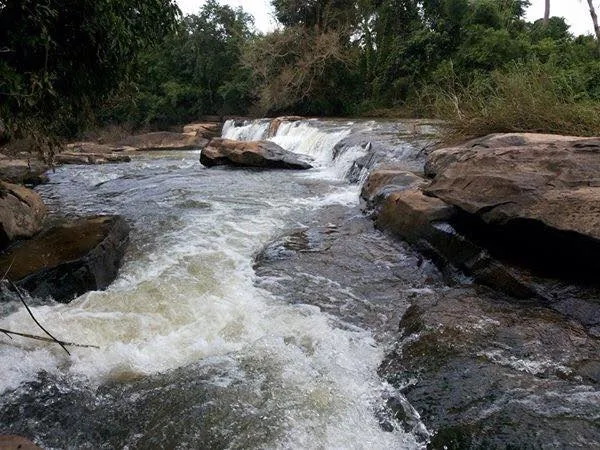
Kaeng Sai Waterfall
Open Days: Daily
Opening Hours: 08.00 - 17.00
Kaeng Sai Waterfall in Phitsanulok Province is a natural attraction in Huai Hia Subdistrict, Nakhon Thai District. It is known for its forest stream, layered waterfall, natural rock shelter, large upstream rapid, freshwater fish conservation area, and local “sand snails” that reflect the biodiversity and community way of life around the stream. This is a suitable destination for travelers who want to experience quiet nature, observe freshwater ecology, and enjoy a less commercialized waterfall in upper Phitsanulok.
Kaeng Sai Waterfall is located in Moo 9, Ban Sap Sopha, Huai Hia Subdistrict, Nakhon Thai District, Phitsanulok Province. Local administrative information also records the place as “Nam Tok Kaeng Sai” and states that it is a water source flowing from Kaeng Lat Waterfall in Moo 7, Ban Kaeng Lat. The waterfall belongs to a wider group of natural sites in Huai Hia, an area known for streams, rocks, waterfalls, forested surroundings, and rural communities closely connected with natural resources.
The main beauty of Kaeng Sai Waterfall comes from the way the water flows over natural rock layers. The waterfall is not a single vertical drop. Instead, it forms a series of smaller cascades and rock levels. In some areas, the water spreads thinly across stone. In other areas, it gathers into narrow channels before flowing down to the lower stream. This layered movement creates a calm and refreshing atmosphere, with the continuous sound of water helping visitors feel relaxed and connected with nature.
Beside the waterfall is a natural rock shelter formed through geological processes. This feature gives the site more character because visitors can see not only water and forest, but also the natural structure of rocks shaped over time. The rock shelter can serve as a resting place during a walk or as a spot to stay away from light rain or strong sun. Visitors should still be careful around wet rock surfaces, especially after rainfall, because natural stone can become slippery.
Above the waterfall is a large rapid where the water flows slowly. This slower-flowing section has become a natural habitat for several freshwater fish species. The combination of rock channels, small pools, shaded water, and calmer current creates a suitable environment for aquatic life. Because of this ecological value, the area has been treated as a fish conservation zone. Kaeng Sai Waterfall is therefore more than a scenic waterfall. It is also a living freshwater ecosystem.
The fish conservation zone helps visitors understand that a stream is not just a beautiful landscape. It is a home for living creatures. Travelers should avoid catching fish, feeding fish unnecessarily, using soap or shampoo in the stream, or throwing food waste into the water. These actions may harm the balance of the ecosystem. Observing fish quietly and respectfully is the best way to enjoy this part of the waterfall.
Another distinctive feature of Kaeng Sai Waterfall is the presence of small local “sand snails.” These small edible snails are part of the local way of life and reflect the relationship between people and the stream. For nearby communities, the waterway is not only a tourism site. It is also connected with food, local knowledge, seasonal observation, and everyday life. The story of sand snails adds cultural depth to the waterfall and makes the place more meaningful than a simple scenic stop.
The sand snails also show the biodiversity of the area. Small aquatic animals, fish, riverside plants, and microorganisms all depend on clean water and a stable habitat. If the stream is disturbed, these living things may decline. Visitors should therefore avoid removing aquatic life from the area, damaging streamside habitats, or changing the natural condition of rocks and water channels. Responsible behavior helps preserve the waterfall and its ecosystem.
Kaeng Sai Waterfall is suitable for eco-travel activities such as walking along the stream, observing fish in the conservation area, viewing the natural rock shelter, photographing rocks and flowing water, resting under shade, and learning about local biodiversity. The waterfall is especially suitable for travelers who appreciate small details in nature. Its value lies not only in the view but also in the fish, snails, rocks, water flow, and quiet forest atmosphere.
The best time to visit Kaeng Sai Waterfall is generally from the rainy season to the early cool season, when the forest is green and the stream has more water. During this period, the cascades and rocks look fresher, and the area is suitable for photography and nature walks. However, visitors should avoid entering the water during heavy rain or when the current is strong. Natural waterfalls can become dangerous quickly because rocks are slippery and water levels may rise.
In the dry season, the water level may decrease, but the site can still be valuable for walking, observing rock formations, viewing the streambed, and studying the freshwater environment. Lower water levels may make it easier to see rock shapes, small channels, and aquatic habitats. For travelers interested in ecology and landscape details, the dry season can offer a different but still meaningful experience.
Traveling to Kaeng Sai Waterfall is best done by private car or motorcycle. Visitors should head toward Huai Hia Subdistrict in Nakhon Thai District, then continue to Moo 9, Ban Sap Sopha, the location recorded by local administrative sources. Before traveling, it is advisable to check road and weather conditions, especially during the rainy season. Some rural and natural-area roads may become slippery or unsuitable for certain vehicles after rain. Travelers unfamiliar with the area should ask local residents or contact the Huai Hia Subdistrict Administrative Organization for route information.
Visitors should prepare drinking water, shoes suitable for wet ground, spare clothes, waterproof protection for phones or cameras, personal medication, and a trash bag. Because Kaeng Sai Waterfall is a natural site, facilities may be limited. Families with children or elderly travelers should choose safe resting areas and avoid slippery rocks, uneven ground, deep water, and strong current areas.
Kaeng Sai Waterfall can be visited as a half-day trip or as part of a full-day nature route. Nearby places include Kaeng Saphung Waterfall, Mae De Waterfall, Kaeng Kwang Nao Waterfall, Kaeng Huai Lop Wa, Wat Na Phra That, and Phu Hin Rong Kla National Park. This route is ideal for travelers who want to see streams, waterfalls, rocky landscapes, forested areas, and local communities in upper Phitsanulok Province.
For photographers, Kaeng Sai Waterfall offers several strong natural compositions. Interesting subjects include water flowing over rock layers, the upstream rapid, fish in the conservation area, the natural rock shelter, and the green forest around the stream. Morning is a good time to visit because the light is softer, the air is cooler, and reflections on the water surface can be beautiful. Photographers should protect their equipment from moisture and avoid standing on algae-covered rocks.
Kaeng Sai Waterfall is also suitable for families who want children to learn from real nature. Children can observe how a stream flows, how fish live in a conservation area, how rocks form a waterfall, and how small animals such as sand snails depend on clean water. Adults should supervise children closely and keep the experience focused on learning and observation rather than risky water play.
From a community perspective, Kaeng Sai Waterfall represents a balanced relationship between people and nature. Local people understand the stream, fish, sand snails, seasons, and natural resources. At the same time, local authorities play a role in conservation and public information. The waterfall is therefore a good example of a local natural site that should remain simple, clean, and ecologically healthy rather than being overdeveloped.
Visitors should follow good nature-travel manners. Do not make loud noise, leave trash, collect snails, catch fish, use chemical products in the water, write on rocks, or damage plants. Small actions can directly affect water quality and aquatic life. If visitors help protect the site, Kaeng Sai Waterfall can remain a beautiful and living natural attraction for both the community and future travelers.
Overall, Kaeng Sai Waterfall is a distinctive natural attraction in Huai Hia Subdistrict, Nakhon Thai District, Phitsanulok Province. Its stream system, layered waterfall, rock shelter, large upstream rapid, fish conservation area, and local sand snails give it value in scenery, ecology, and community culture. It is a good destination for travelers who want to relax, learn about nature, and experience responsible eco-travel in upper Phitsanulok.
| Name | Kaeng Sai Waterfall |
| Location | Moo 9, Ban Sap Sopha, Huai Hia Subdistrict, Nakhon Thai District, Phitsanulok Province |
| Address | Huai Hia Subdistrict, Nakhon Thai District, Phitsanulok Province 65120, Thailand |
| Coordinates / Location | Moo 9, Ban Sap Sopha, Huai Hia Subdistrict, Nakhon Thai District, Phitsanulok Province 65120, Thailand |
| Highlights | A natural waterfall with cascades, rock formations, a natural rock shelter, a large upstream rapid, a fish conservation area, and local sand snails |
| History | A local natural water source of Ban Sap Sopha in Huai Hia Subdistrict; local administrative information states that the water flows from Kaeng Lat Waterfall in Moo 7, Ban Kaeng Lat |
| Name Origin | The name “Kaeng Sai” reflects the local stream and rapid landscape; some local official records spell it as “Nam Tok Kaeng Sai” in Thai without the final consonant mark |
| Distinctive Features | Layered water flow, forest stream, natural rock shelter, slow-flowing upstream rapid, fish habitat, and local sand snails |
| Travel Information | Best reached by private car or motorcycle through Huai Hia Subdistrict, Nakhon Thai District, then toward Moo 9, Ban Sap Sopha. Travelers should check road and weather conditions before visiting |
| Current Status | Listed as a natural attraction in Huai Hia Subdistrict by local administrative sources |
| Open Days | Daily |
| Opening Hours | 08.00 - 17.00 |
| Facilities | Natural stream area, rocky cascades, natural rock shelter, waterside resting spots, and freshwater ecosystem observation areas. Visitors should bring drinking water, suitable shoes, and a personal trash bag |
| Main Areas / Zones | Waterfall area, cascades, upstream rapid, natural rock shelter, fish conservation zone, stream area, and sand snail observation area |
| Caretaker | Huai Hia Subdistrict Administrative Organization, Nakhon Thai District, Phitsanulok Province |
| Main Contact Number | Huai Hia Subdistrict Administrative Organization, Tel. 055-000-212 |
| Official Website / Official Page | www.huayhear.go.th / Huai Hia Subdistrict Administrative Organization, Nakhon Thai, Phitsanulok |
| Nearby Tourist Attractions | 1. Kaeng Saphung Waterfall, Huai Hia Subdistrict, about 8 km 2. Mae De Waterfall, Huai Hia Subdistrict, about 10 km 3. Kaeng Kwang Nao Waterfall, Huai Hia Subdistrict, about 12 km 4. Kaeng Huai Lop Wa, Huai Hia Subdistrict, about 15 km 5. Wat Na Phra That, Nakhon Thai, about 35 km 6. Phu Hin Rong Kla National Park, about 65 km 7. Lan Hin Pum, Phu Hin Rong Kla National Park, about 70 km |
| Nearby Restaurants | 1. Homu Ban Ton Mai Nakhon Thai, about 35 km, Tel. 086-935-9135 2. De Frong'ce Cafe Nakhon Thai, about 40 km, Tel. 084-091-6897 3. Panya Kalae Nakhon Thai, about 35 km 4. Krua Chai Thung, about 38 km 5. Tiew Yak Ban Non Ta Phon, Nong Kathao, about 45 km |
| Nearby Accommodations | 1. Phet Resort Nakhon Thai, about 35 km, Tel. 081-474-3541 2. Panya Kalae Resort Nakhon Thai, about 35 km 3. Panya Garden Resort Nakhon Thai, about 35 km 4. Eve & Amp Resort Nakhon Thai, about 35 km 5. Prem's Place Nakhon Thai, about 35 km 6. Ban Phi, Noen Phoem Subdistrict, about 50 km 7. Ban Pennapha, Noen Phoem Subdistrict, about 50 km |
Frequently Asked Questions (FAQ)
Q: Where is Kaeng Sai Waterfall located?
A: Kaeng Sai Waterfall is located in Moo 9, Ban Sap Sopha, Huai Hia Subdistrict, Nakhon Thai District, Phitsanulok Province.
Q: What is Kaeng Sai Waterfall known for?
A: It is known for its layered waterfall, rocky stream, natural rock shelter, upstream rapid, fish conservation zone, and local sand snails.
Q: When is the best time to visit Kaeng Sai Waterfall?
A: The best time is generally from the rainy season to the early cool season, when the forest is green and the stream has more water. Visitors should avoid the waterfall during heavy rain.
Q: Can visitors swim at Kaeng Sai Waterfall?
A: Visitors may enjoy the water in safe shallow areas, but they should avoid the fish conservation zone, deep water, slippery rocks, and strong currents.
Q: Why is the fish conservation area important?
A: The fish conservation area protects freshwater biodiversity, provides habitat for local fish, and helps maintain the ecological health of the waterfall.
Q: What are the sand snails at Kaeng Sai Waterfall?
A: Sand snails are small local freshwater snails connected with the community’s way of life and the biodiversity of the stream ecosystem.
Q: How can travelers get to Kaeng Sai Waterfall?
A: Travelers should use a private car or motorcycle to reach Huai Hia Subdistrict, then continue to Moo 9, Ban Sap Sopha. Road conditions should be checked before traveling, especially during the rainy season.
Q: Who is the local caretaker for Kaeng Sai Waterfall?
A: The local authority connected with the area is Huai Hia Subdistrict Administrative Organization in Nakhon Thai District, Phitsanulok Province.
 Category: ●Nature and Wildlife
 Group: ●Waterfalls
Last Update : 4 MonthAgo
 Last Update : 4 MonthAgo
Recommend

 Art, Culture and Heritage
 Historical Sites and Monuments(1)
 Landmarks and Memorials(2)
 Art, Craft Centres, Tradition(3)
 Museums(3)
 Educational Places
 Educational Gardens, Farm(1)
 Places of Worship
 Temple(29)
 Mosque(1)
 Other Sacred Sites(3)
 Research and Development
 Royal Project(1)
 Suburban Living
 Village, Community(1)
 National Parks and Marine Reserves(7)
 Mountain (Doi)(4)
 Dam, Reservoir, Lake(5)
Waterfalls(19)
Dam, Reservoir, Lake(5)
Waterfalls(19)
 Caves(3)
 River, Canal(9)
 Other natural attractions(1)
 Entertainment and Agricultural
 Farms, Parks and Ecotourism(2)
 Outdoor and Adventure Activities(1)


