
lovethailand home >North Travel Attractions >Phitsanulok Travel Attractions >Nakhon Thai >Ban Phrao > Pha Khi Khwai
TL;DR: Pha Khi Khwai, Phitsanulok attractions : Nature and Wildlife, Mountain (Doi).
Pha Khi Khwai
Open Days: Contact Ban Phrao Subdistrict Administrative Organization before traveling
Opening Hours: Contact Ban Phrao Subdistrict Administrative Organization before traveling
Pha Khi Khwai in Phitsanulok Province is a natural and cultural attraction in Ban Phrao Subdistrict, Nakhon Thai District. Located around Village No. 4, Ban Fak Nam, the site combines a mountain cliff, forest landscape, local folklore, and a living community tradition known as the Pha Khi Khwai flag-raising tradition. For foreign travelers, this is not only a viewpoint or a hiking destination. It is a place where landscape, rural memory, belief, and community identity are closely connected.
The name Pha Khi Khwai immediately attracts attention because it literally suggests an image connected with riding a buffalo. Local stories explain the name in different ways. Some say the shape of the cliff or rock formation resembles a person riding a buffalo. Others connect the name with the older agricultural way of life, when buffaloes were essential to farming communities. In traditional Thai rural society, buffaloes helped plough fields, transport goods, and support rice farming. The name therefore reflects not only the appearance of the landscape but also the deep relationship between the community, agriculture, and memory.
The area around Pha Khi Khwai remains peaceful and rural. The route to the cliff is not designed as a fully developed tourist facility with urban convenience. Instead, it offers a more authentic nature experience. Visitors pass through village surroundings, forest edges, dirt paths, and steep sections of the mountain before reaching the higher cliff area. The sounds of wind, birds, insects, and the quiet atmosphere of the upland landscape create a strong contrast with city travel.
Reaching the upper part of the cliff gives visitors a wide view of the surrounding mountains and forest. The large rock cliff serves as the symbolic goal of the walk. Standing at the viewpoint, travelers can feel the effort of the climb and the reward of open scenery. The place offers a feeling of distance from everyday life, along with a sense of calm that is difficult to find in crowded destinations.
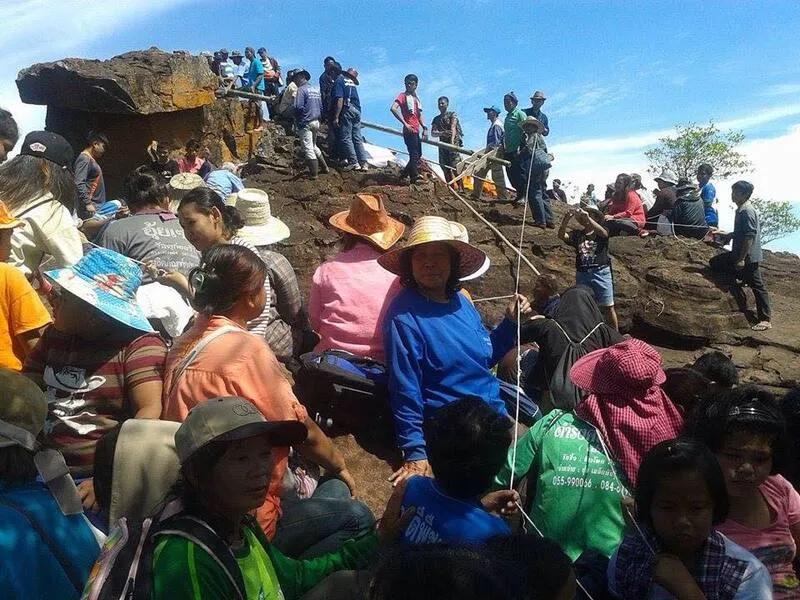
What makes Pha Khi Khwai especially meaningful is the annual flag-raising tradition practiced by the local community of Ban Phrao. Villagers walk up to the cliff together to raise a flag at the summit or ritual point. The flag is not simply a decoration. It is a symbol of faith, unity, blessing, and continuity. The shared walk up the mountain allows families, neighbors, children, young people, adults, and elders to participate in a tradition that has been passed down through generations.
The flag-raising tradition is deeply connected with local belief. People believe that raising the flag on the cliff brings good fortune, protection, and spiritual strength to the community. The ritual also expresses respect for the mountain and the natural landscape that has supported local life for many years. When villagers prepare the flag, climb together, help one another along the way, and gather at the top, the activity becomes a powerful expression of community solidarity.
The atmosphere during the tradition is one of the most memorable aspects of Pha Khi Khwai. The walk itself is part of the ritual experience. Fatigue, cooperation, laughter, encouragement, and shared purpose all become part of the journey. Once the flag is raised, the community can see a visible sign that their tradition remains alive. For visitors, observing this tradition respectfully offers a rare opportunity to understand how a mountain can become a sacred and cultural space.
Pha Khi Khwai shows that nature and culture are not separate. The mountain is not merely a background for ritual; it is the heart of the tradition. The forest is not just a route to pass through; it is a living environment that the community respects. The cliff is not only a viewpoint; it is a place of belief and collective memory. Travelers who visit with this understanding will experience the site more deeply than those who come only for photographs.
The name of the place also opens a window into Thai agricultural heritage. Buffaloes were once central to rural life, especially in farming communities. They represented strength, patience, and the close relationship between humans, animals, and rice fields. Even as modern machinery has replaced buffalo labor in many places, the cultural meaning of the buffalo remains in stories, place names, and local memory. Pha Khi Khwai keeps this memory alive through its name and oral traditions.
The scenery of Pha Khi Khwai changes by season. During the hot season, the sky is often clearer and the wide views are more visible, especially during community events. During the rainy season, the forest becomes greener and more refreshing, although the path can become slippery and more challenging. During the cool season, the air is more comfortable, and mist may appear in the valleys on some mornings. Each season gives the site a different mood, making it suitable for travelers who appreciate slow, nature-based experiences.
For photographers, Pha Khi Khwai offers several interesting subjects: the mountain trail, the rock cliff, forest scenery, villagers walking in the tradition, the raised flag, and the wide landscape from the summit. Morning light adds depth to the mountains, while late afternoon light softens the forest and rock surfaces. During the flag-raising tradition, the colors of the flag, the movement of people, and the atmosphere of participation create meaningful images that reflect living culture.
Visitors should prepare carefully before going to Pha Khi Khwai. The route involves natural terrain, steep paths, dirt sections, and forested areas. Suitable walking shoes are essential. Travelers should bring enough drinking water, a hat, breathable clothing, insect repellent, and a bag for personal waste. During the rainy season, extra caution is needed because the trail may be slippery. Going with local people or asking the community for guidance is strongly recommended.
Pha Khi Khwai should be approached as a community-based and natural attraction rather than a large commercial tourist site. Facilities may be limited, and visitors should not expect the convenience of major attractions. It is important to plan food, water, transport, timing, and safety in advance. Contacting Ban Phrao Subdistrict Administrative Organization or asking local residents before traveling helps visitors understand current trail conditions, suitable timing, and local guidelines.
Responsible travel behavior is important. Visitors should not litter, damage plants, collect rocks, disturb wildlife, leave marked routes, or interrupt community rituals. When taking photographs during the flag-raising tradition, visitors should do so politely and avoid blocking participants. A sacred or meaningful place should not be treated only as a photo background. Respect for local people and their traditions is the foundation of good cultural travel.
Pha Khi Khwai is also an excellent educational site for young people. It can help students understand how mountains become meaningful to communities, how traditions maintain social unity, how place names preserve memory, and how agriculture, animals, landscape, and belief are connected. Learning in a real place allows visitors to understand local culture more deeply than reading about it in a textbook.
As part of travel in Nakhon Thai District, Pha Khi Khwai can be combined with other nearby places. Wat Ban Phrao reflects the religious life of the local community. Namtok Chat Trakan National Park offers waterfalls and forest scenery. Phu Hin Rong Kla National Park is known for highland landscapes and important modern historical sites. Nakhon Thai town also contains local history connected with early Thai historical memory. Combining these places creates a route that includes nature, culture, and history.
Travelers who want a deeper experience should spend time in Ban Phrao Subdistrict rather than visiting only briefly. The community has annual traditions, temples, schools, agriculture, and rural livelihoods that give context to Pha Khi Khwai. Talking with local residents, listening to stories, and observing daily life can make the visit more meaningful. Much of the value of Pha Khi Khwai is not written on signs; it lives in the memories and voices of the people.
During the flag-raising tradition, the site becomes especially lively. The community gathers, helps one another, and walks toward the same destination. The raised flag becomes a visible symbol that the tradition remains alive. For travelers, watching respectfully can reveal the strength of local culture in a way that ordinary sightseeing cannot.
Although Pha Khi Khwai is not as widely known as some major attractions in Phitsanulok, its special quality lies in its authenticity. The site has not lost its local character. Its value comes from the mountain, the trail, the flag tradition, the name, the community, and the stories attached to the place. Travelers who appreciate local destinations will find that Pha Khi Khwai offers something more personal and meaningful than a standard viewpoint.
Getting There from Phitsanulok city, travelers can head toward Nakhon Thai District and then continue to Ban Phrao Subdistrict and Ban Fak Nam, Village No. 4, the area associated with Pha Khi Khwai. A private car or motorcycle suitable for rural roads is recommended. From the village area, visitors continue on foot toward the cliff or flag-raising point along the route recommended by local residents. Travel time depends on the starting point, weather, trail conditions, and personal fitness. Visitors should contact Ban Phrao Subdistrict Administrative Organization or ask local people before traveling.
Those coming from outside the province should consider staying in Nakhon Thai District or nearby areas. Starting early in the morning makes the walk more comfortable and gives enough time for rest, photography, and visiting nearby attractions. Travelers who want to join the flag-raising tradition should check the event date in advance, as the schedule may follow local community planning. Local contact before traveling is therefore the safest and most practical approach.
Pha Khi Khwai is suitable for travelers who want more than a scenic stop. Every step up the mountain brings visitors closer to the actual landscape of the community. Every story reflects local memory. Every view from the cliff reveals the relationship between people and nature. Those who arrive with respect will understand that the value of this place is not only its height or scenery, but the living tradition that continues to give meaning to the mountain.
Overall, Pha Khi Khwai in Phitsanulok is a destination that brings together natural challenge, mountain peace, wide scenery, and the cultural power of the flag-raising tradition. It is ideal for travelers interested in ecotourism, cultural tourism, community-based travel, and meaningful local experiences. With good preparation, local coordination, and responsible behavior, a visit to Pha Khi Khwai can become a memorable journey into one of the lesser-known but culturally rich corners of Phitsanulok Province.
| Name | Pha Khi Khwai |
| Location | Village No. 4, Ban Fak Nam, Ban Phrao Subdistrict, Nakhon Thai District, Phitsanulok Province |
| Address | Ban Phrao Subdistrict, Nakhon Thai District, Phitsanulok 65120, Thailand |
| Highlights | Mountain cliff, wide views, natural hiking route, and the annual Pha Khi Khwai flag-raising tradition of Ban Phrao community |
| History | A local natural and cultural site of Ban Fak Nam community, associated with stories about the cliff shape and traditional agricultural life connected with buffaloes |
| Name Origin | The name is connected with local stories; some say the cliff resembles a person riding a buffalo, while others connect it with buffalo grazing and traditional farming life |
| Distinctive Features | High mountain terrain, challenging natural trail, steep sections, dirt paths, forest areas, and a viewpoint on the cliff summit |
| Beliefs and Traditions | The Pha Khi Khwai flag-raising tradition is an annual community activity that expresses faith, unity, and cultural continuity |
| Travel Information | Travel from Phitsanulok city to Nakhon Thai District, continue to Ban Phrao Subdistrict and Ban Fak Nam, then walk up to the cliff along the route recommended by local residents. Visitors should contact Ban Phrao Subdistrict Administrative Organization before traveling |
| Current Status | Local natural attraction and traditional cultural site of Ban Phrao Subdistrict, Nakhon Thai District, Phitsanulok Province |
| Facilities | Nearby village area, natural walking route, and local coordination through the subdistrict administrative organization |
| Main Areas / Zones | Foothill area, natural trail, forest route, summit viewpoint, and traditional flag-raising area |
| Caretaker | Ban Phrao Subdistrict Administrative Organization, Nakhon Thai District, Phitsanulok Province |
| Main Contact Number | 055-389-044 |
| Official Website / Official Page | Ban Phrao Subdistrict Administrative Organization, Nakhon Thai District, Phitsanulok Province |
| Nearby Tourist Attractions | 1. Wat Ban Phrao, about 6 km 2. Ban Fak Nam and Ban Phrao Community, about 5 km 3. Namtok Chat Trakan National Park, about 28 km 4. Pho Khun Si Inthrathit Monument, Nakhon Thai District, about 30 km 5. Wat Klang Si Phuttharam, Nakhon Thai District, about 31 km 6. Phu Hin Rong Kla National Park, about 58 km |
| Nearby Restaurants | 1. Local Restaurants in Ban Fak Nam, about 5 km 2. Local Restaurants in Ban Phrao Subdistrict, about 6 km 3. Krua Khun Rin, about 28 km, Tel. 081-045-6589 4. Duang Jai Restaurant, about 30 km 5. Hia Tum Wonton Noodle Restaurant, about 30 km 6. Restaurants and Cafes in Nakhon Thai Town, about 30 km |
| Nearby Accommodations | 1. Panya Garden Resort, about 30 km, Tel. 087-998-6896 2. Phet Resort Nakhonthai, about 31 km, Tel. 081-474-3541 3. Prem's Place Nakhon Thai, about 31 km 4. Eve & Am Resort, about 32 km 5. Petch Nakhonthai Homestay, about 33 km 6. Phloen Dao Hotel, about 33 km |
Frequently Asked Questions (FAQ)
Q: Where is Pha Khi Khwai located?
A: Pha Khi Khwai is located around Village No. 4, Ban Fak Nam, Ban Phrao Subdistrict, Nakhon Thai District, Phitsanulok Province. It is a local natural and cultural attraction.
Q: What is Pha Khi Khwai known for?
A: It is known for its mountain cliff, natural trail, wide landscape views, and the annual flag-raising tradition practiced by Ban Phrao community.
Q: What is the Pha Khi Khwai flag-raising tradition?
A: It is a community tradition in which villagers walk up to the cliff and raise a flag as an expression of faith, blessing, unity, and cultural continuity.
Q: Why is it called Pha Khi Khwai?
A: The name comes from local stories. Some say the cliff resembles a person riding a buffalo, while others connect the name with buffalo grazing and traditional farming life.
Q: Is the trail to Pha Khi Khwai difficult?
A: The trail can be challenging, with steep sections, dirt paths, and forested areas. Visitors should wear suitable walking shoes, bring water, and ask local residents for route guidance.
Q: When is the best time to visit Pha Khi Khwai?
A: The cool season is suitable for nature walks, while the flag-raising tradition period is ideal for travelers who want to experience local culture closely. Visitors should check the current schedule with the local community.
Q: Who should visitors contact before traveling?
A: Visitors should contact Ban Phrao Subdistrict Administrative Organization in Nakhon Thai District, Phitsanulok Province, to ask about access, route conditions, and suitable travel timing.
Q: What nearby places can be combined with Pha Khi Khwai?
A: Nearby places include Wat Ban Phrao, Namtok Chat Trakan National Park, Pho Khun Si Inthrathit Monument, Wat Klang Si Phuttharam, and Phu Hin Rong Kla National Park.
 Category: ●Nature and Wildlife
 Group: ●Mountain (Doi)
Last Update : 4 MonthAgo
 Last Update : 4 MonthAgo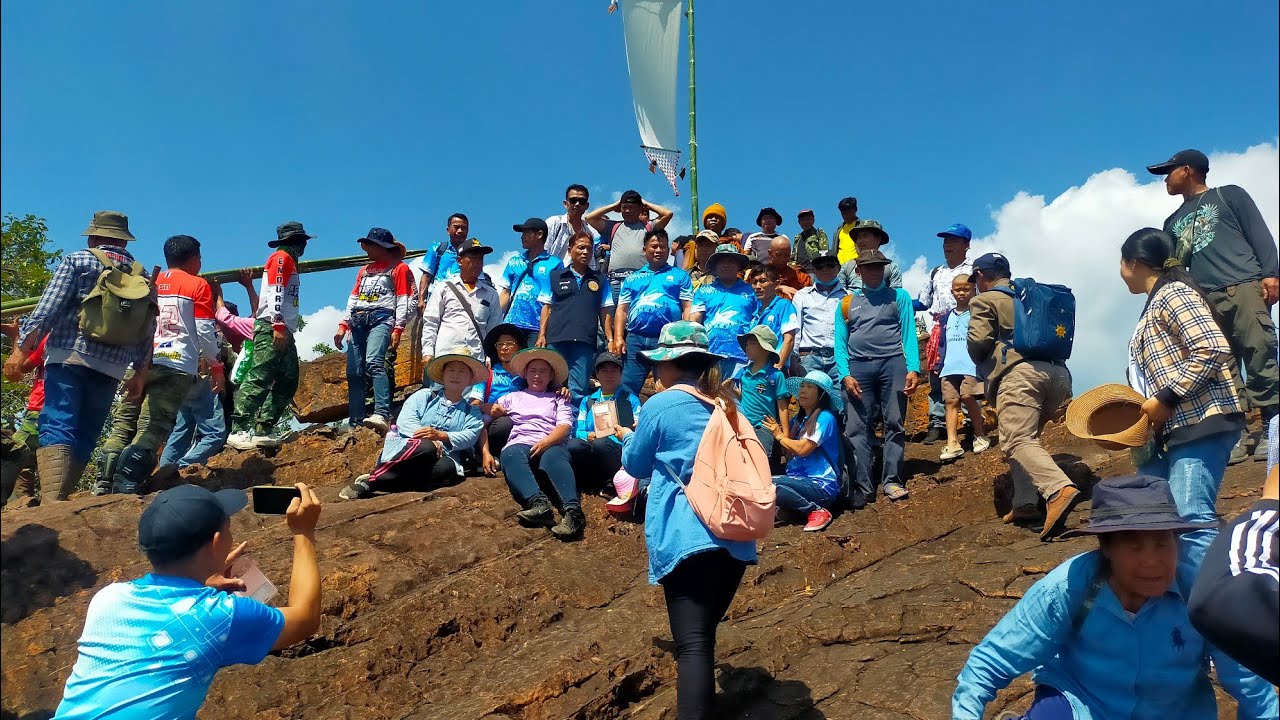
 Click to Access the Navigation Map GPS
Pha Khi Khwai Map
Recommend

 Art, Culture and Heritage
 Historical Sites and Monuments(1)
 Landmarks and Memorials(2)
 Art, Craft Centres, Tradition(3)
 Museums(3)
 Educational Places
 Educational Gardens, Farm(1)
 Places of Worship
 Temple(29)
 Mosque(1)
 Other Sacred Sites(3)
 Research and Development
 Royal Project(1)
 Suburban Living
 Village, Community(1)
 National Parks and Marine Reserves(7)
Mountain (Doi)(4)
National Parks and Marine Reserves(7)
Mountain (Doi)(4)
 Dam, Reservoir, Lake(5)
 Waterfalls(19)
 Caves(3)
 River, Canal(9)
 Other natural attractions(1)
 Entertainment and Agricultural
 Farms, Parks and Ecotourism(2)
 Outdoor and Adventure Activities(1)


