
lovethailand home >North Travel Attractions >Phitsanulok Travel Attractions >Nakhon Thai >Bo Pho > Thousand-Year Salt Well
TL;DR: Thousand-Year Salt Well is located at Moo 1, Ban Bo Pho, Bo Pho Subdistrict, Nakhon Thai District, Phitsanulok Province, open Please contact the local authority before visiting, hours Please contact the local authority before visiting.
Thousand-Year Salt Well
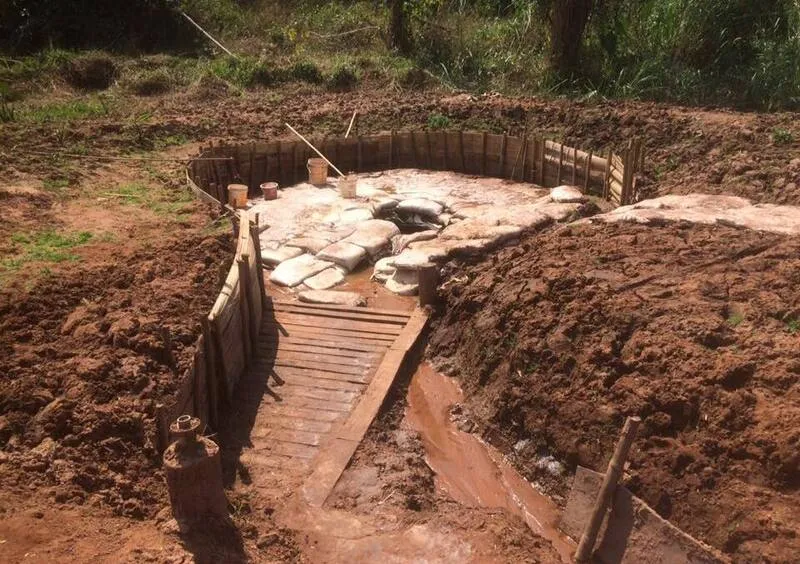
Open Days: Please contact the local authority before visiting
Opening Hours: Please contact the local authority before visiting
The Thousand-Year Salt Well of Ban Bo Pho in Phitsanulok Province is one of the most meaningful cultural and historical attractions in Nakhon Thai District. Located in Moo 1, Ban Bo Pho, Bo Pho Subdistrict, this small mountain village sits near the northern edge of Nakhon Thai District, close to the boundary with Dan Sai District in Loei Province. The attraction is not only an ancient natural salt well. It is also a living cultural site where local legends, belief, salt-making wisdom, community memory, and the surrounding mountain landscape come together in one remarkable place.
For travelers who want a clear overview, the Thousand-Year Salt Well is a natural saltwater source deeply connected with the identity of Ban Bo Pho. Local people tell stories of a sacred rocket festival, a Bodhi tree, the Fia stream, and the historical memory of Pho Khun Bang Klang Thao, the ruler of Bang Yang, which is associated with present-day Nakhon Thai. Visitors come here to see the salt well, learn about traditional salt boiling, understand the role of salt in local life, and experience a quiet village surrounded by mountains and water.
Ban Bo Pho is located about 30 km from Nakhon Thai town, about 130 km from Phitsanulok city, and about 15 km from the district boundary of Dan Sai in Loei Province. The village lies in a valley landscape, with houses set along foothills and near the stream. Mountains surround the community like a natural fortress, while the Fia stream continues to flow through the village. This geography gives Bo Pho a calm, sheltered atmosphere and helps explain why the community has long depended on its natural surroundings.
The name “Bo Pho” is closely tied to the legend of the salt well. Local oral tradition says that the salt well has existed since ancient times. One story connects its origin with a rocket festival held by people from Chiang Khong in Laos. According to the belief, wherever a rocket fell, a salt well would appear. In one version of the legend, a rocket made from a Bodhi tree fell into the middle of the Fia stream and sank deep into the earth. Water inside the hollow Bodhi tree then became salty and flowed continuously throughout the year. Local people used the saltwater for cooking and later called the place “Bo Pho,” or the Bodhi well.
This legend is important because it shows how local communities explained natural phenomena through belief, ritual, and sacred storytelling. In the cultural world of mainland Southeast Asia, rockets are associated with rain, fertility, the sky, and requests for balance from nature. The story of a rocket creating a salt well connects heaven, earth, water, and human survival in a powerful symbolic way. The salt well is therefore not simply a natural resource. It is a meaningful place in the spiritual memory of the community.
Another important story links the salt well with Pho Khun Bang Klang Thao, the ruler of Bang Yang. Local tradition says that when he led troops to fight against the Khmer and expand his territory, his army stopped near Ban Bo Pho. Soldiers searching for food found a clear water source surrounded by a Bodhi tree structure. When they tasted the water, they found it salty. The water was brought to Pho Khun Bang Klang Thao, who ordered it to be boiled in a pan placed on three stones used as a hearth. After the water evaporated, white salt crystals appeared and could be used for cooking and military provisions.
This story reveals the importance of salt in the past. Salt was not only a seasoning. It was also essential for food preservation, travel, and survival during military campaigns. In ancient communities, a salt source in a remote mountain area was economically valuable. Salt from Bo Pho could support local households, serve as food supply, and be exchanged for other necessary goods. For this reason, the Thousand-Year Salt Well became closely connected with settlement, trade, and local livelihood.
After the army returned from war, local stories say that some soldiers settled in Ban Bo Pho and continued making salt. They boiled saltwater, sold salt, and exchanged it for everyday goods. Over generations, the knowledge of drawing saltwater, boiling it, waiting for crystallization, and storing salt became community wisdom. Salt-making in Ban Bo Pho is therefore not merely an old occupation. It is a cultural inheritance passed down through families and preserved through memory and practice.
When travelers visit the Thousand-Year Salt Well today, they see more than a small saltwater well. They encounter a living trace of local history. The saltwater represents the relationship between people and nature, while the traditional boiling process shows how villagers transformed a natural mineral source into a useful product. The process is simple in appearance but meaningful in practice: drawing water from the well, boiling it, letting the water evaporate, and collecting the white salt crystals that remain.
The site is suitable for many kinds of visitors. Families can bring children to learn where salt comes from and how local people used natural resources. Students can study local history, anthropology, and community economy. Cultural travelers can explore legends, beliefs, and oral traditions. Nature lovers can enjoy the surrounding valley, stream, and mountain scenery. The Thousand-Year Salt Well is small in physical size, but rich in meaning.
The value of the salt well cannot be separated from Ban Bo Pho itself. The village is the keeper of the story. Local people preserve the legend, maintain the practice, and welcome visitors who want to understand the place beyond the surface. Ban Bo Pho is therefore not only a stop on a travel route. It is a cultural community where memory, livelihood, food, landscape, and belief remain connected.
Because Bo Pho lies near the boundary between lower northern Thailand and northeastern Thailand, it also reflects a borderland character. The village is close to Dan Sai District in Loei, and the surrounding area has long connected people, beliefs, routes, and ways of life across regions. Visiting Bo Pho allows travelers to understand not only a place in Phitsanulok, but also a cultural meeting zone between regions.
The beauty of the Thousand-Year Salt Well lies in its simplicity. There are no grand buildings or large commercial facilities. Instead, the site is meaningful because of the stories attached to it. Visitors can listen to local narratives, see the salt well, observe traditional salt-making when demonstrations are available, and understand why this modest well continues to matter deeply to the community.
Getting There requires some planning. Ban Bo Pho is about 130 km from Phitsanulok city and about 30 km from Nakhon Thai town. The most convenient way to travel is by private car. Visitors can drive from Phitsanulok city to Nakhon Thai District, then continue to Bo Pho Subdistrict. The final route passes through rural and mountain areas, so travelers should check vehicle condition, fuel, weather, and travel time before departure, especially if continuing to Dan Sai, Phu Hin Rong Kla, or other mountain destinations.
Upon arrival, visitors should approach the community respectfully. It is best to contact local people or the Bo Pho Subdistrict Administrative Organization before visiting, especially if travelers want to see salt-boiling demonstrations. Visitors should not touch equipment, draw water, or enter restricted areas without permission. The salt well is both a tourist attraction and a respected cultural site, so responsible behavior is important.
Travelers interested in local food and community products should ask about rock salt, processed salt products, and local dishes in the village. Buying community products supports the local economy and helps keep traditional knowledge alive. A visit to Bo Pho becomes more meaningful when travelers engage with the community rather than simply taking photographs and leaving.
The salt well can be combined with nearby natural and cultural attractions. Possible route additions include Pha Pratu Mueang, Phu Hin Rong Kla National Park, Ban Rong Kla, Phu Lom Lo, and other sites in Nakhon Thai District. Travelers with limited time can plan a day trip from Nakhon Thai, while those with more time may stay overnight near Nakhon Thai or the mountain areas to explore both community culture and highland scenery.
The best time to visit depends on the type of trip. The salt well can be visited when the community is open to travelers, while the cool season gives the mountain areas a pleasant atmosphere and is suitable for continuing to Phu Hin Rong Kla or Phu Lom Lo. During the rainy season, travelers should check road and weather conditions carefully because rural and mountain routes may require extra caution.
Historically, the Thousand-Year Salt Well helps travelers see Nakhon Thai as an old cultural landscape rather than merely a modern district of Phitsanulok. The stories of Bang Yang, Pho Khun Bang Klang Thao, military travel, and salt as a strategic resource give the site historical depth. Local history is not found only in ruins or written records; it also lives in wells, legends, spoken memory, and everyday community practices.
Culturally, the site shows how local belief can survive alongside modern tourism. The stories of the rocket, Bodhi tree, Fia stream, and saltwater are still told to younger generations and visitors. These narratives give the place a spirit and identity that cannot be replaced by physical structures alone. The salt well is a place where natural resource and cultural imagination meet.
From the perspective of traditional knowledge, salt boiling in Ban Bo Pho reflects the ability of local people to use available resources wisely. Saltwater is boiled until the water evaporates and salt crystals form. Although the method appears simple, it requires experience in controlling heat, time, and water volume. This knowledge was built through observation and repeated practice across generations.
Conserving the Thousand-Year Salt Well therefore means conserving the community around it. The well itself is important, but so are the storytellers, salt makers, local language, memory, and social relationships that keep the site alive. Without the community, the well would be only a saltwater source. With the community, it remains a living heritage site.
For foreign travelers, the most important approach is to visit with respect. The site is modest in scale but deeply meaningful to local people. Photography should be done appropriately, questions should be asked politely, and visitors should follow local guidance. This kind of mindful travel allows visitors to experience more than a landmark; it allows them to understand the cultural depth of Ban Bo Pho.
In summary, the Thousand-Year Salt Well of Ban Bo Pho is a place where nature, history, belief, and community wisdom come together. It tells stories of a rocket and a Bodhi tree, of saltwater and the Fia stream, of Pho Khun Bang Klang Thao, of ancient provisions and settlement, and of villagers who continue to preserve salt-making knowledge. A visit here offers more than sightseeing. It offers a meaningful encounter with a living cultural landscape in Nakhon Thai District, Phitsanulok Province.
| Name | Thousand-Year Salt Well, Ban Bo Pho |
| Location | Moo 1, Ban Bo Pho, Bo Pho Subdistrict, Nakhon Thai District, Phitsanulok Province |
| Address | Ban Bo Pho, Moo 1, Bo Pho Subdistrict, Nakhon Thai District, Phitsanulok Province 65120 |
| Coordinates | 17.23161130373724, 101.04940749955779 |
| Highlights | Ancient natural salt well, rocket legend, Bodhi tree story, Fia stream, Pho Khun Bang Klang Thao legend, and traditional salt-boiling wisdom |
| History | Local tradition describes the well as an ancient natural salt source connected with the history of Pho Khun Bang Klang Thao, the ruler of Bang Yang, associated with present-day Nakhon Thai |
| Name Origin | The name Bo Pho comes from the legend of a Bodhi tree that became a saltwater well near the Fia stream |
| Distinctive Features | A community learning site for ancient salt boiling, local belief, and valley village life surrounded by mountains and the Fia stream |
| Travel Information | Travel from Phitsanulok city to Nakhon Thai District, then continue to Bo Pho Subdistrict. The site is about 30 km from Nakhon Thai town. Private car is recommended. |
| Current Status | A community-based cultural attraction and learning site for traditional salt-making in Bo Pho Subdistrict |
| Facilities | Salt well viewing area, traditional salt-boiling learning area, community tourism area, and local administrative services |
| Main Areas / Zones | Thousand-Year Salt Well, Fia stream, salt-boiling demonstration area, and Ban Bo Pho community |
| Caretaker / Local Authority | Bo Pho Subdistrict Administrative Organization, Nakhon Thai District, Phitsanulok Province |
| Main Contact Number | Bo Pho Subdistrict Administrative Organization Tel. 0-5500-9809, 089-9388842 |
| Official Website / Official Page | Bo Pho Subdistrict Administrative Organization, Nakhon Thai District, Phitsanulok Province |
| Nearby Tourist Attractions | 1. Pha Pratu Mueang, about 3 km 2. Fia Stream And Ban Bo Pho Village, about 1 km 3. Phu Hin Rong Kla National Park, about 45 km 4. Ban Rong Kla, about 50 km 5. Phu Lom Lo, about 60 km |
| Nearby Restaurants | 1. Ban Bo Pho Community Food Stalls, about 1 km 2. Bo Ngoen Restaurant, Ban Bo Pho, about 1 km 3. Local Restaurants In Bo Pho Subdistrict, about 2 km 4. Restaurants In Nakhon Thai Town, about 30 km 5. Restaurants Along The Nakhon Thai-Dan Sai Route, about 15 km |
| Nearby Accommodations | 1. Ban Bo Pho Community Accommodation, about 1 km 2. Panya Garden Resort, Nakhon Thai District, about 30 km 3. Eve & Amp Resort, Nakhon Thai District, about 30 km 4. Ploen Dao Hotel, Nakhon Thai District, about 30 km 5. Petch Nakhonthai Homestay, Nakhon Thai District, about 30 km |
Frequently Asked Questions (FAQ)
Q: Where is the Thousand-Year Salt Well of Ban Bo Pho located?
A: It is located in Moo 1, Ban Bo Pho, Bo Pho Subdistrict, Nakhon Thai District, Phitsanulok Province, about 30 km from Nakhon Thai town.
Q: Why is the Thousand-Year Salt Well important?
A: It is an ancient natural salt well connected with local legends, Pho Khun Bang Klang Thao, traditional salt boiling, and the settlement history of Ban Bo Pho.
Q: What is the origin of the name Bo Pho?
A: The name comes from a local legend about a Bodhi tree that fell into the Fia stream and became a saltwater well.
Q: Can visitors see traditional salt boiling?
A: Visitors can learn about traditional salt-making when demonstrations or community activities are available. It is best to contact the local authority before visiting.
Q: How can travelers get to the Thousand-Year Salt Well?
A: Travel from Phitsanulok city to Nakhon Thai District, then continue to Bo Pho Subdistrict. Private car is the most convenient option.
Q: Who is this destination suitable for?
A: It is suitable for cultural travelers, history lovers, community tourism visitors, families, students, and anyone interested in traditional salt-making wisdom.
Q: What nearby attractions can be visited on the same trip?
A: Travelers can combine the trip with Pha Pratu Mueang, Phu Hin Rong Kla National Park, Ban Rong Kla, Phu Lom Lo, and other attractions in Nakhon Thai District.
Q: What should travelers prepare before visiting?
A: Check the route, contact the local authority before traveling, bring drinking water, wear comfortable shoes, and allow enough time for rural and mountain roads.
 Category: ●Art, Culture and Heritage
 Group: ●Historical Sites and Monuments
Last Update : 4 MonthAgo
 Last Update : 4 MonthAgo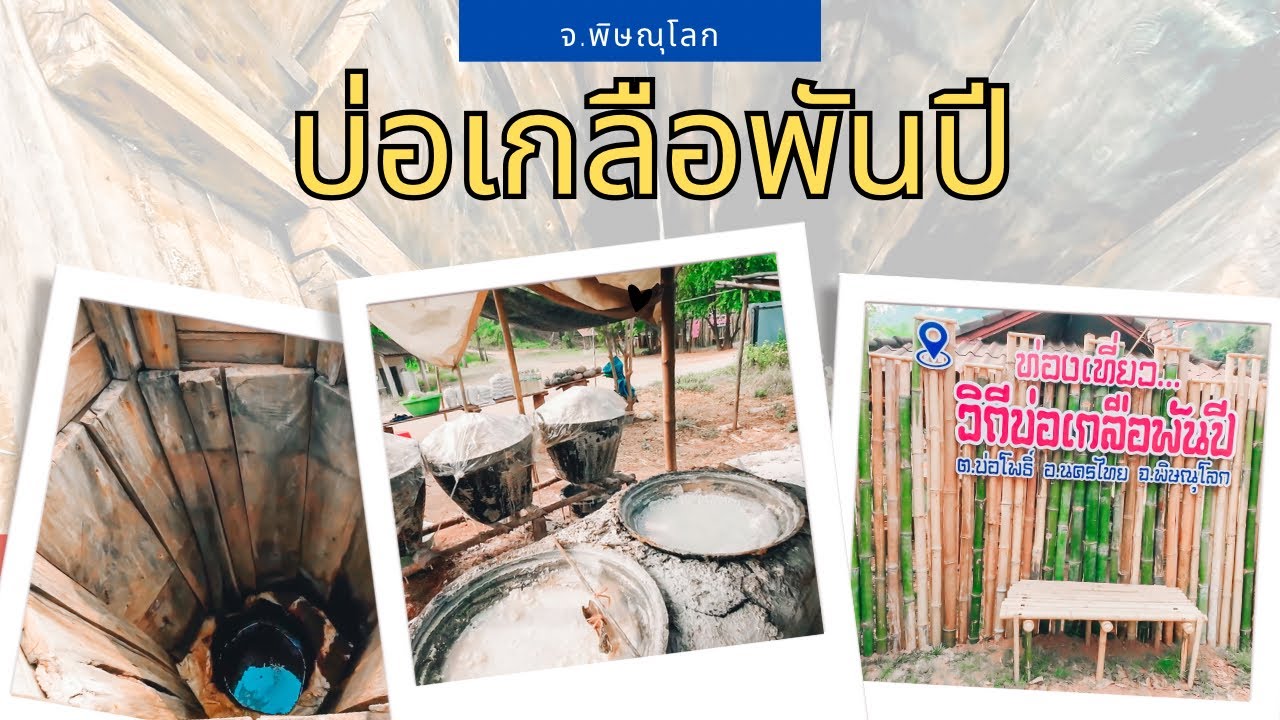
 Click to Access the Navigation Map GPS
Thousand-Year Salt Well Map
Recommend
 Historical Sites and Monuments(1)
 Landmarks and Memorials(2)
 Art, Craft Centres, Tradition(3)
 Museums(3)
 Educational Places
 Educational Gardens, Farm(1)
 Places of Worship
 Temple(29)
 Mosque(1)
 Other Sacred Sites(3)
 Research and Development
 Royal Project(1)
 Suburban Living
 Village, Community(1)
 Nature and Wildlife
 National Parks and Marine Reserves(7)
 Mountain (Doi)(4)
 Dam, Reservoir, Lake(5)
 Waterfalls(19)
 Caves(3)
 River, Canal(9)
 Other natural attractions(1)
 Entertainment and Agricultural
 Farms, Parks and Ecotourism(2)
 Outdoor and Adventure Activities(1)


