
lovethailand home >North Travel Attractions >Phitsanulok Travel Attractions >Nakhon Thai >Nakhon Thai > Wat Nakhon Thai Wararam (Wat Hua Rong)
TL;DR: Wat Nakhon Thai Wararam (Wat Hua Rong) is located at Ban Hua Rong, Village No. 6, Nakhon Thai Subdistrict, Nakhon Thai District, Phitsanulok Province, open Daily, hours 08.00 – 17.00.
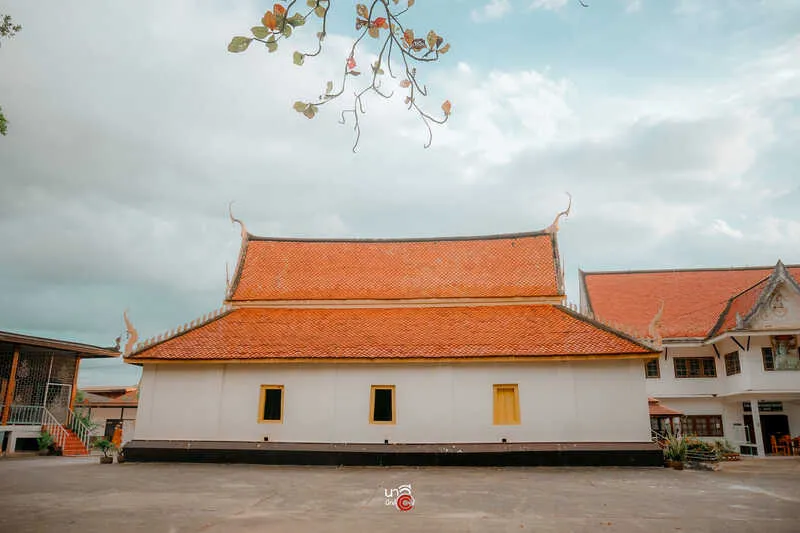
Wat Nakhon Thai Wararam (Wat Hua Rong)
Open Days: Daily
Opening Hours: 08.00 – 17.00
Wat Nakhon Thai Wararam, also known locally as Wat Hua Rong or Wat Tai, is an old community temple in Ban Hua Rong, Nakhon Thai Subdistrict, Nakhon Thai District, Phitsanulok Province. The temple is best known for its old hall and a large sacred teakwood Buddha image in the Mara Vichai posture, respectfully called “Luang Pho Yai” by local people. For travelers who want to understand Nakhon Thai beyond its mountain scenery, this temple offers an important cultural and historical point of entry into the area’s Buddhist faith, local craftsmanship, and memories connected with the ancient town of Bang Yang and Pho Khun Bang Klang Thao.
Wat Nakhon Thai Wararam is located at No. 200, Village No. 6, Ban Hua Rong, Nakhon Thai Subdistrict, Nakhon Thai District, Phitsanulok Province. Although there is no definite written record confirming who first built the temple or the exact year of its establishment, local oral history says that Wat Hua Rong dates back to the era of Pho Khun Bang Klang Thao, around B.E. 1800, during the period associated with the campaign toward Sukhothai after forces had gathered in the ancient town of Bang Yang. This background gives the temple a role beyond that of a village monastery; it also serves as a living cultural space linked to the historical identity of Nakhon Thai.
The most important sacred object at the temple is Luang Pho Yai, a large Buddha image carved from teakwood in the Mara Vichai posture. The image measures 2.45 meters across the lap and 3.45 meters in height. It is enshrined inside the old temple hall and has long been revered by local residents. The Buddha image is distinguished by its large halo, rounded facial features reminiscent of Sukhothai influence, the urna between the eyebrows, large feet, flat soles, and elongated heels. Today the image is covered and gilded for beauty and preservation, making it both a sacred object and a valuable example of local Buddhist craftsmanship.
The temple was originally known as Wat Si Chom Chuen and was located near what is now Khlong Chik Monastic Residence. In the past, the old temple had become deserted and was without regular care. Because villagers settled above a water channel called Khlong Chik, the temple came to be called Wat Hua Rong, meaning a temple at the head of the channel. Over time, the pronunciation shifted into Wat Hua Rong as it is known today. A forest fire later damaged the old temple area, leaving only traces such as an earthen chedi. As the local settlement grew into a village, the community built a new temple about 200 meters from the original site.
In its early period, Wat Hua Rong had only a small number of monks and caretakers. The temple began to develop more clearly during the time of Luang Pu Hui as abbot, when additional halls and monk residences were built around the old hall and the large teakwood Buddha image. The temple received its royal land grant for the ordination boundary in B.E. 2482. Construction of the ordination hall began in B.E. 2491, measuring 5 meters wide and 10 meters long, and was completed in B.E. 2496. These developments show how a modest local temple gradually became an established religious center for the Ban Hua Rong community.
In B.E. 2516, as the old hall and residences deteriorated, the temple buildings were renovated and rebuilt. The name was then changed to Wat Nakhon Thai Wararam to reflect its closer identity with Nakhon Thai District. Even so, the old name Wat Hua Rong remains widely used by local residents, especially among older generations. This layering of names gives the temple a strong sense of continuity, linking its official present with its remembered past.
The old vihara, or temple hall, is one of the most significant structures in the compound. It measures about 9 meters wide and 18 meters long and houses Luang Pho Yai. The hall follows a simple local architectural form, with a calm atmosphere rather than an ornate monumental style. Inside, local decorative details and an elevated brick-and-plaster monks’ platform on the right side of the main Buddha image reflect the practical and spiritual use of the space. The hall remains meaningful because it preserves the relationship between sacred art, local construction methods, and the living Buddhist community.
Luang Pho Yai is the spiritual center of Wat Nakhon Thai Wararam. Local people and visitors come to pay respect, make wishes, seek protection, and pray for peace of mind. Many believe that paying homage to Luang Pho Yai brings blessings, protection, calmness, and relief from hardship. For foreign travelers, the experience is not only about seeing an old Buddha image, but also about observing how Buddhist faith remains woven into everyday life in rural Thailand. Visitors should dress modestly, speak quietly, and behave respectfully inside the hall, as it is both a sacred place and a protected cultural space.
In the past, the temple held a larger annual celebration for merit-making and community gathering. Today, religious activities are mainly organized during important Buddhist and community occasions such as Songkran, Ok Phansa, the Mahachat sermon, and Salak Phat merit-making traditions. These events show the continuing role of the temple as a spiritual and social center for the community. Some activities are managed with care to protect the old hall and sacred objects inside, especially because of the need to prevent damage or loss of valuable items.
For travelers interested in local history, Wat Nakhon Thai Wararam can be part of a meaningful cultural route through Nakhon Thai. Nearby places such as Wat Klang and the Pho Khun Bang Klang Thao Monument, Nakhon Thai Town Museum, Wat Na Phra That, Kaeng Sopha Waterfall, and Phu Hin Rong Kla National Park help visitors understand the district from several angles: ancient settlement, Buddhist heritage, local memory, and highland nature. This makes the temple especially suitable for travelers who prefer slow cultural travel rather than simply stopping for photographs.
The atmosphere at Wat Nakhon Thai Wararam is quiet, sincere, and deeply local. It is not a large tourist temple with a busy commercial setting. Instead, it is a working community monastery where villagers still come for merit-making, ceremonies, and important Buddhist days. This living character is what makes the temple valuable. It allows visitors to see the continuity of faith in a place where history, art, and community life remain closely connected.
Getting There is most convenient by private car or rental car. From Phitsanulok city, drive toward Nakhon Thai District and continue to Ban Hua Rong in Nakhon Thai Subdistrict. The temple is located within a local community area and can be combined with nearby historical and natural attractions. Travelers using public transport should first reach Nakhon Thai town and then arrange local transport to the temple. Since Nakhon Thai is located quite far from Phitsanulok city and the surrounding landscape includes hills and mountain routes, visitors should allow enough travel time.
A visit to Wat Nakhon Thai Wararam is best enjoyed slowly. Visitors can pay respect to Luang Pho Yai, observe the old hall, and learn about the temple’s connection with the community. Photography should be done respectfully, especially near the Buddha image and old interior elements. Those visiting during important festivals should expect more local participants and should plan for parking and timing accordingly. For cultural travelers, this temple offers one of the most meaningful ways to understand Nakhon Thai’s Buddhist heritage and local identity.
| Name | Wat Nakhon Thai Wararam, also known as Wat Hua Rong or Wat Tai |
| Location | Ban Hua Rong, Village No. 6, Nakhon Thai Subdistrict, Nakhon Thai District, Phitsanulok Province |
| Address | No. 200, Village No. 6, Udon Damri Road, Ban Hua Rong, Nakhon Thai Subdistrict, Nakhon Thai District, Phitsanulok Province |
| Highlights | Old local-style vihara and Luang Pho Yai, a large sacred teakwood Buddha image in the Mara Vichai posture, 2.45 meters wide across the lap and 3.45 meters high |
| History | An old temple of Nakhon Thai associated in local memory with the era of Pho Khun Bang Klang Thao around B.E. 1800. The temple received its royal ordination boundary in B.E. 2482. The ordination hall was built from B.E. 2491 and completed in B.E. 2496 |
| Name Origin | Originally called Wat Si Chom Chuen. It later became known as Wat Hua Rong because the community was located above Khlong Chik water channel, before the name shifted into Wat Hua Rong and later Wat Nakhon Thai Wararam |
| Distinctive Features | A quiet old community temple with a local-style hall, folk craftsmanship, an elevated brick-and-plaster monks’ platform, and a revered teakwood Buddha image |
| Main Sacred Image | Luang Pho Yai, a gilded teakwood Buddha image in the Mara Vichai posture enshrined inside the old vihara |
| Related Traditions | Merit-making during Songkran, Ok Phansa, Mahachat sermon ceremonies, and Salak Phat offerings |
| Travel Information | From Phitsanulok city, travel toward Nakhon Thai District and continue to Ban Hua Rong. Private car or rental car is the most convenient option. Local transport can be arranged from Nakhon Thai town |
| Current Status | An active Buddhist temple, a place for paying respect to Luang Pho Yai, and an important spiritual center for the Ban Hua Rong community |
| Open Days | Daily |
| Opening Hours | 08.00 – 17.00 |
| Fees | No admission fee |
| Facilities | Temple grounds, assembly hall, vihara, ordination hall, and areas for Buddhist activities |
| Main Areas / Zones | Luang Pho Yai Vihara, ordination hall, assembly hall, monks’ residences, and community ceremony areas |
| Abbot / Caretaker | Phra Khru Nakhon Burananurak (Luang Pho Sanong Attadamo) |
| Nearby Tourist Attractions | 1. Wat Klang and Pho Khun Bang Klang Thao Monument, about 2 km 2. Nakhon Thai Town Museum, about 2 km 3. Wat Na Phra That, about 3 km 4. Kaeng Sopha Waterfall, about 24 km 5. Phu Hin Rong Kla National Park, about 42 km 6. Lan Hin Pum at Phu Hin Rong Kla, about 48 km |
| Nearby Restaurants | 1. Homu Cafe Nakhon Thai, about 3 km, Tel. 086-935-9135 2. Krua Khun Rin, about 3 km 3. Duang Jai Restaurant, about 3 km 4. Check in Coffee Nakhon Thai, about 4 km 5. Wanda Cafe, about 4 km 6. Tiew Yak Ban Non Ta Phon, about 18 km, Tel. 090-926-8787 |
| Nearby Accommodations | 1. Prem’s Place Nakhon Thai, about 3 km, Tel. 099-154-5144 2. Panya Garden Resort, about 8 km, Tel. 087-998-6896 3. Phet Resort Nakhon Thai, about 9 km, Tel. 081-474-3541 4. Jom Resort Nakhon Thai, about 13 km, Tel. 086-032-4872 5. Petch Nakhon Thai Homestay, about 15 km, Tel. 086-375-8018 |
Frequently Asked Questions (FAQ)
Q: Where is Wat Nakhon Thai Wararam located?
A: Wat Nakhon Thai Wararam is located at No. 200, Village No. 6, Ban Hua Rong, Nakhon Thai Subdistrict, Nakhon Thai District, Phitsanulok Province.
Q: What was the original name of Wat Nakhon Thai Wararam?
A: The temple was originally called Wat Si Chom Chuen. It later became known as Wat Hua Rong and is also locally called Wat Tai.
Q: What is the main highlight of Wat Nakhon Thai Wararam?
A: The main highlight is Luang Pho Yai, a large sacred teakwood Buddha image in the Mara Vichai posture enshrined inside the old local-style vihara.
Q: What is special about Luang Pho Yai?
A: Luang Pho Yai is a large teakwood Buddha image measuring 2.45 meters across the lap and 3.45 meters high. It is highly revered by the local community and is one of the temple’s most important sacred objects.
Q: How is the temple connected with Pho Khun Bang Klang Thao?
A: Local tradition links the temple with the era of Pho Khun Bang Klang Thao and the ancient town of Bang Yang, around the period associated with the rise of Sukhothai.
Q: What are the opening hours of Wat Nakhon Thai Wararam?
A: The temple is open daily from 08.00 to 17.00. Visitors should dress modestly and behave respectfully inside the temple grounds and vihara.
Q: What nearby attractions can be visited after Wat Nakhon Thai Wararam?
A: Nearby attractions include Wat Klang and the Pho Khun Bang Klang Thao Monument, Nakhon Thai Town Museum, Wat Na Phra That, Kaeng Sopha Waterfall, and Phu Hin Rong Kla National Park.
 Category: ●Places of Worship
 Group: ●Temple
Last Update : 5 MonthAgo
 Last Update : 5 MonthAgo
 Click to Access the Navigation Map GPS
Wat Nakhon Thai Wararam (Wat Hua Rong) Map
Recommend

 Art, Culture and Heritage
 Historical Sites and Monuments(1)
 Landmarks and Memorials(2)
 Art, Craft Centres, Tradition(3)
 Museums(3)
 Educational Places
 Educational Gardens, Farm(1)
Temple(29)
Educational Gardens, Farm(1)
Temple(29)
 Mosque(1)
 Other Sacred Sites(3)
 Research and Development
 Royal Project(1)
 Suburban Living
 Village, Community(1)
 Nature and Wildlife
 National Parks and Marine Reserves(7)
 Mountain (Doi)(4)
 Dam, Reservoir, Lake(5)
 Waterfalls(19)
 Caves(3)
 River, Canal(9)
 Other natural attractions(1)
 Entertainment and Agricultural
 Farms, Parks and Ecotourism(2)
 Outdoor and Adventure Activities(1)
 Travel Articles, Recipes
 Travel Review, Food Review(1)


