
lovethailand home >North Travel Attractions >Phitsanulok Travel Attractions >Muang Phitsanulok >Aranyik > Wat Aranyik
TL;DR: Wat Aranyik is located at Moo 6, Ban Nong Pla Khao, Aranyik Subdistrict, Mueang Phitsanulok District, Phitsanulok Province, open Daily, hours 08.00 – 17.00.

Wat Aranyik
Open Days: Daily
Opening Hours: 08.00 – 17.00
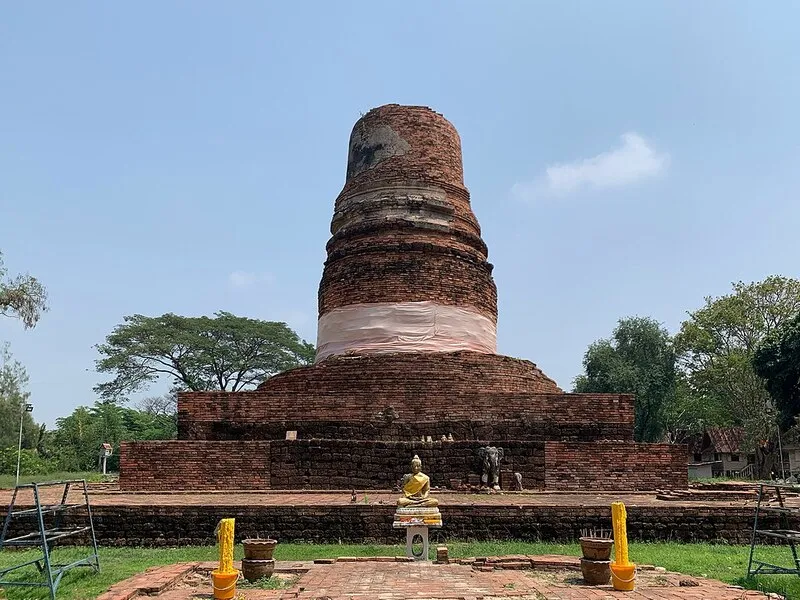
Wat Aranyik in Phitsanulok Province is an ancient Buddhist temple closely connected with the Sukhothai period, early forest-monastery traditions, local faith, and the cultural history of the old Phitsanulok area. Located in Aranyik Subdistrict, Mueang Phitsanulok District, the temple is known for its old Lanka-style principal chedi, remains of an ordination hall, Sukhothai-style stone boundary markers, ancient Buddha images, and a moat surrounding the temple mound. For travelers interested in Thai history, Buddhist art, archaeology, and quiet cultural sites beyond the main tourist route, Wat Aranyik is a meaningful place to visit.
The word “Aranyik” is associated with forest, seclusion, and a peaceful environment suitable for monastic practice. In the Sukhothai period, temples located outside city walls or away from busy urban areas were often connected with forest meditation traditions. These temples provided a calm setting for monks to practice discipline, meditation, and Buddhist study. Wat Aranyik therefore reflects an important idea in Thai Buddhist history: religious practice was not limited to large city temples, but also flourished in quiet natural surroundings.
Wat Aranyik is believed to have been established around B.E. 1620 and later received its official consecrated boundary on 13 July B.E. 2552. This long historical timeline shows both the antiquity of the site and its continuing religious role in the present. The temple stands as a bridge between the Sukhothai world and contemporary Phitsanulok, preserving ancient remains while still functioning as a Buddhist temple supported by the local community.
The present temple area is associated with Moo 6, Ban Nong Pla Khao, Aranyik Subdistrict, Mueang Phitsanulok District. Aranyik itself is a historically meaningful community area with local stories connected to old settlement, religious practice, and the cultural memory of Phitsanulok. Visiting Wat Aranyik helps travelers understand that Phitsanulok is not only defined by its famous city-center temples, but also by ancient sites outside the old urban core that preserve another layer of religious and cultural history.
The most important architectural feature of Wat Aranyik is its principal chedi. The chedi is described as a Lanka-style structure with a round base. The bell-shaped body survives only partially, up to the throne-like upper section. Although the structure is no longer complete, its remaining form is historically significant. It clearly shows the influence of Lanka-style Buddhist architecture, which was deeply important in Sukhothai-period religious culture. The surviving chedi allows visitors to see how sacred architecture once served as the spiritual center of a forest temple.
Lanka-style chedis were closely connected with the spread of Theravada Buddhism and the prestige of the Lankan Buddhist tradition in mainland Southeast Asia. In the Sukhothai period, this tradition strongly influenced religious architecture, monastic discipline, and sacred symbolism. The chedi at Wat Aranyik therefore represents more than an old monument; it reflects a major Buddhist cultural connection between Sukhothai and the wider Theravada world.
Besides the principal chedi, Wat Aranyik contains the remains of an old ordination hall and Sukhothai-style stone boundary markers. Boundary markers, or bai sema, are important because they define the sacred space used for monastic ceremonies. Their presence indicates that Wat Aranyik was once an active religious site where formal Buddhist rituals were performed. The ruined ordination hall and stone markers help visitors imagine the older layout of the temple and understand how the site functioned as a monastic space.
Ancient Buddha images found at Wat Aranyik reflect several artistic traditions, including Chiang Saen, Sukhothai, and Ayutthaya styles. This mixture suggests that the temple was used, restored, or venerated over a long period of time. For art-history travelers, this is especially interesting because one temple compound contains traces of multiple periods of Thai Buddhist art. The images show how religious devotion continued across generations, even as artistic styles and political centers changed.
The moat surrounding the temple mound is another important feature. In an ancient temple, a moat was not merely a practical boundary. It could help define sacred space, create a calm atmosphere, and symbolically separate the monastic area from the outside world. At Wat Aranyik, the moat supports the identity of the site as a forest-style temple, a place intended for quietness, discipline, and spiritual focus.
Local stories describe Wat Aranyik as a place where many monks once stayed for the rains retreat and practiced meditation. The temple’s earlier natural setting would have been suitable for seclusion and monastic discipline. Some stories also connect the temple with royal Buddhist patronage during the Sukhothai period, when kings and members of the royal family supported temples and monastic practice as examples for the wider population. These stories give the temple a deeper spiritual atmosphere and strengthen its place in local memory.
Another local belief says that the ancient chedi at Wat Aranyik was built to enshrine sacred relics of the Buddha. Villagers have passed down stories of mysterious lights appearing near the chedi at night or the sound of chanting seeming to arise when no one was present. Such stories should be understood as part of the temple’s living folklore. They show how local communities preserve sacred meaning through memory, narrative, and faith.
The moat around the temple is also connected with local belief. Some villagers regard it as a protective boundary that separates the sacred area from misfortune or harmful forces. In this view, the architecture of the temple, the surrounding water, and the spiritual discipline practiced inside the compound all work together to create a peaceful and protected space. This belief illustrates how traditional Thai communities often understood sacred places as both physical and spiritual landscapes.
In the modern period, Wat Aranyik has continued to be maintained and developed by the local community. The temple contains both ancient remains and newer religious structures, showing how Thai temples often preserve the past while adapting to present needs. Ancient monuments provide historical memory, while newer buildings support present-day worship, ceremonies, and community activities. This coexistence makes Wat Aranyik a living temple rather than a silent archaeological ruin.
Wat Aranyik continues to host Buddhist activities and local traditions. Phra Maha Thanasak Chintakawi serves as acting abbot and caretaker of the temple. Recent local religious events include Songkran activities, casting of Aranyik-style votive images, and ceremonies involving the ancient chedi. These activities show that the temple remains meaningful to the community and that its ancient monuments continue to inspire contemporary Buddhist devotion.
For visitors interested in archaeology and history, Wat Aranyik should be explored slowly. The principal chedi reveals Sukhothai-period Buddhist influence. The remains of the ordination hall and stone boundary markers explain the sacred function of the site. The moat shows the temple’s spatial organization, while the variety of Buddha image styles reflects centuries of religious continuity. Each feature tells part of the temple’s story.
The atmosphere of Wat Aranyik is quieter than the major temples in central Phitsanulok. This makes it suitable for travelers who prefer reflective cultural visits. Visitors should dress respectfully, avoid loud behavior, and refrain from climbing on or touching fragile ancient structures. The site is best appreciated with patience and attention, especially by those who want to understand how forest temples shaped Buddhist life in earlier periods of Thai history.
Getting There is convenient from Phitsanulok city. Travelers can head toward Aranyik Subdistrict and Ban Nong Pla Khao, Moo 6. The temple can be reached by private car, local taxi, songthaew, or ride-hailing service. It is close enough to the city center to combine with other attractions in a half-day or full-day cultural route.
The best time to visit is in the morning or late afternoon, when the weather is more comfortable for walking around the ancient remains. Visitors should allow at least 45 minutes to 1 hour to see the chedi, the ordination hall remains, stone boundary markers, moat, ancient Buddha images, and the present temple area. Those interested in Buddhist archaeology or Sukhothai art may want to spend more time observing the details.
Wat Aranyik is suitable for history lovers, cultural travelers, Buddhist pilgrims, students, photographers, and foreign visitors interested in the concept of forest monasteries in Thai Buddhism. It helps explain that Thai Buddhist practice was historically shaped not only by large royal temples but also by quieter monastic sites outside the city, where monks could live and practice in a more secluded environment.
A visit to Wat Aranyik can be combined with Wat Phra Si Rattana Mahathat Woramahawihan, Wat Nang Phaya, Wat Ratchaburana, Chan Palace, and Sgt. Maj. Thawee Folk Museum. Together, these sites present a broader picture of Phitsanulok: royal devotion, ancient city history, Buddhist art, local museums, and forest-style temple heritage. This makes Wat Aranyik an important addition to any serious cultural itinerary in Phitsanulok.
Wat Aranyik is therefore more than a quiet ancient temple. It is a place where Sukhothai-period Buddhist ideals, ancient architecture, local folklore, sacred space, and modern community faith meet. Visitors who come here will find not only old ruins but also a living cultural landscape that continues to preserve the memory of Buddhism, nature, and community life in Phitsanulok.
| Name | Wat Aranyik |
| Location | Moo 6, Ban Nong Pla Khao, Aranyik Subdistrict, Mueang Phitsanulok District, Phitsanulok Province |
| Coordinates | Approximately 16.830225, 100.280112 |
| Highlights | Lanka-style principal chedi, ordination hall remains, Sukhothai-style stone boundary markers, moat around the temple mound, and forest-monastery atmosphere |
| History | Ancient Sukhothai-period temple believed to have been established around B.E. 1620 and granted its consecrated boundary on 13 July B.E. 2552. |
| Name Origin | Aranyik refers to a forest or secluded area suitable for monastic practice, reflecting the concept of a forest temple outside the city. |
| Distinctive Features | Ancient temple outside the old city area with a forest-temple layout, Lanka-style chedi, and moat surrounding the sacred mound |
| Key Evidence | Principal Lanka-style chedi, ordination hall remains, stone boundary markers, ancient Buddha images in Chiang Saen, Sukhothai, and Ayutthaya styles, and the surrounding moat |
| Travel Information | Accessible from Phitsanulok city by private car, local taxi, songthaew, or ride-hailing service. The temple is located in Moo 6, Ban Nong Pla Khao, Aranyik Subdistrict. |
| Current Status | Active Buddhist temple and important ancient site of Aranyik Subdistrict, open for worship, cultural visits, and Buddhist activities |
| Open Days | Daily |
| Opening Hours | 08.00 – 17.00 |
| Facilities | Temple grounds, worship areas, walking areas around ancient remains, pavilion, nearby or on-site parking, and areas for Buddhist activities |
| Main Areas / Zones | Principal chedi, ordination hall remains, stone boundary markers, moat, ancient Buddha images, and present-day temple area |
| Abbot / Caretaker | Phra Maha Thanasak Chintakawi, Acting Abbot of Wat Aranyik |
| Official Website / Official Page | Wat Aranyik, Phitsanulok |
| Nearby Tourist Attractions | 1. Chan Palace, about 3 km 2. Wat Phra Si Rattana Mahathat Woramahawihan, about 3 km 3. Wat Nang Phaya, about 3 km 4. Wat Ratchaburana, about 3 km 5. Sgt. Maj. Thawee Folk Museum, about 5 km |
| Nearby Restaurants | 1. Song Siang Ancient-Recipe Kuay Jub, about 2 km 2. Pangtor Grilled Pork Rice, about 2 km 3. Nai Tong Beef Noodles B.E. 2528, about 2 km 4. Dragon River Avenue Restaurant, about 3 km, Tel. 099-374-7447, 055-242-242 5. Amore Restaurant at Topland Hotel, about 3 km |
| Nearby Accommodations | 1. PoonSook Phitsanulok Hotel, about 1 km 2. AVA Hotel, about 1 km 3. Fortune D Hotel Phitsanulok, about 2 km 4. Topland Hotel, about 3 km, Tel. 055-247-800 5. Dragon River Avenue Hotel, about 3 km, Tel. 099-374-7447, 055-242-242 |
Frequently Asked Questions (FAQ)
Q: Where is Wat Aranyik in Phitsanulok located?
A: Wat Aranyik is located in Moo 6, Ban Nong Pla Khao, Aranyik Subdistrict, Mueang Phitsanulok District, Phitsanulok Province.
Q: Why is Wat Aranyik important?
A: Wat Aranyik is an ancient Sukhothai-period temple that reflects the forest-monastery tradition and preserves important archaeological remains such as a chedi, ordination hall remains, stone boundary markers, and a surrounding moat.
Q: What does the word Aranyik mean?
A: Aranyik refers to a forest or secluded area suitable for monastic practice, meditation, and Buddhist discipline.
Q: What ancient remains can visitors see at Wat Aranyik?
A: Visitors can see the Lanka-style principal chedi, ordination hall remains, Sukhothai-style stone boundary markers, ancient Buddha images, and the moat around the temple mound.
Q: Who is the caretaker of Wat Aranyik?
A: The caretaker is Phra Maha Thanasak Chintakawi, Acting Abbot of Wat Aranyik.
Q: Who should visit Wat Aranyik?
A: Wat Aranyik is suitable for history lovers, Buddhist pilgrims, students, photographers, cultural travelers, and visitors interested in Sukhothai art and forest-monastery traditions.
Q: How long should visitors spend at Wat Aranyik?
A: A visit of about 45 minutes to 1 hour is recommended for seeing the chedi, ordination hall remains, stone boundary markers, moat, and present-day temple area.
Q: What nearby attractions can be visited with Wat Aranyik?
A: Nearby attractions include Chan Palace, Wat Phra Si Rattana Mahathat Woramahawihan, Wat Nang Phaya, Wat Ratchaburana, and Sgt. Maj. Thawee Folk Museum.
 Category: ●Places of Worship
 Group: ●Temple
Last Update : 3 MonthAgo
 Last Update : 3 MonthAgo
 Click to Access the Navigation Map GPS
Wat Aranyik Map
Recommend

 Art, Culture and Heritage
 Historical Sites and Monuments(1)
 Landmarks and Memorials(2)
 Art, Craft Centres, Tradition(3)
 Museums(3)
 Educational Places
 Educational Gardens, Farm(1)
Temple(29)
Educational Gardens, Farm(1)
Temple(29)
 Mosque(1)
 Other Sacred Sites(3)
 Research and Development
 Royal Project(1)
 Suburban Living
 Village, Community(1)
 Nature and Wildlife
 National Parks and Marine Reserves(7)
 Mountain (Doi)(4)
 Dam, Reservoir, Lake(5)
 Waterfalls(19)
 Caves(3)
 River, Canal(9)
 Other natural attractions(1)
 Entertainment and Agricultural
 Farms, Parks and Ecotourism(2)
 Outdoor and Adventure Activities(1)


