
lovethailand home >North Travel Attractions >Phichit Travel Attractions >Wang Sai Phun >Nong Phra > Khao Phanom Pha Gold Mine
TL;DR: Khao Phanom Pha Gold Mine is located at Ban Khao Phanom Pha, Moo 7, Nong Phra Subdistrict, Wang Sai Phun District, Phichit Province, open Closed, hours Closed.
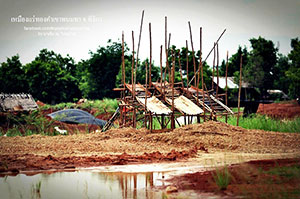
Khao Phanom Pha Gold Mine
Open Days: Closed
Opening Hours: Closed
Khao Phanom Pha Gold Mine is located at Ban Khao Phanom Pha, Moo 7, Nong Phra Subdistrict, Wang Sai Phun District, Phichit Province. It is a small isolated hill covering about 200 rai and is remembered as one of the most unusual local historical sites in Phichit. In the past, the area was known as an open gold mining site where members of the public could buy soil from Khao Phanom Pha and take it to a designated area to pan for gold in a traditional local way. Today, however, the site is closed. For this reason, Khao Phanom Pha should be understood not as an active tourist attraction, but as a local historical and educational story about gold, community life, natural resources, and the challenges of managing mineral areas responsibly.
Khao Phanom Pha gave Nong Phra Subdistrict and Wang Sai Phun District a distinctive place in Phichit’s local history. While the province is often associated with Bueng Si Fai, the Chalawan legend, old temples, agriculture, and rural communities, this small hill adds another layer to the story of Phichit: the story of gold. When people learned that gold could be found in the area, public attention grew rapidly. The site became associated with hope, curiosity, local economic opportunity, and the excitement of traditional gold panning.
The landscape of Khao Phanom Pha is described as a small solitary hill. In a mostly rural setting, this kind of hill naturally stands out from the surrounding land. Over time, the name Khao Phanom Pha became connected not only with the hill itself but also with the memory of gold mining activity, local participation, and the period when people came to observe or take part in gold panning under locally arranged conditions.
In the past, the idea that ordinary people could buy soil and pan for gold made Khao Phanom Pha highly unusual. Visitors were not simply looking at scenery; they were witnessing a local method of searching for gold. The activity combined curiosity, patience, skill, and the hope of finding something valuable. However, because the site is now closed, this story should be presented as historical memory rather than as an activity currently available to travelers.
The importance of Khao Phanom Pha lies in the way it shows the relationship between natural resources and local communities. Gold has long been associated with value, wealth, and opportunity. When a community area becomes known for gold, it can quickly attract public attention. Khao Phanom Pha therefore became more than a small hill in rural Phichit; it became a place where people imagined new possibilities and where natural resources directly affected local awareness.
At the same time, the story of Khao Phanom Pha is also a lesson in the limits and risks of natural resource use. Mineral resources may have high economic value, but mining and uncontrolled digging can affect land stability, safety, soil conditions, local ecology, and legal status. For this reason, any modern article about Khao Phanom Pha should emphasize knowledge, safety, legality, and responsible resource management rather than encouraging people to enter or explore the site.
For readers interested in local history, Khao Phanom Pha is a valuable case study. It shows that Phichit is not only a province of lakes, temples, folklore, and agriculture. It also has a history connected with gold and mineral resources. Learning about Khao Phanom Pha helps broaden the image of Phichit and gives readers a deeper understanding of the province’s natural and economic diversity.
Ban Khao Phanom Pha, Moo 7, is located in Nong Phra Subdistrict, Wang Sai Phun District, an area shaped by rural communities, farmland, local water sources, and everyday village life. The presence of a gold mining story in such a rural setting makes the place particularly interesting. It connects the quiet landscape of a local community with the larger human fascination with gold and underground resources.
From a basic geological perspective, the occurrence of gold in an area is the result of natural processes over long periods of time. Gold is not created by human activity; it forms and accumulates through geological conditions in rocks, soil, or mineral-bearing zones. The fact that Khao Phanom Pha was once associated with gold panning gives it educational value as an example of how mineral resources can become part of local identity.
However, mineral history should be understood together with environmental responsibility. Any mining activity can change landforms, disturb soil, affect local ecology, and create safety risks if not properly managed. Khao Phanom Pha therefore offers a useful lesson: valuable resources must be handled through clear regulation, careful supervision, and respect for both people and the environment.
Traditional gold panning once formed part of the site’s public image. It required patience and observation rather than machinery in the tourist-facing activity. For many people, the attraction was not only the possibility of finding gold but also the experience of participating in a rare local activity. Today, this should be viewed as part of the site’s past, not as something visitors can still do.
The closure of Khao Phanom Pha Gold Mine changed the site from an activity-based destination into a historical memory. Travelers should not expect to enter the mine, buy soil, or watch gold panning demonstrations there today. Instead, the site should be studied through reliable local information, official sources, and historical context. Clear communication is important so that readers do not misunderstand the current status of the place.
Although the mine itself is closed, the story of Khao Phanom Pha can still enrich a wider understanding of Wang Sai Phun District. Travelers who visit nearby places that are open to the public, such as Thung Takhap Reservoir, local temples, Nong Phra community areas, or central Phichit, can understand Khao Phanom Pha as part of the district’s historical background rather than as a destination for direct entry.
Reframing the place as a historical resource rather than an active attraction keeps the story useful and accurate. Some places remain important not because they can still be visited, but because they help explain what happened in a community, how people related to natural resources, and what lessons were learned from managing valuable land and minerals. Khao Phanom Pha belongs to this category.
From a cultural perspective, gold often carries strong emotional meaning. It is linked with luck, hope, wealth, and local stories. A place once associated with gold panning naturally becomes part of community memory. People may remember the period of excitement, the visitors, the search for small traces of gold, and the changes that came with public attention. These memories form part of the intangible heritage of the area.
Phichit Province has many well-known stories connected with water, temples, community life, and folklore. Khao Phanom Pha adds a different kind of story: a story of mineral resources and a small hill that once drew attention because of gold. This makes Phichit more complex and interesting for readers who want to go beyond the usual tourist image of the province.
Anyone studying Khao Phanom Pha should begin with its current status: the site is closed. From there, the historical details can be understood more responsibly: its location at Ban Khao Phanom Pha, its small isolated hill shape, its approximate 200-rai area, its former identity as an open gold mining site, and its past connection with local gold panning. This approach gives a fuller and more accurate picture than treating it as a normal tourist attraction.
For a practical travel route in Wang Sai Phun District, visitors should choose places that are currently open and suitable for public access. Nearby alternatives include Thung Takhap Reservoir, Wat Dong Phlap, Wat Nong Phra, Wang Sai Phun Shrine, and attractions in Mueang Phichit. Khao Phanom Pha may be mentioned as historical context, but it should not be planned as a site for entering a mine or joining any gold panning activity.
Travel in Nong Phra Subdistrict is most convenient by private car or rental car, because public transport is limited in rural areas. Visitors can start from Wang Sai Phun District town and continue toward Nong Phra Subdistrict. However, because the mine is closed, the journey should focus on nearby open attractions, community routes, or educational understanding of the area rather than entering the mining site.
Safety is essential. Old mining areas, hills, and forested or restricted zones may involve unstable ground, steep slopes, hidden hazards, and legal limitations. Entering without permission is not appropriate. Respecting the closure of the site protects both visitors and the local environment.
Overall, Khao Phanom Pha Gold Mine is most valuable today as a historical and educational subject. It tells the story of gold in Phichit, public interest in mineral resources, community memory, and the importance of responsible management. Although the mine is no longer open to visitors, its story remains meaningful for understanding Wang Sai Phun District and the wider history of Phichit Province.
Getting There to the Ban Khao Phanom Pha area is most convenient by private car or rental car from Wang Sai Phun District toward Nong Phra Subdistrict. However, Khao Phanom Pha Gold Mine is closed and should not be planned as an active tourist stop. Travelers interested in the area should focus on open nearby attractions such as Thung Takhap Reservoir, Wat Dong Phlap, Wat Nong Phra, Wang Sai Phun Shrine, or destinations in Mueang Phichit.
| Name | Khao Phanom Pha Gold Mine |
| Location | Ban Khao Phanom Pha, Moo 7, Nong Phra Subdistrict, Wang Sai Phun District, Phichit Province |
| Address | Khao Phanom Pha Gold Mine, Ban Khao Phanom Pha, Moo 7, Nong Phra Subdistrict, Wang Sai Phun District, Phichit 66180, Thailand |
| Highlights | Former open gold mining site in Phichit, small isolated hill of about 200 rai, and historical story of local gold panning |
| History / Importance | Formerly known as an open gold mining site where people could buy soil from Khao Phanom Pha and pan for gold in a locally arranged area; now important as local historical and educational context |
| Name Origin | The name is connected with Ban Khao Phanom Pha in Nong Phra Subdistrict, Wang Sai Phun District, Phichit Province |
| Distinctive Features | Small hill, isolated landform, approximately 200 rai, and former association with traditional gold panning activity |
| Travel Information | The area is most accessible by private car or rental car, but the mine is closed and should not be entered or treated as an active tourist attraction |
| Current Status | Closed; gold panning activity and soil purchase for visitors are no longer available |
| Open Days | Closed |
| Opening Hours | Closed |
| Visitor Note | Best understood as a local historical subject; visitors should not enter the mine or hill area without permission |
| Caretaker / Related Agencies | Nong Phra Subdistrict Administrative Organization, Wang Sai Phun District, Phichit Province, and related government agencies responsible for local land and mineral resources |
| Main Contact Number | Nong Phra Subdistrict Administrative Organization, Tel. 098-007-3900 |
| Official Website / Official Page | Nong Phra Subdistrict Administrative Organization website and local information for Wang Sai Phun District, Phichit Province |
| Nearby Tourist Attractions | 1. Thung Takhap Reservoir, about 8 km 2. Wat Dong Phlap, about 9 km 3. Wat Nong Phra, about 10 km 4. Wang Sai Phun Shrine, about 14 km 5. Bueng Si Fai, about 35 km |
| Nearby Restaurants | 1. Thung Satang Restaurant, about 14 km 2. Café Amazon PTT Wang Sai Phun, about 15 km 3. Restaurants Around Wang Sai Phun Market, about 14 km 4. Kwankaow Restaurant Phichit, about 35 km, Tel. 086-679-0432, 056-611-159 5. Sala Khao Poon, about 36 km, Tel. 082-504-1910 |
| Nearby Accommodations | 1. Baan Warin Daily Rooms Phichit, about 15 km, Tel. 080-815-9939 2. Fahluang Residence, about 32 km 3. The Nest Hotel Phichit, about 35 km, Tel. 056-033-662 4. Orchid Place Hotel Phichit, about 36 km 5. Rose Inn Taphan Hin, about 38 km |
Frequently Asked Questions (FAQ)
Q: Where is Khao Phanom Pha Gold Mine located?
A: It is located at Ban Khao Phanom Pha, Moo 7, Nong Phra Subdistrict, Wang Sai Phun District, Phichit Province.
Q: Is Khao Phanom Pha Gold Mine still open to visitors?
A: No. Khao Phanom Pha Gold Mine is closed. Gold panning activities and soil purchase for visitors are no longer available.
Q: Why is Khao Phanom Pha Gold Mine important?
A: It is remembered as a former open gold mining site in Phichit and as a local historical example of community involvement with mineral resources.
Q: What does Khao Phanom Pha look like?
A: It is a small isolated hill covering about 200 rai.
Q: What did visitors do there in the past?
A: In the past, visitors could observe traditional local gold panning and buy soil from the area to pan for gold at a designated site. This activity is now closed.
Q: Should travelers plan to visit the mine today?
A: No. The mine is closed and should be treated as a historical subject rather than an active tourist destination.
Q: What nearby places can travelers visit instead?
A: Nearby open places include Thung Takhap Reservoir, Wat Dong Phlap, Wat Nong Phra, Wang Sai Phun Shrine, and Bueng Si Fai.
Q: Who can provide local information about the area?
A: Travelers can contact Nong Phra Subdistrict Administrative Organization, Wang Sai Phun District, Phichit Province, at 098-007-3900.
Tel : 056616376, 056612854
 Tel : 056616376, 056612854
 Category: ●Nature and Wildlife
 Group: ●Other natural attractions
Last Update : 4 MonthAgo
 Last Update : 4 MonthAgo
 Click to Access the Navigation Map GPS
Khao Phanom Pha Gold Mine Map
Recommend

 Art, Culture and Heritage
 Historical Sites and Monuments(1)
 Art, Craft Centres, Tradition(1)
 Museums(1)
 Places of Worship
 Temple(32)
 Other Sacred Sites(4)
 Research and Development
 Royal Project(1)
 Suburban Living
 Floating Market(1)
 National Parks and Marine Reserves(1)
 Dam, Reservoir, Lake(3)
 River, Canal(2)
Other natural attractions(1)
River, Canal(2)
Other natural attractions(1)
 Entertainment and Agricultural
 Animal camps and shows(1)
 Farms, Parks and Ecotourism(4)


