
lovethailand home >North Travel Attractions >Phichit Travel Attractions >Muang Phichit >Rong Chang > Wat Rong Chang
TL;DR: Wat Rong Chang is located at Rong Chang Subdistrict, Mueang Phichit District, Phichit Province, open Daily, hours 08.00 – 17.00.
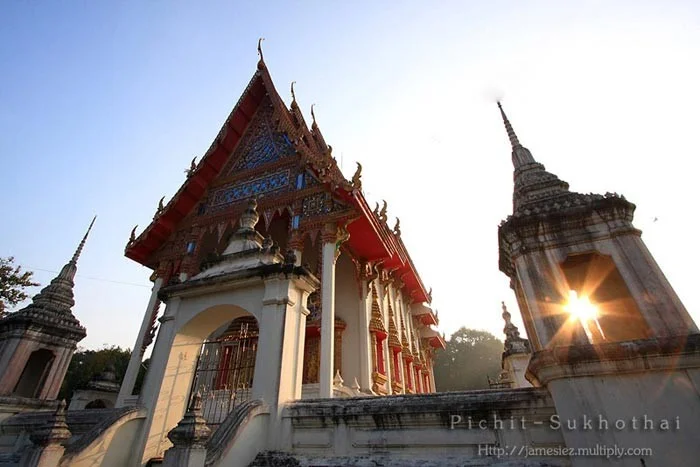
Wat Rong Chang
Open Days: Daily
Opening Hours: 08.00 – 17.00
Wat Rong Chang in Phichit Province is an old Buddhist temple located in Rong Chang Subdistrict, south of Phichit town. The temple stands near the Phichit – Sam Ngam – Wang Chik Road and can be reached via Highway 115 or Highway 1068 around kilometer marker 5. It is one of the local temples that preserves the memory of old Phichit through its name, its community role, its large outdoor Buddha images, and its distinctive stupa connected with the preservation of the Buddhist scriptures. For travelers interested in local history, Buddhist culture, and lesser-known temples in Phichit, Wat Rong Chang offers a meaningful and quiet visit.
The history of Wat Rong Chang is closely connected with the Ayutthaya period and local memory. According to local accounts, during the time when Phraya Khotrabong ruled, this area was known as “Kong Chang,” meaning an elephant camp or a place where elephants were kept. In old Thai society, elephants were important for warfare, royal power, transportation, and the movement of people and goods. The fact that this area was remembered as an elephant camp gives the temple’s name a strong historical identity and connects the site with the wider landscape of old Phichit.
Over time, the name “Kong Chang” was gradually pronounced as “Khlong Chang.” Later, when the government established a public school within the temple compound, the name was changed to “Wat Rong Chang.” This change in name reflects the changing role of the place. What had once been remembered as an elephant camp became a Buddhist temple, a community center, and an educational space. The name of the temple therefore preserves several layers of local history, including military memory, community life, religious activity, and public education.
Wat Rong Chang is important because it shows how Thai temples have traditionally served multiple functions. A temple was not only a place for worship or ceremonies. It was also a learning center, a gathering place, and a social heart of the village. The use of the temple area for a public school reflects the long-standing relationship between temples and education in Thailand. For visitors, this makes Wat Rong Chang more than a religious site. It is a place where the history of the community can still be read through names, stories, buildings, and local memory.
Inside the temple grounds are three large outdoor Buddha images: a Buddha image in the posture of subduing Mara, a Buddha image in the posture of forbidding the relatives from conflict, and a reclining Buddha image. These images are important worship points for local people and visitors. Each posture has a distinct meaning in Buddhist tradition. The posture of subduing Mara represents victory over temptation and inner defilements. The posture of forbidding the relatives symbolizes peace, restraint, and the resolution of conflict. The reclining posture represents serenity, release, and the final peacefulness associated with the Buddha’s passing into parinirvana.
The outdoor setting of these three Buddha images gives the temple an open and accessible atmosphere. Visitors can walk around the temple grounds, pay respect, and appreciate the different meanings of each posture. Although the images are not presented as ancient archaeological objects, they are meaningful as living symbols of Buddhist faith in the community. They also make the temple visually memorable and suitable for visitors who want to understand basic Buddhist iconography through direct observation.
The most distinctive feature of Wat Rong Chang is its large stupa, built in 1974. This stupa serves as a symbol of the preservation of the Buddha’s teachings. Around the stupa are 108 scripture donation boxes where visitors can make merit. The number 108 appears in many Buddhist and Thai cultural contexts and is often associated with completeness, auspiciousness, and spiritual practice. The arrangement of these 108 boxes around the stupa gives visitors a structured way to make merit while moving around a sacred space.
Inside the stupa is an underground chamber designed to preserve brick tablets inscribed with the Buddhist scriptures, representing 84,000 sections of the Dhamma. This idea reflects a strong intention to protect the teachings of the Buddha for the future. The creators of the stupa considered the possibility that unexpected events such as war or disasters could cause Buddhist scriptures to disappear from the world. By inscribing the teachings on brick tablets and storing them underground, the temple created a symbolic and physical archive of Buddhist wisdom.
The idea of 84,000 Dhamma sections is deeply meaningful in Buddhist tradition. It refers to the vast body of teachings attributed to the Buddha, covering discipline, doctrine, and deeper philosophical understanding. At Wat Rong Chang, this number becomes part of the temple’s architecture and sacred narrative. The stupa is therefore not only a structure for worship; it is also a place of memory, preservation, and learning. It reminds visitors that Buddhism values not only ritual devotion, but also the protection and transmission of knowledge.
From a cultural point of view, the stupa at Wat Rong Chang is especially interesting because it is a modern religious structure with a clear preservation concept. Many temples build stupas as sacred symbols, but this stupa adds the function of safeguarding scripture in a durable form. This gives Wat Rong Chang a distinct identity among Phichit temples. Visitors who take time to learn the story behind the stupa will see how faith, architecture, and the preservation of Buddhist knowledge come together in one place.
A visit to Wat Rong Chang can begin with paying respect to the three large outdoor Buddha images, followed by walking around the stupa and observing the 108 scripture donation boxes. Visitors can then reflect on the story of the underground chamber and the brick inscriptions of the Tipitaka. This sequence allows the visit to move from worship to learning, from visual appreciation to deeper understanding. The temple is therefore suitable for both faith-based travelers and those interested in Buddhist cultural heritage.
Wat Rong Chang also reflects the identity of Rong Chang Subdistrict itself. The temple and the subdistrict share the same name, making the temple a strong symbol of local memory. Place names in Thailand often preserve stories about earlier landscapes, occupations, events, or community roles. In this case, the name Rong Chang carries the memory of elephants, settlement, education, and Buddhist life. Learning the name of the temple is therefore also a way of learning the history of the community.
The temple grounds have the character of a rural temple close to town. It is not difficult to reach, yet it remains quieter than the main temples in central Phichit. Visitors can usually spend about 30 minutes to 1 hour walking around the important areas. Those who want to study the stupa and the story of the Buddhist scripture tablets may wish to spend longer. Morning or late afternoon is a comfortable time to visit, especially because several key features are outdoors.
Wat Rong Chang can also be included in a cultural route around Phichit. Nearby places include Wat Nakhon Chum, Phichit Old City Park, Phichit City Pillar Shrine, Bueng Si Fai, Wat Tha Luang Royal Monastery, and Phichit Railway Station. Travelers who are interested in old temples and historical sites can combine Wat Rong Chang with Wat Nakhon Chum and the old city area to understand Phichit’s historical depth. Those who prefer a relaxed trip can continue to restaurants, cafes, and accommodation in Phichit town.
For visitors interested in Buddhism, Wat Rong Chang offers a useful example of how temples can preserve the Dhamma. The underground chamber and brick scripture tablets are different from ordinary printed books or manuscripts. Brick is durable and symbolizes the wish for the teachings to survive through time. This makes the temple a place where visitors can think about religious knowledge, continuity, and the responsibility of preserving cultural heritage for future generations.
The temple is also connected with local religious memory, especially the reverence for Luang Pho Thawi, a respected monk associated with Wat Rong Chang. Local commemorative merit-making activities have been held in his memory, showing that the temple remains a living spiritual space for the community. This connection with respected monks adds another layer to the temple’s identity and makes it more than a site of buildings and objects.
Visitors should observe proper temple etiquette. Dress modestly, speak quietly, avoid climbing on Buddha images or stupa areas, and be respectful toward people who are making merit or attending religious ceremonies. Photography is acceptable in suitable areas, but poses should remain respectful around sacred images and religious structures. A respectful visit helps preserve the peaceful atmosphere of the temple and supports the community that continues to care for it.
Getting There is convenient from Phichit town. Travelers can drive south along the Phichit – Sam Ngam – Wang Chik Road, using Highway 115 or Highway 1068, to around kilometer marker 5. The temple is close enough for a short visit from town. Travelers arriving by train can get off at Phichit Railway Station and continue by local transport to Rong Chang Subdistrict. The temple also connects well with routes to Wat Nakhon Chum and Phichit Old City Park.
Overall, Wat Rong Chang is a valuable local temple that combines history, Buddhist faith, community memory, education, and religious preservation. Its name recalls an old elephant camp, its Buddha images express living devotion, and its stupa preserves the idea of safeguarding 84,000 sections of the Buddhist scriptures. For travelers who want to discover a quieter and more locally rooted side of Phichit, Wat Rong Chang is a meaningful stop that offers both calm and cultural insight.
| Name | Wat Rong Chang |
| Location | Rong Chang Subdistrict, Mueang Phichit District, Phichit Province |
| Address | Rong Chang Subdistrict, Mueang Phichit District, Phichit 66000 |
| Highlights | Large stupa with 108 scripture donation boxes, three outdoor Buddha images, and an underground chamber preserving brick tablets inscribed with 84,000 sections of the Dhamma |
| History | An old temple with history linked to the Ayutthaya period; the area was formerly called Kong Chang because it was used as a camp for elephants |
| Name Origin | The original name Kong Chang later became Khlong Chang and eventually Wat Rong Chang after a public school was established in the temple area |
| Distinctive Features | Local temple connecting elephant-camp history, Buddhism, education, and the preservation of Buddhist scripture |
| Key Sacred Objects | Buddha image in the posture of subduing Mara, Buddha image in the posture of forbidding relatives, reclining Buddha image, large stupa, 108 scripture donation boxes, and underground scripture chamber |
| Travel Information | Drive south from Phichit town along the Phichit – Sam Ngam – Wang Chik Road, using Highway 115 or 1068 around kilometer marker 5, or continue by local transport from Phichit Railway Station |
| Current Status | Open as a Buddhist temple and cultural-historical attraction in Rong Chang Subdistrict |
| Open Days | Daily |
| Opening Hours | 08.00 – 17.00 |
| Fees | No admission fee |
| Facilities | Temple grounds, parking area, merit-making area, outdoor Buddha worship points, and walking area around the stupa |
| Caretaker / Temple Contact | Wat Rong Chang Temple Office |
| Main Contact Number | 056-221-811 |
| Nearby Tourist Attractions | 1. Wat Nakhon Chum, about 2 km 2. Phichit Old City Park, about 4 km 3. Phichit City Pillar Shrine, about 4 km 4. Tops Plaza Phichit, about 5 km 5. Bueng Si Fai, about 6 km 6. Phichit Railway Station, about 7 km 7. Wat Tha Luang Royal Monastery, about 7 km |
| Nearby Restaurants | 1. Natural Sweetness, about 1 km, Tel. 066-027-0689 2. Pa Sane Tam Sang Khong Ta Mong, about 2 km, Tel. 082-471-1527 3. Som Tam Cho Chang, about 4 km 4. Pizza Hut Tops Plaza Phichit, about 5 km 5. Chamcha Cafe, about 6 km 6. Black Ground Cafe & Dining, about 6 km 7. Lung Waen Pla Mae Nam, about 6 km |
| Nearby Accommodations | 1. Modern Resort, about 3 km 2. Jamfa Resort, about 3 km 3. Mee Porn Sawan Grand Hotel & Resort, about 3 km 4. Bedhub Hotel Phichit, about 3 km 5. Minimal Hotel, about 4 km 6. Ban Piang Pen, about 6 km 7. Orchid Place Hotel, about 6 km 8. Lanna Bali, about 6 km |
Frequently Asked Questions (FAQ)
Q: Where is Wat Rong Chang located?
A: Wat Rong Chang is located in Rong Chang Subdistrict, Mueang Phichit District, Phichit Province, south of Phichit town along the Phichit – Sam Ngam – Wang Chik Road.
Q: What is the history of Wat Rong Chang?
A: Wat Rong Chang is an old temple with history linked to the Ayutthaya period. The area was once called Kong Chang because it was used as a camp for elephants, later became Khlong Chang, and eventually became Wat Rong Chang after a public school was established in the temple compound.
Q: What is the main highlight of Wat Rong Chang?
A: The main highlights are three large outdoor Buddha images, a large stupa, 108 scripture donation boxes, and an underground chamber preserving brick tablets inscribed with 84,000 sections of the Dhamma.
Q: What Buddha images can visitors see at Wat Rong Chang?
A: Visitors can see three large outdoor Buddha images: one in the posture of subduing Mara, one in the posture of forbidding relatives, and one reclining Buddha image.
Q: What are the opening hours of Wat Rong Chang?
A: Wat Rong Chang is open daily from 08.00 to 17.00.
Q: Is there an admission fee for Wat Rong Chang?
A: No. Visitors can enter the temple, pay respect, make merit, and walk around the stupa without an admission fee.
Q: What nearby attractions can be visited with Wat Rong Chang?
A: Nearby attractions include Wat Nakhon Chum, Phichit Old City Park, Phichit City Pillar Shrine, Bueng Si Fai, Phichit Railway Station, and Wat Tha Luang Royal Monastery.
 Category: ●Places of Worship
 Group: ●Temple
Last Update : 4 WeekAgo
 Last Update : 4 WeekAgo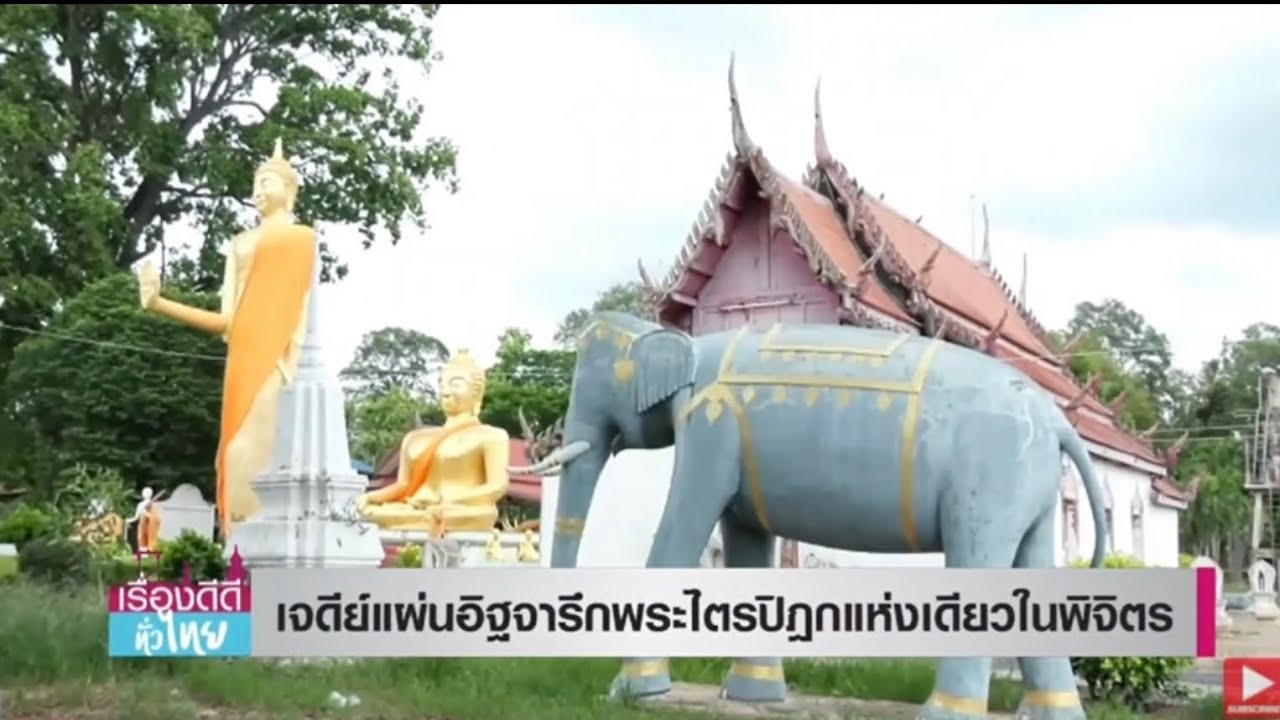
 Click to Access the Navigation Map GPS
Wat Rong Chang Map
Recommend

 Art, Culture and Heritage
 Historical Sites and Monuments(1)
 Art, Craft Centres, Tradition(1)
 Museums(1)
Temple(32)
Museums(1)
Temple(32)
 Other Sacred Sites(4)
 Research and Development
 Royal Project(1)
 Suburban Living
 Floating Market(1)
 Nature and Wildlife
 National Parks and Marine Reserves(1)
 Dam, Reservoir, Lake(3)
 River, Canal(2)
 Other natural attractions(1)
 Entertainment and Agricultural
 Animal camps and shows(1)
 Farms, Parks and Ecotourism(4)


