
lovethailand home >North Travel Attractions >Phichit Travel Attractions >Sam Ngam >Noen Po > Wat Mai Plai Huai
TL;DR: Wat Mai Plai Huai is located at Ban Plai Huai, Moo 11, Noen Po Subdistrict, Sam Ngam District, Phichit Province, open Daily, hours 08.00 – 18.00.
Wat Mai Plai Huai
Open Days: Daily
Opening Hours: 08.00 – 18.00
Wat Mai Plai Huai in Phichit Province is an important Buddhist temple in Noen Po Subdistrict, Sam Ngam District. Located at 108 Moo 11, Ban Plai Huai, Noen Po Subdistrict, Sam Ngam District, Phichit Province, the temple is widely known for its large sacred statues, impressive religious structures, and strong devotional atmosphere. It is also a provincial meditation practice center, making it significant not only as a place of worship and religious tourism, but also as a space for mental cultivation, Dhamma learning, and spiritual reflection.
Wat Mai Plai Huai was established in 1994. It began as a small hut in Ban Plai Huai before gradually developing into a major religious site. The early temple area was modest, but later a devoted supporter, Mr. Wong Thiangyu, donated land for the temple. Over time, the temple expanded and developed many important Buddhist structures and sacred objects. This growth reflects the faith of monks, local people, and devotees who worked together to create a meaningful spiritual center for the community.
The name Wat Mai Plai Huai is directly connected with Ban Plai Huai community. The word “Wat Mai” means “new temple,” while “Plai Huai” refers to the local village and landscape. Although the temple is not as old as many ancient temples in Phichit, its importance lies in its strong living faith, large-scale Buddhist art, and its role as a meditation practice center accessible to local residents and visitors.
The most striking highlight of Wat Mai Plai Huai is the large image of Luang Pu Yai Thep Lok Udon. Many Thai devotees associate Luang Pu Thep Lok Udon with deep spiritual practice, protection of Buddhism, and the unseen lineage of enlightened teachers. The large image at the temple creates a powerful impression. Visitors often come to pay respect, pray for protection, ask for blessings, and find inner peace in front of this monumental sacred figure.
Paying respect to Luang Pu Yai Thep Lok Udon at Wat Mai Plai Huai is a distinctive experience because of the scale and atmosphere of the image. Standing before the large figure gives visitors a sense of humility and calm. For many devotees, the visit is not only about asking for blessings but also about reflecting on discipline, faith, and the importance of cultivating the mind.
Another major sacred figure inside the temple is Luang Pu To Phrommarangsi. Local information describes one large image as measuring 12 sok wide and 48 sok high, and another seated Luang Pu To image with a lap width of 9 sok and 9 inches. Luang Pu To, or Somdet Phra Phutthachan To Phrommarangsi, is one of the most revered Buddhist masters in Thai history. He is strongly associated with wisdom, compassion, and the famous Somdet amulets. His presence at the temple makes Wat Mai Plai Huai especially meaningful for devotees of Luang Pu To.
The temple also enshrines the large Phra Somdet Arahang, another important sacred object connected with the devotional tradition of Luang Pu To. For devotees, paying respect to Phra Somdet Arahang is a way to recall the qualities of the Buddha, the Dhamma, and the Sangha. The image is meaningful not only because of its size, but also because it represents stability, faith, and spiritual protection in the minds of worshippers.
Luang Pho Luea, the principal Buddha image inside the ordination hall, is another important sacred object of Wat Mai Plai Huai. The image has a lap width of 108 inches. As the principal Buddha image of the ordination hall, Luang Pho Luea holds a central role in the religious life of the temple. The ordination hall is a sacred space for monastic ceremonies, and the principal Buddha image provides a calm focus for worship, prayer, and reflection.
Wat Mai Plai Huai also contains a statue of Phaya Chalawan in meditation, with a lap width of 7 sok. Phaya Chalawan is a legendary crocodile figure strongly associated with Phichit through the story of Krai Thong. Presenting Chalawan in a meditative posture gives the image a symbolic meaning: fierce mythical power is transformed into stillness, discipline, and submission to Dhamma. This makes the statue culturally meaningful as well as visually memorable.
The Five Kings Pavilion is another important point within the temple. It reflects reverence for Thai kings who made great contributions to the country. The pavilion connects Buddhist devotion with gratitude toward the monarchy and Thai national history. Visitors often stop here to pay respect and reflect on the relationship between Buddhism, kingship, and cultural memory in Thai society.
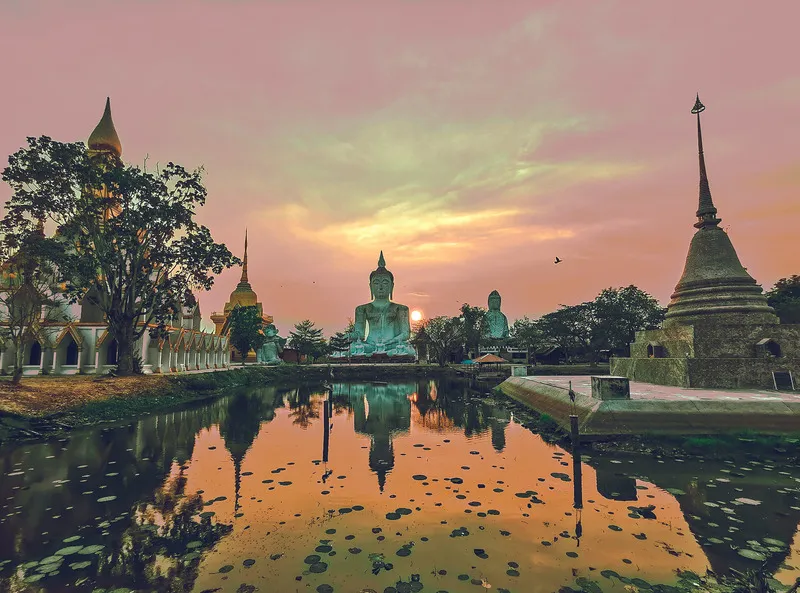
One of the most beautiful structures at Wat Mai Plai Huai is Phra That Suwan Phichit Chedi Rattana Kaew, a chedi standing gracefully in the middle of a pond. The chedi has a base width of 4 wa and a height of 9 wa. Decorated with bright white glass, it reflects light beautifully and enshrines sacred relics of the Buddha. Its location in the water gives it a peaceful, purified, and almost otherworldly atmosphere. Visitors often pay respect here for blessings and spiritual calm.
A chedi enshrining the Buddha’s relics holds deep significance in Buddhism. It is a place where devotees remember the Buddha, cultivate faith, and reflect on the path of practice. The setting of Phra That Suwan Phichit Chedi Rattana Kaew in the middle of a pond enhances the feeling of serenity and separation from everyday distractions. It is one of the most photogenic and spiritually meaningful areas of the temple.
Other important areas inside the temple include Chedi Phuttha Rattana, Chedi Sri Phichit, Wihan Luang Pho Tem, Wihan Luang Pho Takhian Kaew, the Ashoka Pillar courtyard, and Suan Pa Phuttha Barami meditation area. These places give Wat Mai Plai Huai several layers of meaning. It is a temple for worship, meditation, cultural learning, sacred art, and local pilgrimage. Visitors should walk slowly through the temple grounds to appreciate the variety of sacred sites.
Wat Mai Plai Huai is also recognized as the 12th provincial meditation practice center of Phichit. This role makes the temple more than a place for sightseeing. It provides space for monks, novices, public officials, businesspeople, students, and general Buddhists to practice meditation, learn Dhamma, and develop the mind. The existence of a local meditation center allows people in the area to access Buddhist practice without traveling far.
The current abbot of Wat Mai Plai Huai is Phra Khru Wiwat Worasanthit, also known as Luang Pho Udon Thanuttaro. The temple is also deeply associated with Luang Pu Thongdee Anikho, a respected meditation monk and temple developer whose influence helped shape the identity and growth of Wat Mai Plai Huai. The temple’s large sacred structures and meditation role reflect the combined force of monastic leadership, community support, and the faith of many devotees.
The atmosphere of Wat Mai Plai Huai is spacious and peaceful. Visitors can walk through the temple grounds, pay respect to the major sacred figures, make merit, and spend time in quiet reflection. A meaningful visit may include Luang Pu Yai Thep Lok Udon, Luang Pu To Phrommarangsi, Phra Somdet Arahang, Luang Pho Luea, Phaya Chalawan in meditation, the Five Kings Pavilion, and Phra That Suwan Phichit Chedi Rattana Kaew.
For cultural travelers, Wat Mai Plai Huai reveals another side of Phichit. The province is often associated with the legend of Chalawan and historical riverside communities, but this temple shows how modern devotional Buddhism continues to create large-scale sacred art and active religious spaces. Its value does not come from age alone, but from living faith, continuing development, and its ability to bring people together around Buddhist practice.
Getting There is convenient by private car, rental car, or local transport. Travelers can take the Nakhon Sawan–Phitsanulok road heading north. When reaching the Ban Nong Sano sign, turn into the local road and continue until seeing the sign for Wat Mai Plai Huai on the left. Turn left and continue a short distance to the temple. The temple is located at 108 Moo 11, Noen Po Subdistrict, Sam Ngam District, Phichit Province. It can be visited as a day trip from Phichit town.
The best times to visit are in the morning or late afternoon. The temple grounds are broad and include many points of interest, so visitors should avoid the hottest part of the day. Morning is suitable for merit-making and meditation, while late afternoon offers softer light for viewing the chedi and sacred statues. Visitors should allow at least 1 to 2 hours to see the main areas properly.
Visitors should dress modestly, speak quietly, keep the temple clean, and avoid climbing on Buddha images, sacred statues, chedi bases, or restricted areas. Photography should be done respectfully without disturbing monks or worshippers. Those who wish to join meditation activities should contact the temple and follow the rules of the meditation center. Respectful conduct helps preserve the sacred atmosphere of the temple.
Wat Mai Plai Huai is valuable in many ways. Religiously, it is home to several large sacred figures and relic structures. Spiritually, it functions as a meditation practice center. Culturally, it combines devotion to Luang Pu Thep Lok Udon, Luang Pu To, Phaya Chalawan, and Thai kings. As a travel destination, it offers visitors a place to worship, learn, photograph respectfully, and experience the power of modern Buddhist faith in Phichit.
Overall, Wat Mai Plai Huai is one of the most important temples in Sam Ngam District for visitors interested in Buddhist pilgrimage, large sacred art, meditation, and local devotion. The temple brings together Luang Pu Yai Thep Lok Udon, Luang Pu To Phrommarangsi, Phra Somdet Arahang, Luang Pho Luea, Phaya Chalawan in meditation, the Five Kings Pavilion, and Phra That Suwan Phichit Chedi Rattana Kaew in one spacious and peaceful temple compound. A visit here offers blessings, cultural insight, and a strong sense of living Buddhist faith in Phichit Province.
| Name | Wat Mai Plai Huai, Phichit Province |
| Location | Ban Plai Huai, Moo 11, Noen Po Subdistrict, Sam Ngam District, Phichit Province |
| Address | 108 Moo 11, Ban Plai Huai, Noen Po Subdistrict, Sam Ngam District, Phichit Province 66140, Thailand |
| Highlights | Luang Pu Yai Thep Lok Udon, Luang Pu To Phrommarangsi, Phra Somdet Arahang, Luang Pho Luea, Phaya Chalawan in meditation, the Five Kings Pavilion, and Phra That Suwan Phichit Chedi Rattana Kaew in the middle of a pond |
| History | Established in 1994, beginning from a small hut in Ban Plai Huai before expanding through land donation and the development of many important Buddhist structures |
| Name Origin | The name refers to Ban Plai Huai community in Noen Po Subdistrict and the temple’s origin as a newly established temple supported by local faith |
| Distinctive Features | A Mahanikaya local temple and the 12th provincial meditation practice center of Phichit, known for large sacred statues, major devotional structures, and a peaceful religious atmosphere |
| Travel Information | Take the Nakhon Sawan–Phitsanulok road heading north. At the Ban Nong Sano sign, turn into the local road and continue until seeing the sign for Wat Mai Plai Huai on the left |
| Current Status | An active Buddhist temple open for worship, merit-making, religious visits, and meditation activities according to the temple’s system |
| Open Days | Daily |
| Opening Hours | 08.00 – 18.00 |
| Fees | No admission fee |
| Facilities | Parking area, sacred-image worship areas, merit-making areas, meditation practice space, resting areas, toilets, and walking routes within the temple grounds |
| Main Areas / Zones | Luang Pu Yai Thep Lok Udon, Luang Pu To Phrommarangsi, Phra Somdet Arahang, Luang Pho Luea in the ordination hall, Phaya Chalawan in meditation, the Five Kings Pavilion, Phra That Suwan Phichit Chedi Rattana Kaew, Chedi Phuttha Rattana, Chedi Sri Phichit, Wihan Luang Pho Tem, Wihan Luang Pho Takhian Kaew, and the Ashoka Pillar courtyard |
| Abbot / Caretaker | Phra Khru Wiwat Worasanthit, also known as Luang Pho Udon Thanuttaro |
| Main Contact Number | 086-062-8446, 056-039-926 |
| Official Website / Official Page | Phichit Provincial Office of Buddhism, Noen Po Municipality, and the disciples of Luang Pu Thongdee Anikho / Wat Mai Plai Huai Facebook page |
| Nearby Tourist Attractions | 1. Wat Nong Sano, about 6 km 2. Wat Sam Ngam Phichit, about 13 km 3. Yom River and Sam Ngam community area, about 14 km 4. Wat Tha Luang Royal Monastery, about 28 km 5. Bueng Si Fai, about 30 km 6. Phichit Old Town Park, about 35 km |
| Nearby Restaurants | 1. Racha Ling By HO-MU Nong Sano, about 6 km 2. Chit Na Cafe Phichit, Kamphaeng Din Subdistrict, about 10 km 3. Jungle Cafe Sam Ngam Branch, about 13 km 4. Yong Ki, Sam Ngam District, about 14 km 5. Moo Chum Chalawan 5, Sam Ngam District, about 14 km 6. Restaurants in Sam Ngam District, about 13–16 km |
| Nearby Accommodations | 1. Modern Resort Phichit, about 18 km 2. Minimal Hotel, about 20 km 3. SP Resort and Garden, about 22 km 4. Ruean Vana Resort, about 25 km 5. Accommodations in Phichit town, about 28–35 km |
Frequently Asked Questions (FAQ)
Q: Where is Wat Mai Plai Huai located?
A: Wat Mai Plai Huai is located at 108 Moo 11, Ban Plai Huai, Noen Po Subdistrict, Sam Ngam District, Phichit Province 66140, Thailand.
Q: What are the main highlights of Wat Mai Plai Huai?
A: The main highlights include Luang Pu Yai Thep Lok Udon, Luang Pu To Phrommarangsi, Phra Somdet Arahang, Luang Pho Luea, Phaya Chalawan in meditation, the Five Kings Pavilion, and Phra That Suwan Phichit Chedi Rattana Kaew.
Q: When was Wat Mai Plai Huai established?
A: Wat Mai Plai Huai was established in 1994. It began from a small hut in Ban Plai Huai and later developed into a major temple through land donation and community faith.
Q: Who is the abbot of Wat Mai Plai Huai?
A: The abbot of Wat Mai Plai Huai is Phra Khru Wiwat Worasanthit, also known as Luang Pho Udon Thanuttaro.
Q: What are the opening hours of Wat Mai Plai Huai?
A: The temple is generally open daily from 08.00 to 18.00.
Q: Is Wat Mai Plai Huai a meditation practice center?
A: Yes. Wat Mai Plai Huai is the 12th provincial meditation practice center of Phichit and supports meditation, Dhamma learning, and mental cultivation.
Q: How can travelers get to Wat Mai Plai Huai?
A: Travelers can take the Nakhon Sawan–Phitsanulok road heading north, turn in at the Ban Nong Sano sign, and continue until seeing the Wat Mai Plai Huai sign on the left.
Q: What nearby places can be visited with Wat Mai Plai Huai?
A: Nearby places include Wat Nong Sano, Wat Sam Ngam Phichit, the Yom River and Sam Ngam community area, Wat Tha Luang, Bueng Si Fai, and Phichit Old Town Park.
 Category: ●Places of Worship
 Group: ●Temple
Last Update : 4 WeekAgo
 Last Update : 4 WeekAgo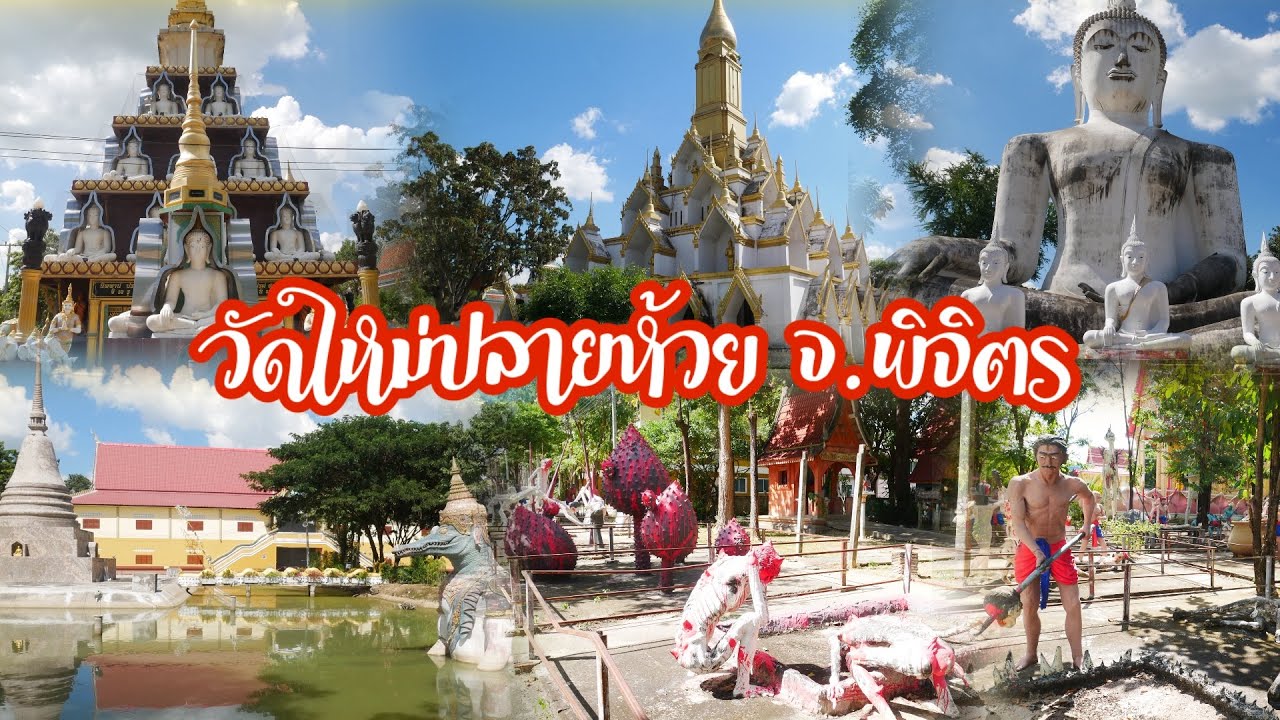
 Click to Access the Navigation Map GPS
Wat Mai Plai Huai Map
Recommend

 Art, Culture and Heritage
 Historical Sites and Monuments(1)
 Art, Craft Centres, Tradition(1)
 Museums(1)
Temple(32)
Museums(1)
Temple(32)
 Other Sacred Sites(4)
 Research and Development
 Royal Project(1)
 Suburban Living
 Floating Market(1)
 Nature and Wildlife
 National Parks and Marine Reserves(1)
 Dam, Reservoir, Lake(3)
 River, Canal(2)
 Other natural attractions(1)
 Entertainment and Agricultural
 Animal camps and shows(1)
 Farms, Parks and Ecotourism(4)


