
lovethailand home >North Travel Attractions >Phichit Travel Attractions >Pho Thale >Tha Khamin > Wat Nong Khla
TL;DR: Wat Nong Khla is located at Ban Nong Khla, Moo 2, Tha Khamin Subdistrict, Pho Thale District, Phichit Province, open Daily, hours Daytime.
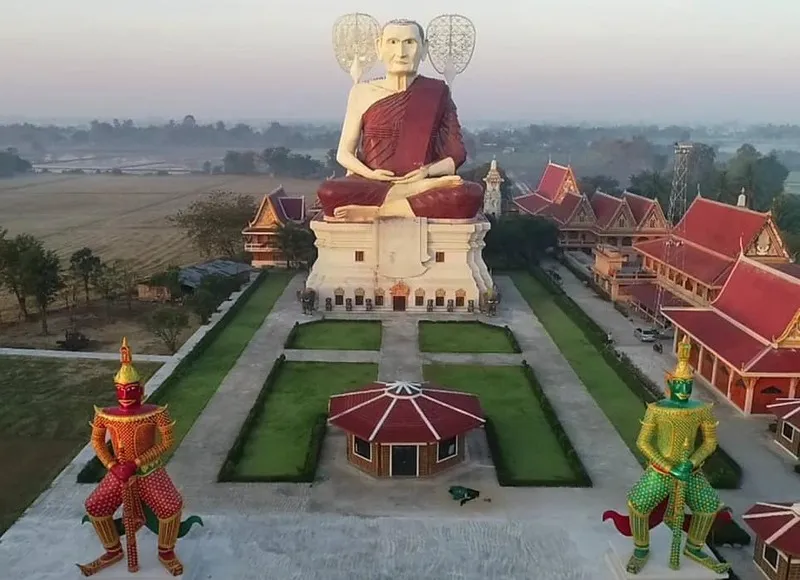
Wat Nong Khla
Open Days: Daily
Opening Hours: Daytime
Wat Nong Khla in Phichit Province is an old community Buddhist temple located at 27 Ban Nong Khla, Moo 2, Tha Khamin Subdistrict, Pho Thale District. It is a local temple under the Mahanikaya order and covers an area of 13 rai, 2 ngan, and 70 square wah. Established in 1930, the temple was built through the cooperation and faith of the people of Ban Nong Khla. Its name comes directly from the village name, showing the close relationship between the temple and the community that created, supported, and preserved it over many generations.
Wat Nong Khla is not a large tourist temple, but it is deeply meaningful as a living community temple. It serves as a place for Buddhist ceremonies, merit-making, moral learning, community gatherings, and spiritual support. For local residents, the temple is a familiar center of life. It is where people come to make offerings, join ceremonies on Buddhist holy days, listen to Dhamma teachings, and participate in local religious traditions. For travelers, the temple offers a quiet opportunity to experience the authentic relationship between a Thai rural temple and its surrounding community.
The physical setting of Wat Nong Khla reflects the rural landscape of Tha Khamin Subdistrict. The northern boundary meets a public road, the southern side connects with rice fields, the eastern side adjoins a canal, and the western side borders Khlong Kung. These details show that the temple is part of a traditional agricultural and water-based environment. Roads, canals, rice fields, and temple grounds all form the cultural landscape of the community. Wat Nong Khla is therefore more than a religious site; it is part of the everyday geography of local life.
The establishment of the temple in 1930 took place during a period when village temples remained central to Thai rural society. A temple was not only a place for worship. It was also a public meeting place, a learning space, a moral center, and a refuge for the mind. The decision of local residents to build Wat Nong Khla reflected the community’s desire for a stable spiritual center where monks could reside, villagers could make merit, and Buddhist traditions could be passed from one generation to the next.
The name Wat Nong Khla is important because it preserves the identity of Ban Nong Khla. Temples named after their villages often carry a strong sense of shared ownership. The temple belongs not only to the monastic community but also to the people who support it. It represents the faith of parents, grandparents, and ancestors who contributed labor, materials, donations, and devotion to establish a sacred place for the village. This gives Wat Nong Khla cultural value beyond its physical structures.
Throughout its history, Wat Nong Khla has been led by a succession of abbots and caretakers. The earliest recorded abbot was Phra Achan Phat, who served from 1930 to 1934. He was followed by Phra Achan Phan from 1935 to 1942, Phra Achan Kiao from 1943 to 1949, and later monks including Phra Achan Chaeng, Phra Achan Rua, Phra Achan Ko, Phra Achan Sak, Phra Achan Jek, Phra Achan Lap, Phra Achan Charoen, and Phra Sing Bunnyalo. This long succession reflects the continuity of Buddhist care, leadership, and religious responsibility within the community.
The role of each abbot was not limited to temple administration. Monks in a rural temple guide religious ceremonies, teach Dhamma, support community morale, and provide spiritual advice to local people. Through this continuity of monastic leadership, Wat Nong Khla has been able to remain active as a place of worship and moral guidance. Even as society has changed, the temple’s core function has remained the same: to serve as a center of faith, learning, and community connection.
Wat Nong Khla has long been used as a venue for Buddhist and community activities. Local residents come to make merit, offer food to monks, present Sangha offerings, listen to sermons, and join ceremonies on major Buddhist days such as Makha Bucha, Visakha Bucha, Asalha Bucha, Buddhist Lent, and the end of Lent. Annual merit-making events such as Kathin and robe-offering ceremonies also help bring the community together. These activities keep the temple alive and strengthen relationships among people of different generations.
In Thai village life, temple events are also social events. When the temple organizes a ceremony, villagers help prepare food, clean the grounds, welcome guests, arrange offerings, and support the monks. These acts of cooperation create unity and reinforce community identity. Children learn from elders, families participate together, and local people express their shared responsibility toward the temple. This is one of the strongest values of a community temple such as Wat Nong Khla.
The temple grounds are arranged to support religious and community functions. Areas such as the sermon hall, ceremonial courtyard, merit-making space, and green areas allow people to gather, worship, rest, and practice calm reflection. The shaded and open character of the temple makes it suitable for visitors who want a peaceful atmosphere rather than a crowded tourist site. Its simplicity is part of its charm.
The temple’s access to public roads and nearby canals also makes it convenient for local residents. The road allows people to reach the temple easily for merit-making and ceremonies, while the surrounding canals and rice fields preserve the feeling of a rural Buddhist landscape. Visitors can observe how temples, agriculture, and waterways continue to coexist in local Thai life.
The abbot and monks of Wat Nong Khla play an important role in guiding the community. They provide religious instruction, conduct ceremonies, and help people apply Buddhist principles in daily life. Villagers often come to the temple for advice regarding merit-making, family ceremonies, memorial rites, Buddhist observances, and moral conduct. This makes the temple a practical spiritual resource as well as a sacred place.
Wat Nong Khla also contributes to moral education. Children and young people who join temple activities learn respect, generosity, patience, gratitude, honesty, and basic Buddhist manners. They learn how to make offerings, listen to monks, behave respectfully in sacred spaces, and participate in community traditions. This kind of learning happens naturally through participation, making the temple an informal but powerful educational space.
For cultural travelers, Wat Nong Khla offers a clear view of a rural temple in Phichit. It does not rely on large monuments or commercial attractions. Its value lies in authenticity, continuity, and local meaning. The temple shows how Buddhism remains part of everyday community life. Visitors who appreciate quiet places, local history, and traditional village culture will find the temple meaningful because it reveals the deeper role of temples in Thai society.
A visit to Wat Nong Khla is suitable for travelers who want to make merit, experience a peaceful temple, and understand the relationship between religion and rural life. The temple can be included in a travel route through Pho Thale District, together with Wat Hiranyaram or Wat Bang Khlan, Wat Ban Noi, Wat Thai Nam, and Pho Thale community area. This route allows visitors to see different types of temples, from nationally known Luang Pho Ngoen-related sites to quieter local temples like Wat Nong Khla.
Although Wat Nong Khla is not a commercial tourist attraction, its simplicity is its strength. Visitors can walk respectfully around the grounds, sit quietly under the shade, make merit, and observe the rural surroundings of rice fields and canals. The temple preserves memories of generations of local people who built, supported, and cared for it. This makes the visit meaningful for those who value culture beyond famous landmarks.
Getting There is most convenient by private car, rental car, or local transport. Travelers can head toward Tha Khamin Subdistrict in Pho Thale District and continue to Ban Nong Khla, Moo 2. Navigation apps can be set to Wat Nong Khla, Tha Khamin Subdistrict, Pho Thale District, or to the coordinates 16.00679, 100.14776. The temple can be visited as part of a day trip through Pho Thale and nearby cultural sites.
The best times to visit are in the morning or late afternoon. Morning is suitable for merit-making and quiet reflection, while late afternoon offers a pleasant atmosphere for walking around the temple grounds and viewing the surrounding rural landscape. Visitors should allow about 30 to 60 minutes for a relaxed visit, especially if they want to learn about the temple’s background and observe its community atmosphere.
Visitors should dress modestly, speak quietly, keep the temple grounds clean, and avoid disturbing monks or local people who come to make merit. If entering a sermon hall or ceremonial area, visitors should remove shoes where appropriate and follow temple customs. Respectful behavior is especially important at a community temple because the temple remains part of local daily life.
Wat Nong Khla is valuable in several ways. Religiously, it is a Mahanikaya community temple established in 1930. Historically, it was created through the cooperation of the people of Ban Nong Khla. Culturally, it continues to support Buddhist ceremonies and local traditions. Environmentally, its setting among roads, rice fields, canals, and village land reflects the rural landscape of Tha Khamin Subdistrict. These combined qualities make the temple a meaningful place for visitors who wish to understand the quieter side of Phichit.
Overall, Wat Nong Khla is a clear example of the relationship between temple and community in Thai society. It is a sacred place, a center of moral learning, a community gathering space, and a keeper of local memory. Visitors will find that the value of the temple lies not in grandeur, but in faith, continuity, and the devotion of the people who have preserved it from 1930 to the present.
| Name | Wat Nong Khla, Phichit Province |
| Location | Ban Nong Khla, Moo 2, Tha Khamin Subdistrict, Pho Thale District, Phichit Province |
| Address | 27 Ban Nong Khla, Moo 2, Tha Khamin Subdistrict, Pho Thale District, Phichit Province 66130, Thailand |
| Coordinates | 16.00679, 100.14776 |
| Highlights | An old Mahanikaya community temple established in 1930, serving as a spiritual and social center for Ban Nong Khla and Tha Khamin Subdistrict |
| History | Established as a temple in 1930 through the cooperation of local residents. The temple covers 13 rai, 2 ngan, and 70 square wah under Nor Sor 3 document No. 68 |
| Name Origin | The temple is named after Ban Nong Khla, the village where local people jointly established and supported the temple |
| Distinctive Features | A rural community temple surrounded by public roads, rice fields, canals, and Khlong Kung, reflecting the traditional landscape of Pho Thale District |
| Temple Boundaries | North: public road; South: rice fields; East: canal; West: Khlong Kung |
| Travel Information | Travel to Tha Khamin Subdistrict, Pho Thale District, and continue to Ban Nong Khla, Moo 2. Visitors can use coordinates 16.00679, 100.14776 for navigation |
| Current Status | An active local Buddhist temple open for merit-making, worship, and community religious activities |
| Open Days | Daily |
| Opening Hours | Daytime |
| Facilities | Parking area, sermon hall area, ceremonial courtyard, merit-making area, resting space, and green areas within the temple grounds |
| Main Areas / Zones | Sermon hall, ceremonial courtyard, merit-making area, village temple grounds, and surrounding rural landscape of rice fields and canals |
| Abbot / Caretaker | Phra Sing Bunnyalo |
| Official Website / Official Page | Tha Khamin Subdistrict Administrative Organization website and Wat Nong Khla Facebook page |
| Nearby Tourist Attractions | 1. Wat Hiranyaram or Wat Bang Khlan, about 12 km 2. Wat Ban Noi, about 15 km 3. Wat Thai Nam, about 18 km 4. Pho Thale community area, about 12 km 5. Wat Tha Luang Royal Monastery, about 35 km 6. Bueng Si Fai, about 37 km |
| Nearby Restaurants | 1. New York Café, Pho Thale District, about 12 km, Tel. 056-619-865, 099-225-1168 2. Apirom Cafe, about 13 km, Tel. 082-628-4888 3. 8 Resort & Cafe, Pho Thale District, about 14 km, Tel. 098-754-3891 4. Kuai Tiao Ruea Sud Yod near Wat Bang Khlan, about 14 km 5. Restaurants and cafes in Pho Thale District, about 12–16 km |
| Nearby Accommodations | 1. Ruean Pingjai Dormitory, Tha Bua Subdistrict, Pho Thale District, about 13 km, Tel. 083-065-3388 2. 8 Resort & Cafe, Pho Thale District, about 14 km, Tel. 098-754-3891 3. Pingjai House / Rai Pingjai, about 18 km, Tel. 089-960-1132 4. Accommodations in Pho Thale District and nearby subdistricts, about 12–20 km 5. Accommodations in Phichit town, about 35–40 km |
Frequently Asked Questions (FAQ)
Q: Where is Wat Nong Khla located?
A: Wat Nong Khla is located at 27 Ban Nong Khla, Moo 2, Tha Khamin Subdistrict, Pho Thale District, Phichit Province.
Q: When was Wat Nong Khla established?
A: Wat Nong Khla was established as a temple in 1930 through the cooperation of the people of Ban Nong Khla.
Q: What type of temple is Wat Nong Khla?
A: Wat Nong Khla is a local Buddhist temple under the Mahanikaya order. Its temple land covers 13 rai, 2 ngan, and 70 square wah.
Q: Why is it called Wat Nong Khla?
A: The temple is named after Ban Nong Khla, the village whose residents jointly established and supported the temple.
Q: Who is the caretaker of Wat Nong Khla?
A: The temple history lists Phra Sing Bunnyalo as the later caretaker or acting monk in charge of the temple.
Q: Who should visit Wat Nong Khla?
A: The temple is suitable for visitors who want to make merit, experience a quiet community temple, and learn about rural Buddhist life in Tha Khamin Subdistrict.
Q: How can travelers get to Wat Nong Khla?
A: Travelers can go to Tha Khamin Subdistrict in Pho Thale District and continue to Ban Nong Khla, Moo 2. The coordinates 16.00679, 100.14776 can be used for navigation.
Q: What nearby places can be visited with Wat Nong Khla?
A: Nearby places include Wat Hiranyaram or Wat Bang Khlan, Wat Ban Noi, Wat Thai Nam, Pho Thale community area, Wat Tha Luang, and Bueng Si Fai.
 Category: ●Places of Worship
 Group: ●Temple
Last Update : 4 WeekAgo
 Last Update : 4 WeekAgo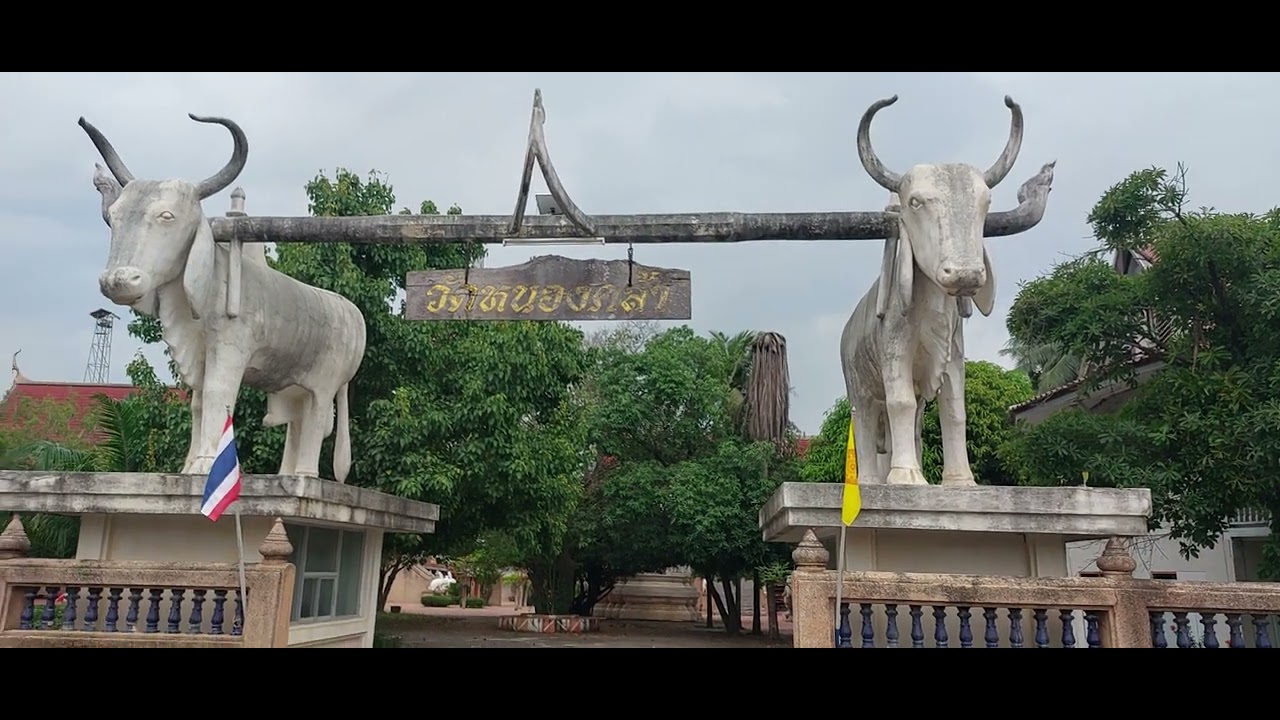
 Click to Access the Navigation Map GPS
Wat Nong Khla Map
Recommend

 Art, Culture and Heritage
 Historical Sites and Monuments(1)
 Art, Craft Centres, Tradition(1)
 Museums(1)
Temple(32)
Museums(1)
Temple(32)
 Other Sacred Sites(4)
 Research and Development
 Royal Project(1)
 Suburban Living
 Floating Market(1)
 Nature and Wildlife
 National Parks and Marine Reserves(1)
 Dam, Reservoir, Lake(3)
 River, Canal(2)
 Other natural attractions(1)
 Entertainment and Agricultural
 Animal camps and shows(1)
 Farms, Parks and Ecotourism(4)


