
lovethailand home >Central Travel Attractions >Pathum Thani Travel Attractions >Muang Pathum Thani >Bang Kadi > Wat Sang Lan
TL;DR: Wat Sang Lan is located at Bang Kadi Subdistrict, Mueang Pathum Thani District, Pathum Thani, open Please Contact The Temple Before Visiting, hours Please Contact In Advance.
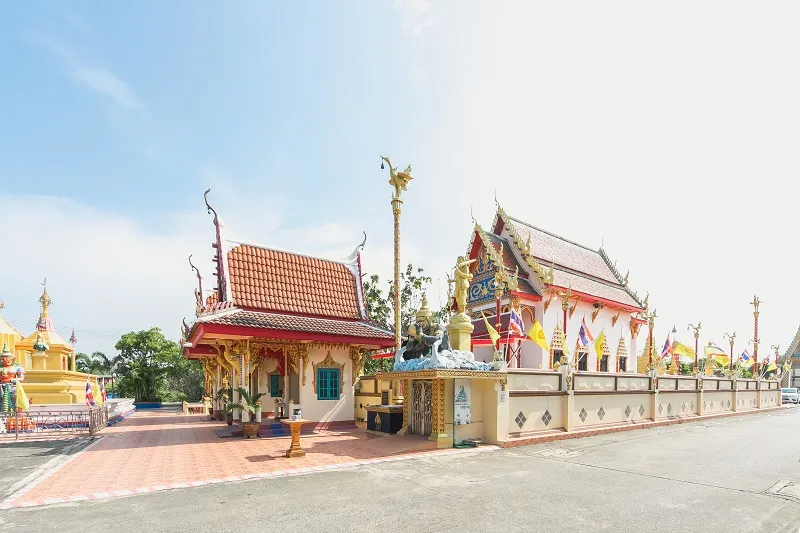
Wat Sang Lan
Open Days: Please Contact The Temple Before Visiting
Opening Hours: Please Contact In Advance
Wat Sang Lan is a historic temple in Bang Kadi Subdistrict, Mueang Pathum Thani District, Pathum Thani. It stands out for its deep Mon community roots, its old religious structures, and the folk museum inside the temple grounds that preserves local memory in a very tangible way. The temple is not defined by monumental size or flashy decoration. Its real charm lies in the atmosphere of an old community temple that still reflects the history, culture, and riverside way of life of Pathum Thani.
For travelers looking for a temple in Pathum Thani with more historical depth and cultural substance than an ordinary temple stop, Wat Sang Lan is an excellent choice. It was founded by Mon-descended settlers whose community history reaches back to the late Ayutthaya period. Because of that, the temple’s story is not only a religious history. It is also the story of migration, settlement, and the formation of community identity in Bang Kadi.
Wat Sang Lan was established in 1826 by a Mon community living in the area. Before the temple was built, the land had been used as a rice-threshing yard. When that space was no longer needed for its original purpose, a temple was founded there and given the name “Sang Lan.” The name combines a Pali-derived word implying goodness or completeness with the Thai word “lan,” meaning yard. This gives the temple a name that is both meaningful and directly connected to the practical past of the site.
The origin of the name is especially interesting because it reflects the real life of the community rather than an abstract religious title. The temple rose from a former working landscape, and its name preserves that memory. In this way, Wat Sang Lan still carries the story of the people who once used the land before it became a sacred place.
The temple received its royal ordination boundary in 1856, with the consecrated area measuring 10 meters wide and 16 meters long. This confirms the temple’s long-standing religious status and shows how it developed from a local community temple into an established Buddhist institution in the Bang Kadi area.
Wat Sang Lan may not be as widely known as some major temples in Pathum Thani, but that is part of its appeal. Its strength lies in the richness of what it preserves: Mon cultural heritage, older sacred objects, community memory, and a museum that gives real context to the site. It is well suited to visitors who enjoy quiet temple visits, local history, and traditional culture rather than crowded sightseeing.
The temple contains several important buildings. Its ordination hall is 6 meters wide and 13 meters long and was built in 1957. The temple also has six monk residences, a chanting hall, and a sermon hall. These structures show that the temple has long functioned as a complete religious center rather than merely a ceremonial site.
The temple’s most important sacred image is Phra Phuttha Khemaphan Rangsri, the principal Buddha image in the ordination hall. It has a lap width of 1.5 meters and is in the Sukhothai artistic style. This image is central to worship at the temple and adds significant artistic value to the site. For visitors who appreciate classical Thai Buddhist art, it is one of Wat Sang Lan’s most meaningful features.
Another important feature is the Mon-style chedi, which clearly reflects the background of the community that founded the temple. Many Mon temples in Pathum Thani still preserve architectural or ritual elements linked to Raman culture, and Wat Sang Lan is a strong example of that cultural continuity. The chedi is therefore more than a decorative structure. It is living evidence of the temple’s Mon identity.
What makes Wat Sang Lan especially distinctive is the presence of the Wat Sang Lan Folk Museum within the temple grounds. The museum was established in 2010 through cooperation between the temple, the Bang Kadi municipality, and the local community. The two-storey building was supported by the municipality, while the items displayed inside come from both the temple’s own collection and donations from local residents who wanted to help preserve their shared heritage.
The museum is highly valuable for anyone interested in Mon culture in Pathum Thani. The ground floor focuses on important Mon traditions and everyday local life, with displays that include a recreated traditional kitchen, pottery, and agricultural tools. This helps visitors understand the world of the community beyond religion alone.
The second floor focuses more on religious and historic temple-related objects, including wooden boxes used to store palm-leaf manuscripts, samut khoi manuscripts in both Mon and Thai, porcelain, and brassware. These displays are important because they preserve evidence of religious learning, language use, and the long cultural relationship between the Mon community and wider Thai society in Pathum Thani.
For visitors who want both merit-making and cultural learning in one place, Wat Sang Lan is especially rewarding. In a single visit, one can pay respect to the principal Buddha image, observe Mon-style architecture, and learn about the daily life and material culture of the local community. Temples that still preserve this level of context are not easy to find near Bangkok.
The overall atmosphere of Wat Sang Lan is calm and local. It still feels like a true community temple rather than a heavily commercialized attraction. That makes it especially suitable for people who want time to walk slowly, look closely at architectural details, and appreciate the setting without rushing.
At present, the temple is led by Phra Khru Pariyat Pathumwat, who serves as abbot. Recent temple activity and current public references indicate that the temple remains active and continues to function as an important spiritual center for the Bang Kadi community.
Wat Sang Lan can also be included in a broader Pathum Thani temple and culture route. Nearby places include Wat San Chao, Sian Pae Rongsi Shrine, Wat Makham, Wat Bot Luang Pu Thian, and the riverside market area. This makes the temple easy to combine with other local destinations in one trip.
Getting There is easiest by private car. The temple is in Bang Kadi Subdistrict, Mueang Pathum Thani District, and is accessible through the Bang Kadi Sai Nai area. Searching for “Wat Sang Lan Pathum Thani” in a navigation app is usually the most practical method. Travelers using public transport should first reach Pathum Thani town or the Bang Kadi area and continue by local hired vehicle.
If you want to visit the museum inside the temple, it is best to arrange in advance. Visitor information for the museum states that advance contact is required, although there is no admission fee. Planning ahead is the best way to make sure you can explore both the temple and the museum properly.
The most pleasant time to visit is from morning to late morning, when the atmosphere is cooler and quieter. On ordinary days the temple is especially peaceful, which is ideal for worship, observation, and museum visits.
In summary, Wat Sang Lan is one of the most culturally valuable temples in Pathum Thani. Its Mon community origins, its name derived from a former threshing yard, its Sukhothai-style principal Buddha image, its Mon chedi, and its folk museum all make it much more than an ordinary local temple. For anyone seeking a meaningful temple visit with real historical depth, Wat Sang Lan is well worth the trip.
| Name | Wat Sang Lan |
| Location | Bang Kadi Subdistrict, Mueang Pathum Thani District, Pathum Thani |
| Address | 1 Moo 3, Ban Kangsong, Bang Kadi, Mueang Pathum Thani, Pathum Thani 12000, Thailand |
| Highlights | Historic Mon temple, Phra Phuttha Khemaphan Rangsri, Mon-style chedi, Wat Sang Lan Folk Museum, Mon cultural objects and local heritage displays |
| History | Founded in 1826 by a Mon-descended community and granted royal ordination boundary in 1856 |
| Name Origin | The temple stands on what had once been a rice-threshing yard, and the name preserves that origin |
| Distinctive Features | An old Mon community temple with an on-site folk museum and preserved religious objects |
| Travel Information | Best reached by private car through the Bang Kadi Sai Nai area; easy to locate with a navigation app |
| Current Status | An active temple with continuing merit-making and community religious activity |
| Open Days | Please Contact The Temple Before Visiting |
| Opening Hours | Museum visits by prior arrangement |
| Fees | No admission fee for the museum |
| Facilities | Ordination hall, sermon hall, chanting hall, monk residences, folk museum |
| Main Areas / Zones | Ordination hall, principal Buddha image area, Mon-style chedi, folk museum with community-life and religious-object displays |
| Abbot / Caretaker | Phra Khru Pariyat Pathumwat |
| Nearby Tourist Attractions | 1) Wat San Chao – around 1 km 2) Sian Pae Rongsi Shrine – around 1 km 3) Wat Makham – around 1 km 4) Wat San Chao Riverside Market – around 1 km 5) Wat Bot Luang Pu Thian – around 3 km |
| Nearby Restaurants | 1) Baan Rua Muang – around 500 m, Tel. 087-810-8048 2) 9-Baht Noodlesริม Wat Sang Lan – around 100 m, Tel. 095-989-0801 3) Ubon Vietnamese Noodle Shop, Bang Kadi Sai Nai – around 1 km, Tel. 081-402-2791 4) Somtam Jae Pong – around 2 km 5) Road Trip Cafe – around 2 km |
| Nearby Accommodations | 1) Campagne Hotel and Residence – around 3 km 2) Progress Mansion – around 3 km, Tel. 089-000-3883 3) Tinidee Hotel Bangkok Golf Club – around 7 km, Tel. 02-147-5858, 063-205-7034 4) Ploen Ploen Residence – around 7 km, Tel. 062-823-2710 5) RuenKijja – around 8 km |
Frequently Asked Questions (FAQ)
Q: Where is Wat Sang Lan located?
A: Wat Sang Lan is in Bang Kadi Subdistrict, Mueang Pathum Thani District, Pathum Thani, and is associated with the old Mon community of the area.
Q: When was Wat Sang Lan founded?
A: Wat Sang Lan was founded in 1826 and received its royal ordination boundary in 1856.
Q: What is the temple’s main highlight?
A: Its main highlights are Phra Phuttha Khemaphan Rangsri, the Mon-style chedi, and the Wat Sang Lan Folk Museum.
Q: Why is it called Wat Sang Lan?
A: The temple was built on a former rice-threshing yard, and its name reflects that original use of the land.
Q: Is there a museum inside the temple?
A: Yes. The Wat Sang Lan Folk Museum was established in 2010 and displays Mon cultural traditions, local tools, and religious objects.
Q: How can I visit the museum?
A: It is best to arrange your visit in advance, as the museum information states that prior contact is required.
Q: Who is the current abbot of Wat Sang Lan?
A: The current abbot is Phra Khru Pariyat Pathumwat.
 Category: ●Places of Worship
 Group: ●Temple
Last Update : 5 MonthAgo
 Last Update : 5 MonthAgo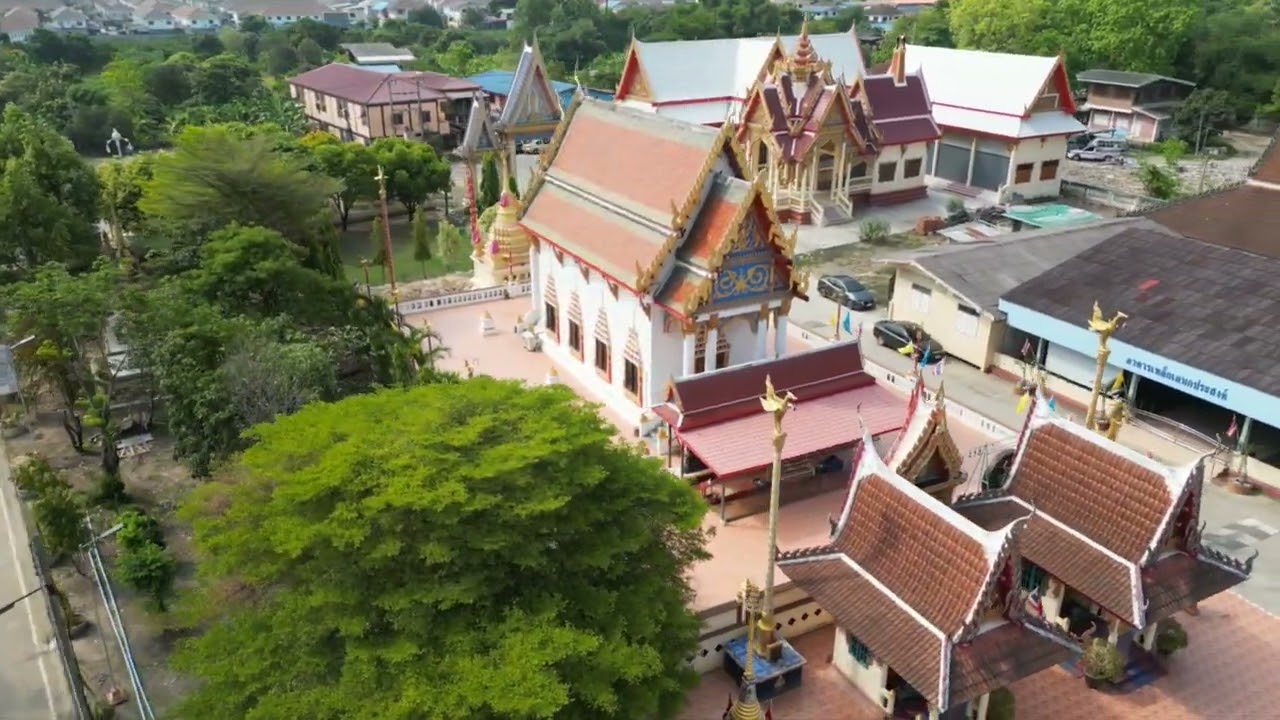
 Click to Access the Navigation Map GPS
Wat Sang Lan Map
Recommend

 Art, Culture and Heritage
 Historical Sites and Monuments(2)
 Landmarks and Memorials(1)
 Art, Craft Centres, Tradition(2)
 Museums(11)
 Art Gallery(1)
 Educational Places
 Museum for Study(1)
 Library(1)
 Training Center(1)
Temple(44)
Training Center(1)
Temple(44)
 Mosque(1)
 Other Sacred Sites(1)
 Research and Development
 Royal Project(1)
 Suburban Living
 Local Market(2)
 Floating Market(3)
 Nature and Wildlife
 River, Canal(1)
 Entertainment and Agricultural
 Animal camps and shows(1)
 Stadium(2)
 Amusement Park(1)
 Waterpark(1)


