
lovethailand home >Central Travel Attractions >Pathum Thani Travel Attractions >Sam Khok >Bang Krabue > Wat Mahingsaram
TL;DR: Wat Mahingsaram is located at Bang Krabue Subdistrict, Sam Khok District, Pathum Thani. Highlights include Old Ayutthaya-style ubosot remains, early Ayutthaya Buddha images, revered hermit shrine, restored abandoned temple atmosphere, Takrut Khu.
Wat Mahingsaram
Operating day: Daily
Operating time: 08.00 - 17.00
Wat Mahingsaram is a historic temple in Bang Krabue, Sam Khok District, Pathum Thani, with a character shaped by decline, abandonment, and later revival. It is one of those temples whose importance comes not only from age, but also from the fact that it was once abandoned and later brought back into active religious life through the effort of monks and local residents.
For travelers looking for a temple with historical depth near Bangkok, Wat Mahingsaram offers more than a typical merit-making stop. The site preserves traces of an old Ayutthaya-period temple, a revered hermit shrine, and memories of a former riverside world in which changes to the land and waterways could determine whether a temple continued to thrive or fell into abandonment.
Wat Mahingsaram is a Mahanikaya temple located in Bang Krabue Subdistrict, Sam Khok District, Pathum Thani Province. In local memory, it was long known as “Wat Rang” or “Wat Nok” because it had become an abandoned temple. These names reflected the condition people saw at the time rather than its formal identity.
The temple is believed to date back to the early Ayutthaya period. According to local historical understanding, it became abandoned because the land in front of the temple gradually extended outward from the riverside, leaving the temple farther away from the water than before. Access became difficult, as entry and exit had to rely on canals rather than a direct riverside position. Because of this inconvenience, a new temple was established closer to the water and became known as Wat Tin Tha.
What makes Wat Mahingsaram especially meaningful is that it did not disappear permanently. Later, monks and local residents recognized its importance and undertook the formal process of reviving it from abandoned-temple status into an active temple with resident monks once again. The temple was officially declared active on 17 June 1998. This revival is one of the temple’s strongest historical themes and gives the place a very distinct identity within Sam Khok.
The current abbot is Phra Athikan Phisan Mongkhalo, and recent temple activity records show that the temple remains active today. This confirms that Wat Mahingsaram is not simply an archaeological remnant, but a living temple that continues to serve a religious role in the community.
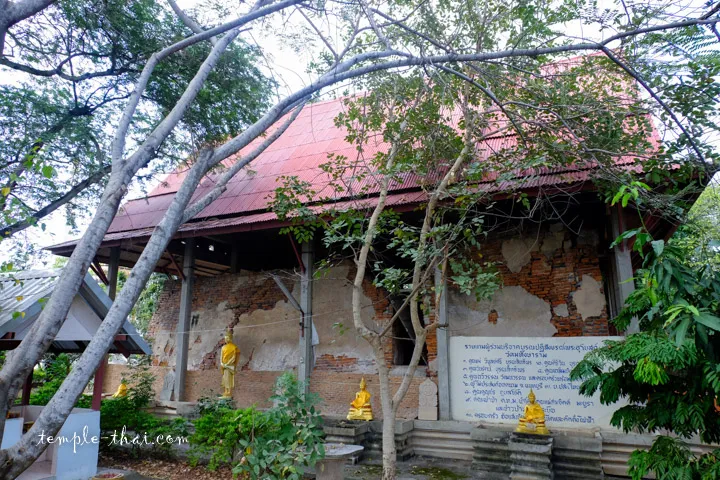
The most important structure at the temple is the old Ayutthaya-style ordination hall, of which only the four surrounding walls remain. Even in this fragmentary state, the structure carries strong historical atmosphere. Inside are Buddha images believed to date back to the early Ayutthaya period, making this part of the temple especially important for visitors interested in old Thai religious art and the physical remains of historic temples.
Another highly respected feature is the hermit shrine, which local people revere deeply. Its presence adds a layer of local belief and traditional spiritual culture that extends beyond formal temple ritual alone. This gives the site a broader cultural value and makes it particularly interesting for visitors who want to understand how local belief practices remain connected to temple spaces.
The former chedi and viharn of the temple have been completely dismantled and no longer survive. This absence is part of what makes the temple so moving. Wat Mahingsaram is a place where visitors can sense not only what remains, but also what has been lost over time. The surviving walls, sacred images, and restored temple life all stand in contrast to the missing older structures.
The active structures used today include the sermon hall and the mortuary pavilion, which support the temple’s present religious and community functions. This means that Wat Mahingsaram is not frozen in the past. It is a temple where old and new roles still coexist, and where restoration has brought life back into a once-abandoned sacred landscape.
Wat Mahingsaram is also widely known for sacred objects associated with Luang Pho Phisan, especially the amulet called Takrut Khu Chiwit. Devotees value it highly because temple tradition says the abbot personally inscribes, writes, rolls, and ties each piece himself. This personal involvement adds spiritual weight in the eyes of believers and has become one of the temple’s strongest points of popular devotion.
For travelers interested in cultural history, the temple is rewarding because it tells several stories at once: the story of an Ayutthaya-period temple, the transformation of a landscape that changed temple access, the relocation of worship to a new waterside site, and the later revival of the abandoned old temple itself. These layers make the visit much richer than a simple stop for worship.
The atmosphere of the temple today remains quiet and understated. It is a place best appreciated slowly, especially by those who are drawn to historical ruins, older sacred environments, and temples that still carry strong local memory. Rather than grandeur, the temple offers authenticity and a powerful sense of continuity.
Wat Mahingsaram can also be combined with nearby temples in Bang Krabue and Sam Khok such as Wat Choeng Tha, Wat Krang, and Wat Bot. This makes it suitable for a half-day or full-day temple route focused on local history and riverside temple culture in Pathum Thani.
Visitors should move through the temple respectfully, especially around the old ordination hall remains and sacred areas. The value of the site lies in both its historical fragility and its restored religious life, so quiet behavior and careful observation are particularly appropriate here.
Getting There Wat Mahingsaram is most conveniently reached by private car via Bang Krabue Subdistrict in Sam Khok District, Pathum Thani. The temple sits within the wider network of old temples in the area and can be visited together with other nearby sites in the district. Travelers using public transport should first reach Sam Khok and continue by local transport.
| Name | Wat Mahingsaram |
| Location | Bang Krabue Subdistrict, Sam Khok District, Pathum Thani |
| Coordinates | 14.10499, 100.53794 |
| Highlights | Old Ayutthaya-style ubosot remains, early Ayutthaya Buddha images, revered hermit shrine, restored abandoned temple atmosphere, Takrut Khu Chiwit amulet |
| History | Ancient Ayutthaya-period temple later abandoned, then formally restored as an active temple on 17 June 1998 |
| Name Origin | Locally known in the past as Wat Rang or Wat Nok during its period of abandonment before returning to the name Wat Mahingsaram |
| Distinctive Features | A revived abandoned temple preserving old Ayutthaya remains and strong local devotional practices |
| Travel Information | Accessible by car through Bang Krabue in Sam Khok District, or by local transport after reaching Sam Khok |
| Current Status | Active temple with resident monks and ongoing religious activity |
| Abbot / Caretaker | Phra Athikan Phisan Mongkhalo |
| Main Areas / Zones | Old Ayutthaya-style ubosot walls, Buddha image area, hermit shrine, sermon hall, mortuary pavilion |
| Notable Sacred Object | Takrut Khu Chiwit associated with Luang Pho Phisan |
| Nearby Tourist Attractions | 1. Wat Choeng Tha – 2 km 2. Wat Krang – 3 km 3. Wat Bot, Sam Khok – 5 km 4. Wat Sing – 7 km 5. Sam Khok Museum – 6 km |
| Nearby Restaurants | 1. Baan Kiang Nam Restaurant – 8 km. Tel. 083-806-3860, 02-147-4719 2. Ros Pathum Restaurant – 10 km. Tel. 065-291-2673, 064-741-9166 3. Sam Khok Boat Noodles – 5 km 4. Riverside eateries near Sam Khok market area – 6 km 5. Local restaurants in Bang Krabue area – 3 km |
| Nearby Accommodations | 1. River View Pathum Hotel & Residence – 10 km. Tel. 065-291-2671, 065-291-2672 2. PAN Ville Resort – 14 km. Tel. 02-101-1993 3. The Pine Resort – 16 km. Tel. 02-978-8851-4, 092-451-6546 4. Tinidee Hotel Bangkok Golf Club – 24 km 5. Bangkok Golf Spa Resort – 25 km |
Frequently Asked Questions (FAQ)
Q: Where is Wat Mahingsaram located?
A: Wat Mahingsaram is in Bang Krabue Subdistrict, Sam Khok District, Pathum Thani.
Q: Was Wat Mahingsaram originally an abandoned temple?
A: Yes. It was long known locally as an abandoned temple before later being formally revived as an active temple.
Q: What are the important things to see at the temple?
A: Key highlights include the old Ayutthaya-style ubosot walls, early Ayutthaya Buddha images, the hermit shrine, and other restored temple areas.
Q: When was the temple officially restored as an active temple?
A: It was officially declared an active temple again on 17 June 1998.
Q: What sacred object is Wat Mahingsaram especially known for?
A: The temple is especially known for Takrut Khu Chiwit associated with Luang Pho Phisan.
Q: Who is the current abbot of Wat Mahingsaram?
A: Recent verified information identifies the abbot as Phra Athikan Phisan Mongkhalo.
 Category: ●Places of Worship
 Group: ●Temple
Last Update : 6 MonthAgo
 Last Update : 6 MonthAgo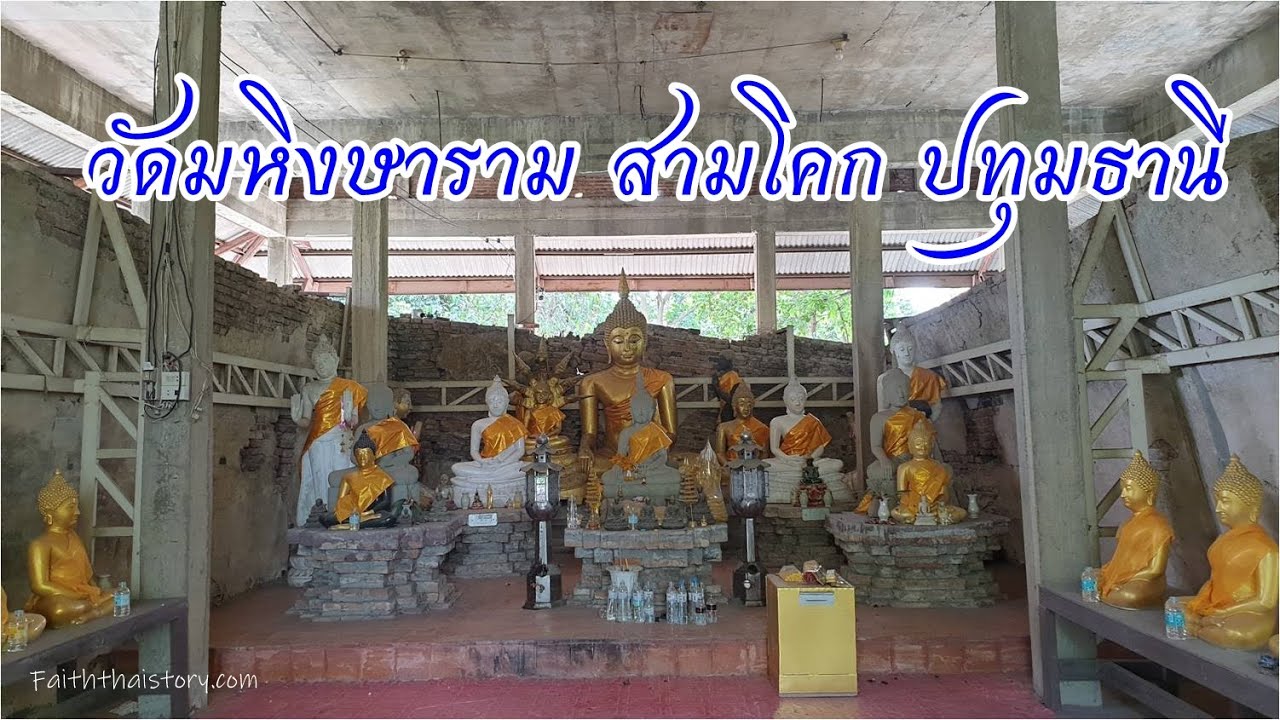
 Click to Access the Navigation Map GPS
Wat Mahingsaram Map
Recommend

 Art, Culture and Heritage
 Historical Sites and Monuments(2)
 Landmarks and Memorials(1)
 Art, Craft Centres, Tradition(2)
 Museums(11)
 Art Gallery(1)
 Educational Places
 Museum for Study(1)
 Library(1)
 Training Center(1)
Temple(44)
Training Center(1)
Temple(44)
 Mosque(1)
 Other Sacred Sites(1)
 Research and Development
 Royal Project(1)
 Suburban Living
 Local Market(2)
 Floating Market(3)
 Nature and Wildlife
 River, Canal(1)
 Entertainment and Agricultural
 Animal camps and shows(1)
 Stadium(2)
 Amusement Park(1)
 Waterpark(1)


