
lovethailand home >Central Travel Attractions >Pathum Thani Travel Attractions >Sam Khok >Ban Ngiw > Wat Suan Mamuang
TL;DR: Wat Suan Mamuang is located at Ban Ngio Subdistrict, Sam Khok District, Pathum Thani. Highlights include Vipassana meditation center, two-storey Thai scripture hall, Mon-style pagoda, Hongsa pillar, Takrab flag, U Thong-period principal Buddha.
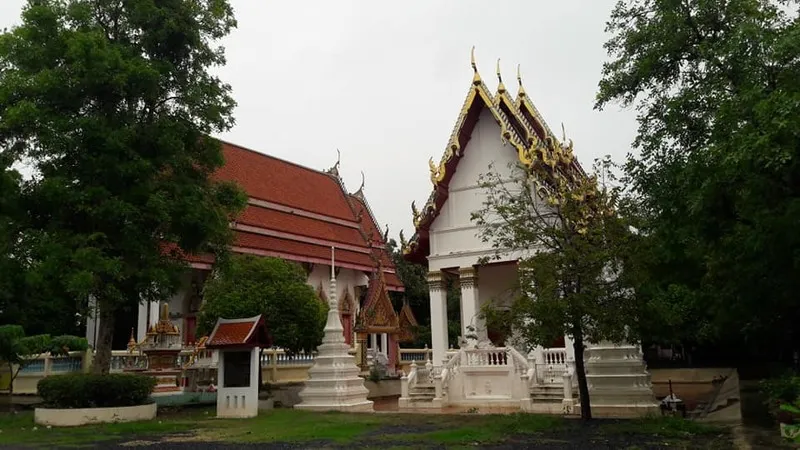
Wat Suan Mamuang
Operating day: Daily
Operating time: 08.00 - 17.00
Wat Suan Mamuang is a historic temple in Ban Ngio, Sam Khok District, Pathum Thani, with a distinctive identity shaped by Mon heritage, traditional temple architecture, and meditation practice. It is not only a place for worship, but also a temple known for vipassana training in the yub-no/pong-no style based on the Four Foundations of Mindfulness.
For travelers looking for a meaningful cultural stop near Bangkok, Wat Suan Mamuang offers more than a regular temple visit. The site combines quiet spiritual atmosphere, old Thai wooden structures, Mon-style religious symbols, and a long local history connected to orchard communities and Mon settlers from Hongsawadi.
Wat Suan Mamuang is a Mahanikaya temple located in Ban Ngio Subdistrict, Sam Khok District, Pathum Thani Province. The temple name comes directly from the local landscape, as the area was historically full of mango orchards. This simple place-based name reflects the agricultural roots of the local community and gives the temple a strong connection to its setting from the very beginning.
According to historical accounts, the temple was established in 1855 by local villagers who worked as orchard farmers in the area. Another tradition linked to former temple leadership says that the temple was built by Mon people from Hongsawadi. A key piece of evidence often mentioned in support of this Mon connection is the pagoda standing at the front of the temple, which was built in a Mon style. This gives the temple a clear place within the wider Mon cultural landscape of Sam Khok.
One of the strongest features of Wat Suan Mamuang today is its role as a meditation temple. The temple is associated with vipassana practice in the yub-no/pong-no tradition under the framework of the Four Foundations of Mindfulness. Meditation activities include walking meditation, seated meditation, and Dhamma talks, making the temple especially meaningful for visitors who want spiritual practice rather than sightseeing alone.
The atmosphere of the temple reflects this role. Compared with more touristic temples, Wat Suan Mamuang feels quieter and more inward-looking. It suits people who want to slow down, observe carefully, and spend time in a place where religious practice is still central to daily temple life.
The temple’s sacred and architectural highlights are especially appealing for those interested in old riverside temple culture. The two-storey Thai scripture hall in the khanom phing style is one of the most notable features. Its folding wall panels and decorative pierced patterns at the gable show careful traditional craftsmanship and give the structure a refined historic charm.
The wooden sermon hall and the old wooden riverside pavilion further strengthen the temple’s character as an old community temple. These features do not rely on monumental scale, but instead create beauty through materials, form, and the atmosphere of preserved traditional architecture.
Mon cultural symbols remain highly visible at Wat Suan Mamuang. The Mon-style pagoda resembling the Shwedagon form, the Hongsa pillar, and the Takrab flag are all important visual markers of Mon religious identity. Together, they make the temple an excellent place for travelers who want to understand how Mon heritage continues to shape temple culture in central Thailand.
Inside the ordination hall is a principal Buddha image dating to the U Thong period, which adds further art-historical importance to the temple. There is also a statue of Phra Khru Pathum Dechasathan enshrined in the sermon hall, contributing another layer of local religious memory and temple history.
Viewed as a whole, Wat Suan Mamuang brings together several strengths in one place: orchard-community origins, Mon settlement history, traditional Thai and Mon architecture, sacred images, and an active role in meditation practice. This makes the temple rewarding for both general visitors and those with a more focused interest in religion, culture, or heritage.
The temple is best explored slowly. Much of its value lies in smaller details such as the old wooden forms, the quiet arrangement of the grounds, the pagoda at the front, and the spiritual atmosphere of an active meditation setting. Visitors who take time to walk carefully through the site will appreciate it much more than those trying to rush through a checklist of attractions.
Wat Suan Mamuang can also be included in a wider Sam Khok temple route, together with nearby sites such as Wat Ampu Wararam, Wat Phai Lom, and Wat Pa Ngio. This makes it an excellent stop for travelers who want to explore the old Mon temple network and riverside heritage of Sam Khok in a single day.
Because the temple functions as a meditation place, visitors should be especially mindful of noise and personal behavior. Modest dress, quiet speech, and respect for meditation activities are important. This helps preserve the temple’s peaceful environment and supports those who come for practice rather than tourism alone.
Getting There Wat Suan Mamuang is most conveniently reached by private car via the local road into Soi Suan Mamuang in Ban Ngio Subdistrict, Sam Khok District, Pathum Thani. The temple is not far from other important temples in the same area. Travelers using public transport should first reach Sam Khok District and continue by local transport within the area.
| Name | Wat Suan Mamuang |
| Location | Ban Ngio Subdistrict, Sam Khok District, Pathum Thani |
| Address | Soi Suan Mamuang, Ban Ngio, Sam Khok, Pathum Thani 12160 |
| Coordinates | 14.08187, 100.52722 |
| Highlights | Vipassana meditation center, two-storey Thai scripture hall, Mon-style pagoda, Hongsa pillar, Takrab flag, U Thong-period principal Buddha image |
| History | Established in 1855 by local orchard villagers, with temple tradition linking its founding to Mon settlers from Hongsawadi |
| Name Origin | Named after the area’s former landscape of many mango orchards |
| Distinctive Features | An old Mon-influenced temple that also serves as a provincial meditation center |
| Travel Information | Accessible by car via Soi Suan Mamuang in Ban Ngio, or by local transport after arriving in Sam Khok District |
| Current Status | Active temple and registered provincial meditation center |
| Abbot / Caretaker | Phra Khru Pathumphawanaphisit |
| Main Contact Number | 02-979-2752, 081-267-1447 |
| Nearby Tourist Attractions | 1. Wat Ampu Wararam – 3 km 2. Wat Phai Lom – 4 km 3. Wat Pa Ngio – 4 km 4. Wat Song Phi Nong – 5 km 5. Wat Bot, Sam Khok – 11 km |
| Nearby Restaurants | 1. Krua Hia Lek – 5 km. Tel. 065-939-6788 2. Riverside Restaurant at Wat Ampu Wararam – 3 km. Tel. 080-901-1898, 081-192-8507 3. Baan Kieng Nam Restaurant – 11 km. Tel. 083-806-3860, 02-147-4719 4. Ros Pathum Restaurant – 13 km. Tel. 065-291-2673, 064-741-9166 5. Riverside eateries near Sam Khok market area – 10 km |
| Nearby Accommodations | 1. River View Pathum Hotel & Residence – 13 km. Tel. 065-291-2671, 065-291-2672 2. Pan Ville Resort – 15 km. Tel. 02-101-1993 3. The Pine Resort – 18 km. Tel. 02-978-8851-4, 092-451-6546 4. Tinidee Hotel Bangkok Golf Club – 27 km. Tel. 02-147-5858, 063-205-7034 5. Bangkok Golf Spa Resort – 28 km |
Frequently Asked Questions (FAQ)
Q: Where is Wat Suan Mamuang located?
A: Wat Suan Mamuang is in Ban Ngio Subdistrict, Sam Khok District, Pathum Thani.
Q: What is Wat Suan Mamuang known for?
A: It is known for vipassana meditation in the yub-no/pong-no tradition and for its Mon-style architectural features.
Q: When was Wat Suan Mamuang established?
A: Historical information states that the temple was established in 1855.
Q: How is the temple connected to Mon culture?
A: Temple tradition says it was built by Mon people from Hongsawadi, and its Mon-style pagoda is often cited as visible evidence of that heritage.
Q: Who currently oversees the temple?
A: Verified ecclesiastical records identify Phra Khru Pathumphawanaphisit as the temple’s current caretaker and a local ecclesiastical leader.
Q: What kind of visit is Wat Suan Mamuang best for?
A: It is ideal for travelers interested in old temples, Mon heritage, meditation practice, and calm cultural routes in Sam Khok.
 Category: ●Places of Worship
 Group: ●Temple
Last Update : 6 MonthAgo
 Last Update : 6 MonthAgo
 Click to Access the Navigation Map GPS
 Art, Culture and Heritage
 Historical Sites and Monuments(2)
 Landmarks and Memorials(1)
 Art, Craft Centres, Tradition(2)
 Museums(11)
 Art Gallery(1)
 Educational Places
 Museum for Study(1)
 Library(1)
 Training Center(1)
Temple(44)
Training Center(1)
Temple(44)
 Mosque(1)
 Other Sacred Sites(1)
 Research and Development
 Royal Project(1)
 Suburban Living
 Local Market(2)
 Floating Market(3)
 Nature and Wildlife
 River, Canal(1)
 Entertainment and Agricultural
 Animal camps and shows(1)
 Stadium(2)
 Amusement Park(1)
 Waterpark(1)


