
lovethailand home >Central Travel Attractions >Pathum Thani Travel Attractions >Sam Khok >Sam Khok > Wat Sam Khok
TL;DR: Wat Sam Khok is located at Moo 2, Ban That, Sam Khok Subdistrict, Sam Khok District, Pathum Thani, open Daily. Highlights include Historic temple with Mon roots, Luang Pho To, old Thai wooden monk residences, story of Wat Ko Pin.
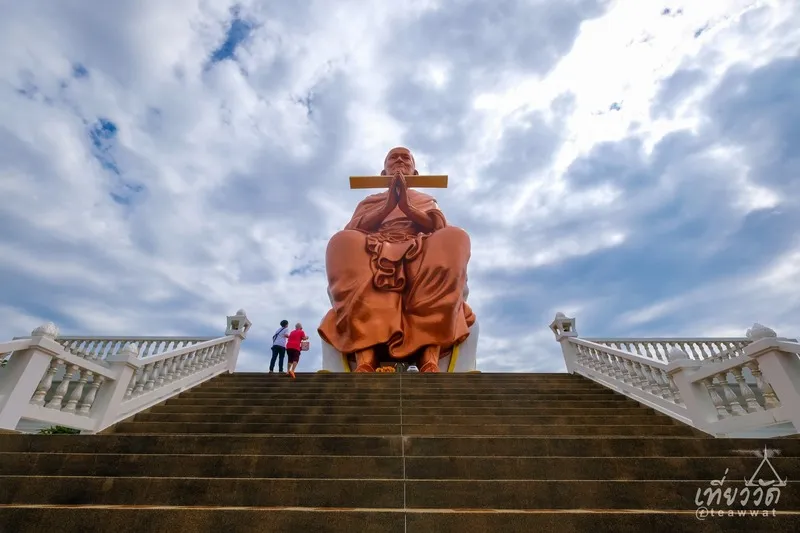
Wat Sam Khok
Open Days: Daily
Opening Hours: 08.00 - 17.00
Wat Sam Khok is one of the historic temples of Sam Khok District in Pathum Thani, and it carries a strong connection to the Mon community that once settled along the Chao Phraya River. The temple is meaningful not only as a religious site, but also as a cultural place where local history, migration stories, old architecture, and community memory still come together in a very visible way.
For travelers who want the essential picture first, Wat Sam Khok is a Mahanikaya temple in Moo 2, Ban That, Sam Khok Subdistrict, Sam Khok District, Pathum Thani. It was formerly known as “Wat Ko Pin,” a Mon name meaning “big neck temple,” and was later renamed Wat Sam Khok to match the place name used today. Inside the temple, the principal Buddha image is Luang Pho To, and one of the most distinctive features of the site is its group of old Thai wooden monks’ residences, which are believed to have important historical value.
The temple’s history is closely tied to a local Mon migration story. According to traditional accounts, Wat Sam Khok was founded on 25 August 1557 CE by two elderly Mon brothers who had migrated from Hongsawadi. The elder brother built Wat Ko Pin, while the younger brother built Wat Pa Fai. Over time, the two temples became one and eventually formed what is now known as Wat Sam Khok. This story gives the temple a strong identity as part of the Mon cultural landscape of the district.
The original name, “Wat Ko Pin,” comes from the Mon language. “Ko” means neck and “Pin” means large, together giving the meaning “big neck temple.” This old name is one of the clearest signs of the temple’s Mon roots. Later, around 1940, the temple became known as Wat Sam Khok so that its name would better match its present-day location and local identity.
Wat Sam Khok is also linked to important moments in Ayutthaya-period history. Historical accounts state that during the period of the first fall of Ayutthaya, the temple held a celebration for its ordination hall, and the temple received royal boundary consecration on 23 July 1574. This gives the temple more than local significance, as it reflects the continuity of religious life in the region over several centuries.
In the field of Buddhist education, Wat Sam Khok has offered Pali and Dhamma studies since 1957. This shows that the temple has long served not only as a place of worship, but also as a learning center for monks and for the preservation of Buddhist knowledge within the community.
The temple compound includes the structures typically expected in a traditional Thai monastery, such as the ubosot, sermon hall, prayer hall, monks’ quarters, funeral pavilion, and cremation area. What makes the site especially distinctive, however, is the cluster of old Thai-style wooden residences. These buildings are believed to be finely crafted structures that may once have been associated with royal-period architecture in Ayutthaya before being relocated andถวาย to the temple. Although parts of them are now in deteriorated condition, they still carry notable architectural and historical value.
This old wooden architecture gives Wat Sam Khok a special atmosphere. Visitors are not only seeing an old temple, but also a place where craftsmanship, timber construction, and the character of earlier Thai building traditions can still be felt. For travelers who appreciate historic wooden structures and quiet temple environments, this is one of the temple’s strongest attractions.
The principal sacred image of the temple is Luang Pho To, enshrined inside the ordination hall. This Buddha image remains the spiritual heart of the temple and is the main point of worship for both local residents and visiting devotees. For many visitors, paying respect to Luang Pho To is the central act of the visit before walking through the rest of the grounds.
Older records of the temple list several abbots over time, including Phra Athikan Phiu Sankajjo, Phra Phin Thitiko, Phra Maha Wanchai Santacitto, and Phra Athikan Somphong Katapunyo. More recent updated information identifies the current abbot as Phra Baidika Watcharapong Ariyo, indicating that the temple remains active in the present day and continues its religious role within the community.
The overall atmosphere of Wat Sam Khok is peaceful and old-fashioned in the best sense. Rather than relying on large modern additions or dramatic visual spectacle, the temple draws interest from its age, its Mon story, its old wooden quarters, and the continuity of its place within Sam Khok. Visitors who enjoy slower cultural travel and heritage-rich temple visits often find this type of place especially memorable.
Wat Sam Khok is also well suited to a half-day or one-day temple route through Sam Khok District. Because it lies within an area known for old riverside temples and Mon cultural traces, it can easily be combined with nearby sites such as Wat Sing, Wat Chedi Thong, or Wat Thai Ko Yai. This makes it a rewarding stop for travelers interested in heritage, local history, and quiet temple exploration near Bangkok.
Visitors should approach the site respectfully, as it remains a functioning temple rather than only a historical monument. Modest dress, quiet behavior, and care around older structures are all appropriate. If you are especially interested in the old wooden quarters, it is best to observe them carefully and respectfully, as parts of the historic fabric are fragile.
Getting There Wat Sam Khok is easiest to reach by private car via the inner Pathum–Sam Khok road, heading into Sam Khok Subdistrict. The temple is located in Moo 2, Ban That, Sam Khok District, Pathum Thani. Visitors coming from Pathum Thani town or Bangkok can reach the area without much difficulty, making it suitable for a short cultural day trip. Those using public transport can first travel into Sam Khok District and continue by local transport to the temple.
| Name | Wat Sam Khok |
| Location | Moo 2, Ban That, Sam Khok Subdistrict, Sam Khok District, Pathum Thani |
| Address | 100 Moo 2, Pathum-Sam Khok Sai Nai Road, Sam Khok, Sam Khok, Pathum Thani 12160 |
| Highlights | Historic temple with Mon roots, Luang Pho To, old Thai wooden monk residences, story of Wat Ko Pin |
| History | Founded on 25 August 1557 CE in the Ayutthaya period, with a strong Mon migration connection from Hongsawadi |
| Name Origin | Formerly called “Wat Ko Pin,” a Mon name meaning “big neck temple,” later renamed Wat Sam Khok |
| Distinctive Features | Historic Thai wooden residential structures believed to be linked with old high-level craftsmanship, plus the principal image Luang Pho To |
| Travel Information | Best reached by car via the inner Pathum–Sam Khok road, or by local transport after arriving in Sam Khok District |
| Current Status | Active temple with current religious activities and updated temple information |
| Abbot / Caretaker | Phra Baidika Watcharapong Ariyo |
| Main Contact Number | 02-978-0562 |
| Nearby Tourist Attractions | 1. Wat Sing – 3 km 2. Wat Chedi Thong – 5 km 3. Wat Thai Ko Yai – 8 km 4. Wat Bot, Sam Khok – 9 km 5. Sam Khok Museum – 4 km |
| Nearby Restaurants | 1. Baan Kieng Nam Restaurant – 8 km. Tel. 083-806-3860, 02-147-4719 2. Ros Pathum Restaurant – 9 km. Tel. 065-291-2673, 064-741-9166 3. Krua Kieng Nam Sam Khok – 8 km 4. Sam Khok Boat Noodles – 3 km 5. Riverside eateries near Sam Khok market area – 4 km |
| Nearby Accommodations | 1. River View Pathum Hotel & Residence – 9 km. Tel. 065-291-2671, 065-291-2672 2. Pan Ville Resort – 13 km. Tel. 02-101-1993 3. The Pine Resort – 15 km. Tel. 02-978-8851-4, 092-451-6546 4. Tinidee Hotel Bangkok Golf Club – 24 km. Tel. 02-147-5858, 063-205-7034 5. Bangkok Golf Spa Resort – 25 km |
Frequently Asked Questions (FAQ)
Q: Where is Wat Sam Khok located?
A: Wat Sam Khok is in Moo 2, Ban That, Sam Khok Subdistrict, Sam Khok District, Pathum Thani.
Q: What was the old name of Wat Sam Khok?
A: The temple was formerly called Wat Ko Pin, a Mon name meaning “big neck temple.”
Q: When was Wat Sam Khok founded?
A: According to temple history, it was founded on 25 August 1557 CE.
Q: What are the important things to see inside the temple?
A: The main highlights are Luang Pho To in the ordination hall and the old Thai wooden monk residences with historic architectural value.
Q: How is Wat Sam Khok connected to the Mon community?
A: Its founding story is linked to Mon migrants from Hongsawadi, and its former name was also in the Mon language.
Q: What kind of trip is Wat Sam Khok suitable for?
A: It is ideal for travelers interested in old temples, local history, and a calm half-day or full-day cultural route in Sam Khok.
 Category: ●Places of Worship
 Group: ●Temple
Last Update : 6 MonthAgo
 Last Update : 6 MonthAgo
 Click to Access the Navigation Map GPS
 Art, Culture and Heritage
 Historical Sites and Monuments(2)
 Landmarks and Memorials(1)
 Art, Craft Centres, Tradition(2)
 Museums(11)
 Art Gallery(1)
 Educational Places
 Museum for Study(1)
 Library(1)
 Training Center(1)
Temple(44)
Training Center(1)
Temple(44)
 Mosque(1)
 Other Sacred Sites(1)
 Research and Development
 Royal Project(1)
 Suburban Living
 Local Market(2)
 Floating Market(3)
 Nature and Wildlife
 River, Canal(1)
 Entertainment and Agricultural
 Animal camps and shows(1)
 Stadium(2)
 Amusement Park(1)
 Waterpark(1)


