
lovethailand home >Central Travel Attractions >Pathum Thani Travel Attractions >Muang Pathum Thani >Bang Phut > Wat Dao Rueang
TL;DR: Wat Dao Rueang is located at Bang Phut Subdistrict, Mueang Pathum Thani District, Pathum Thani, open Daily, hours Please contact the temple before visiting.
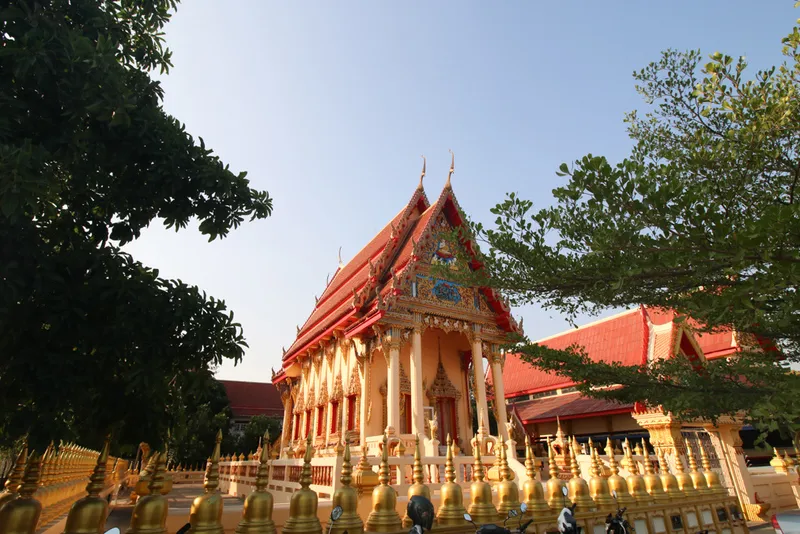
Wat Dao Rueang
Open Days: Daily
Opening Hours: Please contact the temple before visiting
Wat Dao Rueang is a local temple in Bang Phut Subdistrict, Mueang Pathum Thani District, Pathum Thani, set beside Khlong Nam Om on the eastern side of the old Chao Phraya River course. The temple has the calm and grounded atmosphere of a true community temple. Rather than being known for grand scale, it is valued for its riverside character, its long relationship with local education and community life, and its role as a spiritual center for people in the area.
One of the temple’s most meaningful features is its origin story. Wat Dao Rueang was established in 1880 when Nai Dao Rueang and his relatives donated land and worked together to build the temple. The name “Wat Dao Rueang” was given in his honor, preserving his name as a permanent memorial within the community. Because of this, the temple’s name is directly tied to the identity and generosity of its founder, which gives the site a particularly personal historical character.
The temple is important not only as a religious place but also as a long-standing community institution. It began teaching Buddhist scriptures in 1952 and had already played a role in supporting local primary education from 1924 onward. Over time, the temple grounds also became associated with community public functions such as a local health station and a public announcement point. This reflects the classic role of Thai community temples as places that support both spiritual and everyday life.
Wat Dao Rueang stands in a low-lying floodplain area beside Khlong Nam Om. Seasonal flooding has long been part of the landscape, and this connection to the waterway is an essential part of the temple’s identity. In many ways, the temple reflects the traditional way of life in Pathum Thani, where houses, schools, canals, and temples developed together as part of one local system.
Visitors who enjoy cultural temple visits often appreciate Wat Dao Rueang because it still feels like a temple of the people rather than a heavily commercialized attraction. The setting remains simple and peaceful. A visit here offers a chance to experience how a community temple functions in real life, with visible links to school life, local families, and the canal-side environment.
The temple has many permanent structures that support its religious and community roles. Its ordination hall is Thai in form and built with reinforced concrete and masonry. It received its royal ordination boundary on 27 May 1988. The temple also has monk residences built from both concrete and hardwood, while the abbot’s residence is designed in a traditional three-gabled Thai form with decorative roof finials.
Other important structures include a chanting hall, a three-gabled dining hall, cremation facilities, a sermon hall, a multi-purpose pavilion, a bell tower, a drum tower, and a riverside pavilion built with hardwood and reinforced concrete. Taken together, these buildings show that Wat Dao Rueang is not a small ceremonial site, but a working temple complex capable of serving a wide range of religious and social functions.
Among the temple’s important sacred objects are Phra Sri Ariyamettrai and a replica of Phra Phutthasothon enshrined in the viharn. The temple also preserves eight Buddha images in Rattanakosin-period style from the 24th Buddhist century. These objects add artistic and devotional depth to the temple, especially for visitors who value traditional Buddhist images and historic temple collections.
Wat Dao Rueang also preserves older objects of artistic interest, including a mother-of-pearl inlaid preaching seat and a traditional ceremonial vessel. Such items are important because they show the refinement of Thai temple craftsmanship and the care that communities once invested in religious furnishings. Even when they are not the most publicly advertised attractions, they remain culturally valuable details within the temple’s heritage.
Another well-known feature of the temple is the presence of large catfish in front of the temple along the canal. Feeding the fish has become a familiar merit-making activity for local visitors and families. This gives Wat Dao Rueang a warm and approachable atmosphere. The combination of worship, canal scenery, and fish feeding makes the temple especially suitable for relaxed visits rather than rushed sightseeing.
The temple’s riverside setting is a major part of its charm. It stands in an environment where water, local life, religion, and education still feel connected. This gives visitors an experience that is different from urban temples surrounded mainly by roads and buildings. At Wat Dao Rueang, the community context remains visible and helps explain the temple’s continuing importance.
Recent temple activity has referred to Phra Vinaiyathorn Jirawat Techathammo as the abbot of Wat Dao Rueang. Older reference sources have also associated the temple with Phra Khru Prathip Thammanan. The temple therefore remains clearly active in the present day, with continuing monastic leadership and community participation.
Wat Dao Rueang can also be included in a wider Pathum Thani travel route. Nearby places include Talat Sap Pathum, Wat Sadet, Talat Chan Charoen, Wat Sing, and the Puey 100 Years Learning Park area. This makes the temple suitable as either a main stop or a quiet break within a broader local sightseeing plan.
Getting There is convenient by private car. The temple is in Bang Phut along the Rangsit-Pathum route and connects to Wat Dao Rueang Road in the Khlong Nam Om area. Searching for “Wat Dao Rueang Pathum Thani” in a navigation app is usually the easiest method. Visitors using public transport should first come into the Pathum Thani or Rangsit area, then continue by local hired transport.
The most comfortable time to visit is in the morning, when the canal-side atmosphere feels cooler and quieter. Visitors can walk through the grounds, observe the temple buildings, make merit, and feed the fish without rushing. Weekdays are especially suitable for those who want a more peaceful visit.
In summary, Wat Dao Rueang is a valuable community temple in Pathum Thani with a strong local identity. Its founder-based naming history, educational role, canal-side setting, complete temple structures, sacred images, and fish-feeding atmosphere all contribute to its appeal. For anyone looking for a temple in Pathum Thani that offers peace, local character, and cultural depth, Wat Dao Rueang is well worth a visit.
| Name | Wat Dao Rueang |
| Location | Bang Phut Subdistrict, Mueang Pathum Thani District, Pathum Thani |
| Address | 133 Rangsit-Pathum Road, Bang Phut, Mueang Pathum Thani, Pathum Thani 12000, Thailand |
| Highlights | Community temple by Khlong Nam Om, Thai-style ordination hall, Phra Sri Ariyamettrai, replica of Phra Phutthasothon, mother-of-pearl inlaid preaching seat, catfish feeding area |
| History | Founded in 1880 by Nai Dao Rueang and relatives who donated land and established the temple |
| Name Origin | The temple was named in honor of Nai Dao Rueang, the founder and land donor |
| Distinctive Features | A Mahayana-affiliated local temple with strong roles in religion, education, and community life beside the canal |
| Travel Information | Accessible via Rangsit-Pathum Road and Wat Dao Rueang Road in Bang Phut; easy to reach by car from Pathum Thani town |
| Current Status | An active temple with ongoing religious and community activities |
| Open Days | Daily |
| Fees | No admission fee |
| Facilities | Parking, sermon hall, multi-purpose pavilion, riverside pavilion, fish-feeding area, nearby school |
| Main Areas / Zones | Ordination hall, viharn, monk residences, abbot’s residence, chanting hall, dining hall, sermon hall, bell tower, drum tower, riverside pavilion |
| Abbot / Caretaker | Phra Vinaiyathorn Jirawat Techathammo |
| Main Contact Number | 02-598-0400 |
| Nearby Tourist Attractions | 1) Talat Sap Pathum – around 2 km 2) Wat Sadet – around 3 km 3) Talat Chan Charoen – around 3 km 4) Wat Sing – around 5 km 5) Puey 100 Years Learning Park – around 4 km |
| Nearby Restaurants | 1) Coffeemodeslowbar2021 – around 100 m 2) Steak & Riverside Moo Kata Baan Yai – around 100 m 3) Jum Fried Pork and Chicken – around 200 m 4) Somtam Jae Noei – around 300 m 5) Krua Pa Ploen – around 400 m |
| Nearby Accommodations | 1) Campagne Hotel and Residence – around 2 km 2) Ing Nathi Resort – around 3 km, Tel. 082-796-7581, 02-975-0952 3) iResidence Hotel Pathumthani – around 3 km, Tel. 090-052-6666 4) Baan Ta Nid River Lodge – around 3 km, Tel. 081-835-0660 5) Natcha Place Thammasat Rangsit – around 4 km |
Frequently Asked Questions (FAQ)
Q: Where is Wat Dao Rueang located?
A: Wat Dao Rueang is in Bang Phut Subdistrict, Mueang Pathum Thani District, Pathum Thani, beside Khlong Nam Om.
Q: When was Wat Dao Rueang founded?
A: The temple was founded in 1880 by Nai Dao Rueang and his relatives.
Q: What are the main highlights of the temple?
A: Key highlights include the Thai-style ordination hall, Phra Sri Ariyamettrai, the replica of Phra Phutthasothon, old Buddha images, and the catfish-feeding area in front of the temple.
Q: Why is Wat Dao Rueang important to the community?
A: The temple has long supported both religion and education, and it has served as an important center for local community activities.
Q: Is there an entrance fee?
A: No. Wat Dao Rueang does not charge an admission fee.
Q: What can visitors do at Wat Dao Rueang?
A: Visitors can make merit, walk around the temple grounds, see the sacred objects, and feed catfish by the canal.
Q: Who is the current abbot?
A: Recent temple activity identifies Phra Vinaiyathorn Jirawat Techathammo as the current abbot.
 Category: ●Places of Worship
 Group: ●Temple
Last Update : 5 MonthAgo
 Last Update : 5 MonthAgo
 Click to Access the Navigation Map GPS
 Art, Culture and Heritage
 Historical Sites and Monuments(2)
 Landmarks and Memorials(1)
 Art, Craft Centres, Tradition(2)
 Museums(11)
 Art Gallery(1)
 Educational Places
 Museum for Study(1)
 Library(1)
 Training Center(1)
Temple(44)
Training Center(1)
Temple(44)
 Mosque(1)
 Other Sacred Sites(1)
 Research and Development
 Royal Project(1)
 Suburban Living
 Local Market(2)
 Floating Market(3)
 Nature and Wildlife
 River, Canal(1)
 Entertainment and Agricultural
 Animal camps and shows(1)
 Stadium(2)
 Amusement Park(1)
 Waterpark(1)


