
lovethailand home >Central Travel Attractions >Pathum Thani Travel Attractions >Muang Pathum Thani >Ban Klang > Wat San Chao
TL;DR: Wat San Chao is located at Moo 3, Ban Makham, Ban Klang Subdistrict, Mueang Pathum Thani District, Pathum Thani, open Daily, hours 07:00 – 16:30.
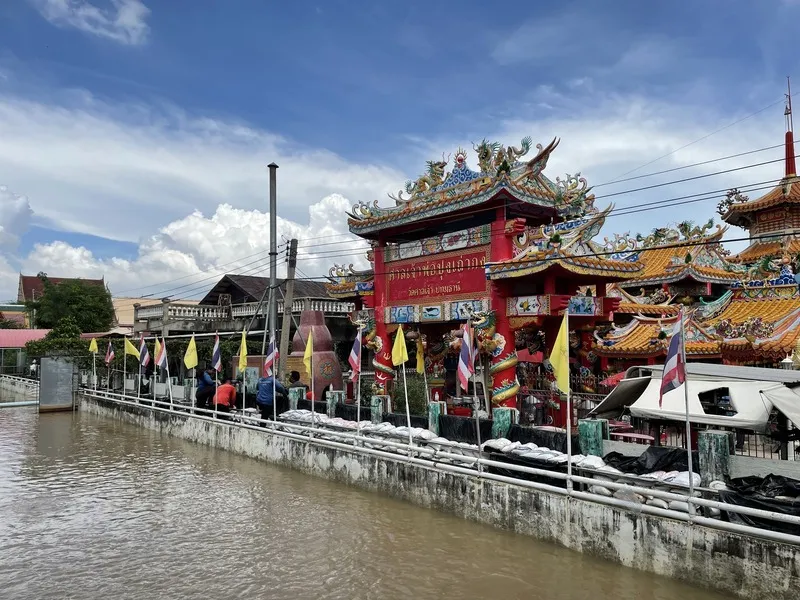
Wat San Chao
Open Days: Daily
Opening Hours: 07:00 – 16:30
Wat San Chao is one of the most distinctive temples in Pathum Thani, combining riverside atmosphere, Mon heritage, Chinese devotional culture, and a lively local market in one place. Located in Ban Klang Subdistrict, Mueang Pathum Thani District, the temple stands beside the Chao Phraya River and Chiang Rak Canal, right next to Wat Makham. Visitors come here not only for Buddhist merit-making, but also to pay respect to Chao Pho Wat San Chao, visit the Sian Pae shrine, and enjoy the famous riverside market on weekends and public holidays.
For travelers looking for a temple near Bangkok that offers more than a standard temple visit, Wat San Chao is an excellent choice. It brings together sacred spaces, local legend, river scenery, and community-based tourism in a single destination. This has made the temple one of the most recognized spiritual and cultural places in Pathum Thani.
The history of Wat San Chao is preserved through more than one local tradition. One account says the temple was established around 1790 by Mon settlers who fled war in Burma and came to seek refuge under Thai royal protection. Because the temple stood near the mouth of Khlong San Chao, it was given its name from that location, and it later received its royal ordination boundary around 1793.
Another well-known legend places the temple’s origin in the late Ayutthaya period. According to this story, Chao Noi Mahaprom, a nobleman skilled in magic and esoteric knowledge, traveled by raft along the Chao Phraya River until he reached the area near Wat Makham Nai. There he met Phra Ajarn Ru, a Mon monk of great spiritual power. After testing each other’s abilities, Chao Noi Mahaprom developed deep respect for the monk and decided to build a temple and a shrine there. The name Wat San Chao then came from the shrine he established on the site.
Even though the two traditions differ in detail, both point to the same larger picture: Wat San Chao grew from a riverside community with strong Mon roots and later developed into a sacred site with wider regional importance. This makes the temple historically valuable not only as a place of worship, but also as a marker of migration, settlement, and local religious life in Pathum Thani.
Within the temple grounds, several important structures reflect this layered history. The ordination hall is associated in local tradition with Chao Noi Mahaprom and was later restored. There is also a Mon-style chedi that reinforces the temple’s Mon cultural identity, along with a sermon hall that houses a Buddha image linked to the temple’s old foundation stories.
One of the temple’s most striking features is the three-storey Chinese-style riverside shrine that houses Chao Pho Wat San Chao. This structure gives the temple a very distinctive visual identity. While many temples in central Thailand are visually dominated by Thai religious architecture, Wat San Chao is remembered by many visitors for this colorful Chinese shrine standing close to the river. The upper level also enshrines Buddhist relics, which adds further spiritual significance to the site.
Another major reason people travel to Wat San Chao is Sian Pae, often referred to by visitors as Sian Pae Rongsi. He is a revered Chinese lay figure strongly associated with prayers for business success, work, finances, and prosperity. In recent years, Sian Pae has become one of the strongest public attractions of the temple, drawing visitors from many provinces who come specifically to make wishes and seek blessings for trade and career matters.
What makes Wat San Chao especially appealing is that it does not rely on only one sacred point. Visitors can move through several distinct devotional experiences in one visit: traditional merit-making in the temple zone, worship at the riverside Chinese shrine, respect paid to Buddhist relics, and prayer at the Sian Pae shrine. This variety is one reason the temple appeals to such a wide audience.
The temple is also closely tied to the well-known Wat San Chao Riverside Market. Open on Saturdays, Sundays, and public holidays, the market adds another layer to the temple’s attraction. Visitors can worship, relax by the river, and then continue with local food, sweets, and traditional market browsing in the same area. This makes the temple ideal for a full half-day or one-day trip.
The riverside setting is one of the temple’s greatest strengths. The view of the Chao Phraya, the connection to Chiang Rak Canal, and the living community atmosphere all make Wat San Chao feel more rooted in place than many urban temples. In the morning, the site feels peaceful and devotional. Later in the day, especially on weekends, it becomes more lively as visitors arrive for the market and the Sian Pae shrine.
Wat San Chao also works very well as part of a wider Pathum Thani itinerary. Nearby places include Wat Makham, the riverside market itself, Sian Pae Rongsi Shrine, Wat Bot Luang Pu Thian, and Wat Hong Pathumawat. Because these attractions are close to one another, travelers can create a practical cultural route without long transfers.
Getting There is straightforward from central Pathum Thani. Travelers can head toward Ban Klang Subdistrict via Tiwanon Road and then turn into the Wat Makham area, where the temple is located close to Wat Makham and the riverside market zone. Searching for “Wat San Chao Pathum Thani” or “Sian Pae Rongsi” in a navigation app is usually the easiest way to arrive. Public transport users can first come into Pathum Thani town and continue by local hired vehicle or motorcycle taxi.
The best time to visit depends on your purpose. If you want a quieter spiritual visit, morning is best. If you want to combine worship with the market atmosphere, come on a Saturday, Sunday, or public holiday. Visitors specifically planning to pray at the Sian Pae shrine should allow extra time, since queues can become long during popular periods.
In summary, Wat San Chao is one of the most complete cultural and spiritual destinations in Pathum Thani. It offers history, legend, Mon and Chinese heritage, riverside scenery, sacred shrines, and a local market all in one place. For anyone searching for a meaningful temple trip near Bangkok, Wat San Chao deserves a place high on the list.
| Name | Wat San Chao |
| Location | Moo 3, Ban Makham, Ban Klang Subdistrict, Mueang Pathum Thani District, Pathum Thani |
| Address | 2/1 Moo 3, Soi Wat Makham, Tiwanon Road, Ban Klang, Mueang Pathum Thani, Pathum Thani 12000, Thailand |
| Highlights | Chao Pho Wat San Chao, three-storey Chinese riverside shrine, Buddhist relics, Sian Pae shrine, Mon-style chedi, Wat San Chao Riverside Market |
| History | One tradition dates the temple to around 1790, founded by Mon settlers, while another links it to the late Ayutthaya period and the legend of Chao Noi Mahaprom |
| Name Origin | The name may come from its location near the mouth of Khlong San Chao, or from the shrine built there according to local legend |
| Distinctive Features | A riverside temple that blends Thai Buddhist, Mon, and Chinese devotional elements within one temple complex |
| Travel Information | Accessible from central Pathum Thani via Tiwanon Road and the Wat Makham area in Ban Klang; close to Wat Makham and the riverside market |
| Current Status | Open for worship, blessing rituals, and visits to the nearby riverside market as usual |
| Open Days | Daily |
| Opening Hours | Temple 07:00 – 16:30, Chao Pho Shrine 07:00 – 17:00, Sian Pae Shrine 07:30 – 17:00 (closed Monday) |
| Fees | No admission fee |
| Facilities | Parking, worship areas, prayer areas, riverside relaxation space, weekend and holiday market |
| Main Areas / Zones | Ordination hall, Mon-style chedi, sermon hall, Chao Pho shrine, Buddhist relic area, Sian Pae shrine, Wat San Chao Riverside Market |
| Main Contact Number | 02-598-0481 |
| Official Website / Official Page | Facebook Page: Wat San Chao Pathum Thani |
| Nearby Tourist Attractions | 1) Wat Makham – around 1 km 2) Wat San Chao Riverside Market – around 1 km 3) Sian Pae Rongsi Shrine – around 1 km 4) Wat Bot Luang Pu Thian – around 3 km 5) Wat Hong Pathumawat – around 4 km |
| Nearby Restaurants | 1) Ruen Mai Rim Nam Wat Makham – around 1 km 2) Nay Thong Suk Ancient Tom Yum Pork Noodles – around 1 km 3) Nay Thong Suk Ancient Pork Noodles Wat San Chao – around 1 km 4) Pa Pong Fried Shrimp – around 1 km 5) Nisakorn Mon Khao Chae Wat San Chao Riverside Market – around 1 km |
| Nearby Accommodations | 1) Campagne Hotel and Residence – around 2 km, Tel. 086-336-3830 2) Progress Mansion – around 3 km, Tel. 089-000-3883 3) Tinidee Hotel Bangkok Golf Club – around 7 km, Tel. 02-147-5858, 063-205-7034 4) Ploen Ploen Residence – around 7 km, Tel. 062-823-2710 5) RuenKijja – around 8 km |
Frequently Asked Questions (FAQ)
Q: Where is Wat San Chao located?
A: Wat San Chao is in Moo 3, Ban Makham, Ban Klang Subdistrict, Mueang Pathum Thani District, Pathum Thani, close to Wat Makham and the Chao Phraya River.
Q: What is Wat San Chao best known for?
A: The temple is best known for Chao Pho Wat San Chao, the three-storey Chinese riverside shrine, Buddhist relics, Sian Pae, and the famous riverside market.
Q: When is Sian Pae Rongsi open?
A: The Sian Pae shrine is open from 07:30 to 17:00 and closed every Monday.
Q: When is the Wat San Chao Riverside Market open?
A: The market opens on Saturdays, Sundays, and public holidays.
Q: When was Wat San Chao founded?
A: Local traditions differ. One dates it to around 1790, while another connects it to the late Ayutthaya period.
Q: Is there an entrance fee?
A: No. Wat San Chao does not charge an admission fee.
Q: What other places can I visit nearby?
A: Nearby places include Wat Makham, the Wat San Chao Riverside Market, Sian Pae Rongsi Shrine, Wat Bot Luang Pu Thian, and Wat Hong Pathumawat.
 Category: ●Places of Worship
 Group: ●Temple
Last Update : 5 MonthAgo
 Last Update : 5 MonthAgo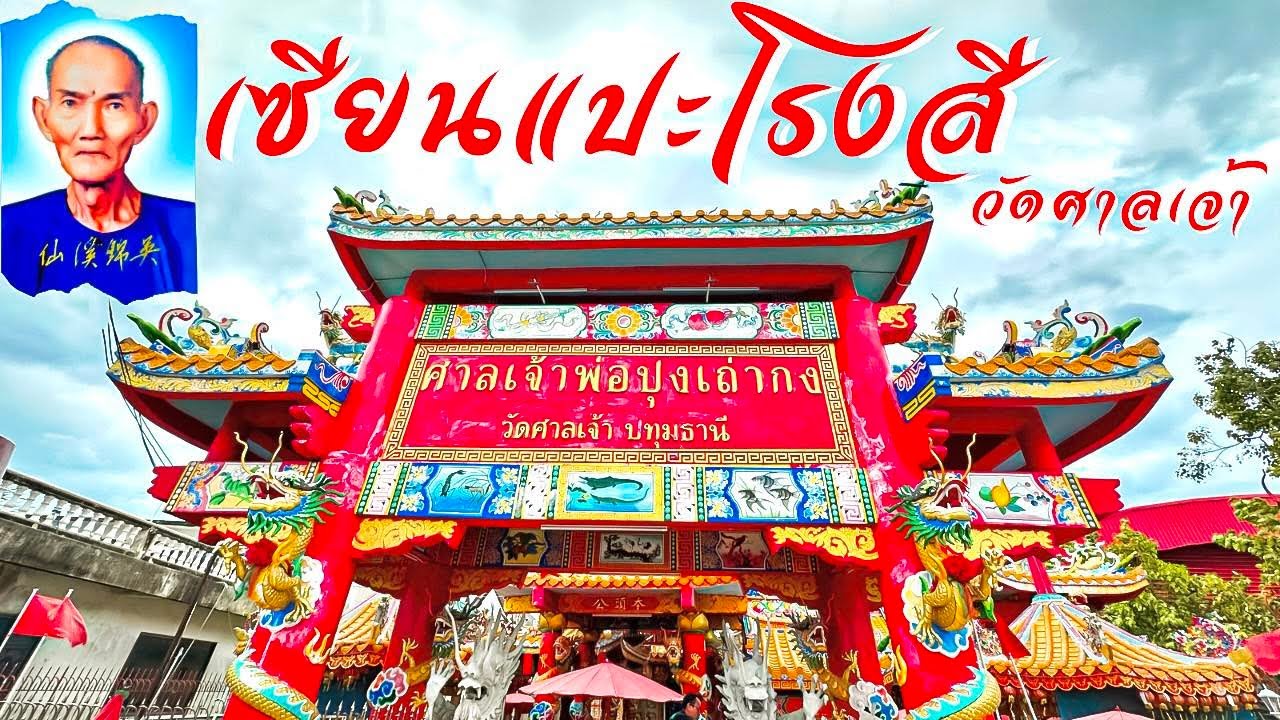
 Click to Access the Navigation Map GPS
Wat San Chao Map
Recommend

 Art, Culture and Heritage
 Historical Sites and Monuments(2)
 Landmarks and Memorials(1)
 Art, Craft Centres, Tradition(2)
 Museums(11)
 Art Gallery(1)
 Educational Places
 Museum for Study(1)
 Library(1)
 Training Center(1)
Temple(44)
Training Center(1)
Temple(44)
 Mosque(1)
 Other Sacred Sites(1)
 Research and Development
 Royal Project(1)
 Suburban Living
 Local Market(2)
 Floating Market(3)
 Nature and Wildlife
 River, Canal(1)
 Entertainment and Agricultural
 Animal camps and shows(1)
 Stadium(2)
 Amusement Park(1)
 Waterpark(1)


