
lovethailand home >Central Travel Attractions >Nakhon Pathom Travel Attractions >Nakhon Chai Si >Sisa Thong > Wat Sisa Thong
TL;DR: Wat Sisa Thong is located at 22 Moo 1, Sisa Thong Subdistrict, Nakhon Chai Si District, Nakhon Pathom 73120, open Open daily, hours Approximately 07.00–17.00 hrs. (It is advisable to check the latest updates on.
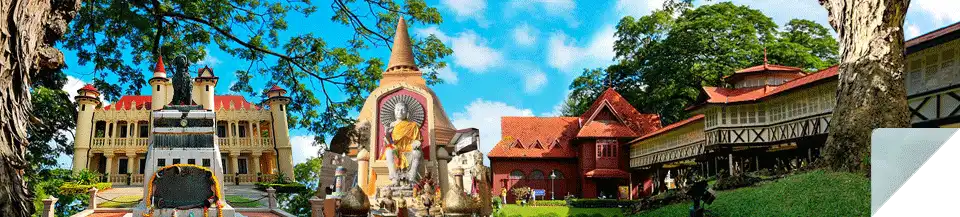
Wat Sisa Thong
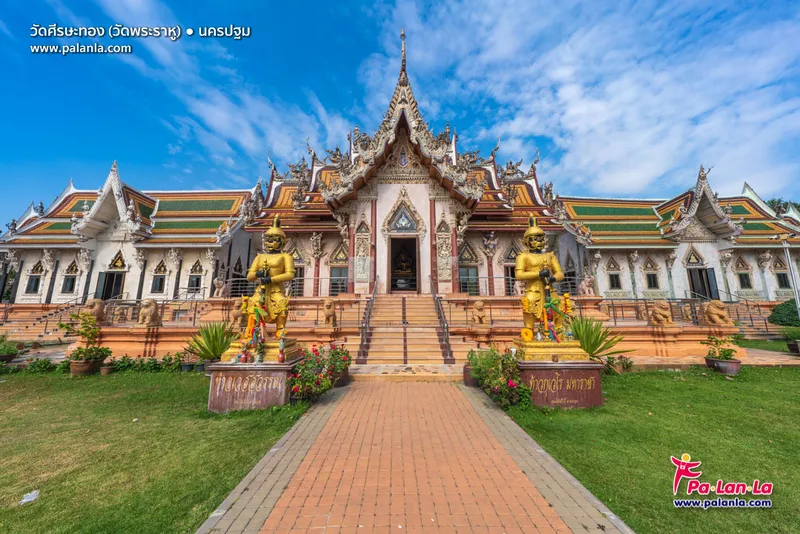
Open Days: Open daily
Opening Hours: Approximately 07.00–17.00 hrs. (It is advisable to check the latest updates on the temple’s official page before visiting.)
Wat Sisa Thong, widely known to many visitors as the Temple of Rahu, is an old temple in Sisa Thong Subdistrict, Nakhon Chai Si District, Nakhon Pathom Province. It stands out for its historical background, spiritual significance, and its role as a center of faith for people from many different areas. This temple is important not only as a local community temple, but also as one of the country’s notable destinations for those who come to pay respect to Phra Rahu in the hope of gaining blessings and encouragement in life.
What makes Wat Sisa Thong different from other temples in the area is the fact that Phra Rahu is at the heart of its spiritual identity. The temple’s name has become closely associated with Rahu worship in public perception. Looking more deeply, however, the temple also has an intriguing historical foundation, linked to the settlement of Lao migrants from Vientiane, the changes in the community after the excavation of Chedi Bucha Canal, and the temple’s later development into an important religious site of Nakhon Chai Si.
According to local historical accounts, Wat Sisa Thong was established in 1815 during the early Rattanakosin period. At that time, the surrounding area was still dense wilderness and relatively far from major water sources. Later, Lao people from Vientiane migrated into the area, helping clear the forest and build a new settlement. They also established the temple as the spiritual center of the community. The first abbot remembered by local residents was Luang Pu Tai, a Lao monk from Vientiane who played an important role in laying the temple’s foundations in its earliest days.
One of the temple’s most important stories concerns the discovery of a golden Buddha head buried in the ground. Local villagers regarded this as an auspicious sign and used the event to give the temple its original name, “Wat Hua Thong,” or the Temple of the Golden Head. Later, when Chedi Bucha Canal was dug, the community moved closer to the canal for easier transportation and daily life. The temple moved together with the community to its new location and was renamed “Wat Sisa Thong,” the name it still carries today.
The temple received its royal consecrated boundary, or wisungkhamasima, in 1960. This is an important indication of its firm standing as a religious institution within the community, and it shows that the temple has played a continuous role in local life for a very long time. It is not simply a temple that became famous because of modern beliefs, but one that has genuinely grown alongside the community itself.
When speaking of the period in which Wat Sisa Thong rose to wider prominence, the name most frequently mentioned is Luang Pu Noi Navarat. He was a former abbot who played a major role in reviving the temple and elevating devotion to Phra Rahu until it became widely known. Through his efforts, Wat Sisa Thong became a place that people from across Thailand intentionally traveled to in order to pay respect, make wishes, and seek peace of mind during difficult times in life.
As a result, Phra Rahu of Wat Sisa Thong became the spiritual heart of the temple in the modern era. Many people believe that Phra Rahu symbolizes the power of transformation, the removal of negative influences, and the turning of life in a better direction. In Thai astrological belief in particular, Rahu is not merely an image of darkness or the unexpected, but also a symbol of transition, new opportunities, and maintaining awareness in the midst of life’s uncertainties.
For this reason, those who come to Wat Sisa Thong often pray for success in work, finances, health, luck, and relief from misfortune. Many visitors choose to make merit alongside their worship of Phra Rahu. Some bring black offerings according to popular belief, while others donate monk offerings or apply gold leaf to smaller sacred images. All of this gives the temple a lively atmosphere and a strong sense that people come here either to begin again or to strengthen themselves inwardly.
Inside the temple grounds are the ordination hall, the Phra Rahu shrine, and other religious spaces that are well maintained. The buildings are refined and elegant in Thai artistic style, and a walk around the grounds reveals that the temple possesses both the calm of an old temple and the vibrancy of a temple continually visited by worshippers. The place many people intentionally come for is the shrine of Phra Rahu, a space with a solemn, peaceful, and distinctly sacred atmosphere.
Beyond its prominence as a center of Rahu worship, Wat Sisa Thong is also remembered as a place connected with traditional knowledge, especially beliefs related to astrology and herbal wisdom. This gives the temple greater cultural depth, reflecting the role of Thai temples in the past as more than sites for religious rites. They were also centers of knowledge and community care.
The atmosphere of the temple today is suitable both for serious merit-making and for those who wish to learn about local history. On weekdays, visitors can enjoy a quieter, more peaceful experience and spend more time exploring different parts of the temple. On weekends or during important ritual occasions, the temple becomes a vivid center of devotion with a steady flow of visitors, making it easy to see just how influential the belief in Phra Rahu remains in people’s lives today.
Wat Sisa Thong is also important to the local community in another sense: it helps introduce outsiders to Sisa Thong Subdistrict and Nakhon Chai Si District. Many visitors come to pay respect to Phra Rahu and then continue on to other attractions nearby. As a result, the temple plays a role not only in religion and culture, but also in the local tourism economy.
Getting There is most convenient by private car. From Bangkok, travelers can head toward Nakhon Pathom and continue to Nakhon Chai Si District without much complication. Upon reaching the Tha Na traffic light intersection, continue straight for about 2 kilometers. The entrance to the temple will appear on the right-hand side, and drivers can make a U-turn to enter the temple grounds. Those using public transport can first travel to Nakhon Chai Si and then continue by local transport or hired vehicle as convenient.
Visitors should dress respectfully, behave with composure, and allow enough time to walk around the grounds, especially if they intend to worship Phra Rahu and make merit at several points in one visit. For those who prefer an unhurried atmosphere, the morning is the best time to come, as the weather is not yet too hot and there is ample time to explore the temple fully.
Wat Sisa Thong is therefore much more than a famous temple associated with Phra Rahu. It is also a place where the stories of an old community, layers of historical memory, and enduring faith from past to present come together in an especially compelling way. Those who visit will encounter not only sacred belief, but also a clear sense of how religion, culture, and the way of life of Thai people can blend beautifully within a single place.
| Place Name | Wat Sisa Thong (Temple of Phra Rahu) |
| Place Overview | An old temple in Nakhon Chai Si District, Nakhon Pathom Province, famous for worship of Phra Rahu and regarded as an important destination for devotees from across Thailand. |
| Highlights | The temple’s important Phra Rahu image, the history of the Lao-Vientiane community, astrological beliefs, the Phra Rahu shrine, and the atmosphere of an old Thai temple. |
| History / Period | Established in 1815 during the early Rattanakosin period. It was originally called Wat Hua Thong before moving to a new site and being renamed Wat Sisa Thong. |
| Current Abbot / Temple Caretaker | Phra Khru Palad Samathiwat (Kawao Chatisiri, Pali Studies Level 3) |
| Address | 22 Moo 1, Sisa Thong Subdistrict, Nakhon Chai Si District, Nakhon Pathom 73120 |
| Coordinates | 13.8092, 100.1584364 |
| Getting There | Best reached by private car. From Bangkok, head toward Nakhon Pathom and continue to Nakhon Chai Si. At Tha Na traffic light intersection, continue straight for about 2 km, then make a U-turn to enter the temple. |
| Open Days | Open daily |
| Opening Hours | Approximately 07.00–17.00 hrs. (It is advisable to check the latest updates on the temple’s official page before visiting.) |
| Admission Fee | No admission fee |
| Facilities | Parking area, Phra Rahu worship area, merit-making points, monk-offering area, and walking space within the temple grounds. |
| Zones | Phra Rahu shrine, ordination hall, merit-making area, and surrounding temple grounds. |
| Nearby Attractions | 1. Jesada Technik Museum – about 4 km 2. Thai Human Imagery Museum – about 6 km 3. Wat Klang Bang Kaew – about 8 km 4. Wat Lam Phaya Floating Market – about 10 km 5. Wat Don Wai Floating Market – about 16 km |
| Nearby Restaurants | 1. Kin Nai Baan Home Cafe & Restaurant – about 7 km – 034-332-233 2. Bannatcha x B COFF Cafe – about 8 km – 090-979-0942 3. Simple Plan x River – about 10 km – 061-269-2945 4. Ran Nang Hoi Kha Nakhon Chai Si – about 11 km – 092-119-4913, 086-356-3565 5. Ran Ahan Glai Chan Branch 1 – about 12 km – 087-081-2500 |
| Nearby Accommodations | 1. Bamboo Inn – about 2 km – 034-338-967 2. Ban Punsuk Resort Nakhon Chai Si – about 5 km – 081-364-6719, 082-507-4909, 094-363-5445 3. New Home Nakhon Chai Si – about 7 km – 086-337-1055 4. Chomphu Inn – about 8 km – 081-641-7201, 093-591-4961 5. Panavana Riverside – about 11 km – 099-959-6564 |
| Main Contact Number | 034-227-462 |
Frequently Asked Questions (FAQ)
Q: What is Wat Sisa Thong famous for?
A: Wat Sisa Thong is best known for worship of Phra Rahu, whom many people believe can help ward off misfortune, enhance luck, and strengthen one’s spirit in life.
Q: What was the temple’s original name?
A: The temple was originally called “Wat Hua Thong” because a golden Buddha head was discovered buried in the ground before the temple moved and was renamed “Wat Sisa Thong.”
Q: When was Wat Sisa Thong founded?
A: According to historical accounts, the temple was founded in 1815 during the early Rattanakosin period and is considered one of the important old temples of Nakhon Chai Si District.
Q: Who played the most important role in making Wat Sisa Thong widely known?
A: Luang Pu Noi Navarat, a former abbot, played a major role in reviving the temple and making Phra Rahu of Wat Sisa Thong widely known.
Q: When is the best time to visit Wat Sisa Thong?
A: Morning to early afternoon is the best time to visit, as it is easier to walk around, worship comfortably, and enjoy the temple before the weather becomes too hot.
Q: Is there an admission fee at Wat Sisa Thong?
A: Information from travel sources and place reviews indicates that there is no admission fee. If you wish to make merit or prepare an offering set, the cost depends on your chosen offerings and your personal faith.
Q: Is it convenient to travel from Bangkok to Wat Sisa Thong?
A: Yes, it is fairly convenient, especially by private car, as the temple is in Nakhon Chai Si District and can easily be visited as a day trip from Bangkok.
 Category: ●Places of Worship
 Group: ●Temple
Last Update : 2 MonthAgo
 Last Update : 2 MonthAgo
 Click to Access the Navigation Map GPS
Wat Sisa Thong Map
Recommend
 Art, Culture and Heritage
 Historical Sites and Monuments(6)
 Landmarks and Memorials(4)
 Royal Palace(3)
 Art, Craft Centres, Tradition(5)
 Museums(13)
 Art Gallery(1)
 Educational Places
 Educational Gardens, Farm(2)
Temple(77)
Educational Gardens, Farm(2)
Temple(77)
 Other religious and spiritural sites(4)
 Research and Development
 Royal Project(1)
 Suburban Living
 Village, Community(3)
 Local Market(3)
 Floating Market(8)
 Nature and Wildlife
 River, Canal(4)
 Other natural attractions(3)
 Entertainment and Agricultural
 Animal camps and shows(1)
 Stadium(1)
 Farm, Parks, Gardens and Ecotourism(5)
 Theater(1)
 Outdoor and Adventure Activities(2)
 Spas and Wellness
 Spas and Wellness(1)


