
lovethailand home >Central Travel Attractions >Nakhon Pathom Travel Attractions >Muang Nakhon Pathom >Nong Ngu Lueam > Wat Nong Ngu Lueam
TL;DR: Wat Nong Ngu Lueam is located at No. 5, Nong Ngu Lueam Subdistrict, Mueang Nakhon Pathom District, Nakhon Pathom Province, open Daily, hours 08:00 AM - 05:00 PM.
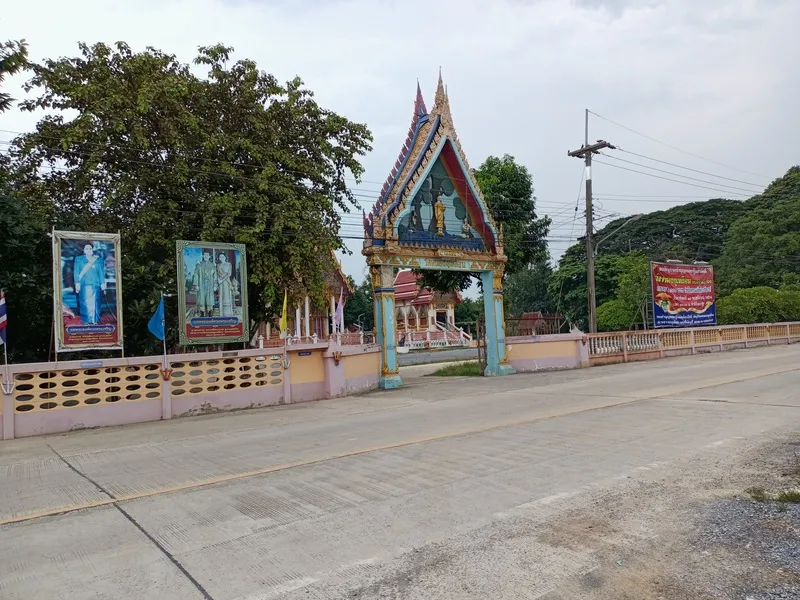
Wat Nong Ngu Lueam
Open Days: Daily
Opening Hours: 08:00 AM - 05:00 PM
Wat Nong Ngu Lueam is located at No. 5, Nong Ngu Lueam Subdistrict, Mueang District, Nakhon Pathom Province. It is a temple under the Maha Nikaya sect that has continuously played an important role in the local community. The temple was established through the collective effort of residents from several villages who wanted to create a shared spiritual and religious center. As a result, Wat Nong Ngu Lueam is not only a place for religious activities, but also a clear reflection of community unity and cooperation in the area.
The temple was founded with support from the people of Ban Nong Kae, Rai Nikhom, Thap Nang Chi, Nong Talu, Nong Phai Lom, and Nong Ngu Lueam. Together, they established this place as a monastic residence on 13 June 1970. This origin clearly shows that Wat Nong Ngu Lueam was built on the combined strength of several local communities, and that foundation continues to shape the temple’s close relationship with local residents today.
The land used for the temple originally belonged to several local families, namely Nang Mai Phiu-on, Nai Nam and Nang Mun Khrongrawa, Nai Thong and Nang Thongdi Phiu-on, Nai Sut and Nang Pan Butsri Duang, and Nai Man and Nang Thian Phantha. The fact that multiple landowners contributed land for the construction of the temple demonstrates the faith and generosity of the community. This is one of the defining characteristics of traditional rural Thai temples, which grew from the support of local people rather than from large-scale projects or commercial development.
The temple covers a total area of 20 rai and 2 ngan. This amount of space allows the temple to support both religious ceremonies and shared community use in a practical way. Community temples of this kind are usually not as architecturally complex as large urban temples, but their strength lies in openness, practical use, and harmony with the way of life of the surrounding community.
In terms of development, Wat Nong Ngu Lueam began as a monastic residence before gradually growing into a full community temple as the population increased and the needs of local residents expanded. Over time, the temple developed together with the surrounding area, serving as a venue for Buddhist ceremonies, merit-making events, and gatherings for important local occasions.
The distinctive character of Wat Nong Ngu Lueam lies in the fact that it is a community temple created through the collective effort of several villages. This gives the temple a different atmosphere from temples that were developed primarily for tourism. Visitors will experience a simple and welcoming setting that genuinely reflects the rural lifestyle of Nakhon Pathom, along with a sense of peace, unhurried living, and a close bond between the temple and the local people.
Inside the temple, the principal Buddha image is Luang Pho Suphannarangsi, a revered image worshipped by local residents. This sacred image reinforces the temple’s role as a spiritual center for the community. In practical terms, the temple continues to have monks in residence and regularly hosts religious activities, which means it remains active and relevant rather than becoming a quiet or inactive site.
The abbot of Wat Nong Ngu Lueam is Phra Palat Manop Thanamutamo. In addition to serving as abbot, he also plays a role in the local ecclesiastical administrative structure. This shows that Wat Nong Ngu Lueam is not only a small village temple with a role limited to its immediate surroundings, but is also connected to the wider monastic system of Mueang Nakhon Pathom District.
The atmosphere of Wat Nong Ngu Lueam is ideal for visitors who want to experience a Thai temple in a simple and genuinely community-oriented setting rather than visiting a place known mainly for grand architecture. Temples like this offer real experiential value, as they allow visitors to see how temples continue to function as centers for merit-making, annual traditions, and daily interaction within the community.
On important Buddhist holy days, Wat Nong Ngu Lueam serves as the main place where local residents gather to perform religious activities, whether for merit-making, listening to sermons, joining candlelight processions, or participating in annual temple events. The continuity of these roles ensures that the temple remains alive in both the memory and the daily use of the community.
Getting There From Bangkok, visitors can take Phetkasem Road to Nakhon Pathom Province and then continue along local roads into Nong Ngu Lueam Subdistrict. Because the temple is located in Mueang Nakhon Pathom District, it is relatively convenient to reach by private car, and it can easily be included as part of a one-day trip in the city area of Nakhon Pathom.
For those looking for a destination that truly reflects the character of a Thai community temple, Wat Nong Ngu Lueam offers significant local historical and contemporary cultural value. Its strength does not lie in luxury or marketing recognition, but in the authenticity of its founding story, the cooperation of local people, and its continuing role as a spiritual center for the community up to the present day.
| Place Name | Wat Nong Ngu Lueam |
| Overview | A community temple in Nong Ngu Lueam Subdistrict established through the cooperation of several villages, and still serving as a religious and community center. |
| Highlights | Built through the collective strength of multiple communities, has a clearly documented founding history, a spacious temple area, and Luang Pho Suphannarangsi as its principal Buddha image. |
| History / Era | Established as a monastic residence on 13 June 1970 through the cooperation of people from Ban Nong Kae, Rai Nikhom, Thap Nang Chi, Nong Talu, Nong Phai Lom, and Nong Ngu Lueam. |
| Latest Abbot | Phra Palat Manop Thanamutamo |
| Address | No. 5, Nong Ngu Lueam Subdistrict, Mueang Nakhon Pathom District, Nakhon Pathom Province |
| Getting There | Travel from Bangkok via Phetkasem Road to Nakhon Pathom, then continue on local roads into Nong Ngu Lueam Subdistrict. Best reached by private car. |
| Open Days | Daily |
| Temple Type | Temple under the Maha Nikaya sect |
| Temple Area | 20 Rai 2 Ngan |
| Main Buddha Image | Luang Pho Suphannarangsi |
Frequently Asked Questions (FAQ)
Q: Where is Wat Nong Ngu Lueam located?
A: Wat Nong Ngu Lueam is located at No. 5, Nong Ngu Lueam Subdistrict, Mueang Nakhon Pathom District, Nakhon Pathom Province.
Q: When was Wat Nong Ngu Lueam established?
A: It was established as a monastic residence on 13 June 1970.
Q: Which communities helped establish the temple?
A: The temple was established through the cooperation of people from Ban Nong Kae, Rai Nikhom, Thap Nang Chi, Nong Talu, Nong Phai Lom, and Nong Ngu Lueam.
Q: How large is the temple area?
A: The temple covers a total area of 20 rai and 2 ngan.
Q: Who is the current abbot?
A: The current abbot is Phra Palat Manop Thanamutamo.
Q: What kind of experience can visitors expect at Wat Nong Ngu Lueam?
A: Visitors can expect a peaceful and authentic Thai community temple atmosphere centered on merit-making, local traditions, and everyday community life.
 Category: ●Places of Worship
 Group: ●Temple
Last Update : 3 MonthAgo
 Last Update : 3 MonthAgo
 Click to Access the Navigation Map GPS
 Art, Culture and Heritage
 Historical Sites and Monuments(6)
 Landmarks and Memorials(4)
 Royal Palace(3)
 Art, Craft Centres, Tradition(5)
 Museums(13)
 Art Gallery(1)
 Educational Places
 Educational Gardens, Farm(2)
Temple(77)
Educational Gardens, Farm(2)
Temple(77)
 Other religious and spiritural sites(4)
 Research and Development
 Royal Project(1)
 Suburban Living
 Village, Community(3)
 Local Market(3)
 Floating Market(8)
 Nature and Wildlife
 River, Canal(4)
 Other natural attractions(3)
 Entertainment and Agricultural
 Animal camps and shows(1)
 Stadium(1)
 Farm, Parks, Gardens and Ecotourism(5)
 Theater(1)
 Outdoor and Adventure Activities(2)
 Spas and Wellness
 Spas and Wellness(1)


