
lovethailand home >North Travel Attractions >Chiang Rai Travel Attractions >Mae Fa Luang >Mae Salong Nok > Northern Chinese Nationalist Veterans Memorial Mus..
TL;DR: Northern Chinese Nationalist Veterans Memorial Museum in Thailand is located at Santikhiri Village, Moo 1, Mae Salong Nok, Mae Fa Luang District, Chiang Rai Province, open Daily, hours 09:00 – 17:00.

Northern Chinese Nationalist Veterans Memorial Museum in Thailand
Open Days: Daily
Opening Hours: 09:00 – 17:00
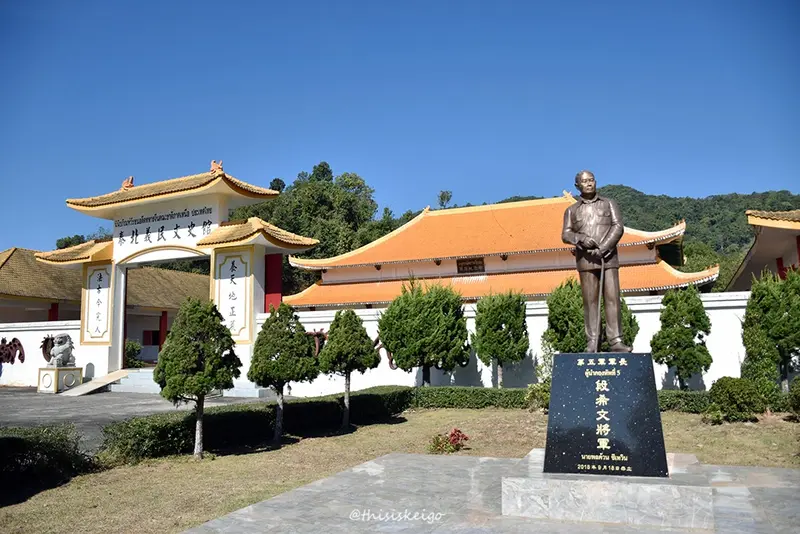
The Northern Chinese Nationalist Veterans Memorial Museum in Thailand is one of the most historically significant places to visit in Chiang Rai, especially for travelers who want to understand Doi Mae Salong beyond its tea plantations, Yunnan restaurants, and mountain scenery. Located in Santikhiri Village, Mae Salong Nok, Mae Fa Luang District, this museum and memorial complex preserves the story of former Chinese Nationalist soldiers whose lives became deeply connected with the history of northern Thailand.
The value of this museum lies in the way it explains the background of the Chinese Nationalist forces that moved through Yunnan, Burma, and eventually into the Thai border region after the final phase of the Chinese Civil War. For many visitors, Mae Salong is known today as a peaceful mountain village with a strong Yunnanese identity. After a visit to this museum, that familiar image gains much greater depth. The village becomes easier to understand as a place shaped by war, migration, settlement, memory, and adaptation.
The site is arranged in 2 main zones. The front area contains community shops and visitor space, while the inner section is the museum complex itself. Inside, the core museum area is divided into 3 major Chinese-style buildings. The left building is Museum Room 1, the central structure is the memorial hall for former Chinese Nationalist soldiers in northern Thailand, and the right building contains Museum Rooms 2 and 3. The architectural style adds an immediate sense of place and reinforces the cultural identity of the Santikhiri community.
Museum Room 1 focuses on the military and political history of the Chinese Nationalist forces in chronological order. The exhibitions begin with the background of the Nationalist forces in 1949, then move through major conflicts such as the fighting at Ko City and Tachileik in 1950, operations at Mong Hsat and the attempted move toward Yunnan in 1951, battles along the Salween River and the first withdrawal to Taiwan, later regrouping and evacuation efforts, and finally the role these forces played in northern Thailand. For visitors unfamiliar with the subject, the layout makes a complex history much easier to follow.
The displays rely heavily on historical photographs, timelines, and battlefield models that show troop movement and combat routes. Military objects are present, but they are not the main focus. Instead, the museum emphasizes visual documentation and narrative sequence. That approach works well because it helps visitors understand events as part of a larger historical chain rather than as isolated episodes. It also makes the museum accessible to general travelers, not just military history enthusiasts.
One of the strongest aspects of the museum is how closely it connects the history of war with the identity of the local community. Mae Salong was not simply a scenic mountain settlement from the beginning. It was shaped by people who had passed through conflict, displacement, and resettlement. This gives the museum unusual depth. It is not only about battles. It is also about how a community was formed, how memory was preserved, and how a difficult past was transformed into a stable and recognizable cultural landscape in present-day Chiang Rai.
The central memorial building is the emotional core of the site. Inside are spirit tablets dedicated to those who died in the conflicts associated with the former Chinese Nationalist forces. These tablets are arranged neatly along the inner walls, creating a solemn and respectful atmosphere. The memorial is not only a place for visitors to observe. It also remains meaningful to descendants and the local community, and annual remembrance ceremonies continue to be held here. This gives the site a living commemorative role rather than making it a purely static attraction.
Museum Rooms 2 and 3 broaden the perspective by presenting social support and community assistance efforts connected to Chinese organizations and welfare networks. These sections highlight aid activities carried out under the idea of “Love of Motherland and the Benevolence of Taiwan,” including donations, scholarships, and forms of public assistance. This part of the exhibition is important because it shifts the story from conflict to reconstruction, showing how the community participated in relief, education, and social development after the earlier era of military struggle.
From a travel perspective, this museum is one of the best first stops in Mae Salong. It provides historical context that makes later visits to the village, tea houses, Chinese restaurants, local markets, and nearby landmarks much more meaningful. Without this museum, Mae Salong can feel like a beautiful but partially unexplained mountain destination. With it, visitors can understand the deeper historical forces that shaped Santikhiri into what it is today.
The museum is especially suitable for travelers interested in border history, migration, memory, military heritage, Yunnanese communities in Thailand, and cultural landscapes shaped by political upheaval. It also works well for students and general visitors because the exhibitions are structured in a clear and direct way. Even without prior knowledge, most visitors can follow the main storyline and leave with a much stronger sense of place.
Getting There is easiest by private car or rental vehicle from Chiang Rai city. Drive toward Mae Fa Luang District and continue up to Doi Mae Salong and Santikhiri Village. The museum is located along the main route into the village, so it is relatively easy to find and fits well into a one-day itinerary around Mae Salong. Public transport is possible by first reaching connecting points in the Mae Chan area and then continuing up the mountain, but having your own vehicle makes it far easier to combine the museum with tea plantations, restaurants, viewpoints, and accommodation nearby.
The museum is open daily and works best as a morning or early afternoon visit. After exploring the exhibits, travelers can continue on to tea plantations, village markets, Yunnan restaurants, and scenic viewpoints in the same day. Overall, the Northern Chinese Nationalist Veterans Memorial Museum is not a flashy attraction, but it is one of the most meaningful cultural and historical sites in Chiang Rai for anyone who wants to understand Mae Salong in a serious and lasting way.
| Name | The Northern Chinese Nationalist Veterans Memorial Museum in Thailand |
| Location | Santikhiri Village, Moo 1, Mae Salong Nok, Mae Fa Luang District, Chiang Rai Province |
| Address | Santikhiri Village, Moo 1, Mae Salong Nok, Mae Fa Luang District, Chiang Rai Province |
| Coordinates | 20.1527, 99.6214 |
| Highlights | A museum and memorial complex telling the story of former Chinese Nationalist soldiers in Mae Salong through photographs, battlefield models, and memorial tablets |
| History | Completed in 2003 and officially opened on 20 February 2004 to honor former Chinese Nationalist soldiers and support Mae Salong tourism |
| Distinctive Features | Chinese-style architecture with 3 main buildings: Museum Room 1, the central memorial hall, and Museum Rooms 2 and 3 |
| Travel Information | Best reached by car from Chiang Rai city via Doi Mae Salong, with easy access to other attractions in Santikhiri Village |
| Current Status | Open |
| Open Days | Daily |
| Opening Hours | 09:00 – 17:00 |
| Fees | 30 Baht per person |
| Facilities | Exhibition spaces, community shops, walking area, parking |
| Main Areas / Zones | Museum Room 1, Central Memorial Hall, Museum Rooms 2 and 3 |
| Caretaker | Community Managed |
| Main Contact Number | 081-288-6691, 053-765180 |
| Nearby Tourist Attractions | 1) General Tuan Tomb 0.5 km 2) Mae Salong Morning Market 1 km 3) 101 Tea Plantation 2 km 4) Phra Boromathat Chedi Srinagarindra Stit Mahasantikhiri 3 km 5) Wang Put Tan Tea Plantation 3 km |
| Nearby Restaurants | 1) Mae Salong Villa Restaurant 1 km, Tel. 053-765114, 053-765115 2) Wang Put Tan Restaurant 2 km, Tel. 053-765094, 089-995-4066 3) Nong Im Phochana 1 km, Tel. 089-637-5290 4) Sweet Maesalong Cafe 2 km, Tel. 089-874-9656 5) Watchar Mae Salong Restaurant 2 km, Tel. 085-829-6194 |
| Nearby Accommodations | 1) Mae Salong Villa 1 km, Tel. 053-765114-5, 095-0534999 2) Wang Put Tan Boutique House 2 km, Tel. 089-995-4066 3) Shin Sane Guest House 1 km, Tel. 053-765026, 087-185-1978 4) Mae Salong Resort 2 km, Tel. 065-063-8953 5) Mae Salong Mountain Home 2 km, Tel. 084-611-9508 |
Frequently Asked Questions (FAQ)
Q: Where is the Northern Chinese Nationalist Veterans Memorial Museum located?
A: It is located in Santikhiri Village, Mae Salong Nok, Mae Fa Luang District, Chiang Rai, on Doi Mae Salong.
Q: What can visitors see inside the museum?
A: Visitors can see exhibitions about former Chinese Nationalist soldiers, historical photographs, battlefield models, the central memorial hall, and displays related to community aid activities.
Q: How much is the entrance fee?
A: The admission fee used in this article is 30 baht per person.
Q: Is the museum open every day?
A: Yes. It is open daily and can easily be combined with other attractions around Doi Mae Salong.
Q: How much time should I allow for the visit?
A: It is best to allow around 45 minutes to 1.5 hours to explore the exhibition buildings properly.
Q: What type of traveler would enjoy this museum?
A: It is ideal for travelers interested in Mae Salong history, former Chinese Nationalist soldiers, Yunnanese community culture, and heritage tourism in Chiang Rai.
 Category: ●Art, Culture and Heritage
 Group: ●Museums
Last Update : 2 MonthAgo
 Last Update : 2 MonthAgo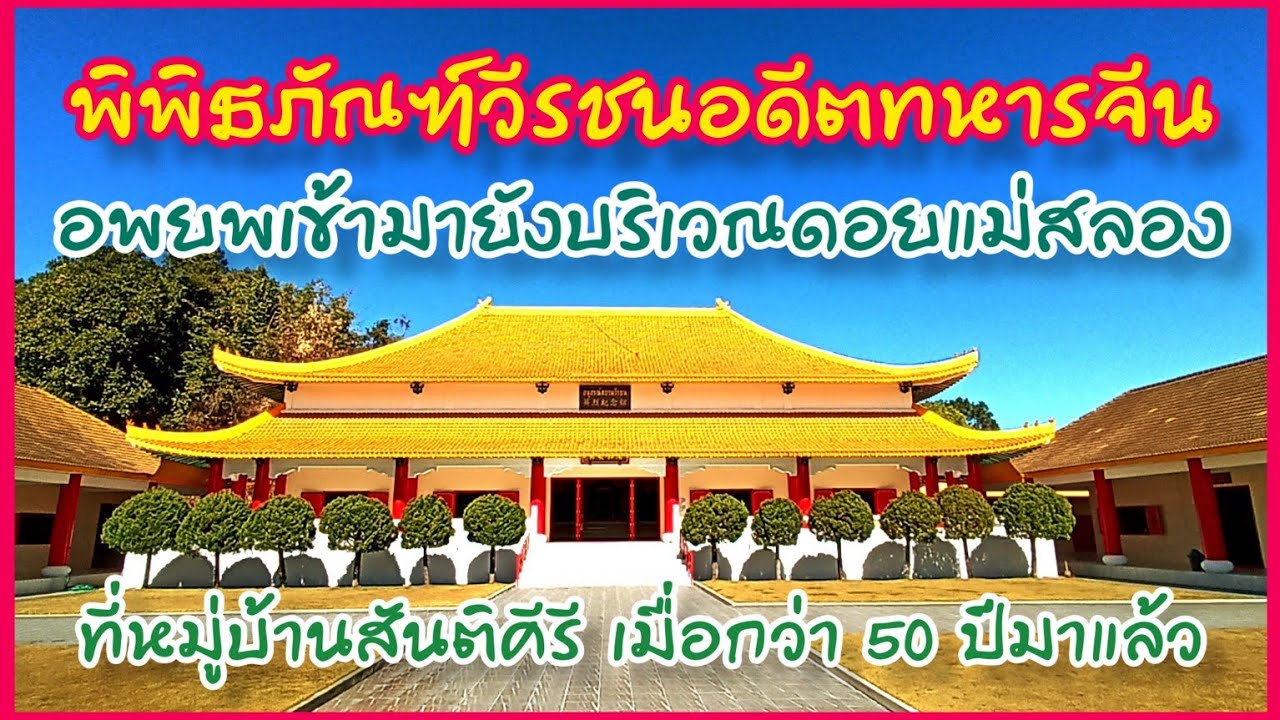
 Click to Access the Navigation Map GPS
Northern Chinese Nationalist Veterans Memorial Museum in Thailand Map
Recommend
 Historical Sites and Monuments(3)
 Landmarks and Memorials(7)
 Art, Craft Centres, Tradition(6)
Museums(8)
Art, Craft Centres, Tradition(6)
Museums(8)
 Historical Houses and The Ancient City(1)
 Educational Places
 Museum for Study(1)
 Library(1)
 Educational Gardens, Farm(3)
 Places of Worship
 Temple(38)
 Other religious and spiritural sites(5)
 Research and Development
 Royal Project(9)
 Suburban Living
 Village, Community(16)
 Local Market(5)
 Nature and Wildlife
 National Parks and Marine Reserves(18)
 Mountain (Doi)(20)
 Dam, Reservoir, Lake(8)
 Waterfalls(16)
 Hot Springs(6)
 Caves(8)
 River, Canal(10)
 Sea, Beach(1)
 Other natural attractions(3)
 Entertainment and Agricultural
 Animal camps and shows(1)
 Farm, Parks, Gardens and Ecotourism(9)
 Shopping
 Shopping and Night Market(2)
 Call Customer Service in Tourism
 Call Customer Service in Tourism(1)
 Travel Articles, Recipes
 Travel Review, Food Review(1)
 Food Menu, North Recipes(1)


