
lovethailand home >North Travel Attractions >Chiang Rai Travel Attractions >Phan >Muang Phan > Phra That Chom Wae
TL;DR: Phra That Chom Wae is located at Wat Phra That Chom Wae, No. 1, Moo 11, Ban Mai San Phak La, Mueang Phan Subdistrict, Phan District, Chiang Rai 57120, open Daily, hours 09.00 – 17.00.
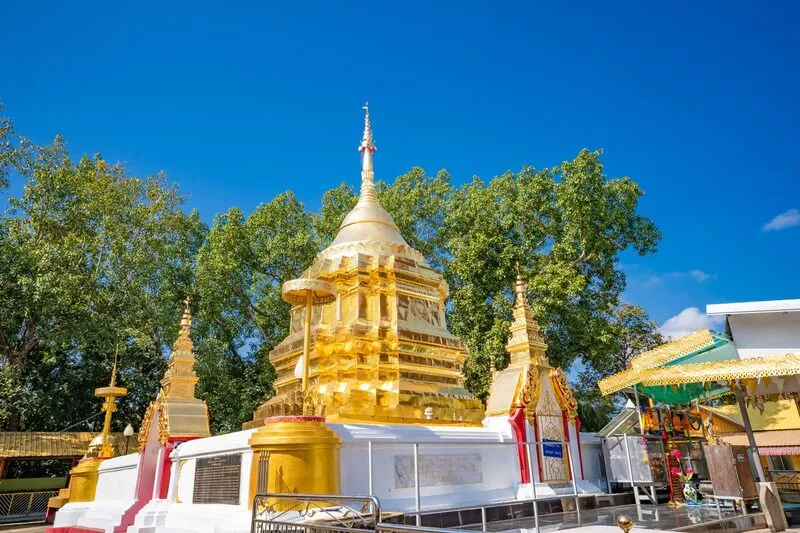
Phra That Chom Wae
Open Days: Daily
Opening Hours: 09.00 – 17.00
Phra That Chom Wae is one of the important sacred stupas of Chiang Rai and is counted among the province’s revered Nine Chom relic sites. Located within Wat Phra That Chom Wae in Mueang Phan Subdistrict, Phan District, Chiang Rai Province, this site may appear modest compared with larger and more famous attractions in the province, yet its historical depth, local belief system, and strong community devotion give it a distinctive cultural value. For travelers interested in sacred sites, Lanna legends, and meaningful stops beyond the usual city landmarks, Phra That Chom Wae offers a rich and memorable experience.
The importance of this site lies not only in the stupa itself, but also in the long-standing legend that connects it to regional rulers and the historical landscape of northern Thailand. According to local tradition, Phra That Chom Wae was built by King Ngam Mueang, ruler of Phu Kamyao, or present-day Phayao, around Chulasakkarat 656, which corresponds to 1837 BE. This places the origin of the site deep within the era of northern city-states, when religion, political authority, and geography were closely connected.
The legend says that King Ngam Mueang climbed Doi Sang Kham, the former name of Doi Chom Wae, in order to inspect the territory under his rule and observe where his people were settled. He then traveled to another hill north of Lam Nam Mae Khao Duan and continued along the ridge of Doi Duan, or Doi Ngam, before returning to Phu Kamyao. This part of the story is important because it shows that the hill was not viewed only as a religious location, but also as a strategic place from which the ruler could understand and oversee the land.
When the king returned to Phu Kamyao in the fourth lunar month of that same year, he ordered Khandhasenamat to lead skilled stupa builders together with local frontier people to construct Phra That Chom Wae on Doi Sang Kham. This reflects the traditional relationship between state authority and religious construction in northern Thailand. Building a stupa on an elevated site was more than a devotional act. It also marked the importance of the landscape and linked royal patronage, sacred relics, and territorial identity together.
According to the legend, the stupa was built over the mark of a barking deer and enshrined sacred hair relics of the Buddha as well as jewelry, silver, and gold. The construction was completed in the eighth lunar month, and a grand three-day and three-night celebration was held to consecrate the finished monument. This detail reveals that the stupa was not a hidden local shrine from the start, but a monument intentionally honored through ceremony and public participation.
Later, during a period of unrest, local people moved away and the stupa fell into ruin because of both neglect and natural deterioration. Like many old religious monuments in northern Thailand, Phra That Chom Wae could not survive unchanged without the support of a living community. Its ruined phase is therefore a crucial part of its story, because it shows how closely the condition of a sacred monument depended on the stability of the surrounding settlement.
A major revival took place in Chulasakkarat 1199, or 2380 BE, when Phraya Han, the first ruler of Phan, restored the stupa from its old remains. This restoration brought the site back into religious use and re-established it as a focal point of local devotion. Later, in the time of Phaya Chaiyana Songkhram, the third ruler of Phan, three village communities joined in faith to restore the stupa again and enlarge it beyond its earlier form. On that occasion, Phra Maha Chin That relics were also enshrined inside, further increasing the site’s sacred importance.
Today, Phra That Chom Wae continues to hold a central place in the spiritual life of Phan District. One of its most important local traditions is the annual water-pouring ceremony for the stupa, which takes place on the full moon day of the eighth northern lunar month. This is more than a ritual observance; it is a moment when local people come together in devotion, memory, and shared identity. Visitors who arrive during this period experience not only the monument itself, but also the continuing cultural life that surrounds it.
One of the most interesting aspects of Phra That Chom Wae is the local interpretation of the word “Wae.” In northern Thai usage, it has two meaningful connotations. The first means “to stop by” or “to make a brief visit.” Because of this, people believe that anyone who passes by and stops to pay respect at the stupa will be protected from misfortune and travel safely. This belief makes the site particularly meaningful to travelers and people beginning an important journey.
The second interpretation compares “Wae” to the sound of beginning to speak or opening a conversation. From this comes the belief that if one worships here and makes a sincere wish, business negotiations, discussions, and important conversations will proceed successfully. This gives the stupa a distinct reputation among sacred sites in Chiang Rai, because it is associated not only with safety and blessing, but also with communication, persuasion, and the successful outcome of human interaction.
The traditional chant associated with the site is: “Ahang wantami mahachina kesa thathayo phuttharupang kotamang ahang wantami.” The existence of a specific chant gives the place its own spiritual identity and helps worshippers approach it with a sense of ritual continuity rather than casual sightseeing. This is one of the reasons why Phra That Chom Wae still feels like a living sacred place rather than a monument separated from local faith.
In practical terms, the site is also easy to include in a day trip around Phan District. It is located not far from Highway 1, the Chiang Rai–Phayao route, and can be reached conveniently from central Phan. Traditional travel directions note that travelers coming from Mae Suai should use Highway 118, return toward the Chiang Rai–Mae Suai junction in Mae Lao District, turn right onto Highway 1 toward Phan, cross the Lao River bridge, pass Huai Sai Khao Hot Springs, and once in Phan District turn right at the Wat Chai Mongkhon junction. After about 300 meters, the entrance to Phra That Chom Wae appears on the right-hand side. The full route is about 49 kilometers from that approach.
Travelers starting from Phan town itself will find the route much simpler. Because the stupa is close to the district center, it can be combined easily with nearby attractions such as Huai Sai Khao Hot Springs, Pu Kaeng Waterfall, and other religious sites in the district. This makes Phra That Chom Wae suitable not only for pilgrims, but also for cultural travelers seeking a slower and more meaningful itinerary in southern Chiang Rai Province.
Another part of the site’s charm is its atmosphere. Unlike large, heavily commercialized attractions, Phra That Chom Wae still feels rooted in local rhythm and devotion. Visitors usually come with clear intention, whether to make merit, pray for safe travel, or quietly spend time in reflection. The surrounding temple grounds retain a peaceful character that encourages slower observation and a more respectful kind of visit.
For people interested in regional history, Phra That Chom Wae is also important because it reveals the historic relationship between Phan and Phu Kamyao. The association with King Ngam Mueang means that the site connects local faith in Phan with a wider political and cultural network in the northern region. This gives the monument value not only as a place of worship, but also as a cultural marker of historical links between old northern polities.
Getting There From Phan town, travel by local road toward Wat Phra That Chom Wae, which is located not far from Highway 1. If coming from Chiang Rai or Mae Lao, follow Highway 1 toward Phan, then turn inward near the Wat Chai Mongkhon junction and continue about 300 meters to the entrance on the right. Using online maps with the temple name makes the journey straightforward and convenient.
| Name | Phra That Chom Wae |
| Overview | A sacred stupa in Phan District and one of Chiang Rai’s Nine Chom relic sites, closely associated with King Ngam Mueang, local protective beliefs, and prayers for successful negotiation and safe journeys. |
| Location | Wat Phra That Chom Wae, No. 1, Moo 11, Ban Mai San Phak La, Mueang Phan Subdistrict, Phan District, Chiang Rai 57120 |
| Highlights | Ancient sacred stupa, one of the Nine Chom relic sites, linked to King Ngam Mueang and local beliefs about safety and successful negotiations |
| History / Period | Legend says it was built around 1837 BE by King Ngam Mueang; later fell into ruin and was restored in 2380 BE by Phraya Han, then enlarged again in the time of Phaya Chaiyana Songkhram |
| Distinctive Features | Hilltop sacred stupa believed to enshrine Buddha hair relics and Phra Maha Chin That relics; annual water-pouring ceremony on the full moon of the eighth northern lunar month |
| Belief | The word “Wae” suggests stopping by; people believe that worship here brings protection during travel and success in business or important conversations |
| Current Status | An active temple and an important sacred site in Phan District |
| Open Days | Daily |
| Opening Hours | 09.00 – 17.00 |
| Entrance Fee | Free |
| Abbot | Phra Khru Phimon Phiphatthanakhun |
| Main Contact Number | 053-721821 |
| Travel Information | Accessible from Highway 1 on the Chiang Rai–Phayao route; after entering Phan District, turn inward near Wat Chai Mongkhon and continue around 300 meters to the temple entrance |
| Nearby Tourist Attractions | 1. Huai Sai Khao Hot Springs – 14 km 2. Pu Kaeng Waterfall – 16 km 3. Wat Huai Sai Khao – 15 km 4. Ji Gong Shrine (Nam Ping Hong) – 6 km 5. porwa farm – 7 km |
| Nearby Restaurants | 1. Harmony Coffee – 4 km, Tel. 065-775-8799 2. Suan Lang Baan – 5 km 3. Mai Mon Farm – 8 km 4. Krua Ban Lek Thi Kao – 5 km 5. Love Terrong Food & Coffee – 6 km |
| Nearby Accommodations | 1. M Place Phan – 4 km, Tel. 099-035-1454 2. Reuntawan Resort – 9 km, Tel. 053-604549, 085-997-8132 3. Phuphan Resort & Sport Club – 10 km, Tel. 091-852-4767 4. Khum Tai Lue Resort – 6 km 5. Phu Plub Phla Resort Chiang Rai – 22 km |
Frequently Asked Questions (FAQ)
Q: Where is Phra That Chom Wae located?
A: It is located within Wat Phra That Chom Wae in Mueang Phan Subdistrict, Phan District, Chiang Rai Province.
Q: When was Phra That Chom Wae built?
A: According to local legend, it was built around 1837 BE by King Ngam Mueang, ruler of Phu Kamyao.
Q: What is the main belief associated with Phra That Chom Wae?
A: People believe that stopping to worship here brings protection from misfortune during travel and helps important negotiations succeed.
Q: Is there an entrance fee?
A: No. Visitors can enter and worship free of charge.
Q: When is the main annual ceremony held?
A: The water-pouring ceremony for the stupa is held on the full moon day of the eighth northern lunar month.
Q: Is Phra That Chom Wae easy to reach?
A: Yes. It is close to Highway 1 and not far from central Phan, making it convenient to visit by car.
 Category: ●Places of Worship
 Group: ●Other Sacred Sites
Last Update : 6 MonthAgo
 Last Update : 6 MonthAgo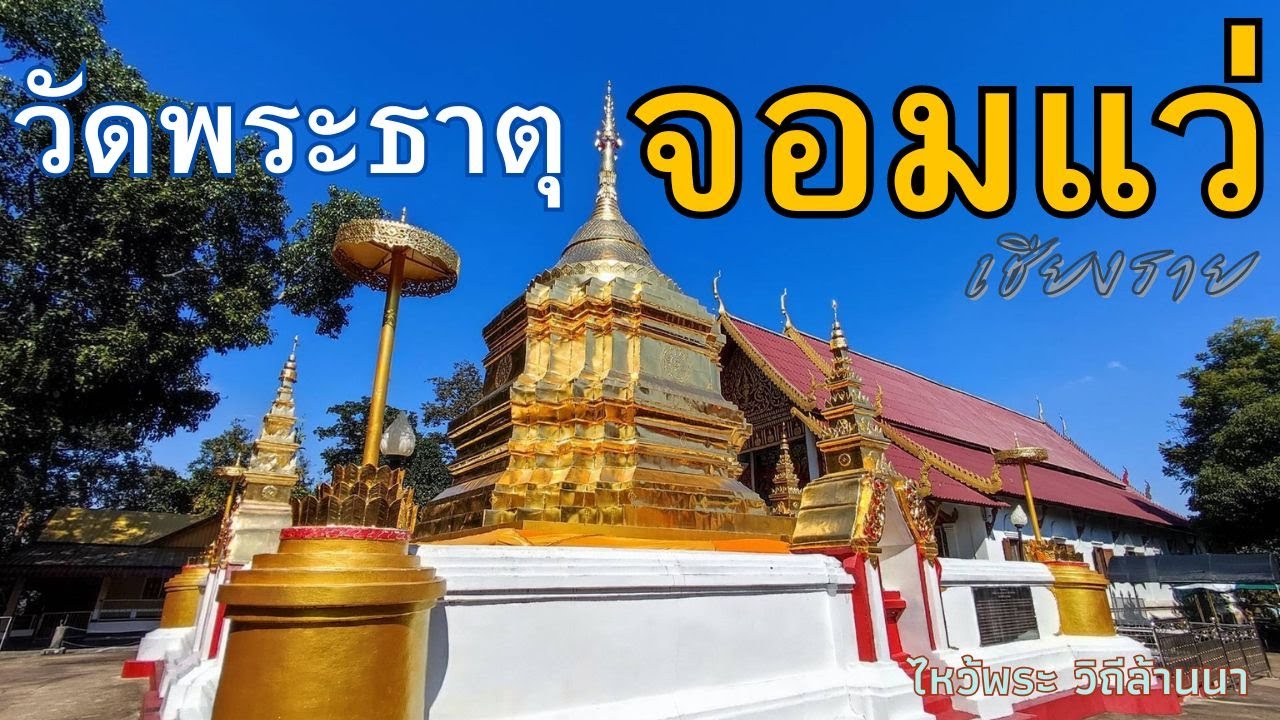
 Click to Access the Navigation Map GPS
Phra That Chom Wae Map
Recommend

 Art, Culture and Heritage
 Historical Sites and Monuments(3)
 Landmarks and Memorials(7)
 Art, Craft Centres, Tradition(6)
 Museums(8)
 Historic Homes and Cities(1)
 Educational Places
 Museum for Study(1)
 Library(1)
 Educational Gardens, Farm(3)
 Temple(38)
Other Sacred Sites(5)
Temple(38)
Other Sacred Sites(5)
 Research and Development
 Royal Project(9)
 Suburban Living
 Village, Community(16)
 Local Market(5)
 Nature and Wildlife
 National Parks and Marine Reserves(20)
 Mountain (Doi)(20)
 Dam, Reservoir, Lake(8)
 Waterfalls(16)
 Hot Springs(6)
 Caves(8)
 River, Canal(10)
 Sea, Beach(1)
 Other natural attractions(3)
 Entertainment and Agricultural
 Animal camps and shows(1)
 Farms, Parks and Ecotourism(9)
 Shopping
 Shopping and Night Market(2)
 Call Customer Service in Tourism
 Call Customer Service in Tourism(1)
 Travel Articles, Recipes
 Travel Review, Food Review(1)
 Food Menu, North Recipes(1)


