
lovethailand home >North Travel Attractions >Chiang Rai Travel Attractions >Chiang Saen >Yonok > Ban Santhat Royal Commemorative Thai Silk Village
TL;DR: Ban Santhat Royal Commemorative Thai Silk Village is located at Ban Santhat, Moo 4, Yonok Subdistrict, Chiang Saen District, Chiang Rai, open Advance coordination is recommended, hours Based on prior arrangement with the community and silk group.

Ban Santhat Royal Commemorative Thai Silk Village
Open Days: Advance coordination is recommended
Opening Hours: Based on prior arrangement with the community and silk group
Ban Santhat Royal Commemorative Thai Silk Village is one of Chiang Rai’s most interesting agricultural and community-based tourism destinations, especially for travelers who want more than a scenic stop. This is not just a rural village in Chiang Saen District. It is a place where royal initiative development, mulberry cultivation, silkworm raising, silk production, and community livelihood come together in a very tangible way. Visitors who come here do not simply look at products on a shelf. They see the living story behind Thai silk.
The village is located in Ban Santhat, Moo 4, Yonok Subdistrict, Chiang Saen District, Chiang Rai Province. It lies about 10 km before reaching Chiang Saen from the main Chiang Rai–Chiang Saen route. Travelers turn at the Ban San Ton Pao area and continue along the rural highway on the Doi Chan–Tha Khao Plueak line for about 9 km, passing Ban San Ton Pao, Ban Doi Chan, and Ban Rong Bong before arriving at Ban Santhat. This approach helps preserve the village’s quiet agricultural atmosphere and gives visitors a stronger sense of entering a real working community.
The village’s importance comes from its role as part of a commemorative project honoring Her Majesty Queen Sirikit in celebration of the royal auspicious occasion of her 6th cycle birthday anniversary on 12 August 2004. The main purpose of the project was to preserve Thai silk, improve livelihoods for mulberry and silkworm farmers, increase community income, and promote the area as an agricultural tourism destination. This gives Ban Santhat a value that goes beyond local production. It represents a development model linking heritage, occupation, and tourism.
In practical terms, Ban Santhat is a strong example of community-level agricultural organization. The user-provided information and current silk-sector development records both show that Ban Santhat remains an active mulberry and silk production area in Yonok Subdistrict, and recent official follow-up activities confirm that the local silk group continues to operate. This means the village is not simply a historical project from the past. It is still a functioning production community today.
The most impressive feature of the village is its fully connected Thai silk process. Visitors can understand the system from the beginning of the chain to the finished product: mulberry cultivation, silkworm raising, cocoon harvesting, silk reeling, weaving, and product development. This is exactly what makes the village suitable for agricultural tourism. It turns silk from an abstract cultural symbol into something visible, understandable, and deeply connected to local life.
According to the village profile, 64 households are involved in mulberry cultivation and silkworm raising, with a total mulberry area of 127 rai. Most of the mulberry fields use the BR.60 variety. The village also has 64 silkworm rearing rooms, including 35 demonstration rooms and 29 low-cost rooms. These figures matter because they show that Ban Santhat is not a small symbolic showcase. It has real production capacity and real community participation.
The village works with multiple silkworm varieties, including Thai strains and hybrid strains. Earlier information highlights varieties such as Kasetsart 8, Kasetsart 10, the local Nang Lai strain, and imported white-cocoon hybrids. More recent silk-sector monitoring also shows that the Ban Santhat group has developed industrial yellow cocoon production while still maintaining handicraft silk activities. This balance is important because it shows that the community has adapted to modern market demand without abandoning traditional silk craftsmanship.
Silkworm production in the village runs across multiple cycles each year, which helps create income throughout the year rather than concentrating earnings in only one season. That makes silk a much stronger livelihood base for the community. Cocoon yields and silk thread output are therefore not just technical figures. They reflect the village’s ability to sustain real production and continue operating as a living agricultural economy.
For travelers, the appeal of Ban Santhat lies in seeing that Thai silk is not just a luxury fabric or a souvenir item. It is the result of continuous labor, practical knowledge, and careful technique. Silkworm raising requires close attention. Silk reeling demands patience. Weaving requires skill and experience. Once visitors see even part of the process, the value of the final textile becomes much easier to understand.
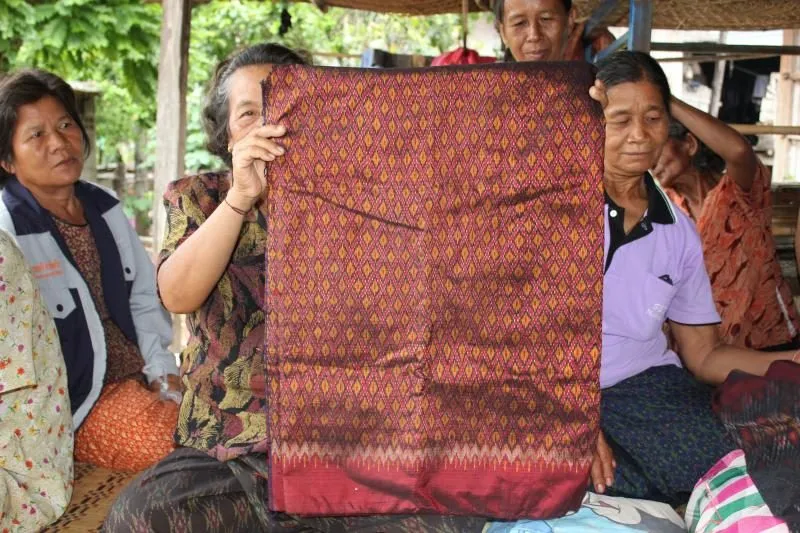
The village is also known for a range of silk products, including plain silk fabric, mudmee silk, sarongs, shawls, and plaid cloth. This shows that Ban Santhat does not stop at raw silk production. It adds value by turning silk into finished goods for local use and for sale to visitors. The diversity of products also makes the village more accessible to different kinds of buyers, from those looking for small gifts to those interested in premium woven silk pieces.
Ban Santhat is especially meaningful as a learning destination. It helps explain how mulberry and silk fit into a broader community economy. Mulberry is the foundation. Silkworms turn leaves into cocoons. Cocoons become thread. Thread becomes fabric. Fabric becomes saleable products. This chain is exactly why Ban Santhat was promoted as an agricultural tourism village. It offers real content, not just scenery.
Another part of its charm is the surrounding rural atmosphere of Yonok. The road into the village passes agricultural land and quiet local settlements, giving travelers a sense of everyday Chiang Saen outside the better-known historical and Mekong attractions. For people who want to see a more grounded side of Chiang Rai, Ban Santhat is a strong choice.
The village also connects well with major attractions in Chiang Saen, including Wat Phra That Chedi Luang, the Chiang Saen National Museum, Wat Pa Sak, and the Golden Triangle. Because of this, Ban Santhat works well as part of a broader itinerary combining Lanna history, border-region culture, and community-based agricultural tourism in the same day.
Ban Santhat can also appeal to international travelers, especially those interested in crafts, heritage, textiles, and sustainable tourism. The silk story is easy to understand across cultures. Watching how local materials become finished handcrafted products gives foreign visitors an accessible but meaningful way to connect with the community.
In practical travel terms, Ban Santhat works well as either a half-day visit or a longer full-day itinerary in Chiang Saen. Travelers focused mainly on silk and agricultural learning can spend time in the village itself. Those wanting a broader Chiang Saen experience can combine it with historical and cultural attractions nearby.
Getting There is easiest by private car or rental car. From the Chiang Rai–Chiang Saen main road, about 10 km before Chiang Saen, turn near Ban San Ton Pao and continue on the Doi Chan–Tha Khao Plueak rural route for about 9 km, passing Ban San Ton Pao, Ban Doi Chan, and Ban Rong Bong before reaching Ban Santhat. A private vehicle is the most convenient option, especially if you want to combine the trip with other attractions around Yonok and Chiang Saen. If you want to see silk production activities in a structured way, advance coordination is recommended.
Overall, Ban Santhat Royal Commemorative Thai Silk Village is one of Chiang Rai’s most worthwhile destinations for travelers who want to understand Thai silk through a real community setting. It is a place where agricultural knowledge, handicraft skill, royal initiative development, and local livelihood all remain clearly visible. If you are looking for a Chiang Rai destination with both substance and authenticity, Ban Santhat deserves serious attention.
| Name | Ban Santhat Royal Commemorative Thai Silk Village |
| Location | Ban Santhat, Moo 4, Yonok Subdistrict, Chiang Saen District, Chiang Rai |
| Address | 147 Moo 4, Yonok, Chiang Saen, Chiang Rai 57150 |
| Highlights | Integrated mulberry and silk learning village, silk thread and weaving process, Thai silk products, and community-based agricultural tourism in Chiang Saen |
| History | Part of a commemorative project honoring Her Majesty Queen Sirikit on the auspicious occasion of her 6th cycle birthday anniversary on 12 August 2004 |
| Name Origin | The village uses the local community name “Ban Santhat” together with its designation as a royal commemorative Thai silk village |
| Distinctive Features | A working rural community with mulberry fields, silkworm raising, silk reeling, weaving, and finished silk products in one connected local system |
| Travel Information | From the Chiang Rai–Chiang Saen main road, turn near Ban San Ton Pao about 10 km before Chiang Saen, then continue about 9 km on the Doi Chan–Tha Khao Plueak rural route to Ban Santhat |
| Current Status | Still active as a mulberry and silk livelihood community and agricultural tourism learning area, with continued support and follow-up activities |
| Open Days | Advance coordination is recommended |
| Opening Hours | Based on prior arrangement with the community and silk group |
| Facilities | Mulberry demonstration plots, silkworm rearing areas, silk weaving learning points, study-visit reception space, and local silk product sales areas |
| Main Areas / Zones | Mulberry plots, silkworm rearing rooms, silk reeling and weaving group area, product sales area, and community learning spaces |
| Main Contact Number | Chiang Saen District Agricultural Office 053-777-096, Chiang Rai Provincial Agricultural Office 053-773-496 |
| Official Website / Official Page | Department of Agricultural Extension agrotourism database, Queen Sirikit Department of Sericulture, and related agricultural offices in Chiang Rai |
| Nearby Tourist Attractions | 1) Chiang Saen Lake / Wiang Nong Lom – about 12 km 2) Wat Phra That Chedi Luang – about 15 km 3) Chiang Saen National Museum – about 15 km 4) Wat Pa Sak – about 16 km 5) Golden Triangle – about 24 km |
| Nearby Restaurants | 1) Swana Chiang Saen – about 6 km 2) Riverside Chill Restaurant, Ban Santhat Mai Phatthana – about 7 km 3) Krua Rim Khong Chiang Saen – about 15 km 4) Viang Yonok Restaurant – about 11 km 5) Golden Triangle dining area – about 24 km |
| Nearby Accommodations | 1) Viang Yonok Hotel, Restaurant, Sports Club – about 11 km 2) Athita The Hidden Court Chiang Saen Boutique Hotel – about 16 km 3) One Budget Hotel Chiangrai Chiangsaen – about 16 km 4) Dview Goldentriangle Hotel – about 17 km 5) Bansaeo Garden and Resort – about 22 km |
Frequently Asked Questions (FAQ)
Q: Where is Ban Santhat Royal Commemorative Thai Silk Village located?
A: It is located in Ban Santhat, Moo 4, Yonok Subdistrict, Chiang Saen District, Chiang Rai Province.
Q: What is the main highlight of Ban Santhat?
A: Its main highlight is the full-cycle Thai silk learning experience, from mulberry cultivation and silkworm raising to silk thread production, weaving, and finished community products.
Q: What kind of travelers would enjoy Ban Santhat?
A: It is especially suitable for travelers interested in agriculture, crafts, Thai silk, community knowledge, and rural cultural tourism.
Q: Do visitors need to arrange in advance?
A: Yes. Advance coordination is recommended, especially if you want to observe silk production activities or visit as a study group.
Q: What silk products are available in the village?
A: The village is known for plain silk fabric, mudmee silk, sarongs, shawls, and plaid cloth products.
Q: Can Ban Santhat be combined with other Chiang Saen attractions?
A: Yes. It can easily be combined with Chiang Saen historical attractions such as Wat Phra That Chedi Luang, Chiang Saen National Museum, Wat Pa Sak, and the Golden Triangle.
 Category: ●Suburban Living
 Group: ●Village, Community
Last Update : 6 MonthAgo
 Last Update : 6 MonthAgo
 Click to Access the Navigation Map GPS
Ban Santhat Royal Commemorative Thai Silk Village Map
Recommend

 Art, Culture and Heritage
 Historical Sites and Monuments(3)
 Landmarks and Memorials(7)
 Art, Craft Centres, Tradition(6)
 Museums(8)
 Historic Homes and Cities(1)
 Educational Places
 Museum for Study(1)
 Library(1)
 Educational Gardens, Farm(3)
 Places of Worship
 Temple(38)
 Other Sacred Sites(5)
 Research and Development
 Royal Project(9)
Village, Community(16)
Royal Project(9)
Village, Community(16)
 Local Market(5)
 Nature and Wildlife
 National Parks and Marine Reserves(20)
 Mountain (Doi)(20)
 Dam, Reservoir, Lake(8)
 Waterfalls(16)
 Hot Springs(6)
 Caves(8)
 River, Canal(10)
 Sea, Beach(1)
 Other natural attractions(3)
 Entertainment and Agricultural
 Animal camps and shows(1)
 Farms, Parks and Ecotourism(9)
 Waterpark(1)
 Shopping
 Shopping and Night Market(2)
 Call Customer Service in Tourism
 Call Customer Service in Tourism(1)
 Travel Articles, Recipes
 Travel Review, Food Review(1)
 Food Menu, North Recipes(1)


