
lovethailand home >North Travel Attractions >Chiang Rai Travel Attractions >Muang Chiang Rai >Rop Wiang > 30 Tribes Costume Exhibition Building
TL;DR: 30 Tribes Costume Exhibition Building is located at Inside Suan Tung and Khom Chiang Rai, Thanalai Road, Wiang Subdistrict, Mueang Chiang Rai District, Chiang Rai, open Monday - Friday, hours 08:30 - 18:00.
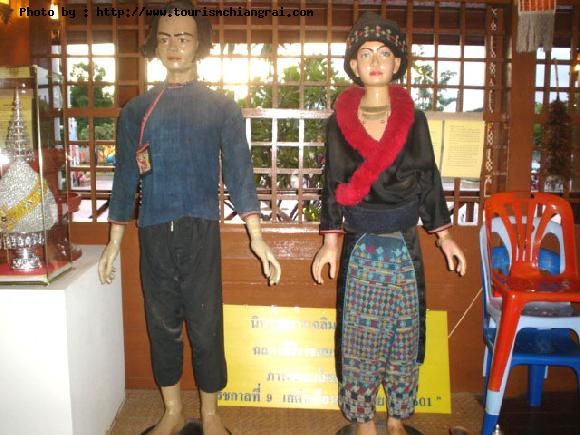
30 Tribes Costume Exhibition Building
Open Days: Monday - Friday
Opening Hours: 08:30 - 18:00
The 30 Tribes Costume Exhibition Building is one of Chiang Rai’s most interesting cultural attractions because it does far more than display ethnic clothing. It presents a broader picture of why Chiang Rai is widely recognized as one of Northern Thailand’s most culturally diverse provinces. Located inside Suan Tung and Khom Chiang Rai on Thanalai Road in the city center, the building is easy to visit and works especially well as part of a walking route through the old urban area.
What makes this place distinctive is the way it explains Chiang Rai through clothing, identity, and community memory. The exhibition does not treat traditional dress as decoration alone. Instead, it uses garments, patterns, colors, and accessories to tell the story of migration, settlement, social identity, ritual life, and the long coexistence of many ethnic groups within the province. This gives the building a strong educational value while still remaining accessible to general travelers.
The building stands within Suan Tung and Khom, a major public cultural space in Chiang Rai. The site itself carries historical weight, as the area was formerly part of the old provincial prison before being redesigned by the municipality into a public park and cultural zone. The former women’s detention building, an old wooden structure, was restored and adapted into a learning space dedicated to the traditional dress and cultural presence of 30 ethnic groups connected to Chiang Rai. That transformation adds another layer of interest, because the place represents both heritage preservation and cultural interpretation at the same time.
At the heart of the exhibition is the presentation of 30 ethnic groups and related communities associated with Chiang Rai. These include Lue Chiang Rung, Musoe Dam, Chinese, Lua or Lawa, Haw, Tai Yong, Lue Chiang Kham, Karen, Lao Indochina, Akha, Lue Huai Meng, Hmong, Tai Ya, Tong Su, Tai Mueang Nuea, Khamu, Yuan, Lue Chaeng, Yao, Red Karen, Mon or Burmese groups referred to locally as Man, White Karen, Lue Nam U, Southern Thai, Muslim and Indian communities referred to as Khaek, Kha Hok, Tai Yai or Shan, Lisu, Kui, and Khuen or Tai Khuen. Seeing these names together immediately shows the scale of ethnic diversity that has shaped Chiang Rai over time.
The exhibition is especially valuable because it helps visitors understand Chiang Rai not just as a scenic northern province, but as a cultural borderland shaped by movement from southern China, the Shan areas, Myanmar, the Mekong region, and nearby upland zones. In that sense, this building becomes more than a museum stop. It serves as a compact cultural map of the province, helping visitors place later trips to districts such as Mae Sai, Mae Chan, Mae Suai, Chiang Khong, Wiang Kaen, Doi Tung, or Doi Chang into a broader human context.
For travelers interested in anthropology, textiles, local history, or cultural tourism, the exhibition provides a meaningful starting point before visiting actual ethnic villages or mountain communities elsewhere in Chiang Rai. Instead of going directly into those places with little background knowledge, visitors can first develop an understanding of who the communities are, how they differ, and how their clothing reflects ways of life, geography, and inherited traditions.
Another strength of the site is its location. Because it stands in the center of Chiang Rai, it can easily be combined with other nearby attractions. After visiting the exhibition building, travelers can continue to Suan Tung and Khom, the Chiang Rai Clock Tower, the Hilltribe Museum, Wat Phra Singh, and Wat Phra Kaew without needing to leave the central city zone. This makes the attraction highly practical for half-day city exploration and especially valuable for visitors who want more than a surface-level stop.
The atmosphere of the building is also part of the experience. Unlike large modern museums, this place carries the warmth and texture of an older wooden civic structure. That sense of age works in its favor. It creates a slower, more reflective environment, one that encourages visitors to spend time looking carefully rather than rushing through. The setting supports the subject matter well, because cultural understanding here comes through observation, reading, and comparison rather than spectacle.
From a cultural tourism perspective, the exhibition remains highly relevant today. Questions of ethnicity, identity, memory, and coexistence continue to matter in Chiang Rai, and this building provides a public space where those themes are made visible in a clear and approachable way. For local students, researchers, and travelers alike, it helps make sense of the province’s human landscape through one of the most recognizable cultural forms: dress.
It is also worth noting that the exhibition sits within a public park area that regularly plays a role in municipal cultural activity. This surrounding environment adds value to the visit, especially during periods when Suan Tung and Khom becomes more lively with city events and seasonal decoration. As a result, the building does not feel isolated. It feels woven into the cultural life of central Chiang Rai.
Getting There is easy because the building is located inside Suan Tung and Khom Chiang Rai on Thanalai Road in the Wiang area of central Chiang Rai. Visitors using private transport can head for Suan Tung and Khom or the Chiang Rai Clock Tower and continue on foot. Those staying in town can also reach the site by local red truck taxi, tuk-tuk, or simple walking routes from the clock tower and walking street area. This convenience makes it one of the easiest culture-focused attractions to include in a city itinerary.
In summary, the 30 Tribes Costume Exhibition Building is one of the most meaningful cultural places to visit in Chiang Rai for travelers who want to understand the province beyond its famous landmarks. It brings together clothing, migration history, ethnic diversity, and urban heritage in one compact and accessible setting. For anyone interested in the deeper identity of Chiang Rai, this is a highly worthwhile stop in the city center.
| Name | 30 Tribes Costume Exhibition Building |
| Location | Inside Suan Tung and Khom Chiang Rai, Thanalai Road, Wiang Subdistrict, Mueang Chiang Rai District, Chiang Rai |
| Address | Suan Tung and Khom Chiang Rai, Thanalai Road, Wiang, Mueang Chiang Rai, Chiang Rai 57000 |
| Highlights | Ethnic costume learning space, city-center cultural attraction, part of the Chiang Rai cultural district, easy to combine with nearby historic sites |
| History | Part of the “Chiang Rai Cultural City” concept, housed in a restored old wooden building within the former provincial prison grounds that later became Suan Tung and Khom |
| Name Origin | Named after its core concept of presenting the dress traditions of 30 ethnic groups and communities connected to Chiang Rai |
| Distinctive Features | Historic wooden exhibition building, life-size displays, ethnic costume interpretation, and a strong focus on Chiang Rai’s cultural diversity |
| Travel Information | Located in central Chiang Rai and easy to reach by private car, local red truck taxi, tuk-tuk, or on foot from the Clock Tower and Walking Street area |
| Current Status | Still part of the cultural zone inside Suan Tung and Khom Chiang Rai and continues to be referenced in recent municipal publicity |
| Open Days | Monday - Friday |
| Opening Hours | 08:30 - 18:00 |
| Fees | Free Admission |
| Facilities | Exhibition building, park walkways, resting areas in Suan Tung and Khom, and easy access to nearby city attractions |
| Main Areas / Zones | 30 Tribes exhibition zone, Suan Tung and Khom park area, city cultural event space, surrounding heritage walking zone |
| Main Contact Number | 053-711333, 086-911-3924 |
| Official Website / Official Page | Chiang Rai Municipality |
| Nearby Tourist Attractions | 1) Suan Tung and Khom Chiang Rai 0 km 2) Chiang Rai Clock Tower 1 km 3) Hilltribe Museum Chiang Rai 1 km 4) Wat Phra Singh Chiang Rai 1 km 5) Wat Phra Kaew Chiang Rai 1 km |
| Nearby Restaurants | 1) Cabbages & Condoms Chiang Rai 1 km Tel. 053-740657 2) Barrab Restaurant 1 km Tel. 094-812-6670 3) Tem Im Lert Rot Khao Man Gai 1 km Tel. 098-899-1587, 084-766-1150 4) Chivit Thamma Da 3 km Tel. 081-984-2925, 052-020-102 5) Melt In Your Mouth Chiang Rai 3 km Tel. 062-023-0549 |
| Nearby Accommodations | 1) Nak Nakara Hotel 1 km Tel. 053-717-700 2) Hi Chiangrai Hotel 1 km Tel. 053-716-699 3) Sooknirund Hotel 1 km Tel. 053-798-788 4) The Riverie by Katathani 2 km Tel. 053-607-999 5) The Legend Chiang Rai Boutique River Resort & Spa 3 km Tel. 053-910-400 |
Frequently Asked Questions (FAQ)
Q: Where is the 30 Tribes Costume Exhibition Building located?
A: It is located inside Suan Tung and Khom Chiang Rai on Thanalai Road in Wiang Subdistrict, Mueang Chiang Rai District, Chiang Rai.
Q: What days is the exhibition building open?
A: It is open from Monday to Friday, from 08:30 to 18:00.
Q: Is there an entrance fee?
A: No. Admission is free.
Q: What is the main focus of the exhibition?
A: The exhibition focuses on the dress traditions and cultural identities of 30 ethnic groups and communities connected to Chiang Rai.
Q: Who would enjoy visiting this place?
A: It is especially suitable for visitors interested in cultural tourism, ethnic history, traditional textiles, local identity, and educational travel in Chiang Rai.
Q: What can I visit nearby after the exhibition?
A: You can continue to Suan Tung and Khom, the Chiang Rai Clock Tower, the Hilltribe Museum, Wat Phra Singh, and Wat Phra Kaew very easily.
 Category: ●Suburban Living
 Group: ●Village, Community
Last Update : 4 MonthAgo
 Last Update : 4 MonthAgo
 Click to Access the Navigation Map GPS
30 Tribes Costume Exhibition Building Map
Recommend

 Art, Culture and Heritage
 Historical Sites and Monuments(3)
 Landmarks and Memorials(7)
 Art, Craft Centres, Tradition(6)
 Museums(8)
 Historic Homes and Cities(1)
 Educational Places
 Museum for Study(1)
 Library(1)
 Educational Gardens, Farm(3)
 Places of Worship
 Temple(38)
 Other Sacred Sites(5)
 Research and Development
 Royal Project(9)
Village, Community(16)
Royal Project(9)
Village, Community(16)
 Local Market(5)
 Nature and Wildlife
 National Parks and Marine Reserves(18)
 Mountain (Doi)(20)
 Dam, Reservoir, Lake(8)
 Waterfalls(16)
 Hot Springs(6)
 Caves(8)
 River, Canal(10)
 Sea, Beach(1)
 Other natural attractions(3)
 Entertainment and Agricultural
 Animal camps and shows(1)
 Farms, Parks and Ecotourism(9)
 Shopping
 Shopping and Night Market(2)
 Call Customer Service in Tourism
 Call Customer Service in Tourism(1)
 Travel Articles, Recipes
 Travel Review, Food Review(1)
 Food Menu, North Recipes(1)


