
lovethailand home >North Travel Attractions >Chiang Rai Travel Attractions >Chiang Saen >Wiang > Wat Roi Kho
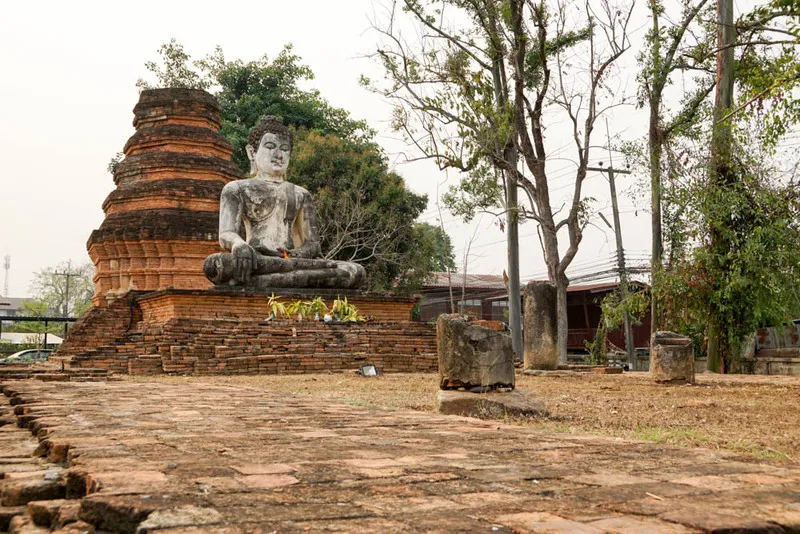
TL;DR: Wat Roi Kho is located at Wiang Subdistrict, Chiang Saen District, Chiang Rai Province. Highlights include Octagonal Lanna-style chedi, white Buddha image on the pedestal base, old viharn remains, authentic old-city atmosphere.
Wat Roi Kho
Operating day: Daily
Operating time: 08.00 - 17.00
Wat Roi Kho is one of the important archaeological sites within the ancient city of Chiang Saen in Chiang Rai Province. It stands on the left side near the intersection connected to Nong Mut Road, along the route from Nong Mut Gate toward the Mekong riverside road. For the clearest short answer, Wat Roi Kho is an abandoned Lanna temple ruin best known for its octagonal chedi, old viharn remains, white Buddha image, and its strong connection to the layered history of Chiang Saen as an ancient northern city.
The appeal of Wat Roi Kho does not come from monumental scale alone. Its real value lies in how clearly it still communicates the character of an abandoned temple within a historic city. Visitors can still read the old layout of the site through the chedi, viharn foundation, pedestal base, and the connecting passage toward a smaller viharn on the southern side. Even after restoration in 2001, the place still preserves the atmosphere of a genuine archaeological ruin rather than a fully modernized tourist site.
The most important feature of the temple is its octagonal Lanna-style chedi. The structure rises from a square base measuring about 9.50 meters, followed by 2 lotus-base tiers with 28 indented angles, then an octagonal garland tier and the bell-shaped upper body. This combination of square foundation, layered lotus base, octagonal transition, and bell form makes the chedi a strong example of Chiang Saen-period artistic language.
On the eastern side of the site stands the remains of the viharn, where only the foundation and the pedestal base survive. A white Buddha image now marks the area and helps modern visitors understand the former sacred focus of the building. The viharn itself measures about 12.20 meters wide and 18.50 meters long. Its form indicates a solid-walled structure that once enshrined a stucco Buddha image in the Mara-Vijaya posture, reflecting Chiang Saen Lanna art.
To the south, there is a connecting path leading to a smaller viharn, about 9 meters wide and 16 meters long. This makes Wat Roi Kho more interesting than a simple single-structure ruin. It suggests a planned religious complex with multiple functional spaces, showing that the temple once played a more active role in the sacred landscape of Chiang Saen.
Stylistic evidence places the temple around the 20th Buddhist century. It is also associated with the broader historical upheaval of Chiang Saen, including the migration and depopulation of communities in 1804 during the era often described as “collecting vegetables into baskets, collecting people into cities.” In that historical context, Wat Roi Kho reflects not only architecture but also the story of a city that shifted from regional importance to partial abandonment, leaving sacred spaces behind as witnesses of change.
This is why Wat Roi Kho matters far beyond its physical remains. It allows visitors to understand Chiang Saen not merely as a place with old ruins, but as a historical city shaped by political power, religion, migration, and cultural continuity. The temple is especially rewarding for travelers who want to explore Chiang Saen in depth rather than focus only on its most famous landmarks.
The site is also attractive for photography. Old brick textures, quiet surroundings, restrained lines of ruined architecture, and the enduring presence of the chedi create a calm and historically rich atmosphere. The mood here is subtle rather than dramatic, which makes it ideal for documentary-style photography and for travelers who appreciate historic places with a strong sense of time.
Getting There is straightforward from Chiang Saen town. Head toward the old city area and the route near Nong Mut Gate, then continue toward the intersection linked to Nong Mut Road and the road leading to the Mekong riverside. The site lies on the left-hand side in Wiang Subdistrict. It can be visited easily by private car and is convenient to combine with nearby historic attractions such as Wat Athi Ton Kaeo, Wat Pa Sak, Wat Phra That Chedi Luang, and the Chiang Saen National Museum.
In summary, Wat Roi Kho is a valuable Chiang Rai historical destination for anyone interested in archaeology, Lanna art, old Chiang Saen, and the quieter side of heritage travel. Its octagonal chedi, viharn remains, readable temple plan, and strong connection to the historical transformation of Chiang Saen make it one of the old city’s most rewarding abandoned temple sites.
| Name | Wat Roi Kho |
| Location | Wiang Subdistrict, Chiang Saen District, Chiang Rai Province |
| Address | Near the intersection connected to Nong Mut Road, on the route from Nong Mut Gate toward the Mekong riverside road, Wiang, Chiang Saen, Chiang Rai |
| Coordinates | 20.280000, 100.090000 |
| Summary | An abandoned temple ruin in the ancient city of Chiang Saen, distinguished by an octagonal Lanna-style chedi, old viharn remains, and a clearly readable historic temple layout |
| Highlights | Octagonal Lanna-style chedi, white Buddha image on the pedestal base, old viharn remains, authentic old-city atmosphere |
| History | Stylistic evidence suggests a date around the 20th Buddhist century; the site is also linked to later community migration in 1804 and was restored in 2001 |
| Distinctive Features | Brick construction facing east, with a chedi on a 9.50-meter square base, 2 lotus-base tiers, 28 indented angles, an octagonal garland tier, and a bell-shaped upper form |
| Travel Information | Accessible from the old city of Chiang Saen via the route near Nong Mut Gate and the road leading toward the Mekong riverside; easiest by private car |
| Current Status | Abandoned temple and archaeological site |
| Fees | No site-specific admission-fee notice found |
| Main Areas / Zones | Main chedi, eastern viharn remains, pedestal base with Buddha image, southern passage to the smaller viharn |
| Caretaker / Information Contact | Wiang Chiang Saen Municipality Tel. 053-777-081 or Wiang Municipality Tel. 053-650-803 |
| Nearby Tourist Attractions | 1. Wat Athi Ton Kaeo, about 1 km 2. Wat Pa Sak, about 2 km 3. Wat Phra That Chedi Luang, Chiang Saen, about 2 km 4. Chiang Saen National Museum, about 2 km 5. Wat Phra Buat, about 2 km |
| Nearby Restaurants | 1. The Terrace Chiang Saen, about 3 km, Tel. 061-686-7773 2. Mekong Pizza, about 3 km, Tel. 083-915-4750 3. Krua Fa Mai Rim Khong, about 3 km 4. Krua Huen Sabai Dee Chiang Saen, about 3 km 5. Le Khwa Cafe Bistro Bed & Breakfast, about 4 km |
| Nearby Accommodations | 1. Siam Triangle Hotel Chiang Saen, about 3 km, Tel. 053-651115 2. Pak-Ping-Rim-Khong Bed & Breakfast, about 3 km, Tel. 053-650151 3. A Hotel Budget Chiang Saen, about 3 km 4. One Budget Hotel Chiangsaen, about 4 km 5. Athita Hotel Chiang Saen, about 4 km |
Frequently Asked Questions (FAQ)
Q: Where is Wat Roi Kho located?
A: Wat Roi Kho is located in Wiang Subdistrict, Chiang Saen District, Chiang Rai Province, near the intersection connected to Nong Mut Road in the old city area.
Q: What is the main highlight of Wat Roi Kho?
A: Its main highlight is the octagonal Lanna-style chedi, which remains the visual centerpiece of the site.
Q: Is Wat Roi Kho still an active temple?
A: No. It is currently an abandoned temple and archaeological site.
Q: How old is Wat Roi Kho?
A: The artistic style of the monument suggests that it dates to around the 20th Buddhist century.
Q: What can visitors see at the site?
A: Visitors can see the main chedi, the remains of the viharn, the pedestal base with a white Buddha image, and the connecting passage toward a smaller viharn.
Q: How long should visitors allow for Wat Roi Kho?
A: A focused visit usually takes around 20–40 minutes, though more time is worthwhile if you are exploring several historical sites in Chiang Saen.
Q: What kind of traveler would enjoy Wat Roi Kho?
A: It is ideal for travelers interested in archaeology, Lanna art, old Chiang Saen, and calm historical sites with strong atmosphere.
Tel : 053650803
 Tel : 053650803
 Category: ●Places of Worship
 Group: ●Temple
Last Update : 6 MonthAgo
 Last Update : 6 MonthAgo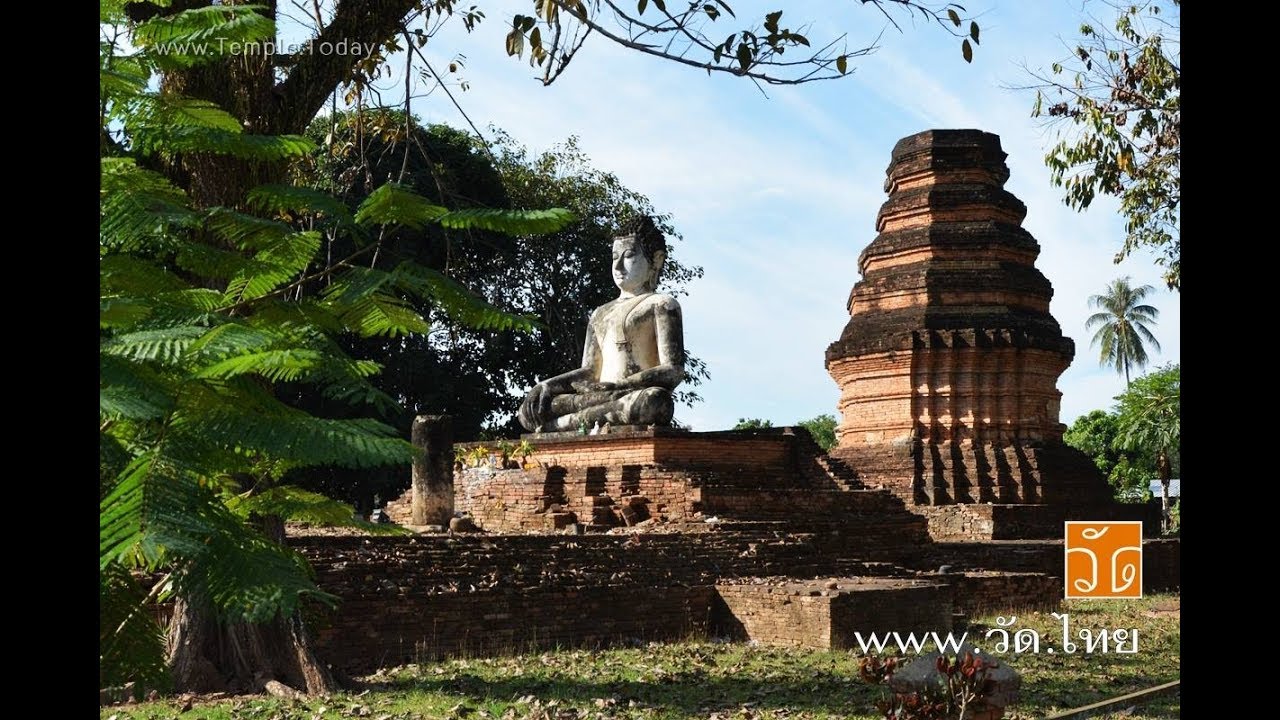
 Click to Access the Navigation Map GPS
Wat Roi Kho Map
Recommend

 Art, Culture and Heritage
 Historical Sites and Monuments(3)
 Landmarks and Memorials(7)
 Art, Craft Centres, Tradition(6)
 Museums(8)
 Historic Homes and Cities(1)
 Educational Places
 Museum for Study(1)
 Library(1)
 Educational Gardens, Farm(3)
Temple(38)
Educational Gardens, Farm(3)
Temple(38)
 Other Sacred Sites(5)
 Research and Development
 Royal Project(9)
 Suburban Living
 Village, Community(16)
 Local Market(5)
 Nature and Wildlife
 National Parks and Marine Reserves(18)
 Mountain (Doi)(20)
 Dam, Reservoir, Lake(8)
 Waterfalls(16)
 Hot Springs(6)
 Caves(8)
 River, Canal(10)
 Sea, Beach(1)
 Other natural attractions(3)
 Entertainment and Agricultural
 Animal camps and shows(1)
 Farms, Parks and Ecotourism(9)
 Shopping
 Shopping and Night Market(2)
 Call Customer Service in Tourism
 Call Customer Service in Tourism(1)
 Travel Articles, Recipes
 Travel Review, Food Review(1)
 Food Menu, North Recipes(1)


