
lovethailand home >North Travel Attractions >Chiang Rai Travel Attractions >Chiang Saen >Wiang > Wat Phra That Pha Ngao
TL;DR: Wat Phra That Pha Ngao is located at Ban Sop Kham, Wiang Subdistrict, Chiang Saen District, Chiang Rai, open Every Day, hours 06:00 – 18:00.
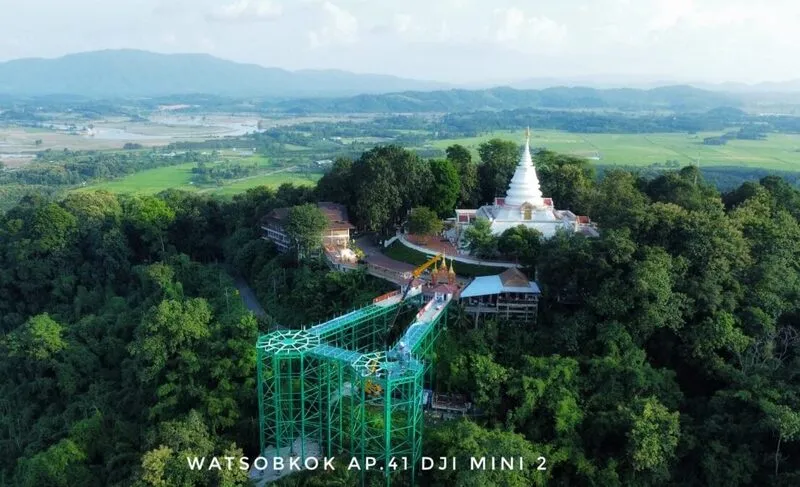
Wat Phra That Pha Ngao
Open Days: Every Day
Opening Hours: 06:00 – 18:00
Wat Phra That Pha Ngao is one of the most important temples in Chiang Saen, Chiang Rai, set on the western bank of the Mekong River directly opposite Laos. This is not just a temple for worship. It is also a place of legend, archaeology, sacred relics, panoramic river views, and one of the best-known skywalk viewpoints in the Chiang Saen area. In simple terms, Wat Phra That Pha Ngao is a destination where travelers can experience ancient Yonok legend, pay respect to Luang Pho Pha Ngao, explore a large hillside temple compound, and enjoy Mekong scenery in a single visit.
The temple stands in Ban Sop Kham, Wiang Subdistrict, Chiang Saen District, with a total area of 743 rai. Much of the grounds stretch across a long line of low hills descending from the upper settlement area toward the riverside village. This large and varied landscape is one of the reasons the temple feels very different from smaller urban temples. Visitors are not simply entering one courtyard. They are moving through a cultural landscape that combines sacred zones, hillside viewpoints, historical traces, and modern visitor facilities.
In older local usage, the hill was once called Doi Kham, while later generations increasingly referred to it as Doi Chan. These names are closely tied to the wider sacred geography of the area, including Phra That Pha Ngao, Phra That Chom Chan, and Phra That Chet Yot. Because of that, Wat Phra That Pha Ngao should be understood as part of a broader historical mountain landscape rather than only as a single temple structure. This layered setting gives the site unusual depth for travelers interested in the old cultural world of Chiang Saen.
According to the Yonok Chronicle, Khun Pha Phing, also known as Phra Ong Phing, the 23rd ruler of Yonok, built a chedi on a large rock at the foot of Doi Chan during the period roughly corresponding to B.E. 494–512. This chedi is understood to be the origin of Phra That Pha Ngao at the present temple. The story is central to the identity of the site because the relic structure standing on a huge rock outcrop is precisely what gives the place its visual character. The name “Pha Ngao” is associated with the rocky formation itself and the shadow-like image created by the massive stone.
Over time, the original relic structure deteriorated substantially, but it appears to have been restored at different periods because it is located on the lower slope of the hill and is easier to maintain than more remote summit monuments. This practical detail matters. It helps explain why Phra That Pha Ngao remained an active focus of reverence while other related structures on higher ground survived only as ruins. For visitors today, that means the lower sacred zone is both historically important and still very much alive in present-day religious practice.
Another important layer of the story involves Phra That Chom Chan and Phra That Chet Yot, two related ancient chedis associated with Doi Kham and Doi Chan. When Khun Lang ruled Wiang Poek Sa, the old name linked to present-day Chiang Saen, in the period B.E. 996–1007, he is said to have encouraged the local people to build chedis on the hilltops. Natural weathering over many centuries reduced these monuments largely to surviving bases around 5 metres high. This makes Wat Phra That Pha Ngao especially interesting because the temple landscape preserves not just one sacred monument, but the memory of several connected relic sites within the same hill system.
One of the most important events in the temple’s modern history took place on 17 March 1976 at 14:00, when local devotees who had been clearing and preparing the area discovered a beautiful Buddha image. Specialists in antiquities later assessed the image as being approximately 700 to 1,300 years old. The image was then named “Luang Pho Pha Ngao,” and from that point onward the temple adopted the name Wat Phra That Pha Ngao. This discovery transformed the identity of the site and firmly established Luang Pho Pha Ngao as the spiritual heart of the temple.
Luang Pho Pha Ngao remains the most revered sacred object in the temple. Visitors come specifically to pay respect to this ancient Buddha image, whose beauty, age, and discovery story have given it a special place in the religious life of Chiang Saen. The temple’s reputation today is inseparable from Luang Pho Pha Ngao. For many Thai visitors, the journey here is first and foremost an act of devotion before it becomes a sightseeing stop.
At the same time, Wat Phra That Pha Ngao has become one of the most attractive cultural and scenic destinations in the district. Provincial public information highlights the temple as an important historic monastery of Chiang Saen, home to Luang Pho Pha Ngao and now also known for a skywalk that overlooks the Mekong and three-country scenery. This dual identity is one of the reasons the site appeals to such a wide range of visitors. It serves worshippers, heritage travelers, photographers, and general tourists equally well.
Inside the temple grounds, visitors can move between several important areas. These include the sacred zone of Phra That Pha Ngao on the large rock, the viharn of Luang Pho Pha Ngao, the large Phra Borommathat Phuttha Nimit Chedi, and the elevated viewpoints farther uphill. There are also supporting cultural elements within the broader temple complex, such as spaces for meditation, religious activities, and heritage interpretation. Because of this variety, the temple is not a place for a rushed ten-minute stop. It is best experienced slowly.
One of the most talked-about attractions in recent years is the Pha Ngao Three-Land Skywalk. This viewing structure has added a contemporary dimension to the temple visit, allowing travelers to enjoy wide views over the Mekong River, Laos, and the surrounding highlands. Even with this new attraction, however, the core identity of the place remains firmly rooted in sacred history. The skywalk adds visual excitement, but the soul of the site is still the ancient relic tradition and Luang Pho Pha Ngao.
The atmosphere is especially beautiful in the morning and late afternoon, when the light across the Mekong is soft and the hillside setting feels particularly calm. Travelers who enjoy photography, river panoramas, and temple landscapes will find this one of the most rewarding stops in Chiang Saen. Those interested in history will appreciate the links to Yonok legend and the surviving memory of multiple ancient chedis across the hill. Those focused on devotion will find a temple that remains active and meaningful in contemporary religious life.
Wat Phra That Pha Ngao is also important as a living monastery. Current information identifies the abbot as Phra Ratchawachirakhani, Dr. (Prasert Panyawachiro), who also serves as the ecclesiastical provincial head of Chiang Rai. This underscores that the temple is not merely a preserved historical landmark. It remains a functioning religious institution with an active place in the Buddhist life of the province.
Getting There is straightforward from Chiang Saen town. Visitors can follow the Chiang Saen–Chiang Khong road along the Mekong toward Ban Sop Kham. The temple is easy to reach by private car and is well suited to a same-day route that also includes Wat Pa Sak, Wat Phra That Chom Kitti, Chiang Saen National Museum, Wat Chedi Luang, and other old-city sites. Parking is available, and for some upper sections of the site, local transport arrangements within the temple area may be used depending on current visitor management.
For practical planning, it is useful to separate entry to the temple itself from access to the skywalk. The main temple visit is free, while the skywalk has a separate ticket and visitor limit per round. In wet weather, access conditions may also change for safety reasons. Travelers who are specifically coming for the panoramic viewpoint should check the latest information with the temple before visiting.
Overall, Wat Phra That Pha Ngao is one of the strongest cultural destinations in Chiang Rai for anyone interested in sacred history, old legends, Buddhist heritage, and Mekong landscapes. It is a temple where worship, archaeology, storytelling, and scenic travel come together naturally. For travelers exploring Chiang Saen in depth, it deserves a prominent place on the itinerary.
| Name | Wat Phra That Pha Ngao |
| Location | Ban Sop Kham, Wiang Subdistrict, Chiang Saen District, Chiang Rai |
| Address | 391 Moo 5, Ban Sop Kham, Chiang Saen–Chiang Khong Road, Wiang, Chiang Saen, Chiang Rai 57150 |
| Coordinates | 20.2441523, 100.1082352 |
| Highlights | Luang Pho Pha Ngao, Phra That on a giant boulder, Mekong River views, Phra Borommathat Phuttha Nimit Chedi, Pha Ngao Three-Land Skywalk |
| History | Connected with Yonok legend and the Yonok Chronicle; Phra That Pha Ngao is linked to Khun Pha Phing in the period B.E. 494–512, and Luang Pho Pha Ngao was discovered on 17 March 1976 |
| Name Origin | The temple takes its name from the relic on the giant rock formation, known locally as Pha Ngao |
| Distinctive Features | Large hillside temple complex of 743 rai with sacred monuments, scenic viewpoints, a skywalk, and active worship areas in one destination |
| Travel Information | Accessible from Chiang Saen town via the Chiang Saen–Chiang Khong road along the Mekong, easy to combine with other Chiang Saen heritage attractions |
| Current Status | Active temple and major cultural attraction in Chiang Saen, open daily for visits, worship, and scenic viewing |
| Open Days | Every Day |
| Opening Hours | 06:00 – 18:00 |
| Fees | Temple visit free / Skywalk adult ticket 40 Baht / Children under 120 cm free |
| Facilities | Parking area, worship zones, scenic viewpoints, internal transport for some upper areas, skywalk, walking areas within the temple grounds |
| Main Areas / Zones | Phra That Pha Ngao, Luang Pho Pha Ngao Viharn, Phra Borommathat Phuttha Nimit Chedi, Pha Ngao Three-Land Skywalk, Mekong viewpoint area |
| Abbot / Caretaker | Phra Ratchawachirakhani, Dr. (Prasert Panyawachiro) |
| Main Contact Number | 095-424-0126 |
| Official Website / Official Page | Amazing Thailand, SMART DASTA, Facebook: Wat Phra That Pha Ngao Chiang Saen |
| Nearby Tourist Attractions | 1) Pha Ngao Three-Land Skywalk – about 1 km 2) Wat Phra Yuen Chiang Saen – about 4 km 3) Wat Pa Sak – about 5 km 4) Chiang Saen National Museum – about 6 km 5) Wat Phra That Chom Kitti – about 6 km |
| Nearby Restaurants | 1) The Terrace Chiang Saen – about 3 km, Tel. 061-686-7773 2) Krua Fa Mai Rim Khong – about 4 km, Tel. 088-252-3158 3) Mekong Pizza – about 4 km, Tel. 083-915-4750 4) Huen Sabaidee Chiang Saen – about 5 km, Tel. 095-513-2559 5) Le Quar Cafe Bistro Bed & Breakfast – about 5 km, Tel. 091-499-9291 |
| Nearby Accommodations | 1) Siam Triangle Hotel Chiang Saen – about 4 km, Tel. 053-651115 2) A Hotel Budget Chiang Saen – about 4 km, Tel. 053-651117 3) One Budget Hotel Chiangsaen – about 5 km, Tel. 080-075-4988 4) Athita Hotel Chiang Saen – about 6 km, Tel. 063-426-9464 5) Gin Greenery Resort – about 8 km, Tel. 053-650847 |
Frequently Asked Questions (FAQ)
Q: Where is Wat Phra That Pha Ngao located?
A: It is located in Ban Sop Kham, Wiang Subdistrict, Chiang Saen District, Chiang Rai, on the Thai side of the Mekong River opposite Laos.
Q: Is Wat Phra That Pha Ngao open every day?
A: Yes. The temple is open every day from 06:00 to 18:00.
Q: Is there an entrance fee for the temple?
A: The temple itself is free to enter, but the skywalk has a separate ticket fee.
Q: What is Luang Pho Pha Ngao?
A: Luang Pho Pha Ngao is an ancient Buddha image discovered on 17 March 1976 and is the most revered sacred image at the temple.
Q: What are the main highlights of the temple?
A: The main highlights are Phra That Pha Ngao on the giant rock, Luang Pho Pha Ngao, the Mekong viewpoint, Phra Borommathat Phuttha Nimit Chedi, and the Pha Ngao Three-Land Skywalk.
Q: How much time should I plan for a visit?
A: Around 1 to 2 hours is a good estimate for the main temple areas, and longer if you also plan to visit the skywalk and multiple viewpoints.
Q: How do I get there from Chiang Saen?
A: Travel from Chiang Saen town along the Chiang Saen–Chiang Khong road by the Mekong toward Ban Sop Kham. The temple is easy to reach by private car and fits well into a Chiang Saen day trip.
 Category: ●Places of Worship
 Group: ●Temple
Last Update : 6 MonthAgo
 Last Update : 6 MonthAgo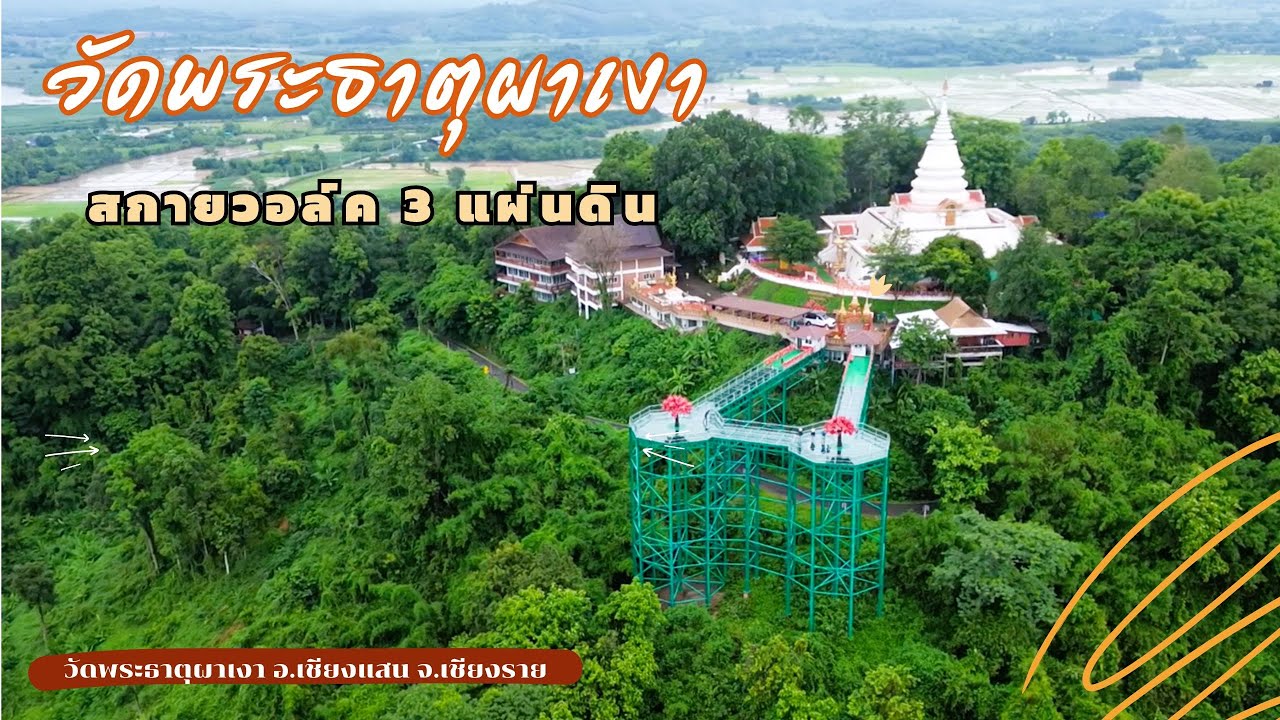
 Click to Access the Navigation Map GPS
Wat Phra That Pha Ngao Map
Gellery
Recommend

 Art, Culture and Heritage
 Historical Sites and Monuments(3)
 Landmarks and Memorials(7)
 Art, Craft Centres, Tradition(6)
 Museums(8)
 Historic Homes and Cities(1)
 Educational Places
 Museum for Study(1)
 Library(1)
 Educational Gardens, Farm(3)
Temple(38)
Educational Gardens, Farm(3)
Temple(38)
 Other Sacred Sites(5)
 Research and Development
 Royal Project(9)
 Suburban Living
 Village, Community(16)
 Local Market(5)
 Nature and Wildlife
 National Parks and Marine Reserves(18)
 Mountain (Doi)(20)
 Dam, Reservoir, Lake(8)
 Waterfalls(16)
 Hot Springs(6)
 Caves(8)
 River, Canal(10)
 Sea, Beach(1)
 Other natural attractions(3)
 Entertainment and Agricultural
 Animal camps and shows(1)
 Farms, Parks and Ecotourism(9)
 Shopping
 Shopping and Night Market(2)
 Call Customer Service in Tourism
 Call Customer Service in Tourism(1)
 Travel Articles, Recipes
 Travel Review, Food Review(1)
 Food Menu, North Recipes(1)


