
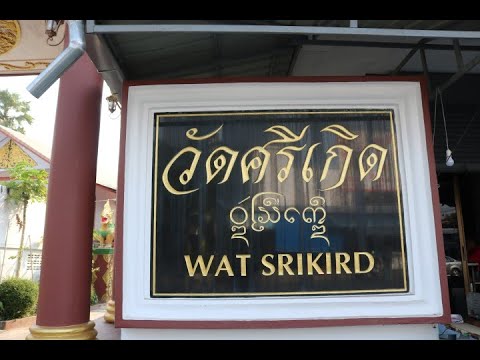
TL;DR: Wat Sri Koet is located at Ban Sri Koet, Moo 3, Wiang Subdistrict, Mueang Chiang Rai District, Chiang Rai.
Wat Sri Koet
Operating day: Daily
Operating time: 08.00 - 17.00
Wat Sri Koet is one of the old temples in the historic urban area of Chiang Rai, located in Ban Sri Koet, Moo 3, Wiang Subdistrict, Mueang Chiang Rai District. Although it is not always the first name mentioned by casual travelers, it is a temple with remarkable cultural depth. The site combines age, symbolism, Lanna craftsmanship, sacred objects, and a calm city-temple atmosphere in one place. For travelers who want to understand Chiang Rai beyond only its most famous landmarks, Wat Sri Koet is a highly worthwhile stop.
The temple was founded in B.E. 1983, placing it among the long-established temples of Chiang Rai. Its name is especially meaningful. Wat Sri Koet was named as an auspicious temple for the city, symbolically associated with the place where the sacred Bodhi tree, or “Sri” tree in local northern language, comes into being. This gives the temple an identity rooted in spiritual blessing and good fortune. In northern Thai cultural understanding, a temple name like this is never just decorative. It reflects the ideals and symbolic protection that the city wished to cultivate.
Wat Sri Koet also received royal boundary status on February 1, B.E. 2489. This is important because it confirms the temple’s formal religious standing in the modern Thai Buddhist system while also pointing back to its much older origins. The temple therefore carries both historical depth and institutional continuity. It is an old temple that has remained present and active across different eras of Chiang Rai’s history.
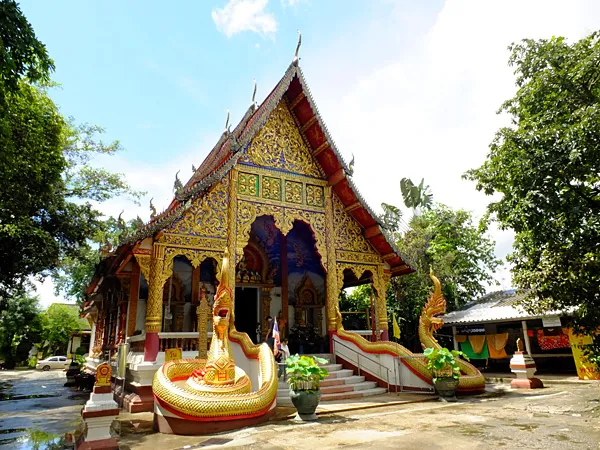
One of the temple’s strongest visual and artistic features is its Lanna woodcraft. According to the historical information associated with the temple, the doors, windows, supporting brackets, and gable elements are beautifully carved from teak wood. This makes Wat Sri Koet especially appealing to visitors who appreciate craftsmanship. The beauty of the temple does not depend only on overall scale, but on the richness of the carved details. The more closely one looks, the more the temple reveals the patience, technical skill, and artistic discipline of northern Thai artisans.
Additional public descriptions of the temple also indicate that the old ordination hall once reflected a more traditional Lanna structure and that the later hall continued to preserve a northern style, including large carved wooden decorative elements and gold-on-lacquer details. This gives the temple an added layer of interest. Visitors are not only looking at an old temple, but also at a site where the story of restoration and continuity can still be read through the architecture.
The sacred objects of Wat Sri Koet are another important reason to visit. The temple has a principal Buddha image, an old Lanna-style chedi, and a number of related religious objects that help define the spiritual atmosphere of the site. Publicly available descriptions also mention Phra Phuttha Si Ming Mongkhon, a small bronze Buddha image of Chiang Saen artistic style, which is held in special reverence and is associated with ritual activity during the Songkran season. For travelers interested in sacred art and local ritual practice, this adds substantial depth to the visit.
The old chedi of the temple is especially significant because it represents one of the clearest surviving Lanna elements at the site. It helps anchor the temple historically and visually. In many northern Thai temples, the chedi is the spiritual and symbolic center of the grounds, and Wat Sri Koet follows that pattern. The presence of the chedi, together with the carved wood details and the old Buddha images, gives the temple a strong sense of coherence as a northern Buddhist site rather than simply an urban temple stop.
For travelers, Wat Sri Koet is attractive because it combines several practical advantages. It is centrally located, quiet, culturally rich, and easy to include in a city itinerary. Unlike more crowded temple attractions, it allows for a slower and more reflective visit. Visitors can spend time looking at the woodwork, observing the ordination hall and the chedi, and appreciating the subtle atmosphere of a temple that remains deeply connected to the old city rather than overwhelmed by mass tourism.
The temple is especially suitable for travelers interested in Lanna architecture and heritage. The teak carvings on the doors, windows, brackets, and gable areas are not minor decorative details; they are the main visual identity of the temple. This means Wat Sri Koet rewards visitors who look carefully. It is a temple of refined details rather than one overwhelming spectacle. That quality often makes a stronger impression on travelers who value authenticity and craftsmanship.
Because the temple is located in Wiang, the historic center of Chiang Rai, it is easy to connect with other major attractions nearby. Wat Phra Kaew, Wat Phra Singh, the Chiang Rai Clock Tower, the weekend walking street, and the Hilltribe Museum can all be visited within the same broader route. This makes Wat Sri Koet a practical choice for half-day or full-day city exploration. Travelers do not need to make a special out-of-town trip. The temple fits naturally into the cultural geography of central Chiang Rai.
Getting There Wat Sri Koet is located in central Chiang Rai and can be reached easily by private car, local taxi, ride-hailing app, or short city drive from landmarks such as the Clock Tower. Because it lies within the old city area, it can also be combined efficiently with nearby temples, restaurants, and hotels. This convenience is one of the temple’s strongest practical advantages for real travel planning.
The temple also works well for different kinds of travelers. Devotional visitors can come for worship and merit-making. Architecture lovers can focus on the carved teak details and Lanna forms. Cultural travelers can appreciate the temple’s name, history, and symbolic position within old Chiang Rai. Slow travelers can use the temple as a calm stop between busier urban attractions. Very few city temples manage to serve all of these purposes so naturally.
Another important aspect is the temple’s continuing religious life. Publicly available information identifies the current abbot as Phra Kru Sirikitchathorn, who also serves in a wider district-level monastic role. This helps confirm that Wat Sri Koet is not merely a preserved historical site. It remains a functioning temple with current administration and active religious status. For visitors, that living continuity adds authenticity to the experience.
In summary, Wat Sri Koet is one of the most rewarding old temples for travelers exploring the historic heart of Chiang Rai. It offers historical depth, a meaningful temple name, Lanna architecture, beautiful teak carvings, sacred Buddhist objects, and a convenient central location. Travelers who want a deeper, quieter, and more culturally grounded experience in Chiang Rai should not overlook it.
| Name | Wat Sri Koet |
| Summary | An ancient temple in central Chiang Rai, founded in B.E. 1983, known for its Lanna chedi, important Buddha images, and beautifully carved teak architectural details |
| Location | Ban Sri Koet, Moo 3, Wiang Subdistrict, Mueang Chiang Rai District, Chiang Rai |
| Highlights | Lanna ordination hall, Lanna-style chedi, important Buddha images, and highly detailed teak carvings on doors, windows, brackets, and gables |
| History | Founded in B.E. 1983 and granted royal boundary status on February 1, B.E. 2489 |
| Name Origin | The name symbolizes an auspicious place associated with the sacred Bodhi tree, or “Sri” tree, in northern cultural understanding |
| Distinctive Features | A quiet old-city temple with strong Lanna identity and especially fine teak carvings |
| Travel Information | Located in central Chiang Rai and easy to reach from the Clock Tower and the old-city temple area by car or local transport |
| Current Status | An active temple under the Mahanikaya order |
| Abbot / Caretaker | Phra Kru Sirikitchathorn |
| Main Contact Number | 053-711-989 |
| Nearby Tourist Attractions | 1. Wat Phra Kaew Chiang Rai 0.9 km 2. Wat Phra Singh Chiang Rai 1.1 km 3. Chiang Rai Clock Tower 1.2 km 4. Chiang Rai Walking Street 1.4 km 5. Hilltribe Museum 1.8 km |
| Nearby Restaurants | 1. EAT KUNDA 0.8 km 2. Barrab Restaurant 1.4 km Tel. 094-812-6670 3. Melt In Your Mouth 2.8 km Tel. 062-023-0549 4. Chivit Thamma Da 3.0 km Tel. 081-984-2925 5. Lu Lum Chiang Rai 3.3 km Tel. 053-748-223 |
| Nearby Accommodations | 1. Hi Chiangrai Hotel 1.2 km Tel. 053-716-699 2. Sooknirund Hotel 1.3 km Tel. 053-798-788 3. Wiang Inn Hotel 1.4 km Tel. 098-415-7425 4. Nak Nakara Hotel 1.7 km Tel. 053-717-700 5. The Riverie by Katathani 2.9 km Tel. 053-607-999 |
Frequently Asked Questions (FAQ)
Q: Where is Wat Sri Koet located?
A: It is located in Ban Sri Koet, Moo 3, Wiang Subdistrict, Mueang Chiang Rai District, in central Chiang Rai.
Q: How old is Wat Sri Koet?
A: The temple was founded in B.E. 1983, making it one of the old temples of Chiang Rai.
Q: What is Wat Sri Koet best known for?
A: It is especially known for its Lanna chedi, important Buddha images, and beautiful teak carvings on architectural elements such as doors, windows, brackets, and gables.
Q: Why is the temple name meaningful?
A: The name symbolizes an auspicious place associated with the sacred Bodhi tree, reflecting the spiritual blessing of the city.
Q: Is Wat Sri Koet easy to include in a Chiang Rai city itinerary?
A: Yes. It is located in the old city area and connects easily with other major attractions such as Wat Phra Kaew, Wat Phra Singh, and the Chiang Rai Clock Tower.
Q: Who would enjoy visiting Wat Sri Koet the most?
A: Travelers interested in old temples, Lanna architecture, traditional wood carving, and a quieter cultural experience in central Chiang Rai would especially enjoy it.
Category: ●Places of Worship
 Category: ●
Group: ●Temple
 Group: ●
 Last Update : 6 DayAgo
 Click to Access the Navigation Map GPS
 Art, Culture and Heritage
 Historical Sites and Monuments(
 Landmarks and Memorials(
 Art, Craft Centres, Tradition(
 Museums(
 Historical Houses and The Ancient City(
 Educational Places
 Museum for Study(
 Library(
 Educational Gardens, Farm(
 University
 Other religious and spiritural sites(
 Research and Development
 Royal Project(
 Suburban Living
 Village, Community(
 Local Market(
 Nature and Wildlife
 National Parks and Marine Reserves(
 Mountain (Doi)(
 Dam, Reservoir, Lake(
 Waterfalls(
 Hot Springs(
 Caves(
 River, Canal(
 Sea, Beach(
 Other natural attractions(
 Entertainment and Agricultural
 Animal camps and shows(
 Farm, Parks, Gardens and Ecotourism(
 Shopping
 Shopping and Night Market(
 Call Customer Service in Tourism
 Call Customer Service in Tourism(
 Travel Articles, Recipes
 Travel Review, Food Review(
 Food Menu, North Recipes(


