
lovethailand home >North Travel Attractions >Chiang Rai Travel Attractions >Muang Chiang Rai >Wiang > Wat Mung Muang
TL;DR: Wat Mung Muang is located at Uttarakit Road, Moo 1, Wiang Subdistrict, Mueang Chiang Rai District, Chiang Rai, open Daily, hours Please contact the temple in advance.
Wat Mung Muang
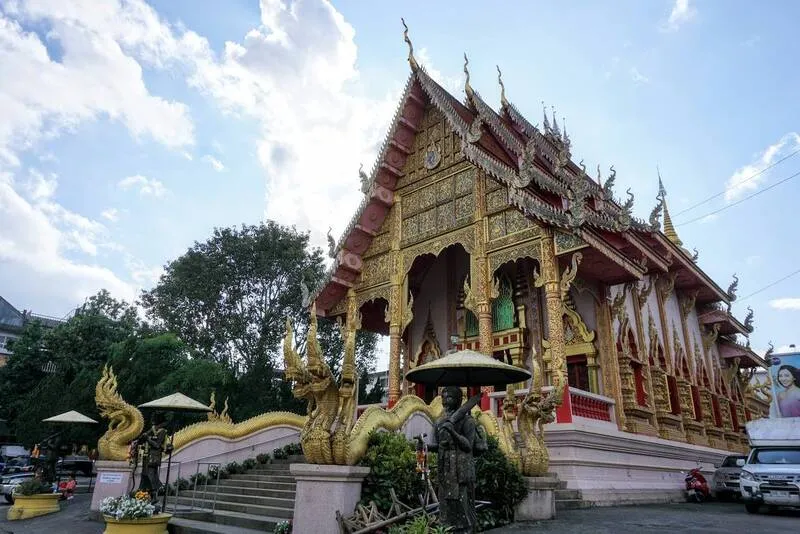
Open Days: Daily
Opening Hours: Please contact the temple in advance
Wat Mung Mueang is a long-standing temple in central Chiang Rai, located on Uttarakit Road in Wiang Subdistrict, Mueang Chiang Rai District. Although it is less internationally famous than some of Chiang Rai’s larger temple landmarks, it holds a very distinctive place in local memory. The temple is especially known as the home of “Phra Chao Song Si,” a sacred Buddha image deeply respected by local residents. For travelers, Wat Mung Mueang offers something valuable: a chance to experience a meaningful city temple that is still connected to everyday religious life, local belief, and the older historical identity of Chiang Rai.
The first impression of the temple is its calm simplicity. This is not a temple built around spectacle. Instead, it is a temple that feels woven into the life of the city. Once inside the grounds, the mood becomes noticeably quieter than the surrounding urban streets. Visitors often find that the space feels intimate and sincere, making it suitable for slow sightseeing, merit-making, and quiet reflection. This atmosphere is one of the temple’s strongest qualities, especially for travelers who want to see more than only Chiang Rai’s best-known attractions.
Historical information associated with the temple states that Wat Mung Mueang was built in B.E. 2382. It belongs to the Mahanikaya monastic order. The temple received royal boundary status on December 5, B.E. 2409, and the boundary consecration ceremony was later performed on January 13, B.E. 2510. These dates show that Wat Mung Mueang has had a formal and continuous religious role for a very long time. It is not simply an old structure that survived into the present. It is a temple that has remained active and meaningful across generations.
The most important sacred object in the temple is Phra Chao Song Si, the “Two-Colored Buddha,” which local people regard as one of the sacred Buddha images of Chiang Rai. This image gives the temple its strongest spiritual identity. Many visitors come specifically to pay respect, make merit, and ask for blessings. Even though detailed historical documentation about the image is not always widely presented in every public source, its place in local devotion is very clear. The temple’s spiritual reputation is closely tied to this image, and that reputation remains strong today.
One of the most memorable local stories connected to Wat Mung Mueang dates to World War II. Local memory recalls that while bombs were dropped in the surrounding Chiang Rai area, especially around the fresh market district nearby, the temple itself remained safe. This story has become part of the temple’s identity. For local people, it is more than an anecdote. It represents protection, sacred power, and reassurance during a time of fear and uncertainty. For travelers, the story gives the temple emotional depth. It turns the site into a place of communal memory, not only religious practice.
The temple’s importance therefore comes from more than architecture alone. It is the combination of sacred image, wartime memory, long institutional history, and present-day worship that makes Wat Mung Mueang meaningful. Travelers who visit only for visual beauty will still find a peaceful temple space. But travelers who pause and learn its story will encounter a place shaped by local faith and memory in a much more intimate way.
Important features inside the temple include the sacred Buddha image Phra Chao Song Si, the temple chedi, and an image of Phra Sangkajjai. These three elements give visitors a useful framework for understanding the temple. Phra Chao Song Si is the center of devotion. The chedi represents continuity and sacred presence within the temple grounds. Phra Sangkajjai adds another layer of local religious practice, as many Thai Buddhists associate the image with abundance, merit, and auspicious blessings. This means the temple is not only a place to observe, but also a place where visitors can participate respectfully in common forms of Thai Buddhist worship.
Wat Mung Mueang is especially suitable for travelers who prefer meaningful urban temples over heavily crowded destinations. It works well for several types of visitors. Devotional travelers can come to pay respect to Phra Chao Song Si. Cultural travelers can appreciate the temple as an example of a city temple tied to local memory. Slow travelers can enjoy the quiet atmosphere without needing a long journey outside the city. Because the temple is within central Chiang Rai, it can easily be included in a short city itinerary.
The location is one of the temple’s major practical strengths. Wat Mung Mueang is in Wiang, the central urban area of Chiang Rai, making it easy to reach from key city landmarks. Travelers staying near the Clock Tower, the Night Bazaar, or central boutique hotels can get there within minutes. This convenience means the temple can be visited in the morning before breakfast, as a midday stop between other attractions, or as a quiet pause before continuing to restaurants or cafés elsewhere in town.
Getting There Because the temple is located on Uttarakit Road in central Chiang Rai, it is easy to reach by private car, local taxi, ride-hailing app, or short city drive. Visitors starting from the Chiang Rai Clock Tower can reach the temple very quickly. This makes Wat Mung Mueang ideal for a half-day city route that includes temples, local food, and heritage areas without requiring long-distance transportation.
Another reason the temple is worth visiting is that it helps travelers see a different side of Chiang Rai. Many visitors know the province through major attractions such as Wat Rong Khun, Wat Rong Suea Ten, or Wat Huay Pla Kang. Wat Mung Mueang offers a different perspective. It is not monumental in the same way, but it is deeply local. It reflects how temples continue to function in the everyday life of Chiang Rai’s residents. That makes it valuable for travelers who want a fuller understanding of the city beyond its most photographed sites.
Photographically, the temple has a quieter kind of beauty. Instead of dramatic contemporary forms, it offers a more understated atmosphere. The temple grounds, sacred objects, and ordinary rhythms of worship all contribute to a gentle and authentic visual experience. Visitors who enjoy documentary-style travel photography or urban cultural scenes will find the temple especially rewarding. The setting is less about grand visual spectacle and more about lived presence.
Wat Mung Mueang is also easy to combine with nearby restaurants and accommodations. Since it is located in the city center, travelers can move from a temple visit to local dining or hotel check-in without difficulty. This is practical for real travel planning. A visit here does not need to stand alone as a separate out-of-town excursion. It fits naturally into the daily rhythm of exploring Chiang Rai city.
Current public Buddhist administrative information also shows that the temple remains active today, with recent ceremonial preparations and a named abbot in place. This matters because it confirms that Wat Mung Mueang is not simply a historical reference. It is still a living temple with ongoing religious activity. For visitors, that adds authenticity and helps explain why the temple continues to matter to local people.
In summary, Wat Mung Mueang is one of the most worthwhile lesser-known temples in central Chiang Rai. It combines accessibility, spiritual value, local memory, and a calm urban setting. Travelers who want a temple visit that feels personal, grounded, and meaningful should strongly consider adding it to their Chiang Rai itinerary.
| Name | Wat Mung Mueang |
| Summary | A historic city temple in central Chiang Rai, known for Phra Chao Song Si, a sacred Buddha image of Chiang Rai, along with its chedi, Phra Sangkajjai image, and wartime local memory |
| Location | Uttarakit Road, Moo 1, Wiang Subdistrict, Mueang Chiang Rai District, Chiang Rai |
| Highlights | Phra Chao Song Si, temple chedi, Phra Sangkajjai, peaceful city-temple atmosphere, World War II local memory |
| History | Built in B.E. 2382, received royal boundary status on December 5, B.E. 2409, and held the boundary consecration ceremony on January 13, B.E. 2510 |
| Distinctive Features | A quiet temple in the city strongly associated with local faith in Phra Chao Song Si and a remembered story of safety during World War II bombing in Chiang Rai |
| Travel Information | Located in central Chiang Rai and easy to reach from the Clock Tower and main city areas by car or local transport |
| Current Status | An active temple under the Mahanikaya order with recent ceremonial activities recorded in 2024 |
| Abbot / Caretaker | Phra Kru Udom Thammanithat |
| Main Contact Number | 062-916-6163 |
| Nearby Tourist Attractions | 1. Chiang Rai Clock Tower 0.7 km 2. Wat Phra Singh Chiang Rai 0.9 km 3. Wat Phra Kaew Chiang Rai 1.0 km 4. Chiang Rai Walking Street 1.1 km 5. Hilltribe Museum 1.5 km |
| Nearby Restaurants | 1. EAT KUNDA 0.4 km 2. Barrab Restaurant 1.0 km โทร. 094-812-6670 3. Melt In Your Mouth 2.4 km 4. Chivit Thamma Da 2.6 km โทร. 081-984-2925 5. Lu Lum Chiang Rai 3.0 km |
| Nearby Accommodations | 1. Hi Chiangrai Hotel 0.8 km โทร. 053-716-699 2. Sooknirund Hotel 0.9 km 3. Wiang Inn Hotel 1.0 km โทร. 098-415-7425 4. Nak Nakara Hotel 1.4 km โทร. 053-717-700 5. The Riverie by Katathani 2.6 km โทร. 053-607-999 |
Frequently Asked Questions (FAQ)
Q: Where is Wat Mung Mueang located?
A: It is located on Uttarakit Road in Wiang Subdistrict, Mueang Chiang Rai District, in central Chiang Rai.
Q: What is Wat Mung Mueang known for?
A: The temple is best known for Phra Chao Song Si, a sacred Buddha image respected by local people in Chiang Rai.
Q: Does the temple have historical significance?
A: Yes. It was built in B.E. 2382 and has long served as a city temple with formal religious status and strong local historical memory.
Q: Why do local people remember this temple during World War II?
A: Local accounts say that although surrounding market areas were affected by bombing, the temple itself remained safe, which strengthened its sacred image in local memory.
Q: Is Wat Mung Mueang easy to visit from central Chiang Rai?
A: Yes. It is located in the city center and can be reached very easily from major central landmarks such as the Clock Tower.
Q: What other places can be visited nearby?
A: Visitors can continue to the Chiang Rai Clock Tower, Wat Phra Singh, Wat Phra Kaew, the walking street, and several nearby restaurants and hotels in the city.
 Category: ●Places of Worship
 Group: ●Temple
Last Update : 6 MonthAgo
 Last Update : 6 MonthAgo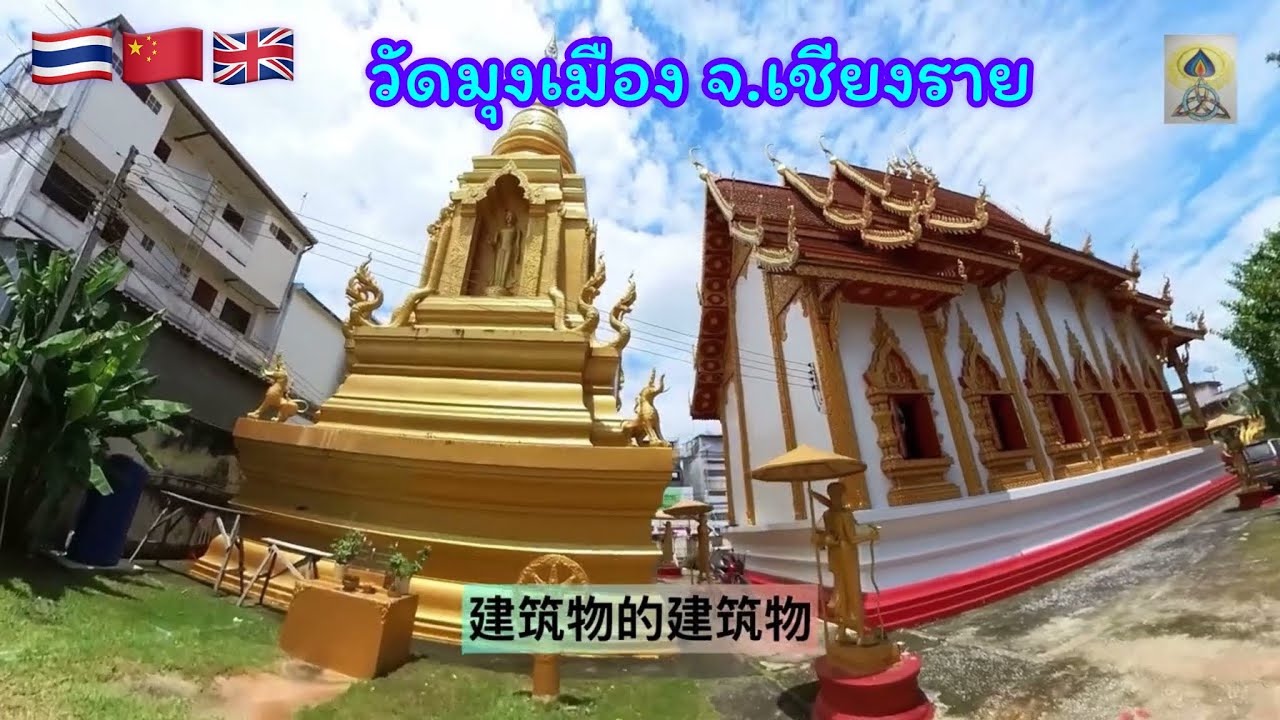
 Click to Access the Navigation Map GPS
Wat Mung Muang Map
Recommend

 Art, Culture and Heritage
 Historical Sites and Monuments(3)
 Landmarks and Memorials(7)
 Art, Craft Centres, Tradition(6)
 Museums(8)
 Historic Homes and Cities(1)
 Educational Places
 Museum for Study(1)
 Library(1)
 Educational Gardens, Farm(3)
Temple(38)
Educational Gardens, Farm(3)
Temple(38)
 Other Sacred Sites(5)
 Research and Development
 Royal Project(9)
 Suburban Living
 Village, Community(16)
 Local Market(5)
 Nature and Wildlife
 National Parks and Marine Reserves(20)
 Mountain (Doi)(20)
 Dam, Reservoir, Lake(8)
 Waterfalls(16)
 Hot Springs(6)
 Caves(8)
 River, Canal(10)
 Sea, Beach(1)
 Other natural attractions(3)
 Entertainment and Agricultural
 Animal camps and shows(1)
 Farms, Parks and Ecotourism(9)
 Shopping
 Shopping and Night Market(2)
 Call Customer Service in Tourism
 Call Customer Service in Tourism(1)
 Travel Articles, Recipes
 Travel Review, Food Review(1)
 Food Menu, North Recipes(1)


