
lovethailand home >North Travel Attractions >Chiang Rai Travel Attractions >Muang Chiang Rai >Rop Wiang > King Rama IX Footprint Museum
TL;DR: King Rama IX Footprint Museum is located at Mengrai Maharaj Camp, Mueang Chiang Rai District, Chiang Rai Province, open Daily, hours 08:30 – 16:00.

King Rama IX Footprint Museum
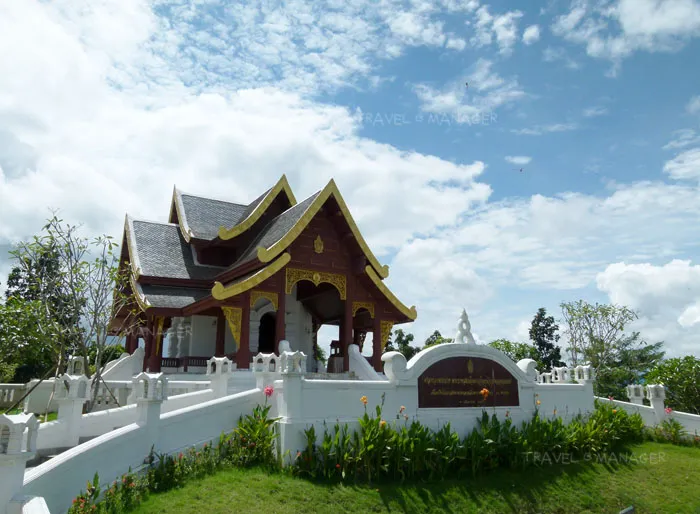
Open Days: Daily
Opening Hours: 08:30 – 16:00
The King Rama IX Footprint Museum inside Mengrai Maharaj Camp is one of Chiang Rai’s most meaningful historical attractions for visitors interested in military history, royal history, and the memory of conflict in northern Thailand. This is not simply a sacred site for paying respect. It is also a place where the story of anti-communist operations in the northern borderlands is preserved and connected directly to the royal visit that left a lasting emotional mark on soldiers and local people.
The main importance of the site lies in the footprint pavilion itself. The royal footprint of King Bhumibol Adulyadej was originally impressed on a plaster slab during a royal visit to military forces at Doi Pha Ya Phiphak in 1982. That visit took place during a period when northern Thailand was affected by armed conflict involving the Communist Party of Thailand. Because of this background, the footprint is remembered not only as a sacred royal symbol, but also as a sign of encouragement, protection, and morale for the troops operating in difficult terrain.
The wider historical background begins in the mid-20th century, when communist organizing expanded into parts of northern Thailand, especially border and highland areas involving Chiang Rai and nearby provinces. Over time, the conflict intensified, and several areas became important bases and battle zones. Among the best-known theaters of operation were Doi Yao and Doi Pha Mon, where armed forces and government officers carried out repeated operations to suppress communist activity and regain control of the region.
These events formed the context for major campaigns and military actions in Chiang Rai, including battles connected to strategic high points such as Hill 1188 on Doi Pha Ya Phiphak. The story is especially associated with the 473rd Infantry Battalion, whose operation in the area became a key part of local memory. For this reason, the museum and pavilion are more than commemorative structures. They are part of a larger narrative about sacrifice, military service, national security, and the emotional relationship between the monarchy and soldiers stationed in the northern frontier.
On 27 February 1982, King Bhumibol Adulyadej, together with Queen Sirikit, Princess Maha Chakri Sirindhorn, and Princess Soamsawali, visited the operational base at Doi Pha Ya Phiphak to meet soldiers and local people. During that visit, the King graciously placed his footprint on a prepared plaster surface as a blessing and source of encouragement for the troops. That event became the defining moment behind the site. The footprint came to embody both royal compassion and the hopes of those serving in a conflict zone.
Later, the footprint was relocated for public veneration within Mengrai Maharaj Camp, and in 2009 it was ceremonially enshrined at the newer pavilion on Doi Hoyod inside the camp. Since then, the site has become a place where military memory, royal reverence, and historical tourism meet. For visitors today, the experience combines a devotional atmosphere with a deeper understanding of the political and military history of Chiang Rai.
One reason the site is especially appealing is that it offers several layers of experience at once. Visitors come to pay respect, to learn about a critical chapter of northern Thai history, and to enjoy the scenic environment of Doi Hoyod. The viewpoint from the pavilion area opens across Chiang Rai city, creating a quiet and reflective atmosphere that suits the meaning of the place. This balance between remembrance and landscape makes the visit feel more complete than many standard monument stops.
The location also benefits from being inside Mengrai Maharaj Camp, which today is part of the Army Land tourism concept under the responsibility of the local military area. That means the site is more accessible to ordinary visitors than people might expect from a military setting. Instead of being hidden away as a strictly internal military shrine, it has become one of the historical attractions that the public can visit, while still retaining its dignity and commemorative importance.
From a travel perspective, the site works well for anyone exploring Chiang Rai city and wanting something more historically substantial than a routine sightseeing stop. It appeals to Thai visitors with reverence for King Rama IX, to students and history-minded travelers, and to anyone interested in how places of memory are created from moments of conflict and reconciliation. The atmosphere on Doi Hoyod is calm, open, and ideal for a slow visit.
Getting There is relatively straightforward. Visitors can enter Mengrai Maharaj Camp either through the front entrance, Gate 1, or the rear access at Gate 5, where there is a marked entrance for the Footprint Pavilion. From there, the route continues past the Mae Kok Golf Course, the clubhouse, and riverside guest accommodation before climbing to Doi Hoyod. Direction signs are in place, and military police officers at the gates can help with directions during official hours if needed.
The pavilion is suitable both for visitors who come specifically to pay respect and for those who want to add a historical landmark to a city itinerary. Since it lies within Mueang Chiang Rai District, it can be combined with other attractions in and around the city without much difficulty. Overall, The King Rama IX Footprint Museum is one of Chiang Rai’s most meaningful historical and commemorative sites, uniting royal memory, military history, and a panoramic hilltop setting in one place.
| Name | The King Rama IX Footprint Museum |
| Location | Mengrai Maharaj Camp, Mueang Chiang Rai District, Chiang Rai Province |
| Address | Mengrai Maharaj Camp, Mueang Chiang Rai, Chiang Rai 57000 |
| Highlights | The King Rama IX Footprint Pavilion on Doi Hoyod, historical interpretation linked to northern anti-communist operations, and panoramic views over Chiang Rai city |
| History | The footprint originated during the royal visit to Doi Pha Ya Phiphak on 27 February 1982 and was later moved to Mengrai Maharaj Camp before being ceremonially enshrined on Doi Hoyod in 2009 |
| Distinctive Features | A sacred royal memorial, a historical site connected to northern military operations, and a scenic viewpoint within Army Land |
| Travel Information | Accessible through Gate 1 or Gate 5 of Mengrai Maharaj Camp, then follow the signs past the Mae Kok Golf Course up to Doi Hoyod |
| Current Status | Open to visitors |
| Open Days | Daily |
| Opening Hours | 08:30 – 16:00 |
| Facilities | Road access to the pavilion, viewpoint area, direction signs, staff assistance at camp entrances during official hours |
| Main Areas / Zones | Footprint Pavilion, Doi Hoyod viewpoint area, route through Mae Kok Golf Course |
| Main Contact Number | 053-711205 |
| Nearby Tourist Attractions | 1) King Mengrai Monument 1 km 2) 37th Military Circle Museum 2 km 3) Ko Loi Public Park 4 km 4) Wat Phra Kaew 6 km 5) Chiang Rai Clock Tower 7 km |
| Nearby Restaurants | 1) Jomphon Coffee 2 km 2) Khao Soi Samerjai 4 km 3) Krua Rim Kok 4 km 4) Melt In Your Mouth 5 km 5) Chivit Thamma Da 6 km |
| Nearby Accommodations | 1) The Imperial River House Resort 3 km 2) Le Meridien Chiang Rai Resort 4 km 3) Nak Nakara Hotel 6 km 4) B2 Chiang Rai Boutique & Budget Hotel 6 km 5) Wiang Inn Hotel 7 km |
Frequently Asked Questions (FAQ)
Q: Where is The King Rama IX Footprint Museum located?
A: It is located on Doi Hoyod inside Mengrai Maharaj Camp in Mueang Chiang Rai District, Chiang Rai Province.
Q: What is the main highlight of the site?
A: The main highlight is the King Rama IX Footprint Pavilion, which is closely connected with northern military history and also offers wide views over Chiang Rai city.
Q: Is the museum open every day?
A: Yes, it is open daily.
Q: How much time should I allow for the visit?
A: Around 45 minutes to 1.5 hours is usually enough for paying respect, walking around, and enjoying the viewpoint.
Q: Can I drive up to the pavilion?
A: Yes. Visitors can drive into the camp and follow the signs up to Doi Hoyod.
Q: Who would enjoy visiting this place?
A: It is well suited to visitors interested in history, King Rama IX, military heritage, and quiet viewpoint attractions in Chiang Rai.
 Category: ●Art, Culture and Heritage
 Group: ●Museums
Last Update : 4 MonthAgo
 Last Update : 4 MonthAgo
 Click to Access the Navigation Map GPS
King Rama IX Footprint Museum Map
Recommend

 Historical Sites and Monuments(3)
 Landmarks and Memorials(7)
 Art, Craft Centres, Tradition(6)
Museums(8)
Art, Craft Centres, Tradition(6)
Museums(8)
 Historic Homes and Cities(1)
 Educational Places
 Museum for Study(1)
 Library(1)
 Educational Gardens, Farm(3)
 Places of Worship
 Temple(38)
 Other Sacred Sites(5)
 Research and Development
 Royal Project(9)
 Suburban Living
 Village, Community(16)
 Local Market(5)
 Nature and Wildlife
 National Parks and Marine Reserves(18)
 Mountain (Doi)(20)
 Dam, Reservoir, Lake(8)
 Waterfalls(16)
 Hot Springs(6)
 Caves(8)
 River, Canal(10)
 Sea, Beach(1)
 Other natural attractions(3)
 Entertainment and Agricultural
 Animal camps and shows(1)
 Farms, Parks and Ecotourism(9)
 Shopping
 Shopping and Night Market(2)
 Call Customer Service in Tourism
 Call Customer Service in Tourism(1)
 Travel Articles, Recipes
 Travel Review, Food Review(1)
 Food Menu, North Recipes(1)


