
lovethailand home >North Travel Attractions >Chiang Rai Travel Attractions >Muang Chiang Rai >Wiang > Wat Klang Wiang
TL;DR: Wat Klang Wiang is located at Uttarakit Road, Wiang Subdistrict, Mueang Chiang Rai District, Chiang Rai, open Daily, hours 08:00 – 20:00.
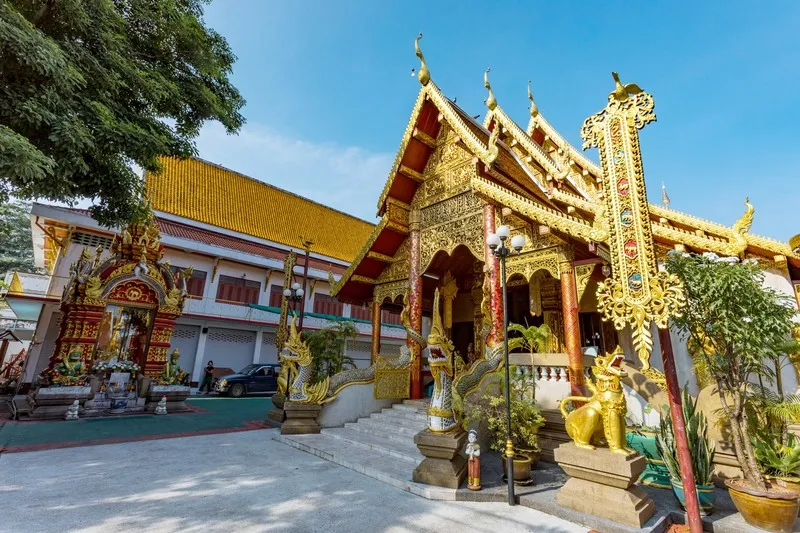
Wat Klang Wiang
Open Days: Daily
Opening Hours: 08:00 – 20:00
Wat Klang Wiang, also known as Wat Chanthalok or Wat Chanthalok Klang Wiang, is one of the most historically meaningful temples in Chiang Rai city. Located on Uttarakit Road in Wiang Subdistrict, Mueang Chiang Rai District, the temple is not only an old religious site but also an important urban landmark tied directly to the idea of the city center in traditional Lanna culture. What makes this temple especially significant is that it combines several layers of heritage in one place: an old temple founded during the period of Burmese rule over Lanna, a restored urban monastery from the era when Chiang Rai was revived, and the site associated with Chiang Rai’s city navel, or sacred central point. For foreign visitors interested in more than just beautiful architecture, Wat Klang Wiang offers a rare opportunity to understand how religion, civic symbolism, and local memory come together in northern Thailand.
In simple terms, Wat Klang Wiang is a temple where the history of Chiang Rai can be read almost like a condensed timeline. It began as Wat Chanthalok in the 17th century, later fell into abandonment when Chiang Rai became deserted during times of warfare, and eventually re-emerged as an important temple again when the city was rebuilt. Its later role became even more important because the area around the temple was identified as the central point of the old city, leading to the installation of the city navel in the late 19th century. This is why the temple’s present name, Wat Klang Wiang, carries deep meaning. It does not merely mean a temple in a central location. It refers to a temple at the symbolic middle of the walled city itself.
According to historical records, Wat Chanthalok was founded in 1637 CE by Phaya Khithok, also written as Phaya Khithon, the ruler of Chiang Rai appointed under King Thalun during the Burmese period in Lanna. The original name of the temple is believed to have come from a large red sandalwood tree that once stood in the temple grounds. This detail may sound small, but it became central to the temple’s identity for generations. Later, when Chiang Rai was abandoned during the conflicts that led to the expulsion of Burmese influence, the temple also became deserted. This interrupted history is important because it explains why Wat Klang Wiang feels different from temples that have developed continuously without a long break. Its story is closely tied to the rise, fall, and rebirth of Chiang Rai itself.
When Chiang Rai was revived in 1825 under Phraya Rattana Anaket, also known as Chao Nan Thammalangka, the city gradually regained life. Groups of Tai Khun people from Phayak settled around the old temple area, forming a community and helping restore Wat Chanthalok. Later, during the continued rebuilding of Chiang Rai under Chao Un Ruen, measurements of the city were taken to establish the boundaries of the revived walled town. Those measurements placed the central point of the city near Wat Chanthalok. Because of that, the city navel was installed there in 1874. From that point onward, the temple came to be known as Wat Chanthalok Klang Wiang, and over time the name was shortened to Wat Klang Wiang. This change in name reflects both geography and ritual meaning, making the temple a civic landmark as much as a religious one.
Another key event that shaped the temple’s identity took place in 1903, when a major storm caused the great red sandalwood tree in the temple grounds to collapse. The fallen tree damaged buildings within the temple, including the vihara and monk residences. The timber was later divided, with one section kept in Chiang Rai and another sent to Chiang Mai as a diplomatic gesture of friendship between the two northern cities. As time passed, the association with the sandalwood tree faded, and the shorter name Wat Klang Wiang became the more common form. This is why the temple’s current name carries a sense of historical evolution rather than a simple official rename.
One of the strongest reasons to visit Wat Klang Wiang today is that it preserves not only sacred objects but also an entire cultural logic about how a city was understood in the Lanna world. The temple is home to a vihara, a revered principal Buddha image, a distinctive stupa, and the pavilion of Chiang Rai’s city navel. Together, these features make the site much more than a standard city temple. Visitors can appreciate it as a sacred place, an architectural stop, and an urban memory site all at once. Because the temple sits in the old center of Chiang Rai, it also fits naturally into a walking itinerary through the city’s historic quarter.
The present vihara was rebuilt in 1991 in a Lanna-inspired style. Its staircase is designed with naga forms emerging from makara mouths, while guardian lion figures and traditional northern decorative elements reinforce the temple’s visual identity. The architecture does not try to imitate the past in a rigid way. Instead, it presents a revived Lanna aesthetic suitable for a modern restoration period. This gives the temple a dignified and welcoming atmosphere, especially for visitors who appreciate northern Thai temple architecture without needing the site to remain frozen in a single historical phase.
Inside the vihara is the temple’s principal Buddha image, known as Phra Chao Phet Mongkhon Muni. The image is a stucco Buddha in the Mara-Vijaya posture. It is believed to have originally reflected Tai Khun artistic influence before being restored and reshaped in a more recognizably Lanna style. Fully lacquered and gilded, the image is both an object of worship and a valuable expression of the artistic layers that have shaped Chiang Rai over time. For visitors interested in art history, this principal Buddha image is especially important because it shows how local traditions were adapted rather than erased during successive restorations.
The temple’s stupa is another major point of interest. Originally it was a Panchamaha That stupa, but in 1996 a new elephant-supported chedi structure was built to encase and emphasize the older core. The result is the striking Phra That Chang Kham seen today, decorated with many Buddha niches and surrounded by elaborately adorned elephant figures around the base. This structure has strong visual appeal and is one of the most photogenic areas of the temple. At the same time, it reflects the temple’s continued life as an active place of merit-making and restoration rather than a static ruin.
The most culturally distinctive element of Wat Klang Wiang is the city navel shrine, known locally as the Sadue Mueang of Chiang Rai. Historical records state that the city navel was established in 1874 during the reign of Chao Un Ruen. In traditional Lanna belief, a city was not just a physical settlement. It was treated as a sacred entity with a spiritual center, and this center had to be honored to ensure balance, protection, and prosperity. This is why the city navel is such an important feature. It turns the temple into a place where urban symbolism and religious devotion meet directly.
Wat Klang Wiang is also associated with the traditional ceremony known as Wai Due Mueang, or the worship of the city navel. This custom is connected with offerings, devotion, and ritual respect for the protective power of the city center. Although the original structure suffered damage and neglect during the 20th century, including periods of disruption around World War II, the city navel tradition was later revived. A new city navel monument was ceremonially established in 1991, and the traditional observance was revived again in 2010. Because of this, the temple remains not only a site of memory but also a place where old ritual meaning continues in contemporary Chiang Rai.
For travelers, Wat Klang Wiang works particularly well as part of a central Chiang Rai walking route. It is close to several important attractions, including Wat Phra Singh, the Chiang Rai Clock Tower, Suan Tung and Khom Park, and other heritage sites in the old town. Reaching the temple is easy by car, local transport, or on foot if you are staying around the night bazaar or clock tower area. This accessibility makes it a very practical stop for visitors who want cultural depth without traveling far outside the city center.
The best time to visit is during the day through early evening, when the temple is open and the details of the vihara, the chedi, and the city navel pavilion can be appreciated clearly. If your visit happens to coincide with a ceremony related to the city navel tradition, the experience becomes even more meaningful because you will see the temple functioning as a living center of local devotion rather than merely a preserved historic site. As with any active temple in Thailand, modest clothing and respectful behavior are appropriate.
Today, Wat Klang Wiang continues to be an active temple under the care of Phra Maha Phurinat Vachirapho, according to 2025 sources. That continuity matters. It means the temple is still being maintained, used in ceremonies, and kept alive by the local community. For anyone interested in Chiang Rai’s religious architecture, urban history, and Lanna ritual tradition, Wat Klang Wiang is one of the most rewarding temples in the city to explore carefully rather than quickly.
| Name | Wat Klang Wiang, Wat Chanthalok, Wat Chanthalok Klang Wiang |
| Location | Uttarakit Road, Wiang Subdistrict, Mueang Chiang Rai District, Chiang Rai |
| Address | Uttarakit Road, Wiang, Mueang Chiang Rai, Chiang Rai 57000, Thailand |
| Coordinates | 19.910743, 99.832547 |
| Highlights | Historic urban temple, Chiang Rai city navel shrine, Lanna-inspired vihara, Phra Chao Phet Mongkhon Muni, elephant-supported chedi |
| History | Founded in 1637 during the Burmese period in Lanna, later restored after Chiang Rai was revived, and identified with the city navel in 1874 |
| Name Origin | Originally called Wat Chanthalok because of a large red sandalwood tree in the temple grounds; later associated with the center of the city and known as Wat Klang Wiang |
| Distinctive Features | Lanna-style restored vihara, principal Buddha image with Tai Khun roots, elephant-supported chedi, Chiang Rai city navel pavilion |
| Travel Information | Located in Chiang Rai old town and easy to reach by car, local transport, or on foot from the clock tower and night bazaar area |
| Current Status | Open for worship and visits during regular opening hours |
| Open Days | Daily |
| Opening Hours | 08:00 – 20:00 |
| Fees | No admission fee |
| Facilities | Worship areas, temple courtyard, walking paths, heritage viewing areas, city navel pavilion |
| Main Areas / Zones | Vihara, Phra Chao Phet Mongkhon Muni, elephant-supported chedi, Chiang Rai city navel shrine, temple heritage zone |
| Abbot / Caretaker | Phra Maha Phurinat Vachirapho |
| Official Website / Official Page | Facebook: Wat Klang Wiang Chiang Rai |
| Nearby Tourist Attractions | 1) Wat Phra Singh Chiang Rai, around 0.2 km 2) Suan Tung and Khom Chiang Rai, around 0.3 km 3) Wat Mung Muang, around 0.4 km 4) Chiang Rai Clock Tower, around 0.6 km 5) Hilltribe Museum Chiang Rai, around 0.8 km |
| Nearby Restaurants | 1) Khao Tom Nai Noom, around 0.5 km, Tel. 053-712-619 2) Khao Man Gai Chakrapat Clock Tower Chiang Rai, around 0.6 km, Tel. 090-963-9962 3) Baan Klang Wiang, around 0.7 km, Tel. 053-744-389 4) Nai Gor Professional Chinese Banquet / Khao Tom Nai Gor, around 1.2 km, Tel. 081-883-5718 5) Khao Soi Thao Kae Ek Wat Phra Kaew, around 1.0 km |
| Nearby Accommodations | 1) Nak Nakara Hotel, around 0.2 km, Tel. 053-717-700 2) Sooknirund Hotel, around 0.5 km, Tel. 053-798-788 3) BED Friends Poshtel, around 0.8 km, Tel. 061-585-4326 4) Le Patta Hotel Chiang Rai, around 0.9 km 5) Wiang Inn Hotel, around 1.0 km |
Frequently Asked Questions (FAQ)
Q: Is Wat Klang Wiang the same place as Wat Chanthalok?
A: Yes. Wat Klang Wiang, Wat Chanthalok, and Wat Chanthalok Klang Wiang are different names used for the same temple at different points in its history.
Q: What makes Wat Klang Wiang special?
A: Its most distinctive feature is the presence of Chiang Rai’s city navel shrine inside the temple grounds, together with important religious structures such as the vihara, principal Buddha image, and chedi.
Q: When was Wat Klang Wiang founded?
A: Historical records place its foundation in 1637 during the period of Burmese rule over Lanna.
Q: What is the name of the principal Buddha image?
A: The principal Buddha image is called Phra Chao Phet Mongkhon Muni.
Q: What is the Wai Due Mueang tradition?
A: It is a traditional ceremony connected with the worship of Chiang Rai’s city navel, reflecting Lanna beliefs about the spiritual protection and balance of the city.
Q: Is the temple easy to visit from central Chiang Rai?
A: Yes. The temple is in the old town area and is easy to reach from the clock tower, night bazaar, and other central attractions.
Tel : 053711659
 Tel : 053711659
 Category: ●Places of Worship
 Group: ●Temple
Last Update : 6 MonthAgo
 Last Update : 6 MonthAgo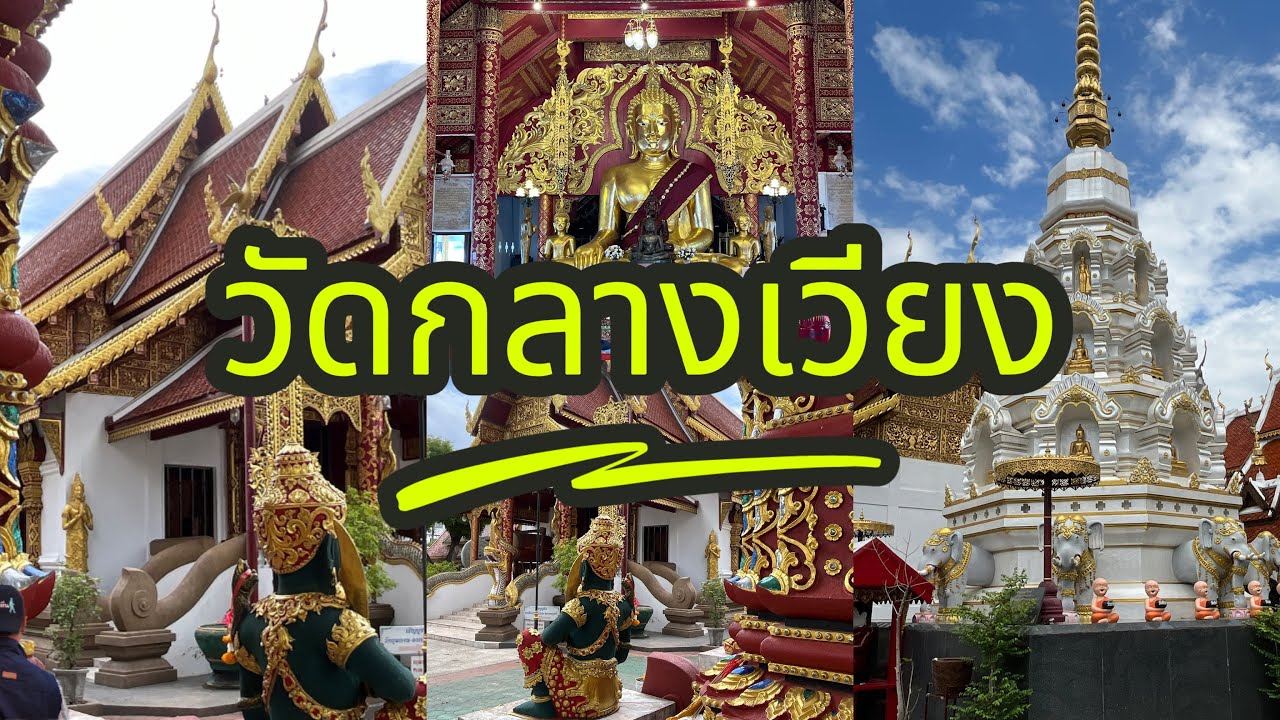
 Click to Access the Navigation Map GPS
Wat Klang Wiang Map
Recommend

 Art, Culture and Heritage
 Historical Sites and Monuments(3)
 Landmarks and Memorials(7)
 Art, Craft Centres, Tradition(6)
 Museums(8)
 Historic Homes and Cities(1)
 Educational Places
 Museum for Study(1)
 Library(1)
 Educational Gardens, Farm(3)
Temple(38)
Educational Gardens, Farm(3)
Temple(38)
 Other Sacred Sites(5)
 Research and Development
 Royal Project(9)
 Suburban Living
 Village, Community(16)
 Local Market(5)
 Nature and Wildlife
 National Parks and Marine Reserves(20)
 Mountain (Doi)(20)
 Dam, Reservoir, Lake(8)
 Waterfalls(16)
 Hot Springs(6)
 Caves(8)
 River, Canal(10)
 Sea, Beach(1)
 Other natural attractions(3)
 Entertainment and Agricultural
 Animal camps and shows(1)
 Farms, Parks and Ecotourism(9)
 Waterpark(1)
 Shopping
 Shopping and Night Market(2)
 Call Customer Service in Tourism
 Call Customer Service in Tourism(1)
 Travel Articles, Recipes
 Travel Review, Food Review(1)
 Food Menu, North Recipes(1)


